


Longs prices in Romania stable despite slow trade
Despite the last week’s announcement of lower tariff-rate quota volumes, which had some impact on wire rod segment pricing, this week no price movements have been seen in spot market prices of rebar and wire rod in Romania.
The sole rebar manufacturer has also kept prices stable week on week. The market’s present outlook, according to market participants, is not supportive of an upward trend since the demand sector is not robust enough to sustain increases. Meanwhile, in the import segment, no new deals have been reported since the majority of buyers anticipate a new quota period.
As a result, local Romanian rebar spot prices have remained stable at €590-605/mt ex-warehouse from last week. Similarly, rebar pricing from the sole domestic mill is stable at roughly €580-590/mt ex-works.
A similar stability has been observed in the wire rod segment, with retail prices quoted stable week on week at €595-600/mt ex-warehouse.
Furthermore, as previously stated, no fresh deals have been recorded in the import market since purchasers are not in a hurry to restock due to the upcoming new quota period, and demand in the domestic market remains low.
According to reports, Bulgaria’s rebar offers have remained stable at €620-630/mt CPT, while Greece’s rebar and wire rod offers are stable week on week at €620-625/mt CFR and €610-615/mt CFR, respectively.
Similarly, Egypt’s rebar and wire rod offers have not changed since last week, at €550-555/mt CPT and €560-565/mt CPT, respectively.
In addition, Turkey’s rebar offers are stable at around €555-570/mt CFR Romania, based on a €1 = $1.08 exchange rate and a freight cost of €25-30/mt.


ArcelorMittal denies accusations of industrial pollution at its Fos-sur-Mer site
The Marseille public prosecutor’s office indicted ArcelorMittal for endangering the lives of others, forgery, and environmental damage earlier this week, according to media reports.
The steelmaker has therefore been placed under judicial supervision, subject to a €250,000 ($268,525) deposit and €1.75 million bank guarantee, the prosecutor’s office said in a statement, quoted by French media outlets.
ArcelorMittal said in its statement that the company was cooperating fully with the authorities in charge of dealing with complaints filed by residents and environmental associations in relation to the Fos-sur-Mer site.
“ArcelorMittal has always been transparent in its contact with the authorities and has made every effort to ensure that the emissions from the Fos-sur-Mer site comply with the prescribed annual limit values. There was no falsification of data,” the steel manufacturer added.
According to its statement, ArcelorMittal has invested more than €735 million since 2014 to modernize its facilities and reduce emission levels. Thanks to these actions, the company has reduced its air emissions from the Fos-sur-Mer site by 70% compared to 2002.
ArcelorMittal said that it would not comment further on the indictment because the procedure was still ongoing, adding that the presumption of innocence and respect for the secrecy of the investigation should be considered.
The Fos-sur-Mer site has been facing problems with environmental organizations and residents since 2018, when a complaint against the plan was filed, according to media outlets.
ArcelorMittal Fos-sur-Mer has two blast furnaces (BFs) with a total capacity for about 5 million tonnes per year of pig iron, market sources said. The site produces hot-rolled and cold-rolled coil.
ArcelorMittal modernizes its French assets
Earlier in March, ArcelorMittal announced that it planned further modernization of its two production plants in France – Dunkirk and Fos-sur-Mer. Due to the overhaul, one of the BFs at the Dunkirk site will be idled for 90 days in the second quarter of 2025.
Specifically for the Fos-sur-Mer site, the company is planning investment amounting to €18.3 million, which is intended to extend the life of BF1. But the production unit will restart operations no earlier than the first half of 2026, Fastmarkets understands. While BF2 will remain operational.
BF1 at Fos-sur-Mer has been idled since the third quarter of 2023.
Market overview
The stoppage of one BF at the Dunkirk site was expected to put additional pressure on the HRC prices in Europe, industry sources told Fastmarkets.
Supply of domestic material in the region has already been limited by Salzgitter, who announced force majeure on HRC deliveries due to a fire at a hot strip mill late in February.
These circumstances, combined with the limited HRC imports due to the new safeguard measures of the European Commission, have supported a recovery in HRC prices in Northern Europe, industry sources told Fastmarkets.
“Production in Europe is at a quite low level now. There are a lot of problems with domestic mills. Customers often complain about delays with deliveries,” a distributor source based in Germany told Fastmarkets.
The distributor source added that mills were quite firm on their offers, advising customers to go to another mill if they did not like the offered price. “But there are not many other options where to go,” the source said.
Despite some small fluctuations, HRC prices in Northern Europe have been recovering gradually since the beginning of the year, reaching €645.00 per tonne on Wednesday, Fastmarkets’ daily steel hot-rolled coil index domestic, exw Northern Europe, shows.
But the index averaged €608.04 per tonne in February remaining far below €738.28 per tonne – the average level reached in February 2024.
Fastmarkets’ sources expected that the recovery of the HRC prices would continue, although some were skeptical if the €700-per-tonne level would be reached.

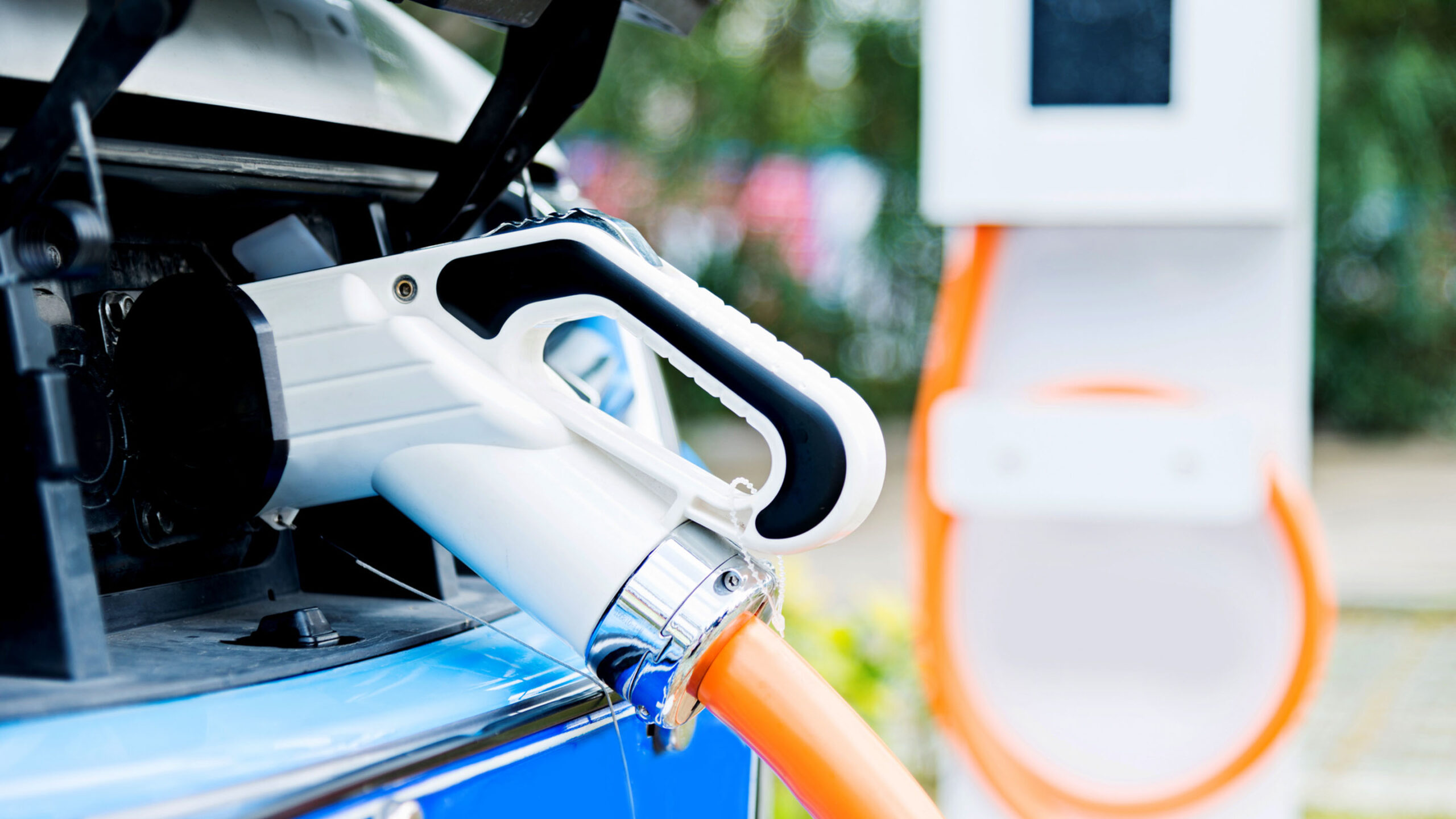
Automakers should capitalize on upcoming green steel technologies to decarbonize industry, CALSTART says
The webinar, hosted by the non-profit organization, which has a focus on the development of efficient transport solutions, featured panelists from green iron and steelmakers Boston Metal, Electra and Stegra.
The automotive sector is a large consumer of steel produced via primary steelmaking, which is a highly emissions-intensive process, Gordon said on Thursday. The US market has a 30:70 split of primary steel and secondary steel, which involves using recycled steel and has far lower emissions due to the use of electricity.
The US produces about 20 million tons per year of primary steel, he said.
To match that capacity, CALSTART estimates that it would take 8-12 green steel facilities, developing a need to ramp-up green steel production by aggregating demand, Gordon said.
“Demand has such a massive effect on the investments that are made,” Gordon said. “When we make steel today, we release between 1.5 and 3 tons of [carbon dioxide] per ton of steel. To make green steel, we need to take the carbon dioxide [out].”
The decarbonization of steel concerns the decarbonizing of iron, Holger Koehler, head of strategy with clean iron company Electra, said.
“It’s not the electric-arc furnace [steelmaking process] that is novel,” he said. “It is really the direct use of iron with 100% hydrogen testing. It’s all about the iron-making, and that requires a partnership along the value chain that is absolutely critical.”
Electra intended to operate a commercial-scale green steel facility in Sweden by 2030. This will produce high-purity iron plate from low-grade iron ore using renewable energy and electrochemical processes. The company has a pilot plant already operating in Boulder, in the US state of Colorado.
Michael Lovgren, head of commercial metallics of Stegra, and Adam Rauwerdink, senior vice president of business development at Boston Metal, both highlighted the importance of collaboration and a robust supply chain in the development of the green steel market.
Stegra, previously H2 Green Steel, is building a large-scale green steel plant in Boden, Sweden, aiming for near-zero-emissions steel production using green hydrogen and renewable electricity, with operations scheduled to begin in 2027.
Meanwhile, Boston Metal will deploy its first demonstration plant relating to the scalability of molten oxide electrolysis (MOE) steel to achieve commercial production in 2026. MOE does not require coke production, iron ore sintering and pelletizing, blast furnace reduction or basic oxygen furnace refinement.
When it comes to accelerating the decarbonization of the steel industry, Lovgren noted the importance of collaborating with original equipment manufacturers to strengthen the supply chain, to create the demand for low carbon emissions steel.
“Where we definitely see the most value from automotive and some of these other early adopting markets is just stability of demand,” Rauwerdink said, “showing that the demand for green steel and low carbon emission steel is real, that it can survive the headlines of the day. That will allow the steel industry to make the capital allocations needed to really drive this change.”
Global decarbonization trajectory
Globally, the panelists highlighted China and India as markets to target when it comes to decarbonization, due to the mix of electric-arc furnace (EAF) and blast furnace (BF) steel production in those countries.
The global steel industry produces nearly 1.9 billion tonnes per year of steel, according to the World Economic Forum, and is a major contributor to greenhouse gas emissions.
“If your goal is to decarbonize 1.9 billion tpy of steel, something like 1.1 [billion tpy] of that is in India and China. So that’s certainly our priorities,” Rauwerdink said during the webinar. “The majority of the world’s blast furnaces are in China. So that’s going to be a critical market.
“India is… forecast to grow in terms of overall steel supply,” he added. “They’ll be putting assets into the ground that will have decades of life. That’s an important part of decarbonizing the future of steel.”
The decarbonization trajectory of the Chinese and Indian steel markets were likely to be prolonged, Holgren said, due to the relatively newer cadre of blast furnaces in these countries.
“Those fleets are relatively young,” Holgren said. “The Chinese and especially the Indian fleet are actually really young blast furnaces. So that will be a longer-term [objective].”
As recently as September 2024, Tata Steel commissioned India’s largest blast furnace.
Focusing on Asia, Lovgren highlighted that Japan and South Korea were bright spots for green steel demand.
“But again,” he said, “the fleet is younger, so the kind of demand from that perspective looks a bit different and it’s less mature.”

Czech production, consumption sink to record low
The Czech Republic recorded its lowest-ever crude steel production of 2.44 million tonnes in 2024, down 25% on-year, due mainly to the problems at Liberty Ostrava. Apparent consumption was 5.5mt, also the lowest-ever figure except for the 2009 financial crisis year, points out the Czech and Slovak steel association, Steel Union.
Besides Liberty Ostrava, which is in administration and initiated a sales tender last month, production was impacted by high energy prices, the global geopolitical situation, pressure from low-priced steel supply from third countries, and the poor EU macroeconomic situation, the association adds.
By product group, Czech flat products output plummeted 52% last year, with longs down 10% and the traditionally strong pipe segment down by 29%. Seamless pipe was especially affected, Kallanish notes.
“The dismal situation in the steel industry is due to the persistently unfavourable development of demand for steel products in the EU. The crisis in the construction industry and other consumer sectors such as mechanical engineering and automotive is having a negative impact on overall steel production. The competitiveness of European producers continues to be threatened by high energy prices and cheap imports from third countries,” says Steel Union supervisory board chairman Roman Heide.
Czech exports also reached a record-low of 3mt in 2024. However, imports rose 300,000t versus 2023 to 6.6mt.
Adam Smith Poland


US tariffs concern UK, EU automotive associations
Automotive associations in the UK and Europe have responded to new US tariffs on cars, expressing concern and disappointment, in separate statements seen by Kallanish.
On 26 March, US President Donald Trump announced an additional 25% tariff on foreign-made cars coming into the country.
UK automotive association SMMT chief executive Mike Hawes says the announcement was “not surprising but, nevertheless, disappointing if, as seems likely, additional tariffs are to apply to UK made cars.”
Recent SMMT data show the UK exports two-thirds of its vehicle production, accounting for 77.6% of its 82,178 total output in February. The EU remained the largest market for UK car exports, taking 53.5%, followed by the US at 19.7% and China at 6.3%. February shipments to the EU and China fell 9.6% and 10.9% respectively, while those to the US rose 34.6%.
“The UK and US auto industries have a long-standing and productive relationship, with US consumers enjoying vehicles built in Britain by some iconic brands, while thousands of UK motorists buy cars made in America,” he adds.
Rather than calling for retaliatory or additional tariffs measures against the US, he said the UK should explore ways in which opportunities for both British and American manufacturers can be created as part of a mutually beneficial relationship. This would be in order to benefit consumers and create jobs and growth across the Atlantic.
“The industry urges both sides to come together immediately and strike a deal that works for all,” Hawes notes.
This echoes a similar sentiment from the UK’s steelmakers in response to earlier import tariffs by the US, who say that such measures would not be the correct response.
The UK did not respond to Trump’s import tariffs on steel in the same manner as the EU, which announced measures of its own, instead continuing ongoing trade deal discussions in the hope of seeking an exemption.
The European Automobile Manufacturers’ Association (ACEA) says in its own statement that it is “deeply concerned” by the US announcement. This comes at a “watershed moment for our industry’s transformation and as fierce international competition mounts,” it notes.
“European automakers have been investing in the US for decades, creating jobs, fostering economic growth in local communities, and generating massive tax revenue for the US government,” says Sigrid de Vries, ACEA director general.
She urges Trump to consider the negative impact of tariffs not only on global auto makers but also on US domestic manufacturing.
“Tariffs will not just impact imports into the US, a penalty that American consumers are likely to pay, but measures on automotive parts will also hurt auto makers producing cars in the US for export markets. European manufacturers export between 50% and 60% of the vehicles they make in the US, making a substantial positive contribution to the US trade balance,” she notes.
She also called for dialogue with the US to find an “immediate resolution to avert tariffs and the damaging consequences of a trade war”.
Carrie Bone UK

British Steel starts consultation to close Scunthorpe BFs
British Steel says it will consult with workers and trade unions on the closure of its two blast furnaces, steelmaking operations and a reduction of steel rolling mill capacity in Scunthorpe, Kallanish learns.
It says challenging market conditions and significant ongoing financial losses have made it unsustainable to continue operating the blast furnaces and wider steelmaking operations.
It adds it will engage with ministers to seek options for support on transition to electric arc furnace steelmaking. However, this news comes the day after British Steel rejected a government funding offer, believed to be £500 million ($644m).
The steelmaker says following many months of negotiations, no agreement with government has been reached. As a result, the “difficult decision” has been made to begin a formal consultation with employees and unions from 27 March.
It adds that since 2020, British Steel owner Jingye has invested more than £1.2 billion to maintain operations amid ongoing production instability and significant financial losses of around £700,000 a day. Despite this, the blast furnaces and steelmaking operations are no longer financially sustainable due to highly challenging market conditions, the imposition of tariffs, and higher environmental costs relating to the production of high-emission steel.
The consultation will propose three options, including the closure of BFs, steelmaking operations and Scunthorpe rod mill by early June 2025, or BF and steelmaking operation closure in September. The third proposal is the BF and steelmaking operation closure at a future point beyond September.
British Steel chief executive Zengwei An says: “We understand this is an extremely difficult day for our staff, their families, and everyone associated with British Steel. But we believe this is a necessary decision given the hugely challenging circumstances the business faces.”
In its most recent financial report, the firm announced an eightfold increase in pre-tax losses, noting its ageing and high-cost assets. The company has experienced BF operational issues for some time, with losses growing yearly.
In a statement emailed to Kallanish, business and trade secretary Jonathan Reynolds says: “I know this will be a deeply worrying time for staff and, while this is British Steel’s decision, we will continue working tirelessly to reach an agreement with the company’s owners to secure its future and protect taxpayers’ money.”
He adds there is a bright future for UK steelmaking, given the government’s commitment of up to £2.5 billion to rebuild the sector, and the upcoming Plan for Steel.
The government has made clear that any offer of grant funding for the company must be the right deal for taxpayers. British Steel is said not to have met standard conditions guaranteeing respect for workers, support for the local area and ensuring the company’s long-term commercial viability.
UK Steel director general Gareth Stace called the move by British Steel a “gut punch to UK steelmaking” that will have “a profound impact felt throughout the British economy.”
“The end of steelmaking at British Steel would mean we have a major gap in capacity to meet the future demand of the nation and will be an irreparable break in the armour of national security,” he adds. “Government must get back to the negotiating table.”
UK industry minister Sarah Jones said later on Thursday that government hopes British Steel returns to negotiations, but it does not rule out nationalising the steelmaker (see separate story).
Carrie Bone UK