


US tariffs undermine recovery for European manufacturing
2025 is unlikely to see a long-awaited rebound in European industrial production and metals consumption, primarily steel. While the impact of earlier investments could improve the second half of the year, more substantial changes that have been set in motion to revitalize EU manufacturing have been postponed to 2026, multinational ING bank said.
At the start of the year, industrial production in the EU and the eurozone was 5% lower than two years ago, while it has remained stable in the US, and China recorded a 13% growth in that same period, ING noted in a report published on May 1.
February saw production in both the EU-27 and the eurozone rise to the highest level since August 2024, and in April, the manufacturing output PMI rose to 51.2 — the highest level in almost three years. According to ING, while the longstanding decline in European industrial production, which began in the first quarter of 2023, has shown signs of bottoming out with improved purchasing power, new uncertainties stemming from US President Donald Trump’s import tariffs are now eroding confidence and dampening investment in the manufacturing sector.
EU’s 20% reciprocal tariffs have been postponed for 90 days, but 25% tariffs on steel, aluminum, cars and auto parts remain in place, while most other EU-manufactured goods are now subject to a 10% tariff.
Eurozone exports to the US increased materially before tariff announcements were made, but “as long as tariffs remain in place and uncertainty about further and higher levies lingers, the US [the largest export destination providing 20% of extra-EU trade] will probably no longer be a growth market for European goods,” says ING.
While it is impossible to fully quantify their impact, ING reckons 20% tariffs will shave off 0.3 percentage points of eurozone GDP growth over the next two years. Aside from pharma, the machinery and equipment sectors that in 2024 made up 26% of EU’s Eur530 billion exports to the US – will be among those hit hardest, the bank estimates.
“The picture may change somewhat in the second half of the year, if the trade storm subsides and European producers and consumers can look ahead with more confidence,” says ING adding that “in the meantime, uncertainty over trade barriers remains a major disruptive factor for confidence and investment,” and that “we probably have to wait until 2026 for a substantial increase in industrial production due to government investments in infrastructure and defence.”
The escalation of trade tensions between the US and China will also have a negative effect on EU manufacturing as China seeks markets outside the US for its exports, although European exporters may well show resilience too and successfully shift part of their trade from the US to other countries. Meanwhile, the EU is already pursuing new trade agreements and forging partnerships with countries such as Mexico, Chile, Switzerland, Malaysia, and South American states.
However, conditions will remain difficult for longer for energy-intensive industries given that gas prices in Europe remain four to six times higher than in the US, and electricity is two to three times more expensive, ING estimates. The proposed measures on affordable energy from the European Commission could yield results, but immediate energy supply boosts are unlikely.
A number of steelworks – falling victim to lower domestic end-user demand, especially dwindling procurements by manufacturers of machinery, electrical equipment, and motor vehicles, whose productions declined the most in 2024, — have been shut across Europe recently as global overcapacity in steel has increased to a level that exceeds the total steel production of OECD countries.
The EU is now bracing for its basic industries’ competitiveness to be eroded further as US tariffs are expected to prompt more steel directed to the European Single Market, which in a persisting environment of high energy prices and weak demand will result in an increasing number of basic industrial companies shifting investments away from European soil.
Although the EU housing market is picking up and US import tariffs are having little impact on many European building material suppliers, manufacturers of metal and plastic semi-finished products do not see their prospects improving much for the time being, while a substantial increase in production isn’t expected until 2026.
Discussing other differences between sectors and countries, ING noted that high-tech industries, including electronics and air and spacecraft, are somewhat better off with an uptick in their production levels in February, while basic and mid-tech industries, including machinery and transport equipment, are affected by rapid technological advances and large-scale government investments in China that have made the country a fierce contender in traditional European strongholds.
Within the EU, Spain and Poland have managed to maintain stable production over the past two years, while Germany, Italy, and the Netherlands have experienced a steady decline.


Green steel shift gains momentum: Meranti chief executive
The global steel industry is starting to move towards “greener” production as rules tighten and customer preferences change, Sebastian Langendorf, founder and chief executive of Meranti Green Steel, said during an industry webinar attended by Kallanish.
He explained that regulations like the EU’s Carbon Border Adjustment Mechanism (CBAM) and rising carbon taxes in Southeast Asia are pushing steelmakers to reduce emissions. For example, Singapore’s carbon tax is set to rise to $45/tonne by 2026.
This is also changing what customers want, especially in sectors like carmaking and construction, where low-carbon steel is becoming more important.
One key part of green steel is direct reduced iron, which uses cleaner fuels like natural gas or hydrogen. DRI needs high-grade iron ore with 67-68% iron content. Right now, DRI-based steelmaking only makes up a small share of global steel production, but demand is expected to grow quickly.
Scrap steel is also playing a bigger role. Around 800 million tonnes/year of steel is made from scrap, and this could rise to 1.5 billion tonnes by 2050. Still, iron ore-based steel will continue to be needed, especially in fast-growing regions like India and Africa, Langendorf highlighted.
Southeast Asia, which currently produces around 80m t/y of steel, could double its output by 2035. While most production still comes from traditional blast furnaces, signs of green steel demand are starting to appear, for example, in Thailand’s car industry and Singapore’s building sector.
“Steelmakers are starting to follow two paths,” said Langendorf. “They are preparing to supply Europe’s future demand for green steel while also slowly building local green markets in Southeast Asia. The shift has started and green steel is here to stay.”
Aditi Tiwari India


Salzgitter invests in new walking beam furnace
Salzgitter is investing a triple-digit million euro sum in a new walking beam furnace and waste gas heat utilisation system at the hot strip mill at its Salzgitter Flachstahl unit.
Tenova Italimpianti was assigned with the realisation of the project, Kallanish hears from the German steelmaker.
“With the new furnace, we will be reducing our energy requirements for slab heating in the hot flat steel area by up to 30%. This is another significant step towards reducing the CO2 footprint of flat steel products,” says Thomas Routschek, operations director at Salzgitter Flachstahl.
Hot combustion gases are generated when slab is heated in the walking beam furnace. The associated thermal energy is converted into steam in an exhaust gas heat recovery system. The DSD Power company was commissioned with the construction of the heat recovery system.
The new walking beam furnace will also enable the use of hydrogen, Salzgitter adds.
Thanks to its high energy efficiency, the project is being funded by German development bank KfW. The installation and commissioning of the new furnace is scheduled for 2028 completion.
Christian Koehl Germany
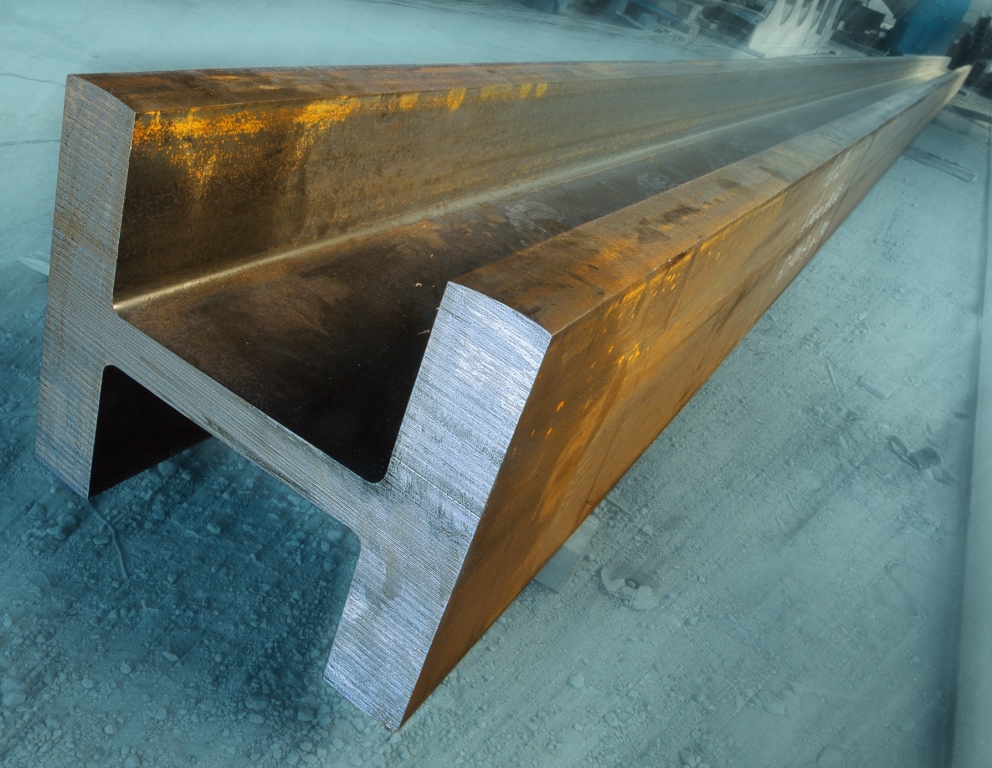
Northwest European sections gain, but behind mills’ target
Sections prices in Germany and adjacent markets have gained somewhat over recent weeks. Limitations to imports could play a role in supporting prices, despite weak market dynamics; however, this could be offset by falling scrap values.
German mills indicated in March €800/tonne ($912) delivered as their target deal price, but they are yet to achieve this. “I do not think any of the big ones [buyers] will pay that,” one German buyer tells Kallanish. He and others see the realistic value for transactions currently going towards €780/t in Germany.
A Danish observer confirms the target of €800, “which the mills declared two months ago”. He too sees the price paid in Germany at €780 delivered. Scandinavian prices, delivered, would be at €20-30 higher, he adds.
Although sections values are yet to see any downward corrections this year, that could happen later this month, the Danish observer warns. He says scrap prices have seen quite a decline recently and mills will have to make price concessions due to the resultant cost savings they are enjoying.
Another German source is however not so sure about that. He argues that scrap is not the price driver it used to be, with high energy costs and revised safeguard duties now playing a larger role.
Christian Koehl Germany

Metalogalva becomes a member of EUROMETAL
Founded in 1971, Metalogalva’s mission is to manufacture high quality steel infrastructure while consistently providing the best products, maintaining the highest standards of service, and promoting responsible business practices.
Metalogalva operates 22 industrial units, including 10 in Portugal, 2 in Germany and 2 in Poland and employ over 2.000 people, reaffirming its commitment to research, development, and innovation to maximize productivity and uphold the highest quality standards that meet customer expectations.
The company offers a wide range of steel structures for the Lighting, Renewables, Energy, Telecom, Railway, and Roadway sectors. Metalogalva also provides in-house Hot-Dip Galvanizing, Electro plated coatings and a variety of surface treatments, including Liquid Paint, Powder Coating, the Duplex System, and the innovative Coatection Complete.
With a global presence, leader in Europe and with a solid expertise, Metalogalva is a reference in the Steel Structures industry, recognized for its excellence, innovation, and commitment to the future.
Discover more: metalogalva.pt

Measures to rearm Europe could fortify EU metal-intensive industries
The European Commission’s plan to boost defense spending and planned Germany’s infrastructure investments are key drivers, along with lower central banks’ interest rates, that could offset some of the impact of the US import tariffs on the Eurozone economy and manufacturing, according to multinational bank ING.
“Total defence production in EU could rise as much as five times by 2030,” ING said in a May 1 report.
The boost for Eurozone industrial production is expected from the commission’s initiative to unlock Eur650 billion ($737 billion) — if countries allocate an extra 1.5% of GDP to defense — raising average EU defense budgets to 3.5% of GDP.
In addition to the planned Eur150 billion in European defense loans, the EC is also considering shifting the existing Eur392 billion in the European Cohesion Policy fund to strengthening the defense capabilities of member states, ING said.
The bank stressed that EU defense spending has already been on the rise, having increased over the last four years by more than 30%, to 1.8% of GDP, and the domestic manufacturing of military transport, such as fighter planes, naval vessels, submarines and tanks, has been one of the EU’s few growing industrial subsectors recently, second only to pharmaceuticals, but otherwise, the upside for local manufacturing has been limited given Europe’s lacking production capacity and ununified defense strategies.
As a result, since the Russian invasion of Ukraine, roughly 80% of the EU’s defense procurement has gone to non-EU firms: Europe-wide, imports of major arms have increased by 155% between the 2015-2019 and 2020-2024 periods, according to the ING report.
Provided the EU rolls out harmonized defense standards that overcome the currently fragmented nature of its military equipment market, builds up collective investments in manufacturing and makes better use of dual-use technologies and capacities at companies previously focused exclusively on the civilian market, the region can see its defense output soar with potentially 50% of its military needs sourced within the EU in the long term, ING estimates.
A growing number of European manufacturers already pursue opportunities in military products. Dutch civilian manufacturer VDL wants to use its former car factory for the production of defense equipment, and German tank manufacturer Rheinmetall is interested in certain facilities of Volkswagen. French-German military land system manufacturers KNDS recently bought a wagon factory from French rolling stock manufacturer Alstom to scale up the production of tanks. Italian aerospace company Leonardo is considering drone production in collaboration with Turkish UAV specialists Baykar, ING said.
The EU defense industry is largely concentrated in Germany, France and Italy, but none of the largest EU defense companies are among the top 10 players globally.
“Arms revenues of [the EU’s] Airbus and Leonardo amounted to almost 13bn and 12.5bn in 2023, whereas the largest US defence company, Lockheed-Martin, earned over 60bn in arms; this figure stood at 30bn for the largest UK player, BAE Systems,” ING said.
That said, the share of defense output in EU’s industrial production could increase from 0.5% in 2024 to 2.5% in 2030 and therefore contribute to a long-awaited reboot of the European industry, ING said.
Germany’s federal assembly Bundestag in March approved the amendment to the Basic Law, which makes an allowance for a Eur500 billion infrastructure fund to be spent over the next 12 years, including on clean energy and transport. This came as good news for EU manufacturing sectors, especially for steel and metallurgy in general.
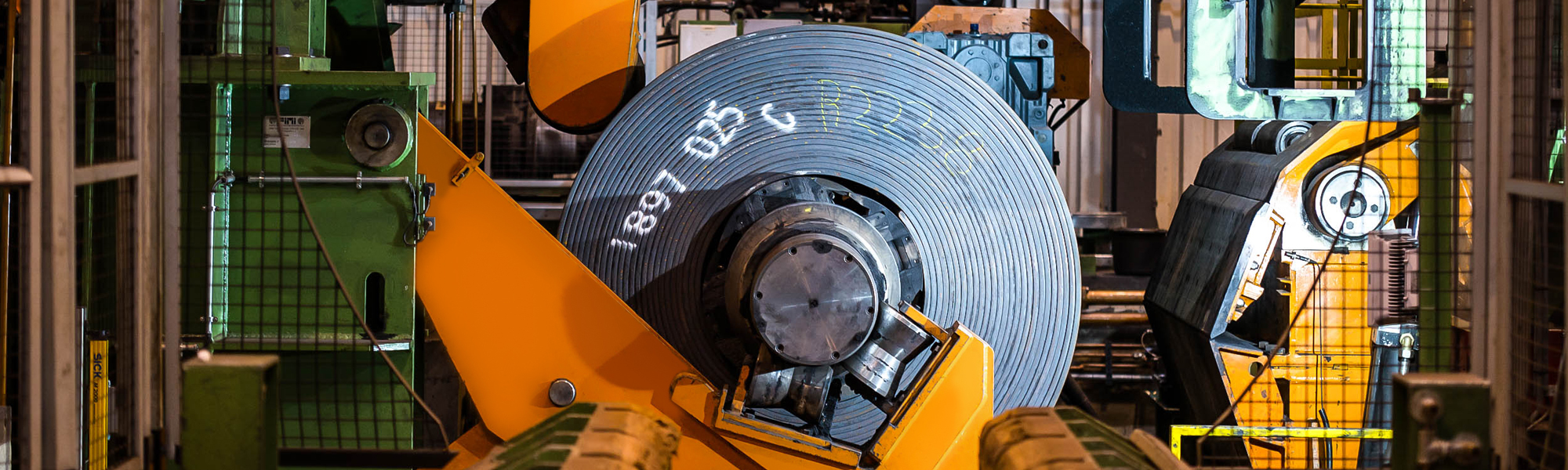
European HRC prices hold as market eyes Made in Steel for clarity
European domestic hot-rolled coil prices held steady May 2 amid subdued spot market activity and a cautious outlook, with market participants expecting more direction to emerge during the upcoming Made in Steel fair in Milan, Italy.
Market participants noted another quiet session due to national holidays in parts of Europe, where mills were largely offering for end-June shipment.
“We’ve had three very slow weeks,” a mill source said. “Everyone is hoping the trade fair brings clarity — both on spot demand and mill positioning.”
Despite the slow pace, domestic mills were said to be relatively well-booked, leaving them in no rush to cut prices competitively. However, sources noted some flexibility on large-volume deals. “Expectations for the second quarter are largely priced in, so negotiation space is wider if buyers come with volume,” the mill source said.
Platts assessed hot-rolled coil in Southern Europe at Eur620/mt ex-works Italy and in Northwest Europe at Eur650/mt ex-works Ruhr, both stable day over day.
Several import offers were noted, with Indonesia emerging as an active origin. Around 100,000 mt from Indonesia are expected to arrive in the current quarter, along with similar volumes from Vietnam, the source said.
Import HRC offers to Italy were heard at Eur530-550/mt CIF from Indonesia, Eur550/mt from Saudi Arabia and Eur580-590/mt CIF from Turkey, duty paid. To Northwest Europe, Indian-origin HRC was heard at Eur560-570/mt CIF Antwerp, while Turkish offers were cited at Eur590-600/mt CIF Antwerp, duty paid.
Platts assessed imported HRC in Northern Europe at Eur540/mt CIF Antwerp and in Southern Europe at Eur530/mt CIF Italy, both stable day over day.

EU launches steel carbon label consultations
The European Commission has initiated a public consultation as part of its impact assessment on different policy options related to the Clean Industrial Deal, which include a voluntary label specifying the carbon intensity of steel products, Kallanish notes.
The Industrial Decarbonisation Accelerator Act, a key part of the Clean Industrial Deal, aims to increase sustainable and resilient industrial production in energy-intensive industrial sectors (EIIs) in the EU by supporting decarbonisation investments.
Its three objectives are to speed up permitting procedures for industrial decarbonisation; Identify and promote priority industrial decarbonisation projects and clusters; and create and protect European lead markets for European low-carbon products.
The last of these will consider introducing sustainability and
Also assessed will be promoting industrial products with a low carbon intensity, including options for an EU label. This will develop a voluntary label for steel based on EU Emissions Trading System data and building on the EU’s Carbon Border Adjustment Mechanism (CBAM) methodology, the Commission says.
The impact assessment will also consider incentives for uptake of clean carbon feedstock, including carbon capture and u
In a continuation of its recent language that has been strongly supportive of industry, the Commission says: “The absence of additional EU action would maintain the status quo, increasing the risk of losing European strategic industries and becoming excessively dependent on non-EU countries for the EU’s green, digital, defence and economic security objectives.”
It admits problems can only partially be addressed by member states due to the integrated nature of the market for energy-intensive industrial products and that of energy markets.
EIIs are “of strategic importance to the EU’s resilience, security and economic prosperity. They are the key starting point for many value chains, providing raw, processed and intermediate materials to downstream sectors,” the Commission adds.
They therefore need “urgent support to decarbonise, electrify as well as tackle high energy costs, unfair global competition and complex regulations that jeopardise their business case, harm their competitiveness and weaken European resilience,” it notes.
The consultation is open for feedback for 12 weeks from 2 May and is open to all citizens and stakeholders.
Adam Smith Poland