


EUROFER demands closing of loopholes in CBAM
The European Steel Association (EUROFER) has stated that the Carbon Border Adjustment Mechanism (CBAM) is full of loopholes and, if not fixed, it would undermine decarbonization investments, accelerate deindustrialization, favor production in third countries, and fail to cut global emissions. The association stated that the green transition efforts of the European steel industry are at risk of being undermined due to cheap and carbon-intensive imports.
Noting that 70 percent of EU steel exports go to countries with no carbon pricing, EUROFER highlighted that the lack of a solution to preserve exports is a major loophole that has a negative impact not only on competitiveness but also on climate because EU exports will be displaced by more carbon-intensive products.
To strengthen the effectiveness of the CBAM and close the loopholes, the EUROFER stated that free allocation for exports should continue to avoid carbon leakage in global markets; resource shuffling should be prevented; the CBAM must be extended to steel-intensive downstream goods; grade 304 that has higher emissions must be fixed for stainless steel; indirect cost compensation for steelmaking should be maintained and indirect emissions for ferroalloys must be included in the CBAM; the origin of CBAM goods must be set where the steel was melted and poured; the inward processing procedure should be ended to avoid a major environmental loophole; and free allocation benchmarks for long products and stainless steel need to reflect the most climate-friendly practices.


ArcelorMittal signs XCarb deals in Germany, Switzerland
ArcelorMittal has signed two new partnerships for its XCarb low-emission steel brand with fabricators in Germany and Switzerland, Kallanish learns.
In Germany, ArcelorMittal Steel Service Centres Europe will supply XCarb to Wolf Gmbh, a maker of solutions for heating and air conditioning. Wolf will be offering XCarb as an option for a range of its air conditioning production. Its customers will receive documentation with all the data on CO2 content and manufacturing path, providing end-users with transparency for their own sustainability targets, a Wolf spokesperson says.
In Switzerland, the steelmaker is partnering with Burri Public Elements for steel used to produce the “Landi” bench, which the Swiss company has been producing since 1939. In cooperation with ArcelorMittal Tubular Products Altensteig and local processor Kindlmann, it has come up with a sustainable version of the iconic bench for public places.
In summer 2024, Burri started a test run of its bench with XCarb steel to gauge its properties. “The steel could be bent, welded and coated without any problems,” says Burri partner Stephan Bachmann.
Christian Koehl Germany

ArcelorMittal wants stricter EU sheet piling import limits
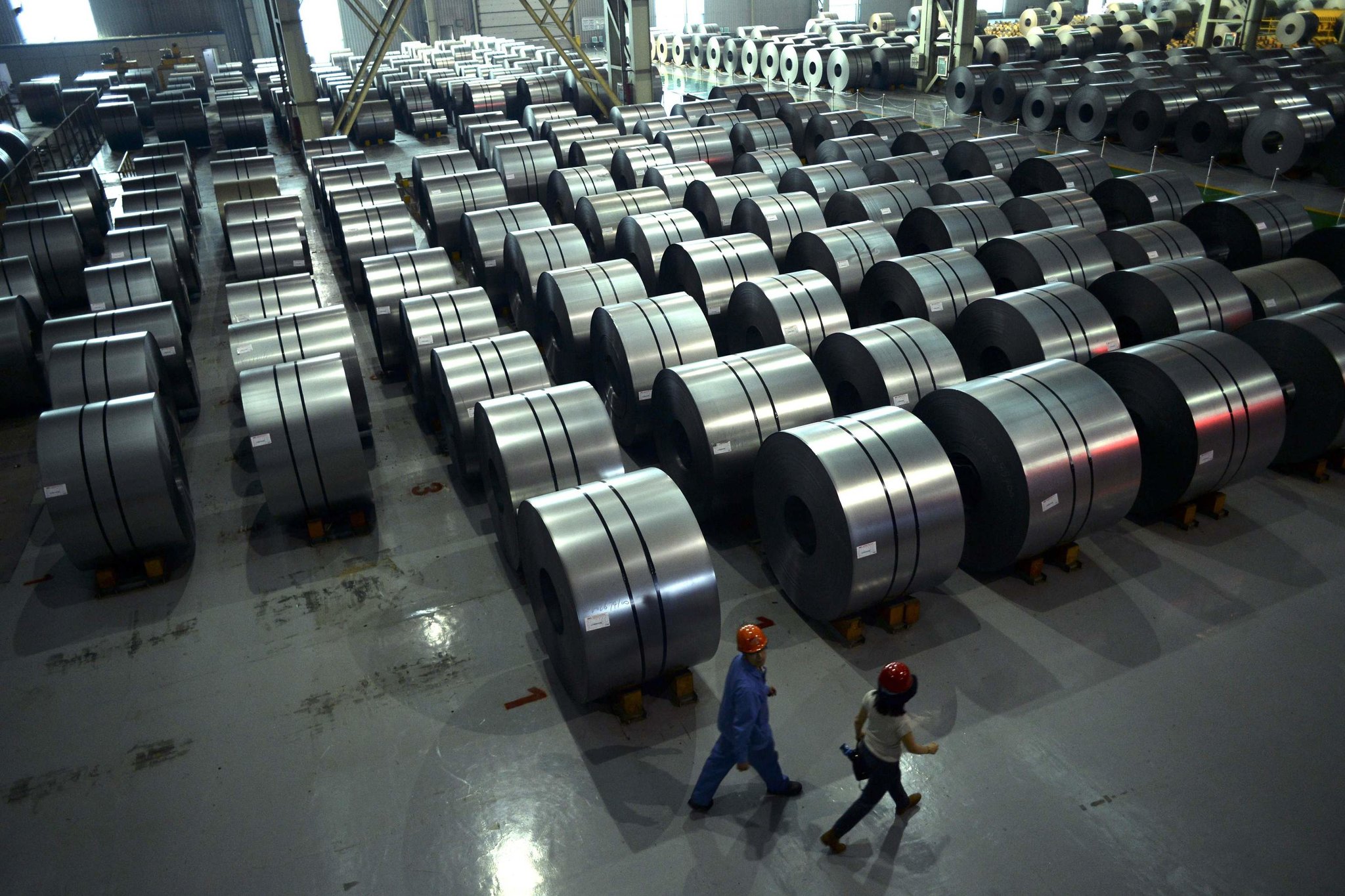
Imports of sheet piling into Europe remain at high volumes but low prices, and should be subject to stricter limitation by the European Commission, finds ArcelorMittal Europe.
According to the group, EU restrictions have not addressed the full challenge faced by European sheet pile producers. “Low-priced imports imported into the EU – predominantly from China – now represent a real threat to the future of European sheet pile manufacturers,” the company tells Kallanish. Current EU safeguards will last until 30 June 2026. “The next tariff tool will be tighter with reduced quotas, [but needs] to follow quickly,” it adds.
According to sources at the company, China can ship 28,000 tonnes/quarter of sheet piling duty-free into the EU. Imports of sheet piles from China rose from 17,000t in 2020 to 41,000t in 2023, mainly reaching the Benelux countries and Germany.
China is therefore able to supply 150% of the quota by paying the 25% duty, and is still competitive in Europe due to the low prices of its product. Sources suggest that
Chinese sheet piles, even with duty paid, are 15-20% cheaper than the average of EU producers.
European countries with demand for dykes, ports and flood protection are the main targets for sheet piling imports. According to ArcelorMittal, the Benelux countries taken together are the biggest market for sheet piles, constituting 31% of EU27 demand. Germany is the second-biggest market, accounting for 22% of EU27 demand.
A paramount factor is that Europe-made sheet piles have the lowest carbon footprint in the sector, the firm says. “But there is currently no strong incentive for customers to choose low carbon-emissions sheet piles,” meaning price remains the main factor of choice, it concludes.
Christian Koehl Germany

Assofermet sees uncertainty dominating global flats market
Uncertainty continues to loom across the flat steel market, with global production slowing except for in India and demand downstream still under pressure, Italian trade association Assofermet says in a market note seen by Kallanish.
Since the Made in Steel event in Milan earlier this month, the flats market has slowed due to the climate of uncertainty. “The market, lacking a clear direction … appears disoriented: on the one hand, European steel mills are reducing their plants’ capacity while maintaining a rigid commercial attitude, supported by growing protectionist measures; on the other hand, pressure from Far East producers is growing, characterised by subdued internal consumption and challenges in exporting to the United States,” the note states.
Although the tariff impact appears to be easing, there remain several factors of uncertainty that need to be addressed. May commenced with a subdued market, which created apprehension among market participants. The uncertainty surrounding the fire at the former Ilva plant in Taranto, now Acciaierie d’Italia, raises significant concerns regarding employment stability and the future productivity of the Taranto facility, the association notes.
It continues to monitor the development of European laws on trade restrictions and the low-emission steelmaking transition, it adds. Regulatory updates expected in the third and fourth quarters may represent a turning point in the second half of the year, the association concludes.
Natalia Capra France

AST electrical steel investment remains on hold
Capital allocation remains on hold for electrical steel production and the two cold rolling lines planned at Arvedi Acciai Speciali Terni (AST), Kallanish learns from union sources.
The stainless steel producer engaged with union representatives earlier this week to review its industrial strategy for the period spanning 2022 to 2028. The unions point out the company has maintained all its investments for the period, with the exception of delays concerning the two cold rolling lines and electrical steel production, despite an “extremely complicated macroeconomic and geopolitical context”, a union note says.
The industrial plan focuses on strengthening the hot area while also broadening the range of cold-processed products.
The initially committed €1 billion ($1.1 billion) investment encompasses, among other elements, a new rolling mill and a new pickling, rolling and annealing line, alongside the two electrical steel lines that are currently on hold.
The unions are pressing the government to expedite the signing of the programme agreement, which would facilitate the swift relaunch of the site. AST is in discussions with authorities to finalise the agreement.
In January, the company, authorities and unions established a timeline to address technical issues concerning energy supply. It also aims to determine the resources that will be allocated by the Environment Ministry and Energy Security and the Ministry of Enterprises and Made in Italy to facilitate the industrial plan.
Arvedi has invested €325 million in AST since it acquired the firm in 2022, with an additional €232m to be allocated this year across various segments at the Terni-based mill. Of the investment so far, €160m was designated for equipment and upgrades that are currently operational, while works are progressing with a remaining value of €165m.
In a previous letter to the workforce, Arvedi founder and president Giovanni Arvedi affirmed that the industrial plan for the plant’s production of electrical steel includes a significant expenditure of €411m (see Kallanish passim).
Natalia Capra France

Carbon border tax simplification advances with European Council approval
The proposal to reform the EU’s Carbon Border Adjustment Mechanism cleared another hurdle after the European Council backed the simplification of this climate policy May 27.
“Simplification and reduction of the administrative burden for our companies to boost EU competitiveness remain among the priorities of the Polish presidency,” Adam Szłapka, Poland’s minister for the EU, said in a statement.
“Today’s agreement sends a clear signal that the Council is determined to advance on this path as fast as possible.”
The European Commission had been under pressure from various sectors to tweak CBAM so as to enhance the competitiveness of the bloc’s industry by exempting small importers and reducing the administrative burden for many companies.
Under the changes, importers will be able to purchase CBAM certificates starting in February 2027 rather than from Jan. 1, 2026, to cover the emissions embedded in their imports for 2026, giving businesses more time to adapt to the new carbon pricing mechanism.
The proposal also includes a 50 mt de minimis threshold that would exempt 90% of importers while still covering 99% of CO2 emissions from key industrial imports.
“Following today’s adoption of the Council’s position, the presidency will start negotiations with the European Parliament on this file,” the European Council statement added.
This comes almost a week after the European Parliament voted with an overwhelming majority to streamline the EU’s CBAM.
CBAM essentially imposes a carbon tariff on emissions-intensive commodities imported by the EU, including aluminum, cement, electricity, fertilizers, hydrogen, and iron and steel. The aim is to level the playing field for EU companies, as most exporting countries do not have a carbon price as high as the EU Emissions Trading System or lack a price on emissions altogether.
Carbon prices vary greatly geographically. Platts, part of S&P Global Commodity Insights, assessed EU allowances for December 2025 at Eur71.71/mtCO2e ($81.38/mtCO2e) May 23. This compares with China’s compliance emission allowance, which was valued at Yuan 69.41/mtCO2e ($9.65/mtCO2e) on May 23, according to the Shanghai Environment and Energy Exchange.
CBAM is currently operational in the EU in a “transitional phase,” where importers must report emissions embedded in relevant products they bring into the bloc.
However, from Jan. 1, 2026, under its “definitive phase,” importers will be obliged to purchase CBAM certificates. This proposal means these certificates will now need to be purchased until 2027.


European HRC market rangebound as mills lower offers
European domestic hot-rolled coil prices were stable on May 27 as domestic mills lowered offers in order to maintain order books amid weak spot demand across Europe.
“Nothing is really happening, the mood is changing. Our customers expect prices to go down … It’s getting more difficult because the market leader reduced offer prices by Eur30-40,” said a mill source.
Other sources cited weak demand for the next six to eight weeks and into the summer holidays.
However, one mill source was optimistic that demand would pick up before the summer holiday, sparked by increased infrastructure spending in Germany. The same source acknowledged a weakened automotive industry.
“In Germany, we hope demand will pick up before summer as the country has spent a lot of money on infrastructure, but the automotive [industry] is not in a good shape. For normal volumes, sales are not so well,” a mill source said.
Low offers from Indonesia and Turkey also continue to put pressure on domestic prices. Offers were heard at Eur520/mt CFR Italy, ex-Indonesia and Eur550/mt CFR Italy, ex-Turkey on the day.
Buyers are becoming more wary of long-lead imports as the carbon border adjustment mechanism comes into effect in 2026, with one distributor citing that the market will start feeling the effects in the second half of 2025. One mill source was concerned about the uncertainty regarding its implementation and the impacts on delivery time.
Platts assessed domestic HRC in Northwest Europe at Eur630/mt ex-works Ruhr, stable day over day, and in Southern Europe at Eur605/mt ex-works Italy, stable day over day.
Platts assessed imported HRC in Northern Europe at Eur530/mt CIF Antwerp, and in Southern Europe at Eur520/mt CIF Italy, both stable day over day.
Alexander Wong | Devbrat Saha | Charles Thompson