

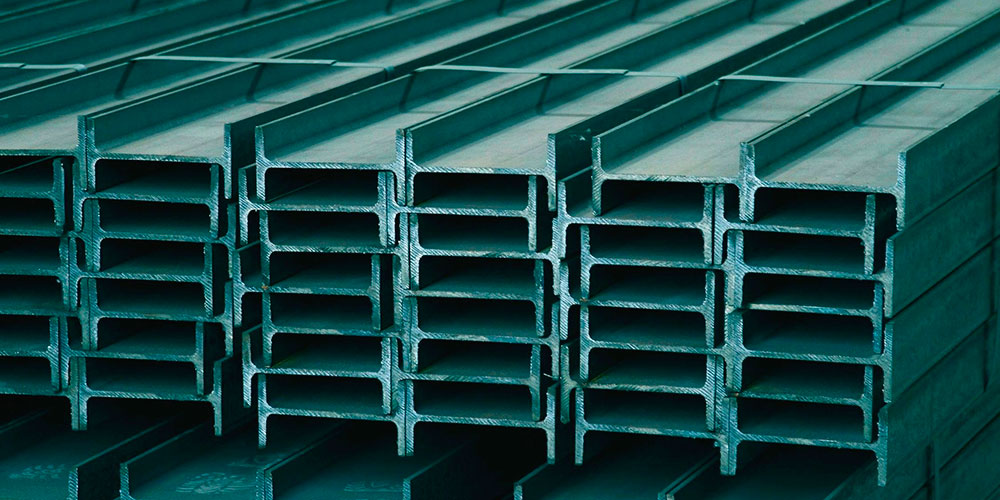
European long steel market steady amid weak demand, quota caution
The European domestic long steel market remained broadly stable in the week to May 28, with market participants reporting subdued activity amid weak demand and lingering concerns over import quotas and regulatory changes.
Rebar tradable values were reported at Eur650-660/mt delivered Germany and around Eur625-630/mt delivered Belgium. One trader said the workable levels remained largely unchanged from last week, with ex-works rebar prices in the region at around Eur610/mt in Benelux.
Market sentiment remained soft across the longs segment, with one mill source suggesting that while mills are hoping to raise prices on the back of expected scrap increases — potentially by Eur20/mt — current demand levels do not support any near-term uptick. “The market is very quiet — hopefully June will be better,” the source added.
Despite some anecdotal indications that Southern Europe was seeing slightly better activity, most market participants described overall European demand as weak, especially heading into the early summer period. Import volumes remained low across long products, largely due to stricter quota allocations, according to sources.
Platts assessed rebar at Eur625/mt ex-works Benelux, stable week over week. Platts assessed medium sections at Eur780/mt delivered Benelux, down Eur5/mt week over week.


Salzgitter sells Austrian distribution unit to Ecco
Salzgitter Mannesmann Stahlhandel GmbH, the distribution subsidiary of Salzgitter AG, is selling its Salzgitter Mannesmann Stahlhandel Austria unit to the Ecco Group.
Salzgitter Mannesmann Stahlhandel Austria, based in Graz and Gratkorn, generates an annual turnover of around €60 million ($68m) and employs 84 people. Salzgitter AG founded the Austrian unit in 2012 through the acquisition of parts of the Graz-based company Kovac Stahl GmbH. It handles flat products, beams, tubes and fittings, a spokesman tells Kallanish.
According to Salzgitter, Ecco Group specialises in the acquisition and sustainable further development of corporate divisions and units that are transferred to independence as part of group spin-offs – so-called carve-outs. As part of the transaction, all relevant business divisions and activities are being transferred to the new owner.
The existing supply relationships with the previous owner company and with the Salzgitter Group’s supply plants will remain in place and will continue to form a mainstay of the business model, Salzgitter notes.
Christian Koehl Germany


Tata Nederland starts can-making line
Tata Steel Nederland has commissioned a new can-making machine at its R&D facilities, Kallanish hears. It uses a dry forming process to produce food cans like those commonly found on supermarket shelves.
In a typical can-making line, small steel cups are first punched out, then stretched to form the sides of the can, Tata explains. In conventional processes, this generates heat due to friction, requiring cooling water that must then be washed off the cans – an energy- and water-intensive process.
Using its proprietary Protact steel and advanced internal cooling of the tooling, cans can now be formed in a dry process. This eliminates the need for emulsified water, reducing energy use and cutting the investment costs for customers.
According to Tata, the new line is faster than its predecessors and will be used to help further develop the latest technologies in packaging. Its line can produce up to 400 cans per minute, 25% more than the industry standard of 320.
Close collaboration with customers has already delivered results, Tata says. One example is Tata Steel’s partnership with Grupo Calvo, which led to the development of an innovative Protact tuna can. The polymer layer applied to the steel reduces the need for oil to keep the tuna fresh and make it easy to remove from the can, Tata notes.
Christian Koehl Germany

Austria crude steel production decreases
Austria decreased crude steel production in April compared to the previous month, according to worldsteel data.
Output amounted to 614,558 tonnes, down 12.4% on-month and 8.9% year-on-year, Kallanish notes.
In January-April, the country produced 2.37 million tonnes of steel, compared to 2.52mt in the same period last year.
Austria remained in 23rd place in the ranking of top global steel producers, the data show.
Overall EU output in April was down 18.7% on-year at 11.1mt. January-April production was 43.5mt compared to 44.6mt in the same period last year.
Austrian steelmaker voestalpine has expressed mixed feelings about US steel tariffs, as the firm operates multiple sites in the US, which it plans to expand, while actual imports from Austria into the US are limited. Earlier, the steelmaker successfully commissioned the profile rolling line at its hot tube rolling mill at Kindberg in Styria.
Svetoslav Abrossimov Bulgaria

European HRC mills reduce offers, but buyers hold back
Leading European suppliers lowered their offers to around €650 ($686.71) per tonne ex-works from €700 per tonne ex-works. First-tier mills in Northern European mills were offering July-delivery coil around €640-650 per tonne ex-works or delivered.
Italy-origin coil was offered to Germany at €640-650 per tonne delivered.
Transactions were heard at €620-640 per tonne ex-works in Germany and the Benelux region, with buyer estimates of tradeable values heard at €620-630 per tonne ex-works.
“European mills are chasing for orders ahead of summer breaks. The order book situation for some producers is not looking good; there are gaps to be filled and buyers are holding back in the declining market,” one buyer in Germany told Fastmarkets. “Some suppliers are even selling coil below breakeven costs to generate cashflow.”
Trading was slow, with buyers remaining cautious with booking big tonnages in an uncertain market.
“Demand for commodity-grade HRC is weak and we have summer holidays ahead, so improvement is unlikely,” a distributor source said.
Fastmarkets’ calculation of the daily steel HRC index, domestic, exw Northern Europe was €628.75 per tonne on Wednesday, up by €0.18 per tonne from €628.57 per tonne on May 27.
The index was down by €4.58 per tonne week on week and down by €27.25 per tonne month on month.
Fastmarkets’ daily steel HRC index, domestic, exw Italy was €600 per tonne on Wednesday, down by €1.25 per tonne from €601.25 per tonne on Tuesday.
The Italian index was down by €5.00 per tonne week on week and by €27.50 per tonne month on month.
In Italy, trading was also muted.
Buyers estimated achievable prices at €590-600 per tonne ex-works, while offers were heard at €620 per tonne ex-works.
Meanwhile, import HRC prices to Europe were little changed during the week to Friday.
Despite the wide gap with domestic prices, big buyers were looking at import bookings, due to risks related to safeguard measures, sources said.
“Indonesia offers July production/August shipment for HRC. That means [the HRC] arrives to Europe in September and chances are high that it can only be custom cleared on January 1, 2026 to avoid safeguards. And [Carbon Border Adjustment Mechanism] is coming into force in 2026, so there are a lot of uncertainties,” a mill source told Fastmarkets.
July-shipment HRC from Turkey was available at an average price of €550-560 per tonne, duty paid. One supplier with lower duties was heard offering of €540-545 per tonne, duty paid.
Algerian HRC was offered to Italy at €540 per tonne CFR.
An offer was reported from an Indonesian mill at €520-530 per tonne CFR.
HRC from India and Thailand was offered at €560-570 per tonne CFR Italy.
