


Trump to hike Section 232 tariffs on steel to 50 percent, meets strong global criticism
Speaking at a rally in Pittsburgh on Friday, May 30, US President Donald Trump stated that the Section 232 tariffs applied to all steel and aluminum imports will be raised to 50 percent from 25 percent, effective this Wednesday, to help the domestic steel industry.
Trump’s decision was met with strong criticism around the globe. Canada’s Chamber of Commerce stated that the hike was “antithetical to North American economic security”, while Canada’s United Steelworkers considered the hike as a direct attack on Canadian industries and workers. The European Commission, on the other hand, said that Trump’s move “undermines ongoing efforts to reach a negotiated solution”, recalling that the European Union has paused its tariffs on imports from the US to facilitate negotiations. A spokesperson for the commission stated that Europe is ready to retaliate.
Trump also accused China of violating the agreement to roll back tariffs reached in recent trade talks in Geneva without specifying a reason. The Ministry of Economy of China pushed back on Trump’s claims, saying that, while China upheld its part of the agreement, the US introduced some “discriminatory restrictions”.


Unesid reiterates calls for greater protection, energy solutions
The Spanish steel industry is urging the EU to provide stronger protection for the sector and help offset high energy costs, Kallanish notes.
This appeal was made by Spanish steel association Unesid president Bernardo Velázquez and general director Carola Hermoso during a meeting with Miguel Gil Tertre, chief of staff to Teresa Ribera, the European Commission’s Executive Vice-President for a Clean, Just and Competitive Transition and Commissioner for Competition.
The industry is calling for urgent measures to safeguard steel production, including the development of a new and effective trade defence mechanism that also covers downstream products vulnerable to unfair competition.
“We consider it crucial that Europe prohibits the export of scrap to countries that do not meet EU environmental standards, as scrap availability is essential for steel decarbonisation,” Unesid states. “Competitive and predictable energy pricing is also vital, along with temporary support to cover additional costs while the shift to renewables progresses.”
Unesid is also advocating progressive incentives to promote the use of “green” steel in key sectors such as automotive, construction, and appliances. Additionally, it is calling for EU funds to support industrial decarbonisation with realistic, economically viable targets.
Another priority raised during the meeting was the inclusion of sustainability and resilience criteria in public procurement. This would help create lead markets for low-emission products, attract foreign investment, and strengthen trade relations with the US.
Todor Kirkov Bulgaria


Diminished demand, costly environmental policy hit ArcelorMittal France
French steel demand has halved over the last decade, meaning ArcelorMittal’s Dunkirk facility could not operate fully if it were reliant solely on domestic demand. Stringent and costly EU decarbonisation policies meanwhile force steelmakers into a “competitiveness race”, diminishing margins and volumes, says ArcelorMittal France chief Alain Le Grix de la Salle.
Unions asked the French government to nationalise the company in May in response to it announcing 600 job cuts and the offshoring of certain functions to India (see Kallanish 15 May).
“We have to ask the question whether a French facility in France still has a value and can stay in a country where there is no longer a market,” de la Salle told the “commission des affaires économiques” economic affairs commission at the Senate in Paris last week, in a televised hearing seen by Kallanish.
The firm’s French sites sell 60% of their products to other EU countries. “Ten years ago, Italy’s market was twice that of France; currently, Italy’s market is four times larger than France’s. Deindustrialisation in France is a fact. Even if you nationalise the company with the intention of reselling it you have a site [Dunkirk] which is the largest facility in Europe on a market where there is no market,” De la Salle warned. ArcelorMittal has adjusted its European capacity in response to the declining demand resulting from deindustrialisation.
In 2008, total steel demand in Europe was approximately 160 million tonnes. Today, demand has reached 120mt, showing a 25% decline. This downward trend is associated with the challenges faced by the automotive and construction sectors.
The automotive sector is currently experiencing significant structural changes, particularly with the transition to electric vehicles, an area where the company possesses limited visibility. The automotive sector in Europe accounts for an annual consumption of 13mt, which constitutes 20% of the total European demand for flat products. The figure accounts for 35% in France.
“Today, we can no longer compensate the activity decrease in France and Europe with exports … Even if we have CO2 quotas, they do not cover the totality of our emissions, so we pay for CO2. It has become practically impossible to export commodity-grade products due to our costs and global overcapacity. We pay for CO2, unlike other [non-EU] countries. The rules are not the same for everyone,” De la Salle continued.
He estimates the current global overcapacity is four times greater than Europe’s capacity. The ongoing situation is likely to continue as India and Southeast Asia allocate substantial investments in the forthcoming years. ArcelorMittal’s customers are also facing a significant challenge due to a substantial increase in the volume of imported finished products.
The firm operates 11 blast furnaces across Europe. One to two electric arc furnaces are needed to replace each BF to reduce emissions. The scale of the investment is substantial. De la Salle asserts the company lacks the financial capacity to decarbonise its European facilities.
Expenses associated with CO2 continue to be notably elevated. Failure to decarbonise its facilities by 2030 will result in CO2 costs accounting for 25% of the production cost of a single coil. Europe must implement a funding mechanism to facilitate decarbonisation initiatives. ArcelorMittal nevertheless previously confirmed it is investing in its inaugural EAF in Dunkirk (see Kallanish 19 May).
Natalia Capra France

EU needs ‘tough, smart’ US response: WV Stahl
The doubling of US tariffs on steel imports announced by President Donald Trump marks a new level of escalation in the transatlantic trade conflict, says Germany’s steel federation, WV Stahl.
“It is therefore essential for the EU Commission to strike a balance between tough trade defence and smart negotiations,” says Kerstin-Maria Rippel, managing director of WV Stahl. “On the one hand, an effective trade defence instrument for the European steel industry is needed in the near term. Secondly, negotiations on a bilateral steel agreement with the USA are important.”
In a statement sent to Kallanish, the federation warns that a 50% US levy on steel trade is a massive burden for the European steel industry. It will further increase pressure on the already crisis-ridden economy and affect the industry in many ways. On the one hand, the measures will place a greater burden on direct exports to the US market.
“The indirect effect is even more problematic: traditional supplier countries are at risk of losing access to the US market, and will consequently redirect their steel to the EU,” Rippel warns.
This will further exacerbate the already considerable import pressure on Europe, with one third of steel on the European market already imported. “Unfortunately – and very few people are aware of this – this includes material from Russia, which supplies 3 to 4 million tonnes of steel to the EU every year,” she continues.
Meanwhile, the European Commission has stated that Trump’s announcement undermines efforts to negotiate a way out of the trade dispute, and will increase costs for consumers on both sides of the Atlantic. Media reports cite a spokesman as saying the Commission is prepared to raise counter-tariffs earlier than 14 July – the date given earlier for the enforcement of EU reciprocal tariffs on the US.
Christian Koehl Germany
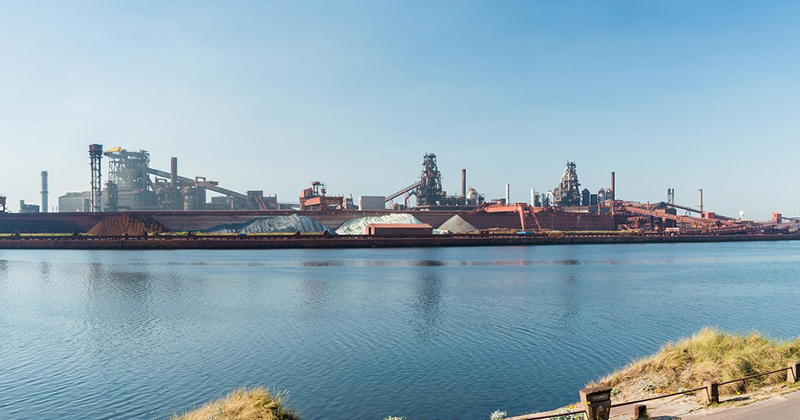
ArcelorMittal France cuts production, awaits EU decarbonisation measures
ArcelorMittal France is currently producing at 60-70% capacity utilisation, around 6.5 to 6.8 million tonnes of its total 10m t/year capacity, due to the constant and continuous decline in steel consumption in Europe and in France. So said ArcelorMittal France chief Alain Le Grix de la Salle to the “commission des affaires économiques” economic affairs commission at the Senate in Paris last week in a televised hearing seen by Kallanish.
The steelmaker’s high energy costs are jeopardising the Dunkirk site’s planned direct reduction plant (DRP) model, a facility producing DRI to feed the future electric arc furnaces. Considering the current CO2 emission allowances ArcelorMittal pays, the cost of a steel coil produced using the blast furnace route is equivalent to the cost of a coil produced using the gas-fuelled DRP process.
“Therefore, no economic model currently justifies the transition to the DRP model,” De la Salle said. Hydrogen produced from electrolysis is 70% dependent on the price of electricity. The target price for hydrogen to enable the production of pre-reduced iron ore at a competitive cost is €2/kg ($2.2), whereas the current market price is around €7/kg.
“To reach such a target price, the price of electricity would have to reach €25 per kilowatt-hour. This gives you an idea of the road ahead … In any case, the use of DRP in Europe will take time; its development will depend on the cost of natural gas and electricity. This does not mean that our project in Dunkirk is stopped: it is on hold,” de la Salle noted.
In his address, he highlighted the ongoing deindustrialisation occurring in France (see separate story). Defining the energy price that would facilitate reindustrialisation in the country poses a significant challenge.
“I will take the example of hydrogen: the Americans and the Chinese are preparing to overtake Europe. Can’t we, on a European scale, create a demonstrator without wasting time as we are currently doing? Let’s resolve the economic problem of price to demonstrate the industrial feasibility of hydrogen-related projects. Time is passing, and nothing is being done,” he warned.
Europe should authorise certain aid measures for electricity-intensive industries. “I’m thinking of tax exemptions and the compensation of the cost of CO2 in the price of electricity – this is known as carbon offsetting. These two forms of aid are essential for us to remain competitive,” De la Salle continued. He pointed out that the commercial acceptance of low-emission steels is another pressing issue. Very few consumers are so far prepared to pay a premium for green steel.
The transition towards green steelmaking in Europe will cost billions of euros. “When Europe has clarified the rules and given us visibility, the ArcelorMittal group will also provide some clarity on its continental, and therefore French, strategy. In fact, the Fos-sur-Mer teams, like those in all European countries, are waiting for clarification from us regarding the decarbonisation plan. We hope to proceed in stages and begin its deployment by the end of the year,” De la Salle said.
He confirmed that ArcelorMittal will relocate certain job functions to India, mirroring the strategies employed by numerous European steel companies over the years. The steelmaker is collaborating with unions to identify the functions that are suitable for offshoring, with an emphasis on those that do not necessitate close customer interaction. As a result, transactional tasks may be consolidated into one or two locations, allowing for economies of scale.
In France, the group employs nearly 15,400 people at 40 production and processing sites, representing 25% of its European workforce. Over the past five years, it has invested approximately €1.7 billion in France. This represents approximately €350 million in annual capital expenditure, or 25% of the group’s European investments.
Natalia Capra France

European HRC prices flat to slightly lower amid bearish sentiment
On Monday, the HRC market was quiet in Northern Europe, following public holidays in the region in the week to Friday May 30.
Offers for July-delivery HRC from integrated mill in the region were heard at €640-650 ($731-742) per tonne ex-works or delivered.
At the same time, buyer’s estimations of tradable values were reported at €600-630 per tonne ex-works on Monday.
Mill sources argued that lower end of the range was rather “a wishful thinking from the buyers” then a realistic price level.
Due to offer/bid mismatch and downbeat expectations among buyers, trading was minimal in the region.
“End users and stockists are not ruling out the possibility that [HRC] prices might go further down and [many are trying] to clear their stocks before the vacation period starts,” a German buyer said.
And so far, no progress has been made in negotiations for long-term contracts with end users for the second half of 2025.
“EU mills asked for higher prices compared with first-half 2025 contracts — around €800 per tonne. But spot prices [for HRC] started falling in May, so naturally original equipment manufacturers (OEMs) are not accepting the asked offer price [for long-term contracts],” a source familiar with the matter said.
As a result, Fastmarkets’ calculation of the daily steel hot-rolled coil index, domestic, exw Northern Europe was €627.50 per tonne on Monday, down slightly by €1.25 per tonne compared with €628.75 per tonne on Friday.
The index was down by €5.00 per tonne week on week and by €27.50 per tonne month on month.
Meanwhile, in Italy, Fastmarkets’ daily steel hot-rolled coil index, domestic, exw Italy was calculated at €598.75 per tonne on Monday, unchanged since Friday.
The Italian index was down by €2.50 per tonne week on week and by €24.38 per tonne month on month.
The Italian market was inactive due to celebration of Republic day on Monday.
Buyers estimations of achievable prices were heard at €590-600 per tonne ex-works on Friday, while offers were heard at €620 per tonne ex-works from one integrated supplier.
Import HRC offers to Europe were stable on Monday.
Buying interest for imported coil was limited, despite a wide gap with domestic prices. Safeguards-related risks and looming CBAM were tempering buyers’ appetite for overseas bookings.
“Not the best times to book import [HRC] — you never know how much it will cost you in the end,” a buyer source said.
Indonesia continued to offer the lowest prices, at €520 per tonne CFR.
Turkey-origin coil was offered at an average price of €550 per tonne duty paid, while one supplier with lower duties was heard offering €540-545 per tonne, duty paid.
HRC from India and Thailand was on offer for €560-570 per tonne CFR to Italy.


Polish long steel prices drop on sluggish demand, low market mood
“The situation in the whole steel market is very poor at the moment, with prices decreasing week on week,” a trader source said. “Long steel products are not exempt from this situation.”
Market participants also cited cheaper prices for European steel scrap as another factor strongly affecting the market for long steel products.
As an example of European scrap prices, Fastmarkets’ most recent monthly price assessment for steel scrap E3, old thick steel scrap, domestic, delivered mill Germany, was €320-340 ($359-382) on May 28, falling from €340-360 per tonne the previous month.
Rebar offer prices in the Polish domestic market last week fell to 2,550-2,560 zloty ($683-686) per tonne CPT, from 2,580-2,600 zloty per tonne CPT a week before.
As a result, Fastmarkets’ weekly price assessment for steel reinforcing bar (rebar), domestic, cpt Poland, was 2,550-2,560 zloty per tonne on May 30, falling from 2,580-2,600 zloty per tonne on May 23.
Import rebar offers from Ukraine were heard at €555-560 per tonne, DAP border.
The prices for Polish domestic low-carbon drawing quality wire rod also dropped in the week to May 30.
Offers were heard at 2,800-2,850 zloty per tonne CPT. But market participants indicated that workable prices were around 2,700-2,800 zloty per tonne CPT in the week to Friday, compared with 2,750-2,850 zloty per tonne CPT the previous week.
Fastmarkets’ price assessment for steel wire rod (drawing quality), domestic, delivered Poland, was 2,700-2,800 zloty per tonne on Friday, falling from 2,750-2,850 the previous week.
Marina Shulga in Dnipro contributed to this report.

European heavy plate round-up
European heavy plate prices remained largely stable in the week to 30 May, but prices face continue pressure from limited spot demand.
“There are no changes in the market, demand is slow, but there are hardly any import offers. A slight demand is there but only for small quantities,” a trader said.
Demand from spot buyers has been limited as distributors have been unwilling to build stocks. Plate producers have been selling material with higher added value to projects, but the segment mainly needs material with longer lead times and the volumes are less than those usually sold to spot buyers.
Italian re-rollers have been selling heavy plate at €620-640/t ex-works, with the majority of the deals heard at the lower end of the range.
Some market participants believe that plate prices from re-rollers would slide further due to an anticipated decrease of slab prices.
Offers of slab from Asia have been heard above $500/t CIF Italy, but the next round of the semi-finished products is expected to be settled at $480-490/t CIF Italy.
German mills have been offering plate at €670-700/t ex-works.
German heavy plate producer Dillinger idled blast furnace (BF) No. 4 at its Rogesa Roheisengesellschaft Saar plant on 21-22 May for planned repairs that should take around three months. The stoppage was followed by a fire at the furnace.
Market sources said that the accident and the stoppage had limited impact on the market despite some delays of deliveries.
Dillinger has “a big slab stocks which they can cut into needed sizes,” a German distributor said.
While Asian suppliers remained inactive in the European market, a Brazilian mill has been offering s355jr-grade plate at €640/t CFR Antwerp.
Maria Tanatar
