


EUROMETAL at Europe Steel Markets Conference in Amsterdam
EUROMETAL was pleased to participate in the Europe Steel Markets Conference by Kallanish Commodities in Amsterdam on 17–18 June.
President Alexander M. Julius, joined industry leaders in a key session on steel supply chain challenges, addressing regulatory pressure, trade disruptions, and the impact of CBAM on the European market.
Board members Jaap Jan Aardenburg (Tata Steel Nederland) and Julian Verden (Stemcor Global Holdings Limited) also contributed valuable insights during the discussions on market outlook, supply, demand, and pricing.
As a partner of the event, EUROMETAL reaffirmed its commitment to representing Europe’s steel distribution community at this crucial time for the industry.



ArcelorMittal Eisenhüttenstadt to implement annual scheduled repair work at BF 5A
Germany-based ArcelorMittal Eisenhüttenstadt, subsidiary of Luxembourg-headquartered global steelmaker ArcelorMittal, has announced that it will implement annual scheduled repair work on blast furnace 5A. The repair phase will begin on June 22, 2025, with a blast furnace shutdown lasting several hours. The blast furnace is expected to be restarted on June 27-28, 2025.
The company has also informed that dust and noise emissions may occur in the vicinity of the plant premises during the shutdown and startup phases of the blast furnace.
The blast furnace 5A has an annual production capacity of 1.7 million mt.


France’s Alstom chooses Outokumpu as green stainless steel supplier
Finland-based stainless steel producer Outokumpu has announced that it will supply its green stainless steel under the brand Circle Green® to France-based rolling stock manufacturer Alstom.
Starting from 2026, Alstom will receive the first deliveries of the Circle Green® stainless steel, which has a carbon footprint up to 93 percent lower than the global industry average. Consequently, Alstom will use this steel in its latest generation of Metropolis metro cars. The collaboration will help the French company to cut emissions from its goods and services by 30 percent by 2030.

Salzgitter and Volvo Cars create closed-loop partnership
Germany-based steelmaker Salzgitter Group is expanding its partnership with the Swedish automotive manufacturer Volvo Cars by establishing a closed-loop. The steelmaker, which already supplies high-quality flat steel to Volvo Cars’ body plant in Olofström, has announced that it will source significant quantities of steel scrap from the given plant in 2026 for its steelworks.
The steel scrap generated at the Olofström plant will be fed into the production of Salzgitter Flachstahl GmbH, keeping the material in the cycle without any quality loss.
Salzgitter delivers flat steel to Sweden by train, using a single-wagon system. In the future, the steel will be delivered to Volvo Cars and will return as scrap via a direct and fast sophisticated shuttle concept with short transit times and maximum capacity utilization. Despite the approximately 700-kilometer route between the two locations, low-emission transport cycle will be created thanks to the use of powerful, interoperable locomotives that can carry high train loads and the use of 100 percent climate-neutral electricity for traction.

Increasingly ‘VUCA world’ necessitates speedier consensus on green steel definition: IIO 2025
The steelmaking industry must soon establish a consensus on its green steel definition against headwinds from a world that is increasingly characterized by its volatility, uncertainty, complexity and ambiguity (VUCA). This was a recurring theme with delegates during Fastmarkets’ 2025 International Iron Ore and Green Steel Summit, held June 17-19 in Barcelona.
Andreas Eichstaedt, head of research and strategy, raw materials procurement for steelmaker thyssenkrupp, said during his presentation on responding to market challenges that the steelmaking industry is at the cusp of a “mega VUCA” world, made difficult by geopolitical tensions, wars and price fluctuations.
The layered complexities of a multi-faceted world where individual market participants act on their own interests could stand in the way of converging on a common discourse, according to Paulo Carvalho, managing director at decarbonization consultancy decarbValue Limited.
Speaking at a panel on the reality of green steel in Europe, Carvalho added that the steelmaking market can draw lessons from how industry standards are delineated in parallel industries, such as hydrogen markets, whereby a global definition of green hydrogen has formed the backbone of the Green Hydrogen Standard.
Carvalho also highlighted the importance of expounding on voluntary efforts by individual participants in setting parameters, such as the launch of India’s Green Steel Taxonomy in December 2024, which categorizes green steel in terms of percentage of “greenness” of the steel below the threshold of 2.2 tonnes of CO2e (tCO2e) per tonne of finished steel, according to a release by India’s Ministry of Steel.
A trader based in Singapore who was attending the panel told Fastmarkets that there is a need for a more centralized approach in defining green steel that coalesces the opinions and requirements of vital users considering the tight timeframe for decarbonized steelmaking.
The same sentiment was echoed by José Noldin, chief executive officer of sustainable iron company GravitHY, who was also speaking at the same panel on green steel in Europe; Noldin added that the views of a microcosm of the market, which includes the buyers, sellers and a tertiary authority should form the base of discussion.
Noldin also emphasized the need for measurable parameters, such as the absolute reduction of CO2 emissions negating mass balance efforts as a “fake concept” in reducing emissions.
The reality is that in a free market world, while the widespread traction of a green steel industry is likely to fail without government support in structuring incentives and establishing deterrents, state-led efforts cannot be the end-all answer, according to Eichstaedt.
The Singapore-based trader said that the EU, with its robust regulatory framework over a more centralized steelmaking bloc, has the strongest potential in coalescing a measured approach in defining green steel in the “mega VUCA world.”


Reality of green steel in Europe: IIO 2025
Decarbonization has been in the spotlight of the European steel industry for a few years now; however, scaling up production and obtaining premiums for green steel raises tough questions about resource availability, regulations, economics and even definitions.
During Fastmarkets’ International Iron Ore & Green Steel Summit 2025, taking place June 17-19 in Barcelona, panelists — including Fernando Pessanha Santos, chief strategy officer of Hydnum Steel, Paulo Carvalho, managing director of decarbValue Limited, and Jose Noldin, chief executive officer of GravitHy — discussed the reality of the green steel market in Europe.
What does green steel actually mean in 2025?
In the past few years, European steel producers have accelerated their decarbonization efforts, and a new market for steel with a reduced carbon footprint has emerged, with all the major flat steel suppliers in Europe developing their own green steel brands — XCarb, Arvzero, SSAB Zero, Bluemint, Greentec, among others.
But there is no common standard or official definition for “green steel” as of yet.
“There is no definition so far. We’re about to produce 1.5 million tonnes [of steel] at the end of 2027 [and] beginning of 2028. And we see sustainability as a whole [concept], not only emissions [threshold]. We reuse residual ‘gray’ water to reduce fresh water consumption, we use 100% renewable energy, we use scrap, and we aim for zero emissions for the steel we produce,” Fernando Pessanha Santos said. “It’s difficult to have a definition that encompasses everything. But so far there is no consensus.”
“Green steel is a sort of ambition,” Jose Noldin said. “We have to recognize that we have far too many [different] definitions [of what green steel is]. And now we need to converge and consider the [specific carbon] footprint. The definition has to be accepted by the market, by the customers, because they dictate the rules. But one thing is clear — we should consider [green] physically reduced carbon emissions, which means that we don’t believe that [green steel] should be qualified as such via the mass balance approach… Green steel is a steel produced with minimized CO2 content. We need to agree that green steel is a steel produced with less than X kg of CO2 per 1 tonne of steel.”
“Steel is not alone in the economy, and Europe is not alone in the world. Other regions are also discussing the standards. There is no definition or other standard [in Europe],” Paulo Carvalho said. “There are standards emerging in other industries — for example for green hydrogen, renewable electricity — we can learn from these industries.”
“India has introduced its own definition for green steel and quantified the carbon emissions levels with a star rating system in December 2024. I’m not talking about the metrics of those specific thresholds [in India] at this point, but there is a definition there and that gives some clarity to market participants,” Carvalho added. “There is no widely accepted [green steel] definition yet.”
Access to raw materials
Between 40 million and 50 million tonnes of new green steelmaking capacity — using just electric-arc furnaces (EAFs) or EAFs and direct reduced iron (DRI) — is expected to come online in Europe in 2025-2030, Fastmarkets’ research team estimates.
Moving to the DRI/EAF production route, however, raises concerns in the European market, notably regarding access to raw materials — DR-grade pellets, high-quality scrap — and energy resources.
“If we look at 100 million tonnes of DRI projects announced globally, indeed we have a problem [with resource availability]. And we have to react. It’s not a top-down approach, it’s a bottom to top approach,” Noldin said. “So, in our case, at GravitHy we have already secured 50% of our feedstock with one major high-grade pellet producer — Rio Tinto. And we have positive discussions with other suppliers. There might be a scenario where there will be a shortage [of feedstock] in the future, but for the first wave of [DRI/hot briquetted iron] projects, [the shortage] should not be so dramatic.”
“When you have a shortage or scarcity of a resource, it also brings opportunity. For high-grade pellets, there is a scarcity; if there is a scarcity, there is a premium, and that’s an incentive for more capacities to come, new technologies to evolve,” Pessanha said. “And last but not least is the energy factor. Green transition is all about energy. Having access to green energy at an affordable price is a base to build green steel transformation on.”
“A few things the iron ore industry has been doing are good in terms of a solution [for the feedstock supply issue]. First of all, additional pelletizing capacity; one can only pelletize with access to high-grade iron ore — new capacities built in Algeria, in Egypt, other places… will be part of the solution to increase the availability of feedstock for DRI plants. And there is blending, of course, [the process of combining different types of iron ore to achieve a desired composition]. This could help alleviate any availability [issue] on the DR side,” Carvalho said.
Green steel demand in Europe: current situation and how it can be stimulated
One of the opportunities for steelmakers in their transition to cleaner production routes is to get premiums for decarbonized steel products.
However, the willingness to pay premiums remains relatively low across the supply chain.
Sources pointed out that for steel service centers, steel products represent nearly 100% of the cost, and paying any premium is a challenge; meanwhile, for the automotive sector, for example, the price of steel is relatively low, only “a fraction of their costs.”
“The closest you are to the end user and more premium goods or luxury products, they have a lot of willingness and for them it doesn’t impact the cost,” Pessanha said.
“We clearly see a demand from different sectors, different actors,” Noldin said.
Noldin pointed out that the lack of standards and definition of green steel is another setback for its adoption in supply chains.
“Some [customers] are a bit lost. What exactly should I buy to cope with my decarbonization objectives or to serve my end customers that are asking for green steel? So the definition, again, if it’s something that we need to converge,” he said.
“[Green steel] still remains niche product, for niche applications [where paying green premium is affordable],” Carvalho said. “The balance of supply and demand is completely different in different segments of the market.”
For example, in the long steel sector, which mainly uses the EAF route of steel production, the acceptance of premium charges by customers is more difficult when compared with flats because this method of production was already considered more ecologically sound.
Fastmarkets’ methodology defines European green long steel as “steel produced with Scope 1, 2 & 3 emissions at a maximum of 0.5 tonnes of CO2 per tonne of steel.”
Fastmarkets’ assessment for green steel, differential to steel reinforcing bar (rebar), domestic, delivered Northern Europe was €20-30 ($23-35) per tonne on Wednesday June 11, stable week on week
In sharp contrast, premiums for flat steel were a lot higher.
Fastmarkets’ methodology provides the following definition for European green flat steel: “Steel produced with Scope 1, 2 & 3 emissions of maximum 0.8 tonnes of CO2 per tonne of steel.”
For example, Fastmarkets’ weekly assessment for green steel, domestic, flat-rolled, differential to HRC index, exw Northern Europe was €170-200 per tonne on Thursday June 12, flat week on week.
In Europe, 79% of carbon steel long products are produced via the EAF route, while 96% of flat products are produced using the blast furnace-basic oxygen furnace (BF-BOF) route.
Looking ahead
In recent months, the European steel sector has been facing rising production costs, increased pressure from low-cost imports from Asia and the ongoing deterioration of the steel demand-supply balance in Europe.
Apparent steel consumption in the EU amounted to 127 million tonnes in 2024, down by 2.3% from 130 million tonnes in 2023 and lower than during the 2020 pandemic year, when it stood at 129 million tonnes, data from the European steel association Eurofer shows.
And imports’ share in domestic steel consumption in Europe was estimated to be around 30% in 2024, sources told Fastmarkets at the sidelines of the event.
Amid the crisis unfolding in the European steel industry, there were concerns about decarbonization being pushed back and becoming a secondary issue.
However, panelists remained optimistic regarding the green steel transition in Europe, expecting a regulatory framework to drive the change.
“It’s a legal obligation from Europe to achieve carbon neutrality by 2050. And the steel industry is a part of the solution. You cannot achieve the green new objective without decarbonizing the steel industry,” Noldin said. “I remain optimistic that we continue to decarbonize the steel industry in Europe, and this is not a risk. It’s not a threat to the European steel industry. It’s a fantastic opportunity.”
“In January 2026, the big change [Carbon Border Adjustment Mechanism] is coming and it’s going to touch the most sensitive part of the human body, the pocket. [CBAM] can be a very, very important driver and catalyst, or it may accelerate the transition because it changes the market dynamics, changes pricing, changes the cost structure. A green producer will be more competitive than a gray producer within a couple of years,” Pessanha said.

HRC buyers in Europe hold back from trading; slow demand, competitive imports weigh down on expectations
European hot-rolled coil prices were broadly flat on Wednesday June 18, with downbeat sentiment weighing down on buying activity in both Northern Europe and Italy, sources told Fastmarkets.
From integrated mills, July-delivery coil was on offer in the range of €600-620 ($693-716) per tonne ex-works, while bids for such material were mainly reported lower, at €570-590 per tonne ex-works.
Mill sources estimated workable prices no lower than €600 per tonne ex-works but admitted that it was challenging to maintain this level, considering a lack of real demand and bearish buyer sentiment.
“I think it will go further down in the summer. After that, we will see a traditional rebound in the following quarter, but nothing extraordinary,” a German buyer said.
“We don’t buy [HRC] because first, we have enough stocks, and second, we expect prices to slide lower,” the buyer added.
As a result, Fastmarkets’ calculation of the daily steel hot-rolled coil index domestic, exw Northern Europe was €593.33 per tonne on Wednesday, down by €0.17 per tonne from €593.50 per tonne on Tuesday June 17.
The Northern European index was down by €7.50 per tonne week on week and by €45.42 per tonne month on month.
Overall, expectations regarding price trends were quite pessimistic due to both subdued consumption and seasonality factors, Fastmarkets heard.
“We will have very long summer holidays this year; the market is too weak,” a buyer in the Benelux area said.
Meanwhile, Fastmarkets’ daily steel hot-rolled coil index domestic, exw Italy was calculated at €571.88 per tonne on Wednesday, down by €3.75 per tonne day on day.
The Italian index was down by €11.04 per tonne week on week and by €38.75 per tonne month on month.
In Italy, the HRC market was also subdued, with only scarce trading reported.
HRC from domestic producers in Italy was available at €570-585 per tonne ex-works for July delivery, sources said.
Buyers’ estimations of tradeable prices came in a wider range, at €540-570 per tonne ex-works, but the lower end was not traded, sources said.
Deals for small tonnages were reported at €560-575 per tonne ex-works earlier this week.
A European supplier reportedly sold HRC to Italy at €535 per tonne ex-works, with market sources estimating it to net back to around €580-585 per tonne delivered. The same supplier was heard selling coil to Italy at €555 per tonne ex-works during the week to Friday June 13.
Import HRC offers were stable to slightly weaker in the week to Wednesday.
Indonesian HRC was heard offered at €470-480 per tonne CFR to Italy for August shipment.
Turkish coil was said to be available at €530-540 per tonne CFR, duty paid. Some sources reported even lower prices for Turkish coil, at €520-525 per tonne CFR duty paid.

Strong action can reverse EU deindustrialisation: Henrik Adam
There is strong political will to support the steel industry in Europe, for the first time, Henrik Adam, executive chairman of Tata Steel Netherlands Holding BV, told delegates at Kallanish Europe Steel Markets in Amsterdam on Wednesday.
The state of the US steel industry shows there is hope for the steel industry if governments are willing to take decisive action, added Adam, who is also Eurofer president.
In order to avoid deindustrialisation, not only in the steel industry but also for its downstream manufacturing customers, problems with the Carbon Border Adjustment Mechanism (CBAM) must be addressed, Adam warned. The system in its current form has holes that “you could put a train through”, he remarked.
In particular, CBAM must also cover derivative products made with steel. Otherwise, these products could simply be made in other regions without paying carbon costs and EU manufacturers would be unable to compete.
The current crisis in the EU steel industry has been driven by high costs, including carbon costs. There have been 29 million tonnes/year of permanent capacity closures and 90,000 jobs lost over 2008-2023.
To pull out of this crisis, the EU must address trade, CBAM, energy and scrap issues. This is particularly true considering the more than 700m t/y of global steelmaking overcapacity. For energy, accessible, abundant, and affordable fossil-free electricity is needed, Adam added.
Over 2010-2020, the industry needed around 75 TWh/y of electricity. By 2030 this could rise to 165 TWh/y, and by 2050 400 TWh/y will be needed. Of this, 170 TWh/y would be used in steelmaking and 230 TWh/y would be needed to produce 5.5m t/y of hydrogen.
Especially since the energy crisis of the last three years, European gas and electricity prices are far above those paid in competing steelmaking regions.
Despite the deep crisis of the EU steel industry, there is hope that strong action can revive its fortunes. Although Adam does not agree with the methods that have been used in the USA, decisive action there has led to a sharp increase in capacity utilisation and investment.
EU capacity fell to 95% of 2010 capacity by 2019 and has since slumped to 86% of 2010 capacity. US capacity also fell to 94% of 2010 levels by 2019, but then rebounded to 101% in 2024, Adam noted.


European steel industry faces three-option transformation choice: Genet
There are three possible solutions to Europe’s steel industry woes, Laplace Conseil founder, consultant Marcel Genet asserted at Kallanish Europe Steel Markets in Amsterdam this week.
The main problem is that Europe’s steel industry is currently facing overcapacity and falling exports.
Genet said that Europe, including the EU, UK, Norway, Switzerland and the Balkan countries, produced 136.9 million tonnes of crude steel in 2024, with 55% and 45% respectively contributed by 29 BF-BoF and 132 EAF plants.
For the 29 integrated BF-BoF plants, the average capacity utilisation rate was only 62% in 2024, measured by the OECD based on its annual survey, and from capacity and production reported by mills.
“We keep talking about the excess capacity of Chinese steel and any other countries. We never talk about the excess capacity of Europe. Europe has the lowest level of capacity utilisation in the world,” Genet noted.
Rather than just blaming imports, and relying on government subsidies and trade measures, EU mills should invest into new technology. The three main options that steel mills are thinking about and taking action on are to replace BF-BOF with natural gas-based direct reduced iron-making, hydrogen-based DRI and scrap recycling through EAFs.
Unfortunately, Europe faces a very high price for natural gas, which is about ten times that in the Middle East, North Africa, the US, Mexico and Canada. Therefore, the EU cannot produce DRI to make steel competitively, Genet observed.
By contrast, producing fully decarbonised steel using scrap requires seven times less clean electricity than with iron ore and hydrogen.
For steel production, Genet forecasted the EU will reach 150mt by 2050, 10% more than in 2024. 70% of it will be contributed by EAFs using scrap, with the remainder to be shared equally by EAFs using hydrogen-based and natural gas-based DRI.
Genet also expects the last European BF will be extinguished in 20-25 years, ten years after the last one shuts down in North America.
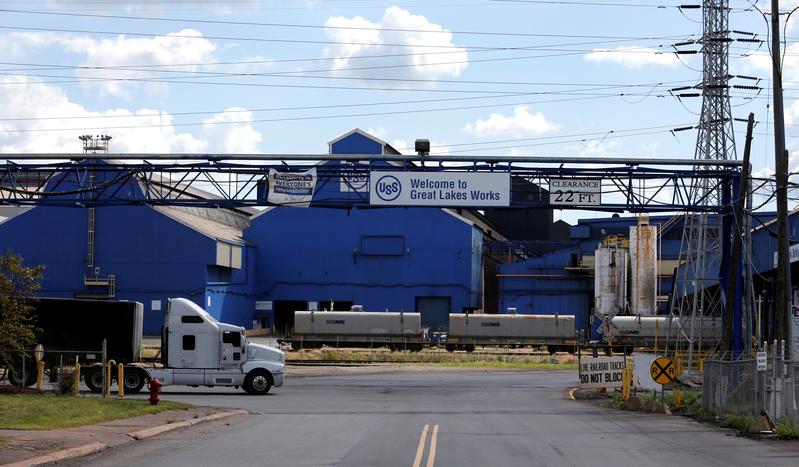
Nippon completes acquisition of US Steel
The long-awaited and contested merger between Nippon Steel and US Steel has closed, Kallanish learns from a US Steel press release issued Wednesday.
Highlights of the acquisition include Nippon’s $11 billion investment into US Steel facilities by 2028. The US Steel headquarters will remain in Pittsburgh, Pennsylvania, with existing US mills maintaining capacity to meet domestic demand. Additional investments are designed to protect and create more jobs at the acquired sites in Pennsylvania, Indiana, Arkansas, Minnesota and Alabama.
“This is a momentous day for our country, our communities, and the American steel industry,” states US Steel chief executive Dave Burritt. “American workers secured the best possible deal. US Steel will remain rooted in the United States and continue to call Pittsburgh home. Through our partnership with Nippon Steel, we are poised to grow better and bigger, with transformative investment, cutting-edge technology, and the creation of good-paying jobs across the United States.”
A key aspect of the national security agreement (NSA) with the US government tied to the $14.1 billion deal is what commerce secretary Howard Lutnick calls a “perpetual golden share” provision. The agreement prevents Nippon Steel from relocating US Steel operations out of Pittsburgh, changing the company’s name, or closing domestic plants without government consent.
“I am very pleased that the partnership between Nippon Steel and US Steel has been realised thanks to President [Donald] Trump’s historic and visionary decision,” states Nippon Steel chairman and chief executive Eiji Hashimoto.
Nippon’s ceo expresses the company’s excitement about opening a new chapter in US Steel’s storied history and becoming what he calls “world’s leading steelmaker.”
In a previously scheduled appearance at the Global Steel Dynamics Forum on Wednesday afternoon in New York, Burritt celebrated the closing of the transaction by thanking many, many stakeholders and supporters of the deal. He said Nippon will deploy additional artificial intelligence and automation at the US properties “that will strengthen, not sideline, our people.” Nippon ownership, under the agreed-to guarantees, will ensure that US Steel, founded in 1901, thrives “for the next 124 years,” Burritt proclaims.
US Steel is now a wholly owned subsidiary of Nippon Steel North America. The shares stopped trading on the New York Stock Exchange on Wednesday morning. Ticker “X” will be officially delisted on 30 June. The sharefolders are collecting $55/share in cash from Nippon.
Dom Yanchunas USA , John Isaacson USA