


European HRC prices decline on weak demand, import interest stays low despite more price cuts
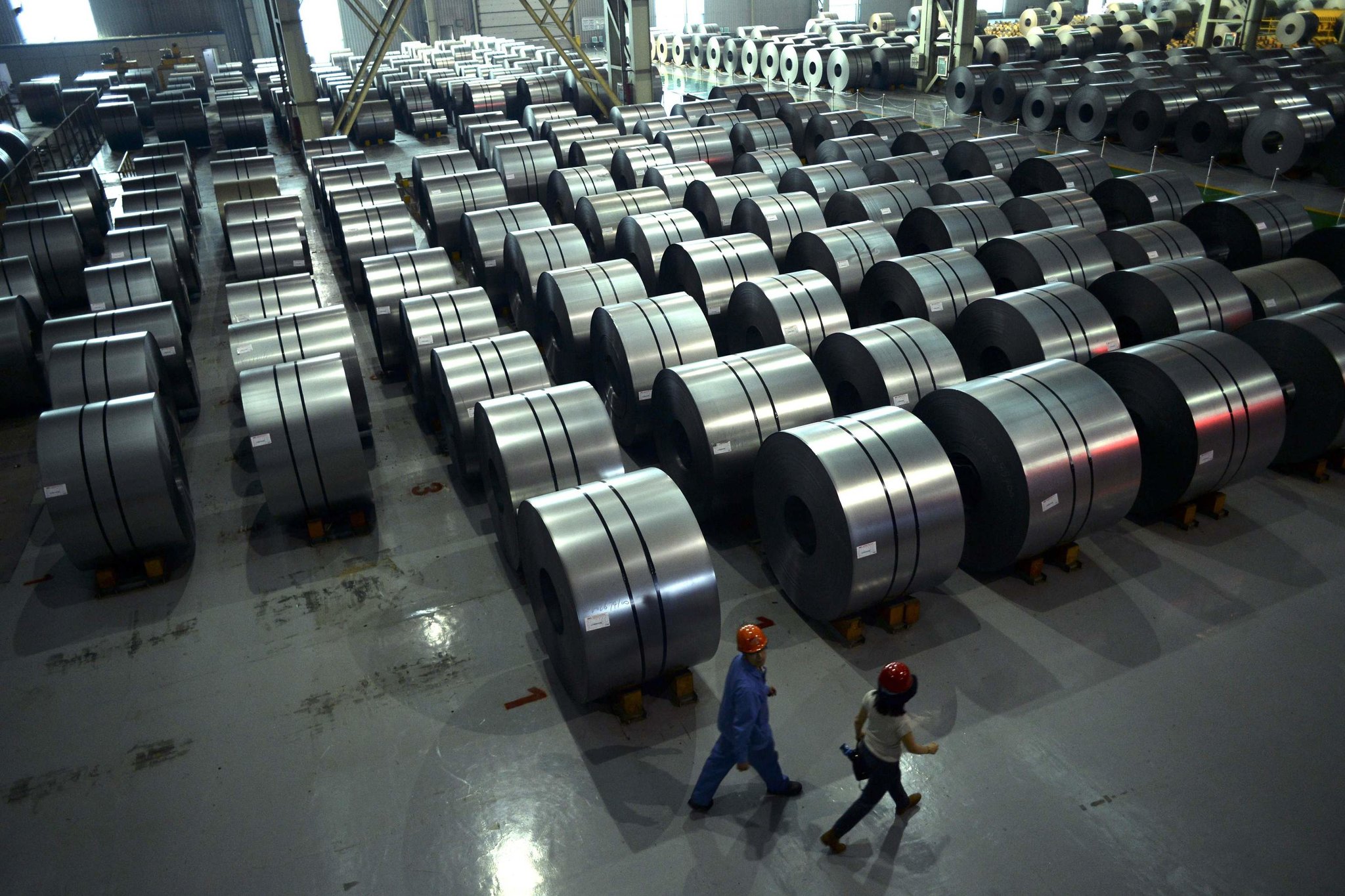
Domestic HRC prices in Europe have declined further this week, as weak demand and bearish sentiment continue to weigh on the market. Most buyers are refraining from new purchases, citing sufficient stock levels and expectations of further price erosion. As a result, trading activity remains subdued, with a cautious and defensive tone prevailing across the market. At the same time, import buying has remained limited and is largely focused on material for clearance before October 1, after which activity is expected to pause.
More specifically, most local HRC prices from mills in northern Europe, mainly for July deliveries, have been voiced at €600-620/mt ex-works, the same last week, however, tradable prices in northern Europe have declined further this week by around €10/mt week on week to €590/mt ex-works level. “The HRC market is expected to face further downward pressure over the summer, some estimated €570/mt ex-works as a workable price in north in the short run. Buyers anticipate a modest rebound only when summer ends or in the next quarter,” a market insider told SteelOrbis.
Meanwhile, in Italy, most offers from mills have dropped at €570-590/mt ex-works from €580-600/mt ex-works last week. At the same time, workable prices have dropped as well, falling to €550-555/mt ex-works levels, down by at least €20/mt week on week. According to sources, buyers remain cautious, with some speculative deals dipping to €535/mt ex-works – though not yet reflective of actual market levels. Still, sentiment suggests HRC prices have not reached bottom, leaving room for a further softening.
In the meantime, import trading activity in southern Europe has remained subdued this week, with most offers for import HRC in southern Europe voiced at €470-530/mt CFR, depending on the supplier, compared to €490-540/mt CFR last week. HRC offers from one of Indonesian mills have been reported at the lower end of the range or around €470-490/mt CFR, down from €490/mt CFR last week. However, according to sources, “market is not ready to buy from them and is using this price to negotiate with others”.
Besides, offers from India have been reported at $600/mt CFR southern Europe, which translates to around €520/mt CFR, down by €5-10/mt week on week. “Buyers are pushing for lower prices or around $590/mt CFR,” a market insider told SteelOrbis. At the same time, a deal for ex-India HRC has been signed at $610/mt CFR or around €530/mt CFR Antwerp, though according to sources, “it likely included extras, like 2 meters wide HRC”.
Meanwhile, offers from Turkish suppliers have varied depending on the source, with most quoted at €515–530/mt CFR, duty paid, reflecting a €5-10/mt decline week on week. However, lower offers for ex-Turkey HRC have also been heard in the market, at around $550/mt CFR or approximately €480/mt CFR, duty paid.
“Buyers are currently purchasing material for clearance by October 1st, after which activity is expected to come to a halt. This trend applies primarily to HRC, while galvanized product purchases have already stopped. Most customers are now adopting a wait-and-see approach as they await clarification on the new regulations, particularly regarding Carbon Border Adjustment Mechanism (CBAM),” a Spanish trader told SteelOrbis.
$1 = €0.87

George Ibbotson to distribute Alleima’s strip steels in UK
Sweden-based specialty steel producer Alleima has announced that it has formed a partnership with UK-based steel distributor George Ibbotson Ltd. Through the collaboration, George Ibbotson will sell and distribute Alleima’s premium strip steels throughout the UK market.
This collaboration is part of Alleima’s strategy to build strong local partnerships that bring its high-quality materials closer to customers. “We are excited to team up with George Ibbotson Ltd. Their experience and long-standing relationships in the industry make them a valuable ally as we continue to expand our reach,” Roberto Torresani, sales director at Alleima, said.

EU launches Türkiye hydrogen project led by BOTAŞ
The European Commission has launched the tender procedure for the technical assistance project “Boosting Green and Low-Carbon Hydrogen in Türkiye,” with Türkiye’s state-owned energy company BOTAŞ as the main beneficiary.
Published on 12 June via the EU Funding & Tenders Portal, the project is funded under the Instrument for Pre-accession Assistance (IPA III) with a total budget of €3 million, Kallanish notes.
The project aims to support the development of a national green and low-carbon hydrogen ecosystem, enhance institutional capacity, and strengthen Türkiye’s technical know-how in the hydrogen sector. It will involve a technical assessment of BOTAŞ’s infrastructure for hydrogen readiness, the development of a Hydrogen Master Network Plan, and the implementation of extensive capacity-building initiatives targeting relevant stakeholders.
BOTAŞ, or Petroleum Pipeline Corp, is engaged in a wide range of activities, including oil and natural gas pipeline operation, LNG and FSRU terminal operation and port services, as well as the design, engineering, land survey, expropriation and construction of oil and gas pipelines and compressor stations. The company is also active in the trade and storage of natural gas and LNG, and participates in international oil and natural gas transportation projects.
Elina Virchenko Bulgaria


Dudelange facility left in limbo after buyer withdrawal
No prospective buyers have emerged for Liberty Steel’s Dudelange facility following the suspension of the sales process last month, after rumoured bidder Tosyali reportedly withdrew.
Informed sources tell Kallanish that the primary objective of Dudelange’s court-appointed receiver and the Luxembourg government remains the sale of the facility. However, despite receiving enquiries from interested steel companies, no formal bids have materialised.
The plant employs approximately 140 workers, following recent staff reductions. Union representatives have expressed scepticism regarding the likelihood of a sale. In coordination with the government, the unions are now organising a “job day” initiative aimed at helping employees transition to alternative employment opportunities.
“Tosyali had a good industrial project for Dudelange,” a source explains. “They were going to invest and expand into the European market. The official reason for the withdrawal is the stringent EU import quotas on coils, which would have prevented them from supplying Dudelange with coil volumes produced in Turkey.”
The facility has remained inactive for more than two years, with the exception of a production test conducted in July 2024. The Dudelange site is currently being kept operational by a small team performing essential equipment maintenance. The Luxembourg government has designated Olivier Wagner to serve as the receiver. He is reportedly pessimistic about the prospects of a future sale.
The government retains ownership of the land and is expected to issue new concession rights to the potential owner. Tosyali was not available to comment before press deadline.
In December, the Luxembourg commerce tribunal declared the Dudelange facility bankrupt (see Kallanish 4 December 2024). In addition to Dudelange, Liberty plans to divest its Magona facility in Italy and its Belgium-based Liege plant. The three businesses combined possess rolling capacity exceeding 2.5 million tonnes/year.
The Magona facility remains operational but is running at or below half of its production capacity. According to a source in Italy familiar with the matter, a potential buyer has been identified, and the sale process is now underway. The source attributes this progress largely to strong involvement from the government, which has actively pushed to secure a buyer for the site.
Liberty Steel’s Liège facility in Belgium was declared bankrupt on 22 April. Potential buyers include NLMK and ArcelorMittal, according to sources.
Liberty Galati in Romania has recently restarted pig iron production at blast furnace no.5, after an almost year-long stoppage. Poland’s Huta Czestochowa has produced over 100,000t of steel since resuming production in January after a year-long hiatus. It was declared bankrupt last year under previous owner Liberty Steel. In February Liberty Ostrava’s insolvency administrator initiated the sale process of the bankrupt steel plant with the approval of the creditors committee (see Kallanish passim).
Natalia Capra France

Buyer caution drives down Italian coil prices
The Italian and broader European coil market is witnessing a downward trend in pricing. European prices are experiencing a decline to align with the lower import levels. The current sales environment for mills in Europe is characterised by a notable lack of momentum, as buyers are predominantly taking a cautious stance.
Certain larger buyers, however, are prepared to engage in and have already implemented import and European material deals, contingent upon securing competitive pricing. European steelmakers are currently experiencing short lead times, with reports suggesting that one company has sold in Italy as well as other EU nations at a price slightly exceeding €530-550/tonne ($613-636/t) delivered. A base price of €570/t delivered has also been heard. However, the outlook for prices in the upcoming weeks suggests a consolidation of drops to align with import levels. Buyers are in a favourable position, given the substantial stock levels and the weakened demand in downstream sectors.
The service centres and re-rollers who spoke to Kallanish suggest that there is currently no urgent demand for purchasing, and the decline in downstream products such as sheets and tubes is exerting pressure on margins.
This week, market participants, including sellers and trading sources, report an uptick in interest regarding potential buying of coils this week. In the upcoming week, it is anticipated that buyers will re-enter the market. The decision to re-enter the European domestic market or pursue imports will depend on the concessions that EU producers are prepared to accept to ease sales.
Italy is currently facing a downward trend in HRC offers originating from Turkey and the Far East. Current offers from Turkey are noted to be within the range of €480/t cfr including duty. The Turkish offers starting at €500/t are inclusive of duties. Several buyers are evaluating the potential acquisition of this material. Considering the first proposal, HRC is available at a price range of €520-530/t delivered to a warehouse.
Indonesia HRC is offered at €470/t cfr. Other Asian producers, such as those in Vietnam and Thailand, are setting their large-tonnage vessel prices in the range of €500-510/t cfr.
A source in the non-Italian steelmaking sector indicates that there are expectations of price increases in September attributed to the Carbon Border Adjustment Mechanism (CBAM). However, the scenario does not yet support the prices of the European market. A foreign trading source operating in Europe says producers outside the EU expect the commission to implement modifications to the safeguard mechanism. It may permit limited tonnages to enter the European market. Implementation of the melt-and-pour clause will exert additional additional pressure on imports.
Natalia Capra France

Negative sentiment persists in European steel HRC market
The mood in the European market for steel hot-rolled coil remained pessimistic on Thursday June 19, with demand being limited and import offers continuing to exert pressure.
Official offers from mills in Northern Europe still came at €600-620 ($634-656) per tonne ex-works and somewhat below, while workable prices were estimated within the range of €580-600 per tonne ex-works.
Trading activity has been generally muted in recent days with Germany and Austria celebrating the religious holiday of Corpus Christi on June 19, which made the market particularly quiet that day.
Those few who were present in the market had bearish expectations.
“Mills in Northern Europe are struggling to find orders at €600 per tonne ex-works, so it is only a question of time until we see €580-585 per tonne ex-works in offers, but I doubt this will be the end of downward spiral,” one trader said.
Fastmarkets’ calculation of the daily steel HRC index, domestic, exw Northern Europe, was €590.00 ($675.93) per tonne on June 19, down by €3.33 per tonne from €593.33 per tonne on Wednesday.
In Italy, official HRC offers were heard at €570-580 per tonne ex-works, with €565-575 per tonne ex-works being negotiable, according to one seller, and bids coming in below €560 per tonne ex-works.
Fastmarkets’ daily steel hot-rolled coil index, domestic, ex-works Italy, was calculated at €568.40 per tonne on Thursday, down from €571.88 per tonne on Wednesday.
In imports, Indonesian HRC was quoted at €470–480 per tonne CFR Italy.
Despite weak demand and market uncertainty, some market sources said that Indonesian HRC could be negotiated as low as €460-470 per tonne CFR.
Algerian coil was available at prices below €500 per tonne CFR Italy for July–August shipment. Vietnamese material offers came at €510 per tonne CFR, while Indian and Turkish offers were heard at €530-540 per tonne, with the Turkish price including duty.
Some market sources reported Turkish and Indian offers as low as €515 per tonne, duty paid and CFR respectively, but this could not be confirmed at the time of publication.


European steel CRC, HDG prices still dropping on soft demand
Downstream flat steel prices continued to fall in Europe in the week ended Wednesday June 18, with depressed demand and a seasonal slowdown still affecting the market, trade sources told Fastmarkets.
Northern Europe
Industry sources estimated the workable market price for cold-rolled coil at €690 ($792) per tonne ex-works during the week to Wednesday, falling by €10 from €700 per tonne ex-works the previous week.
But offers were also heard at €685 per tonne ex-works.
As a result, Fastmarkets’ weekly price assessment for steel cold-rolled coil, domestic, exw Northern Europe, was €685-690 per tonne on Wednesday, falling from €700-720 per tonne the previous week.
Market sources cited “weak demand” and “market uncertainty” as the main factors behind the recent price drops, with mills redirecting their attention from CRC to other steel products.
“Amid current market conditions, mills are shifting focus away from CRC, with some buyers reporting no recent offers for cold-rolled material,” a buyer source told Fastmarkets. “Mills are largely steering clear of CRC, redirecting their efforts toward galvanized products.”
Prices for cold-rolled coil imported into Northern Europe also dropped in the week to Wednesday. Market sources reported offers from Asia at €640 per tonne CFR, compared with €650-655 per tonne CFR in early June.
Fastmarkets’ weekly price assessment for steel cold-rolled coil, import, cfr main port Northern Europe, was €640-660 per tonne on Wednesday, widening downward from €650-660 per tonne the previous week.
Meanwhile, the market for domestic hot-dipped galvanized coil also showed downward shifts during the assessment period.
Trade sources estimated the workable market for HDG at €700 per tonne ex-works this week, compared with €700-710 per tonne ex-works during the previous assessment period.
But sources also reported offers of HDG at €690 per tonne ex-works.
Therefore, Fastmarkets’ weekly price assessment for steel hot-dipped galvanized coil, domestic, exw Northern Europe, was €690-700 per tonne on Wednesday, falling from €700-710 per tonne in the previous week.
Import prices for HDG to Northern Europe showed no change during the assessment period.
Fastmarkets’ weekly price assessment for steel hot-dipped galvanized coil, import, cfr Northern Europe, stayed at €700-740 per tonne on Wednesday.
Southern Europe
Import prices for CRC in Southern Europe also fell in the week to Wednesday, according to market sources.
Reported offers of CRC dropped as low as €590 per tonne CFR in the week, while the lower end of offers from the previous week had hovered around €620-625 per tonne CFR.
Fastmarkets’ weekly price assessment for steel cold-rolled coil, import, cfr Southern Europe, was €590-630 per tonne in the week, falling from €620-635 per tonne in the previous week.
Import prices for HDG remained stable during the assessment period, however.
Fastmarkets’ weekly price assessment for steel hot-dipped galvanized coil, import, cfr main port Southern Europe, was €670-700 per tonne on Wednesday, unchanged week on week.
Domestic CRC and HDG prices were also stable in the week to Wednesday.
Fastmarkets’ weekly price assessment for steel cold-rolled coil, domestic, exw Southern Europe, was €680-700 per tonne on Wednesday, unchanged week on week.
Similarly, the weekly price assessment for steel hot-dipped galvanized coil, domestic, exw Southern Europe, was €700-720 per tonne on Wednesday, also unchanged week on week.

European rebar prices split amid rising energy, raw materials costs
Steel rebar prices in Europe diverged in the week to Wednesday June 18, with price direction varying depending on the region, sources told Fastmarkets.
In Italy 8-16 mm B450C rebar offers were largely unchanged at €520-560 ($598-644) per tonne ex-works, with a supplier in the north of the country taking an aggressive stance and reducing offer prices to as little as €510-515 per tonne ex-works, sources said.
The other mills in the north of the country were offering rebar at €520-530 per tonne ex-works.
In southern Italy, meanwhile, rebar was available at €540-560 per tonne, according to sources.
Fastmarkets’ price assessment for steel reinforcing bar (rebar), domestic, exw Italy widened to €510-560 ($601-647) per tonne on Wednesday, down from €550-580 per tonne on July 4.
Suppliers tried to maintain their offer prices for Italian rebar and were unwilling to provide discounts – either in the domestic market or in deals to northern Euorpe – because of increased scrap and energy costs.
One buyer from Northern Europe, who managed to book Italian material last week at €605 per tonne delivered, said he was now “struggling to get the same level” and estimated that potential deal prices could push up to €615 per tonne delivered this week.
Rebar from suppliers in Northern Europe was available at €630-640 per tonne delivered in the week to June 18, sources said, with one citing a slight revival in business activity this week because customers were restocking ahead of the summer holidays.
“You need to be worry-free to go on holiday,” the source said.
Fastmarkets’ price assessment for steel reinforcing bar (rebar), domestic, delivered Northern Europe was €615-640 per tonne on June 18, narrowing down from €615-650 per tonne on June 11.
In Spain, Fastmarkets’ price assessment for steel reinforcing bar (rebar) domestic, delivered Spain was stable at €615-620 per tonne delivered – a level regarded as acceptable my most customers.

Steel prices to rise amid CBAM implementation
Steel prices are to rise ahead of the implementation of Europe’s carbon border adjustment mechanism (CBAM), which will start from January 2026, panellists said at the Kallanish Europe Steel Markets conference in Amsterdam.
Panellists noted that whilst demand is currently a concern, steel prices are likely to be supported going into the third and quarter quarters with orders needing to be placed soon ahead of January delivery, when CBAM would come into force.
Jerome Waterkeyn, chief executive of Steelforce said: “The demand is one thing… We see [with] imports that’ll happen from 1 January 2026, customers start to stress that if they don’t purchase now, they will be late, and they will be charged or we will have to charge them an unknown amount.”
He added they were squeezed by multiple quotas already in place that could be full towards Q4, ahead of other quotas opening. That could mean “they will be penalised with an additional amount. It’s creating uncertainty, but it creates a revival of restocking, at least from the import side.”
“Maybe CBAM might activate the market, because demand is also very much a feeling, it is about the conviction that people have that the market may go up,” the Steelforce ceo added.

This was echoed by Julian Verden, managing director of Europe at Stemcor Group.
“The logic would suggest that people are going to try get something in just before the CBAM prices, which could cost €60/tonne” as of 1 January, he said.
Kamal Arifi, director of commercial transformation at SSAB Europe, noted that the uncertainty and challenges are supportive of prices.
“Even from some of the experts in the market, the uncertainties, the difficulties they’re facing, that obviously will support prices in a way or another,” Arifi commented.
He highlighted analyst reports foreseeing that prices in Q4 will have support from the implementation of CBAM.
Verden added that there is a “multi-priced and multi-opportunity market, all depending on what’s blocked and what isn’t blocked, and the different pricing that’s for America, for Europe, for the UK and the rest of the world.”
“I would think the implementation of CBAM is going to at least push prices up,” said Waterkeyn, who noted that “the green conversion is an enormous supportive aspect to maintain prices at higher levels.”
Waterkeyn added that Europe’s global push for a greener market via CBAM will also mean that prices will be supported in the long term.
However, Verden noted that if CBAM is taken out of the equation, “then it is possible that prices would not particularly increase.”
He added that steel prices could tick down over the next few weeks, but they would have to rise after that. He revealed that customers currently do not want to buy as they don’t see the demand, but “they get to a point in about a month’s time where it’s going to be January delivery then the price is going to be up.”
Verden estimated that, aside from green sources, CBAM could add €50/t to prices.
Arifi referenced reports by analysts who do not see a further downward trend.
“We are reaching a floor with pricing at the moment, and in Q3 and Q4 there could be an upward trend,” he said, agreeing that prices would be supported by CBAM.
Carrie Bone UK

Stegra commits to 2026 start-up
Stegra, formerly known as H2 Green Steel, says it fully intends to begin commercial production in about one year from now, according to Stephan Flapper, Stegra’s head of commercial, speaking at Kallanish Europe Steel Markets 2025 in Amsterdam on Wednesday.
The company aims to supply both green steel and green HBI as it believes that more than half of announced HBI capacity will not actually come online.
Stegra plans 21 million tonnes/year of DRI and 2.5m t/y of crude steel capacity through an EAF and slabcaster. This could then be ramped up to 5m t/y. The plant intends to produce HRC and CRC. Running on DRI and scrap, Stegra also plans to sell some HBI to regional steelmakers.
The plant in Sweden is still under construction with significant work to do. However, the company has hired a large construction team for the summer, when days are very long at the site.
“There is huge [green steel] demand coming at us,” said Flapper. This is largely because in many key manufactured products, steel accounts for a large proportion of embodied emissions but a relatively small proportion of the total cost. This means that reducing embodied emissions in steel is the most efficient and cost effective way for downstream manufacturers to decarbonise their products.
Despite this, a large number of planned DRI/HBI projects are unlikely to come to commissioning, Flapper believes. By 2030 incremental DRI/HBI demand could reach 32mt. Announced projects would more than cover this with 47m t/y of capacity planned to be commissioned. However, financing and other issues mean that Stegra expects only 21m t/y of additional capacity to actually be operating in 2030. This will be almost half of European and Middle Eastern capacity, with a small contribution from other regions.
This is one reason why Stegra is looking for growth options outside of the facility it is currently construction in Sweden.