


ArcelorMittal France decommissions BF No. 1 for modernization
ArcelorMittal France has announced that it has begun modernizing its blast furnace No. 1 at its Fos-sur-Mer plant with an investment of €53 million.
As part of the project, the furnace’s copper protection plates and other key equipment will be replaced to extend its lifespan. Once the furnace in question is commissioned in the first half of 2026 as planned, it will replace the blast furnace No. 2.
Meanwhile, ArcelorMittal France has participated in a regional public debate organized by the National Commission for Public Debate (CNDP). The debate focused on the reindustrialization and energy transition of the Fos-Étang de Berre region and surrounding areas. During the debate, the company discussed its planned decarbonization project at its Fos-sur-Mer plant, under which an EAF would be built to replace a blast furnace in order to reduce emissions from steelmaking by 2030. Feasibility studies estimate the project’s cost at around €750 million. Further studies are required before a final investment decision can be made. ArcelorMittal argued that several conditions are required to successfully carry out this transformation and ensure sustainability, including public support for investments, an evolved European regulatory framework, fair competition in the global steel market, and support for employees.

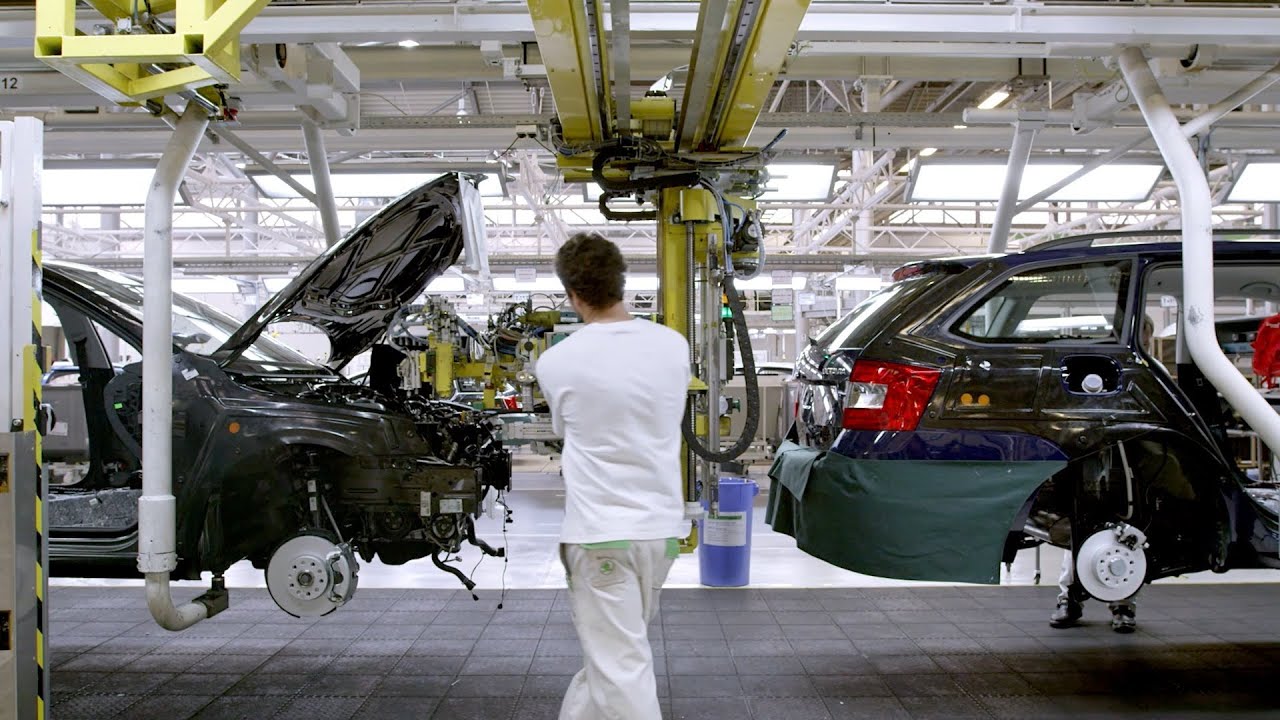
Spanish car production improves sequentially in May
The Spanish automotive industry posted sequential growth in May but remained weaker compared to the same period last year, Kallanish notes.
“In May, we once again recorded on-year declines in both vehicle production and exports. Several factories are currently undergoing adaptation and line upgrades to accommodate electrified models,” says José López-Tafall, president of Spanish automotive association Anfac. “Meanwhile, key export markets such as France and Germany are also seeing a slowdown.”
López-Tafall also highlighted that production ultimately mirrors market demand. The still limited market share of electric vehicles (EVs) across Europe is constraining manufacturers’ efforts to drive industrial transformation and maintain competitiveness. “If clarity on these two fronts is not achieved soon, we risk falling even further behind non-European competitors in the race for EV industrial leadership,” he warns.
Production in May reached 220,407 units, compared with 193,541 vehicles in the previous month. This volume was down 11.7% from May 2024. Of the total, 61.5% were gasoline and diesel-powered automobiles. Five-month output totalled 1 million units, down 9.7% y-o-y.
Spanish vehicle exports rose sequentially in May to 185,354 units but were down 17% on-year.
European markets had a 94.5% share in Spanish deliveries in May. Five-month exports fell 13.8% to 849,057 vehicles, Anfac data show.
Todor Kirkov Bulgaria


Salzgitter answers German defence industry’s steel supply call
Salzgitter confirms to Kallanish it is seeking increased steel supply to the growing defence sector, amid calls from German defence manufacturers, including Rheinmetall, for steelmakers to ramp up production of military-grade steel.
“Demand for steel and armour steels is increasing and we are responding to this growing volume by bundling our group-wide activities in the area of safety in a Defence Task Force,” a company spokesperson notes. “Salzgitter is just getting ready for its first deliveries to the defence sector and the company has already set up a special division for this purpose.”
“Geopolitical tensions have set new measures of defence capability, and are creating new demand for security steels and special grades,” the company wrote in an April presentation. “We have a wide scope of steels for security purposes, and we are in talks with a number of suppliers of such components.”
The steelmaker said in March it will further expand its portfolio for defence purposes this year (see Kallanish passim).
Demand for armour steel is growing amid the war in Ukraine and a possible reduction in US military support for Europe, Bloomberg reports. The German defence industry currently relies heavily on Swedish supplier SSAB, which creates risks in the event of disruptions, especially when needs increase. In response, two German companies – Salzgitter and Dillinger Hüttenwerke – have already announced their willingness to cooperate with the defence sector, according to the report.
Dillinger, which has been certified for military supplies since 2021, is in talks with armoured vehicle manufacturers in Germany and Europe, it adds.
Rheinmetall and Dillinger Hüttenwerke did not reply to Kallanish request for comment.
Rheinmetall requires thousands of tonnes of military steel each year – twice as much as two years ago, and the company has already started buying within Germany, although it does not disclose its suppliers, according to the report.
Most military-grade steel producers in Germany are relatively small and vulnerable to periods of weak demand. The Federation of the German Defence Industries therefore stresses that state participation and guarantees are necessary to ensure a stable supply of armour steel for the army.
Earlier, Rheinmetall said it is considering taking over one of Volkswagen’s soon-to-be-unused plants, as the arms maker seeks additional production capacity in Germany while domestic carmakers struggle (see Kallanish passim).
VW’s Osnabrück plant is one of three that will remain unused for the next two years after the automaker decided last December to halve its production capacity in the country due to slowing car sales in Europe.
Svetoslav Abrossimov Bulgaria

UK industry welcomes Industrial Strategy but concerns remain
The UK government’s newly released Industrial Strategy has been welcomed by industry players, but concerns remain over some aspects, including the implementation timeline, Kallanish learns.
Industry association UK Steel says it welcomes the adoption of three recommendations to help tackle industrial electricity prices.
These include the increase of network charging compensation to 90% from 2026, matching what is provided in Germany and France, a move that will save the steel industry £14.5 million/year ($18.5m). This is in addition to the continuation of the indirect compensation scheme, which compensates the steel industry for carbon taxes paid via electricity bills.
Additionally, from 2027, the British industrial competitiveness scheme will provide an exemption for renewables obligation, feed-in tariffs and the capacity market for less electro-intensive businesses. UK Steel estimates this will reduce power prices for eligible manufacturers by £43/MWh, which the government states would represent up to 25% of manufacturers’ electricity bills.
Despite this, a differential remains to European electricity costs, equating to £36m annually on steel bills due to wholesale electricity costs, driven by the UK’s reliance on natural gas power generation.
UK Steel has proposed the introduction of a two-way Contract-for-Difference to peg wholesale prices to those in France and Germany, eradicating the price disparity.
Gareth Stace, director general at UK Steel, says: “The Government has rightly taken action to reduce industrial electricity prices and modelled its new policies on UK Steel’s solutions. UK power prices have for too long damaged the profitability and growth of the steel industry hand over fist, driving away investment and opportunities decarbonise our production.”
“The Industrial Strategy is a step in the right direction towards competitive electricity prices and a better, more effective business landscape, but we are climbing slowly up the foothills of the mountain we need to climb. This is an important milestone, but we are not out of the trenches yet. The Industrial Strategy must be the first of many changes if we are to fully unlock the potential of the UK steel industry to back the growth and stability of our economy,” he adds.
Meanwhile, workers union Unite has also welcomed the move but says it needs to go further to provide the manufacturing sector with the support it needs, and it also needs to be implemented sooner.
Unite general secretary Sharon Graham notes: “UK industry is highly competitive, until you include energy costs which in many industries make it the least competitive. Tackling industrial energy prices is the single most important thing the government can do as part of the industrial strategy.”
“Our energy system is broken beyond repair; it will never function in the interests of business and consumers until it is brought back into public ownership. That must start with the National Grid to ensure industry can get the power it needs when it needs it and is not left waiting forever for new connections,” she adds.
The union also expresses concern over the 2027 implementation, highlighting a “long-term failure to support UK industry”. It proposes that an earlier implementation date would be highly advantageous, along with a clear funding plan.
Carrie Bone UK

ArcelorMittal to sell steelmaking business in Bosnia amid falling production
ArcelorMittal will sell its business operations in Bosnia and Herzegovina to the national holding company Pavgord Group for an undisclosed amount, the company announced on Friday June 20.
The steelmaker said in a press release on Friday June 20 that it has signed a sale and purchase agreement for its integrated steel plant, ArcelorMittal Zenica, and its iron ore mining business, ArcelorMittal Prijedor.
According to the statement, ArcelorMittal made “considerable investments and efforts” to enhance the two facilities, but ultimately concluded that the sale was “the best solution for the development of the business and its people.”
ArcelorMittal has held operations in Bosnia for 21 years. In 2017, ArcelorMittal invested €12.4 million ($14 million) to upgrade its Zenica steel plant by cutting carbon emissions while also incorporating new technologies aimed at modernizing the plant’s steel production.
According to the company’s latest annual report, ArcelorMittal Zenica produced 500,000 tonnes of crude steel in 2024, down from 600,000 tonnes in the previous year.
The deal, which is subjected to merger control clearance, is expected to close in the third quarter of 2025.
ArcelorMittal declined Fastmarkets’ request for comment at the time of publication.
According to the agreement, ArcelorMittal will sell its shares in both facilities to the Pavgord Group, while also transferring all its employers to the new owner.
“We believe the company will continue to be a major contributor to the economy of Bosnia and Herzegovina,” ArcelorMittal’s vice president Sanjay Samaddar said in a statement.
The steelmaker estimates a loss $200 million following the closure of the deal, excluding sale proceeds.
The Luxemburg-based steelmaker has ceased operations in some of its Bosnian facilities before. In 2024, the company closed its coke plant in Zenica, citing rising production costs and lower demand for finished steel.


Buying still scarce in European steel HRC market
Business activity in the European market for steel hot-rolled coil was still subdued on Monday June 23 with customers expecting a further decline in prices in both the North and South of the region, while the deteriorating geopolitical situation in the Middle East made customers even more cautious.
In Northern Europe, material from local suppliers was available within the range of €570-590 ($657-680) per tonne ex-works, with some limited tonnages heard sold at €580 per tonne ex-works.
Consequently, Fastmarkets’ calculation of the daily steel hot-rolled coil index, domestic, exw Northern Europe, was €580.23 ($669.06) per tonne on Monday, up by only €0.05 per tonne from €580.18 per tonne on June 20.
After the assessment was filed, however, one market source said that “even at €570 per tonne ex-works, it is difficult to find much interest.”
In Italy, some bookings from local producers were heard at €550 per tonne ex-works, while both integrated mills and re-rollers were hoping to achieve €560-570 per tonne ex-works.
Some bids were heard as low as €530 per tonne ex-works.
Fastmarkets’ daily steel hot-rolled coil index, domestic, exw Italy, was calculated at €556.00 per tonne on Monday, down from €566.67 per tonne ex-works on Friday.
The worsening of the geopolitical situation in the Middle East [LINK] was increasing the sense of caution among buyers, several market sources said.
A rise in the costs of production following the increase in global oil prices, as well as the potential for change in the logistics of material imports in the event that the Suez Canal becomes blocked, were among the possible consequences of the conflict between Israel and Iran.
Most recent offers of Indonesian HRC were heard at the end of last week at €470-480 per tonne CFR Italy for August shipment, with estimates of achievable prices for such material heard at €460-470 per tonne CFR.
Turkish coil was offered to Italy around €525-530 per tonne CFR, including duty, but some market participants indicated that HRC from Turkey could be available at prices as low as €515 per tonne, duty paid and CFR. This could not be verified at the time of publication, however.
Algeria-origin coil was offered at less than €500 per tonne CFR Italy for July–August shipment.
Offers of Vietnamese material were heard at €510 per tonne CFR, with bids reported at €490-500 per tonne CFR.

Polish domestic long steel prices unchanged amid seasonal slowdown
Steel rebar and wire rod prices in Poland were unchanged in the week to Friday 20 June, with sources linking the quietness of the market to the seasonal slowdown.
“I see inactivity in the market because of the [summer] season, plus there was a holiday in Poland,” a seller source said.
A distributor source also attributed the period of inactivity to the “lack of new [construction] projects” and the “oversupply” of products from both Polish and international mills.
In the week to Friday, Polish mills were heard offering wire rod at around 2,700-2,800 zloty ($724-751) per tonne CPT, compared with 2,750-2,800 zloty per tonne during the previous week.
In addition, most market participants said the tradable level for wire rod was around 2,700-2800 zloty per tonne CPT.
Fastmarkets’ price assessment for steel wire rod (drawing quality), domestic, delivered Poland was 2,700-2,800 zloty per tonne on Friday, unchanged week on week.
Some import prices from Ukraine were heard at €570 ($654), DAP border.
And prices for Polish domestic rebar were also steady in the week to Friday, sources told Fastmarkets.
Market participants indicated that the tradable level for rebar was 2,500 zloty per tonne on Friday, compared with around 2,500-2,560 zloty per tonne during the previous assessment period.
Bids were also heard at 2,500 zloty per tonne CPT.
Fastmarkets’ weekly price assessment for steel reinforcing bar (rebar), domestic, cpt Poland was 2,500-2,560 zloty per tonne on Friday, also unchanged week on week.