


New car registrations in EU down 0.6 percent in Jan-May 2025
In May this year, new passenger car registrations in the EU rose by 1.6 percent year on year to 926,582 units, according to the European association of car manufacturers ACEA.
In the given month, the French market (-12.3%) saw the sharpest decline, followed by Italy (-0.1%), while Spain (+18.6%) and Germany (+1.2%) reported positive results.
In the first five months of this year, new car registrations in the EU dropped by 0.6 percent year on year to 4.57 million units. France (-8.2%), Germany (-2.4%) and Italy (-0.5%) showed a negative performance. On the other hand, Spain (+13.6%) market saw its results increase.

Most EU steel import quotas nearly exhausted as Q2 ends
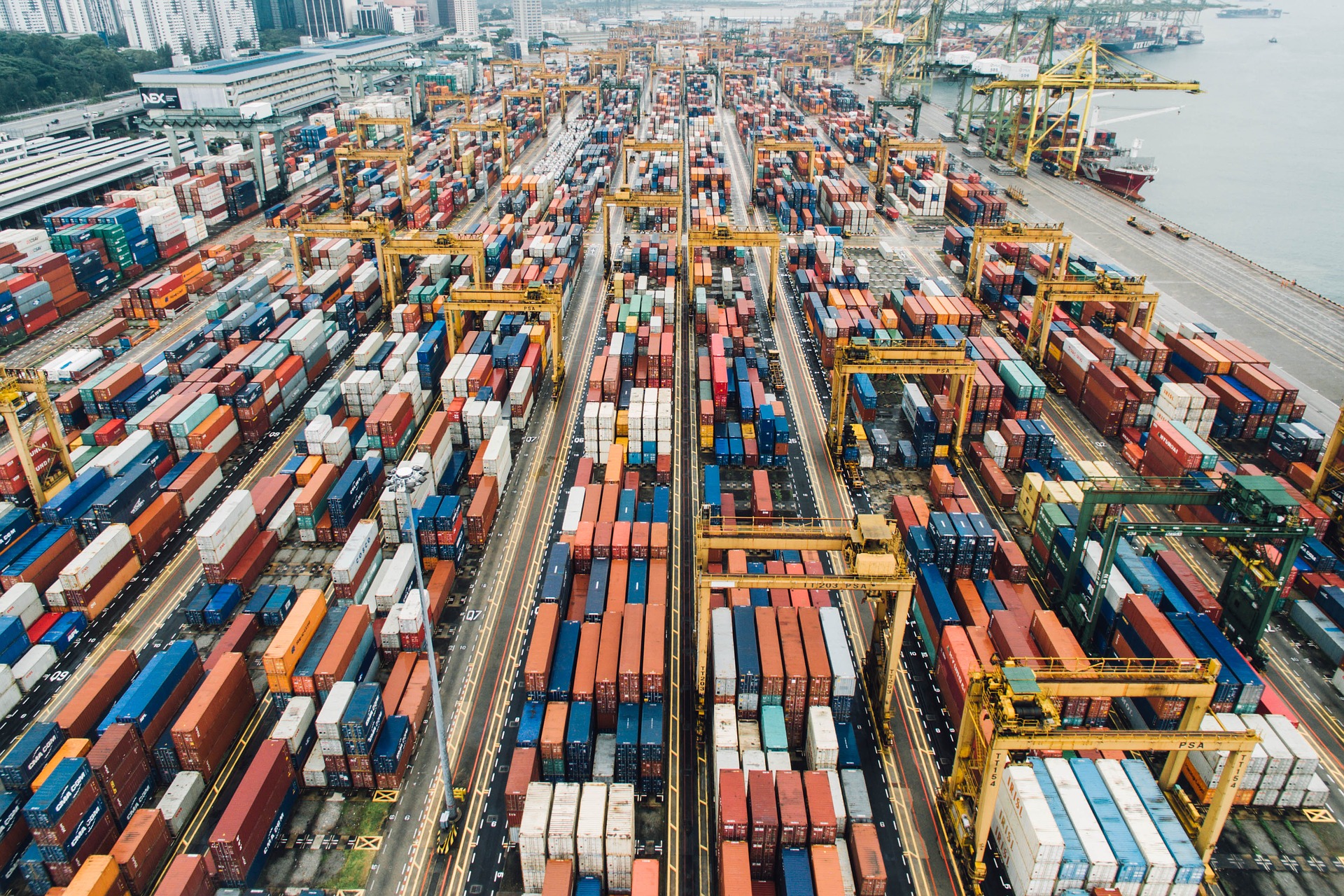
As of June 26, approaching the end of the EU quota period between April 1, 2025 and June 30, 2025, some of the import quotas for certain steel products allocated for South Korea, Turkey, “other countries” and China have been exhausted, while over 80 percent of quotas for some steel products have been used up, according to the European Commission’s data.
Regarding the exhausted quotas, the quotas of 161,143 mt for HRC (1A) and 71,028 mt for organic coated sheets allocated to South Korea have been exhausted. China has exhausted the quota of 140,266 mt for merchant bars and light sections. Regarding the quotas allocated under “other countries”, the 43,468 mt quota for CRC allocated for Turkey, the 20,955 mt quota for metallic coated sheets (4B) for Japan, the 110,038 mt quota for quarto plates for South Korea and the 27,568 mt quota for rebar for Egypt have been used up .
Looking at the quotas allocated for Turkey, the country has used up 93.97 percent, 95.6 percent, 99.95 percent and 93.6 percent of its quotas of 627,026 mt for HRC (1A), 21,177 mt for stainless cold rolled sheets and strips, 49,432 mt for gas pipes and 43,093 mt for other welded pipes, respectively. The country has also used up 99.95 percent of the 118,012 mt quota for metallic coated sheets (4A) allocated under “other countries”.
Other product quotas used up can be seen at the table below.
| Product | Country | Amount (mt) | Used (%) |
| HRC (1A) | Australia (under other countries) | 111,380 | 99.34 |
| CRC | South Korea | 94,591 | 98.48 |
|
Electrical sheets (3B) |
China | 39,732 | 84.72 |
| Vietnam (under other countries) | 43,468 | 92.67 | |
| Taiwan (under other countries) | 43,468 | 82.47 | |
| Japan (under other countries) | 43,468 | 99.87 | |
|
Metallic coated sheets (4A) |
South Korea | 48,916 | 94.19 |
| UK | 49,849 | 98.65 | |
| Taiwan (under other countries) | 118,012 | 99.17 | |
| Organic coated sheets | Taiwan | 22,904 | 99.79 |
| Quarto plates | Indonesia (under other countries) | 110,038 | 93.28 |
| Rebar | Algeria (under other countries) | 27,568 | 99.92 |
|
Wire rod |
Malaysia (under other countries) | 15,074 | 99.44 |
| Algeria (under other countries) | 15,074 | 99.74 | |
| Egypt (under other countries) | 15,074 | 99.71 | |
| Hollow sections | Macedonia | 28,852 | 99.77 |
| Other seamless pipes | UK | 39,728 | 95.6 |

European longs market remains sluggish, higher energy costs may boost Italian rebar prices
Amid the generalized slowness in all European steel markets, from recycled steel to flat steel, the longs steel segment in Europe has also remained sluggish with a slight downtrend in the past week. However, rumors of a possible recovery are emerging, at least as far as rebar prices in Italy are concerned.
Taking up the words of the representative of one Italian steel mill and comparing them with the opinion of one of his counterparts, the common ground among Italian steel producers is to expect rebar prices to recover. Both sources said that the increase in electricity prices is having a major impact on production costs and so they doubt that such a low level can last much longer. According to reports, local rebar prices in Italy are standing at €240-250/mt ex-works base (€505-515/mt ex-works including regular extras), down by about ten $10/mt week on week on the lower end of the range. Although electricity prices have roughly returned to the levels seen at the beginning of June, standing today, June 27, at €118/MWh, after the peak of €135/MWh recorded on June 23, there is no doubt that they are the highest in the entire European Union: in the past week, average electricity prices in Italy have reached €126/MWh, compared to €57/MWh in France, €93/MWh in Spain, and €61/MWh in Germany.
In addition, a logistics crisis is seen in the Italian longs market. “The shortage of trucks is more severe than any other year, and waiting too long [to buy] would mean customers will not be able to receive their orders on time,” a spokesperson for an Italian mill commented. According to a local trader, however, it would be the excess of rebar supply that leads end-users to maintain low stocks and place punctual orders, as they are aware they can receive the material in a short time.
However that may be, it is likely that these factors, combined with imminent production stoppages, will produce a price increase in the Italian longs market, where for now wire rod prices remain stable at €620-635/mt delivered for drawing quality wire rod and at €605-620/mt delivered for mesh quality wire rod, unchanged week on week.
No change has been detected in export markets, where the average prices of rebar and wire rod from Greece have been reported at €575/mt FOB and €570/mt FOB respectively, unchanged week on week, and rebar export prices from Spain to UK ports have been reported at around €550-555/mt FOB, also unchanged compared to last week.
On the other hand, import prices of rebar and wire rod from Turkey have declined, standing at €480-490/mt CFR and €490-495/mt CFR, respectively. This figure is down by €10-15/mt week on week and by about $10/mt week on week, also due the fluctuations in the euro-dollar exchange rate, which, according to the European Central Bank, stood at €1 = $1.17 on June 26.

Austria ramps up crude steel production in May
Austria increased crude steel production in May compared to the previous month, according to worldsteel data.
Output amounted to 690,137 tonnes, up 11.6% on-month and 1.3% year-on-year, Kallanish notes.
In January-May, the country produced 3.06 million tonnes of steel, compared to 3.2mt in the same period last year.
Austria remained in 23rd place in the ranking of top global steel producers, data show.
Overall EU output in May was down 3.1% on-year at 11.36mt. January-May production was almost 55mt compared to 56.3mt in the same period last year.
Austrian steelmaker voestalpine will supply steel to Chinese electric vehicle producer BYD for its new car factory in Hungary (see Kallanish passim). The company was chosen by BYD because of its geographical proximity to the Hungary plant, and the high quality and excellent reputation of Austrian steel, the Chinese company said.
Earlier, voestalpine expressed mixed feelings about US steel tariffs, as the firm operates multiple sites in the US, which it plans to expand, while actual Austria-origin imports into the US are limited. The steelmaker recently commissioned the profile rolling line at its hot tube rolling mill at Kindberg in Styria.
Svetoslav Abrossimov Bulgaria


SSAB, Polmotors partner for automotive components
SSAB has entered into an agreement with tier 1 automotive supplier Polmotors for future supply of fossil-free steel for the manufacturing of structural automotive components and assemblies.
The collaboration aims to explore the potential for fossil-free materials in demanding automotive applications, Kallanish hears from the steelmaker.
“Polmotors sees the future of fossil-free steel,” says its chief executive, Maciej Grabos. He highlights “the potential competitive advantage of being an early adopter, positioning ourselves to meet the anticipated market demand from premium automotive OEMs.”
Polmotors designs and manufactures crash management systems (CMSs), such as bumpers and rally bars, “so the choice of materials is crucial”, Grabos says. “Polmotors looks forward to joint R&D – working with SSAB and the OEMs – for the implementation of new steel grades in our products.”
Christian Koehl Germany
Czech steel industry rebounds but from low base
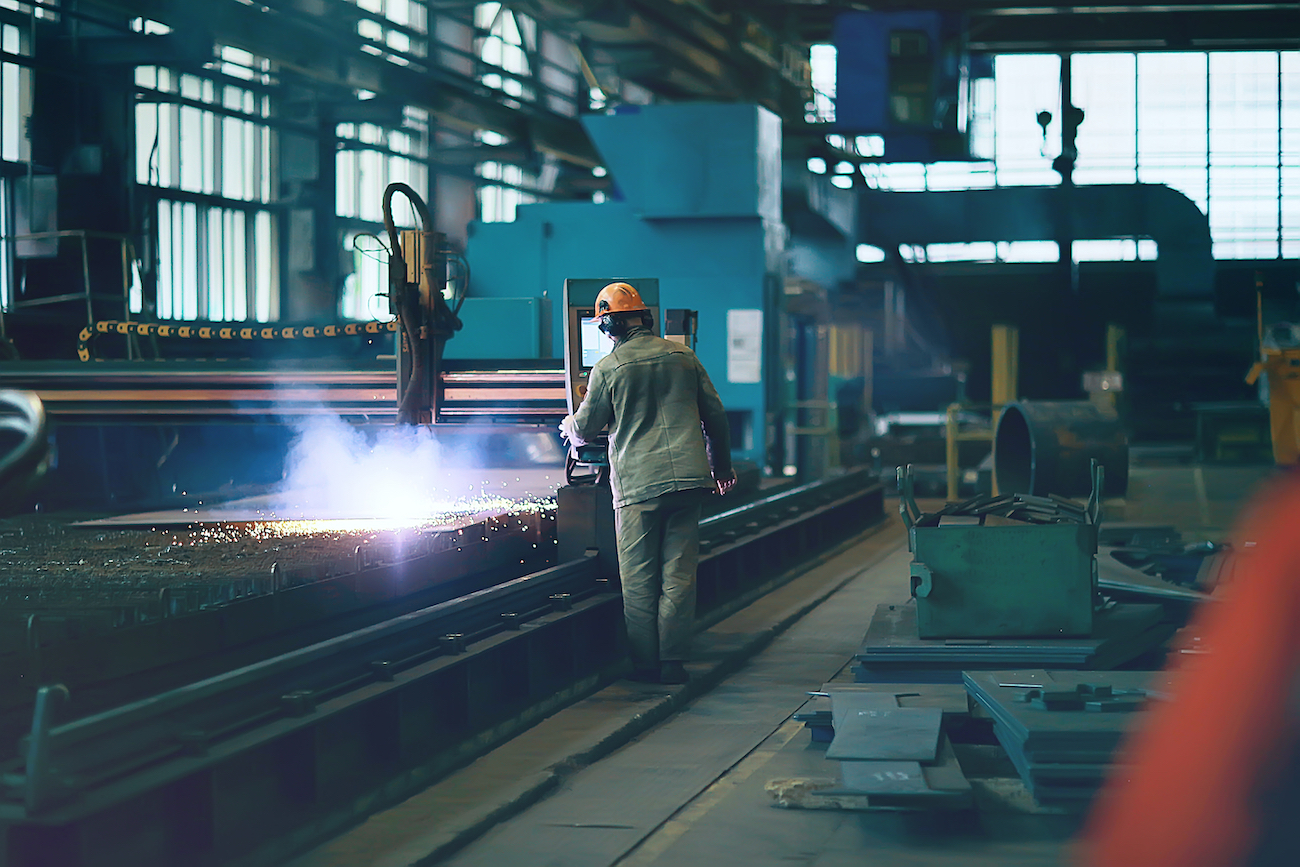
Czech crude steel production and apparent steel demand rebounded slightly in the first quarter but a more substantial recovery is being hampered by low demand, still high energy prices, stringent climate regulation and the uncertain geopolitical situation, says the Czech and Slovak steel association, Steel Union.
Production rebounded 4% on-year in Q1 to 670,000 tonnes, with apparent steel consumption up 1.5% to 1.39 million tonnes. This represents welcome relief after full-year 2024 saw Czech crude steel output sink to an all-time low of 2.44mt, down 25% on-year, with apparent consumption at 5.5mt, also the lowest-ever figure except for the 2009 financial crisis year.
Q1 output of long products, flats and pipe rose 2%, 5% and 41% respectively to 489,000t, 142,000t and 82,000t. However, the rebound is due to a low base in 2024 when production shut down at Liberty Ostrava.
Czech steel exports rose 9% on-year in Q1 to 907,000t, with imports also up, by 10%, to 1.84mt, Kallanish notes.
At a recent roundtable discussion on the future of the Czech chemistry and steel industries, representatives warned that immediate policy action is required to ensure their survival. Czech and the wider EU industry is suffering from low demand and worsening economic conditions in Europe, high energy intensity of production and rising energy costs, and unreasonable demands for greener production without adequate support, they noted.
“We are pleased that the Steel and Metals Action Plan has been developed; however, this has only provided a diagnosis of the state of the steel industry and we are waiting for a specific treatment procedure to be determined. We’re appealing for the elaboration of the impact of decarbonisation measures on Czech industry and thus on the entire economy of the Czech Republic,” said Steel Union chairwoman Marcela Kubalova.
Adam Smith Austria

Italian long steel market remains quiet amid price pressure
The Italian long products market remains subdued and largely unchanged, with merchant bar and beam prices stable on-week, despite a general market downturn. Scrap values continue to fall, making it harder for longs producers to push for price increases.
Prices are expected to remain weak, stabilising at the lowest levels reached in June. A major distributor has expressed concern over needing to write-down the value of inventory bought at higher prices after values dropped, but he anticipates some price stability in the near term, Kallanish notes.
Market volumes are comparable to last year, although slightly lower in some cases. However, margins have eroded significantly, especially in downstream segments. Producers are reportedly earning very limited profits at current price levels.
Some mills are considering price hikes, but widespread concern over losing orders is holding them back. Supply may tighten in July as sections and merchant bar mills are planning stoppages.
A buyer in France says Italian longs prices are lower than in nearby markets, but apart from a few Italian rebar producers, others are nevertheless refusing to sell in France and Germany.
Italian merchant bar demand remains weak, with forecasts remaining pessimistic. Domestic levels are at €650-670/tonne ($752-775) delivered inclusive of size extras. The first category of beams is also holding steady at €780-810/t delivered, with Spanish offers at €40/t less.
Italian rebar prices continue to decline on a weekly basis, with base ex-works values now at €230-240/t. Including size extras of €260-270/t, transaction levels range between €490 and €510/t ex-works.
Natalia Capra France

Producers warn of ‘rock bottom’ amid multi-month lows for European HRC prices
European hot-rolled coil prices were broadly stable on Friday June 27, amid tepid demand, but the overall weekly decline means prices are now close to “rock bottom” and further falls are unlikely because costs are increasing, producer sources told Fastmarkets.
“I don’t think [HRC] prices will keep sliding down at the same pace. The decline is already slowing [and the] order books situation is not too bad ,” a mill source said.
One mill source estimated the market level at €580 per tonne ex-works, but most market participants – including suppliers – indicated that lower prices were achievable, with some indicating that €550-570 per tonne ex-works was a workable level.
At the same time, suppliers said that for integrated mills €550 per tonne ex-works was “unacceptable.”
“You can get €550 [per tonne ex-works] only from rerollers,” a second mill source said, who also reported a transaction at €570 per tonne ex-works for a small tonnage.
Fastmarkets’ calculation of the daily steel hot-rolled coil index domestic, exw Northern Europe was €565.63 per tonne on June 27, down by just €0.62 per tonne from €566.25 per tonne on Thursday.
But the Northern European index was down by €14.55 per tonne week on week and by €62.94 per tonne month on month and Friday’s calculation puts the index at its lowest level since January 9.
Market participants were split over the likely direction of prices, however.
Sellers sources told Fastmarkets they were certain that the bottom has already been reached, given the current input costs.
“We can’t reduce [HRC] prices any more – otherwise, we will have to shut down production,” a second supplier source said.
A third supplier source said that prices had been “unjustifiably” high in April and early May and that some suppliers were stuck with “unrealistic” offers for far too long, which resulted in gaps in order books and aggressive sales later in May and into June.
“One of the drivers of the HRC price decline [in the past few weeks] was the aggressive sales policy of [one major Europe supplier]. However, [that supplier has now] closed its July-August order book and has withdrawn from the market,” the third supplier source said.
“We have quiet summer months ahead and, hopefully, will see some kind of rebound in autumn, due to restocking and lower demand for imports [ahead of the upcoming CBAM [regulations],” the source added.
Meanwhile, domestic hot-rolled coil prices in Central Europe fell in the week to Wednesday, with muted demand and competitive imports affecting the market, sources told Fastmarkets.
Offers from suppliers in Central Europe were heard hovering around €590-600 per tonne ex-works through the week, compared to €620-640 per tonne ex-works heard in early June.
Sources attributed the drop in prices to weak demand and primarily to cheap imports from Asia, and especially from Indonesia, where HRC offers have been heard at €470-480 per tonne CIF.
According to a producer source, Indonesian imports have caused “significant disruption” in Central Europe with their “low-priced deals”, while also citing rumours alluding to possible additional drops in prices.
A second producer source said that current levels are at “the bottom of the market, or close to it,” although they added that the exchange rate was “changing in favor of imports,” which is also affecting prices.
Meanwhile, a distributor source said the price trend was down to “reduced demand.”
Fastmarkets’ weekly price assessment for steel hot-rolled coil domestic, exw Central Europe, was €590-600 per tonne on Wednesday, June 25, falling from €600-630 the previous week.
Fastmarkets’ daily steel hot-rolled coil index domestic, exw Italy was calculated at €540.42 per tonne on Friday, down by just €0.21 per tonne day on day.
But the Italian index was down by €26.25 per tonne week on week and by €60.83 per tonne month on month.
In Italy, local suppliers were offering HRC with August lead times at around €560-570 per tonne delivered, which nets back to €550-560 per tonne ex-works.
But estimates of achievable prices were lower, at around €530–550 per tonne ex-works.
Notably, several sources said, that small-sized tonnages – of below 1,000 tonnes – were available at €540-550 per tonne or slightly higher, while larger volumes could be traded at €530-540 per tonne ex-works.
“I don’t see big tonnages [of HRC] being traded at prices higher than 530-540 per tonne ex-works,” a source in the Italian market said.
In the secondary market, 4 mm HR sheet was traded at €640-660 per tonne CPT, Fastmarkets understands, which is lower than the deals done at €660-680 per tonne CPT in the first half of June. Offers were broadly unchanged in the week to Friday.
August-shipment HRC from Indonesia, meanwhile, was on offer at €470-480 per tonne CFR Italy, sources said.
And Turkish HRC was on offer to Italy at around €525-530 per tonne CFR, including the import duty – although some market participants indicated that larger tonnages of HRC from Turkey could be available at prices as low as €500-510 per tonne CFR, duty paid.
One source also reported that HRC from Saudi Arabia was on offer at €500-510 per tonne CFR to Italy, and HRC from Vietnam and Thailand was on offer at €510-515 per tonne CFR.


Trump ends trade talks with Canada
US President Donald Trump has reportedly terminated trade talks with Canada, citing a newly imposed Canadian tax on tech companies including ones based in the US, the president announced in a social media post on Friday June 27.
The digital services tax on US tech companies imposed by Canada is a “direct and blatant attack on our country,” the president wrote in a Truth Social post.
“Based on this egregious Tax, we are hereby terminating ALL discussions on Trade with Canada, effective immediately. We will let Canada know the Tariff that they will be paying to do business with the United States of America within the next seven day period [sic],” he said on Friday.
What this means for the steel trade dynamics between the pair remains murky, with Canada a top supplier of steel to the US.
In the first six months of the second Trump Administration, the relationship between the US and its northern neighbor has been fraught, with Trump imposing 25% tariffs on steel imports in mid-March and then doubling levies in early June.
Trump’s tariff policies have curbed the inflow of Canadian steel, evidenced by volumes of Canadian carbon and alloy steel falling to its lowest level in almost five years in May.
The office of Canadian Prime Minister Mark Carney did not respond to Fastmarkets’ request for comment at the time of publication.