EU Steel Distribution: Sentiment slips further in July 2025 amid growing uncertainty
The July 2025 EUROMETAL Market Sentiment Survey reveals growing pressure across the European steel distribution sector, with worsening assessments of current activity, a weakening outlook for the coming quarter, and persistently negative price expectations. Stock levels, meanwhile, remain largely unchanged — highlighting a cautious and defensive posture among distributors.
Distributors appear to be responding pragmatically: holding stock steady while bracing for weaker demand and continued margin pressure. Unless broader economic conditions improve, the current trends suggest a challenging third quarter for the European steel and metals distribution sector.
Assessment of current activity
July 2025 shows a notable drop in sentiment compared to June. The sentiment has moved further below the neutral line, reflecting an increasingly negative assessment of current activity. This downturn breaks the relatively flat trend observed in the first half of 2025 and signals growing dissatisfaction or declining demand in real-time operations.
Future activity forecast
The forecast for the next quarter continues to decline, with July showing the lowest forward-looking sentiment in the past six months. The trendline illustrates a clear and consistent downward trajectory since May, confirming worsening confidence in short-term market recovery. Respondents are increasingly pessimistic about business conditions through Q3.
Stock position outlook
Stock expectations remain remarkably stable, with most respondents continuing to expect no major changes in inventory levels. This suggests risk aversion and careful supply chain management, as distributors prefer not to overcommit amid weak activity and uncertain pricing. The consistent bubble size and central positioning point to a wait-and-see approach.
Price development expectations
Sentiment toward pricing remains firmly negative, following a steep drop in May and no recovery since.
July shows a slight uptick compared to June but remains well below the neutral line, suggesting that expectations of price increases are limited. The data shows a continued lack of pricing power in the market, with respondents likely anticipating oversupply or muted demand to keep pressure on prices through the summer.
This analysis is based on the EUROMETAL Market Sentiment Survey, reflecting the opinions of 215 industry participants for July 2025.
Interested in our Sentiment Tool? Contact us.

ArcelorMittal delivers stronger EU profit, lower production
ArcelorMittal’s global steel output remained largely steady, whilst production in Europe saw a slight decline. Yet Europe showed improved financial results, including a skyrocketing Ebitda, the steelmaker says in its second-quarter results monitored by Kallanish.
The striking figure emerging from the report is the steelmaker’s European Ebitda, which surged 69.7% to $627 million in Q2, up from $370m in the first quarter and from $462m in Q2 2024. The improvement reflects a stronger price-cost spread, slightly offset by reduced shipment volumes.
ArcelorMittal’s global crude steel output edged upward year-on-year to 29.2 million tonnes in the first half of 2025, from 29.1mt in H1 2024. Quarterly production remained broadly stable, easing slightly from 14.8mt in Q1 to 14.4mt in Q2 2025. On-year, Q2 output declined moderately from 14.7mt. In Europe, production in the recent quarter fell compared with the previous quarter, primarily due to the planned reline of the Dunkirk’s blast furnace no. 4, which was restarted in mid-July. In the first six months of the year, crude output in Europe stood at 15.5mt, slightly down from 15.6mt in the same period last year. In the second quarter output reached 7.5mt, down from the 7.9mt achieved in the first quarter and from 8,041t of Q2 2024.
“Sales in 2Q 2025 increased by 6.0% to $7.7 billion as compared to $7.2 billion in 1Q 2025, primarily due to a 11.0% increase in average steel selling prices offset in part by a 3.0% decline in steel shipment volumes which was impacted by apparent demand. 2Q 2025 steel shipments were 1.4% lower year-on-year, reflecting a 6% decline in long product shipments whilst flat product shipments were stable,” the reports states.
European sales in the first half reached $14.87 billion, reflecting a y-o-y decrease from $15.66 billion in H1 2024. Ebitda soared in H1 to $997m from $805m in the same period last year. Steel shipment in the six-month period increased slightly on-year to 14.833t from 14.643t the previous year.
According to the report, in Europe demand is holding up relatively well, with apparent flat product consumption forecast to grow 0.5-1.5% in 2025, thanks to limited tariff impacts and easing interest rates. Despite short-term headwinds such as seasonally weaker demand and subdued manufacturing activity, European inventories remain relatively low. In the medium term, Europe may see notable improvement supported by trade policy, the Carbon Border Adjustment Mechanism (CBAM), and increased public investment in infrastructure and defence.
The group’s first-half sales stood at $30.72 billion, compared with $32.53 billion in H1 2024. H1 Ebitda stood at $ 3.44 billion, declining from $ 3.82 billion in H1 last year (see separate article).
Natalia Capra France

Romanian longs prices remain stable amid sluggish demand as market enters vacation mode
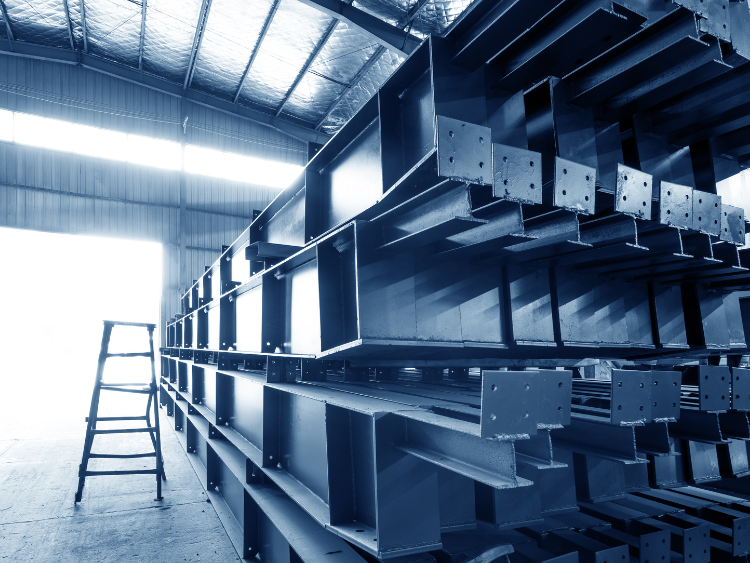
Romanian long steel prices, both in the spot market and from the sole domestic rebar producer, have remained stable over the past week, with no significant changes in demand. As the August summer vacation period begins, the market has become noticeably quiet, with limited activity. Most market participants expect a return to normal business operations and demand at the end of the month or in September. With the vacation mood setting in, offers are expected to follow a stable trend over the coming weeks.
“Not much activity at the moment since August has nearly started, but by the end of the month we will definitely see a comeback in both prices and demand,” a trader told SteelOrbis.
The domestic rebar producer has maintained its pricing for another week, with ex-works offers holding firm at €585-590/mt. Similarly, retail market prices across Romania have shown no variation, continuing to be heard within the €580-595/mt ex-warehouse range.
A comparable trend is seen in the wire rod market, where trading activity remains subdued and most suppliers are quoting steady prices between €580-590/mt ex-warehouse.
On the other hand, in the import market, activity has been limited as the entire European market is expected to enter vacation mode in August. As a result, there has been little interest of deal-making, and most price offers have remained stable over the past week. According to sources, rebar offers from Bulgaria have remained unchanged from the previous week, standing at €605-615/mt CPT for August shipment. Similarly, offers from Greece have held firm, with rebar quoted at €585-590/mt CFR and wire rod at €580-585/mt CFR for the same period. Additionally, it has been reported that rebar from Italian and Hungarian suppliers has been offered to western Romania at €590-600/mt CFR.
Meanwhile, suppliers outside the EU have shown mixed pricing trends for August-September shipments. Egypt has kept its offers steady, with rebar priced at €485-490/mt CFR and wire rod at €500–505/mt CFR. In contrast, Turkish rebar offers have increased slightly over the past week, now quoted at €485-500/mt CFR, based on an exchange rate of €1 = $1.14 and estimated freight costs of €15-20/mt. Although interest in EU-origin offers remains low, some buyers are showing interest in Turkish longs, encouraged by the current exchange rate. According to sources, this may lead to some bookings for the October shipment.


EU states push for early end to steel safeguards, propose much tougher trade framework instead
Eleven EU member states have called upon the European Commission to impose new, stricter trade measures in lieu of safeguards on steel from January 1 next year.
Earlier this week, Austria, Belgium, Bulgaria, France, Greece, Italy, Luxembourg, Poland, Romania, Slovakia and Spain issued a joint “non-paper” urging the EC to consider early expiry of the existing safeguard measures and the imposition of new trade measures as early as the start of next year.
The goal is to help the struggling EU steel sector return to sustainable capacity utilization rates near 85%, aligning import market shares with pre-crisis levels – of 15% for flat and stainless steel and 5% for long steel. Imports current account for around 28-30% of the EU flat steel market, observers estimate.
The existing steel safeguard measures – in place since 2019 – were intended to protect EU steelmakers from a potential surge in imports. The current measures are set to expire on June 30, 2026.
“If appropriate, an early expiry of the safeguard measure could be envisaged, coordinated with the entry into force of the new mechanism, in order to ensure the best possible protection for the EU steel industry as early as possible,” the document reads.
The new trade framework should include a tariff-rate quota system that is similar to current iteration but with significantly reduced duty-free quotas – at 40-50% below current levels – and apply equally to all third countries, the member states argued
It must also prevent quota manipulation via progressive liberalization, rollover of unused quotas or inconsistent national customs procedures. Flexibility is key – quota volumes should adjust based on demand shifts to maintain import market share consistency.
The countries also suggested to increase out-of-quota duty of imported steel to 40-50% from 25% currently “to effectively limit the imports to the targeted market shares.”
The suggested new system is based on tariff-rate quotas with an additional customs duty on all imports outside of that quota. But it could ultimately be product-based rather than country-based, as is the case for the existing measures, sources suggested to Fastmarkets.
The proposal also advocates extending coverage to steel products that are not currently targeted by safeguard measures, including:
• Tubes, pipes and hollow profiles of cast iron (CN 73 03 0010, 73 03 0090)
• Grain-oriented electrical steel sheets (CN 72 25 1100, 72 26 1100)
• Granules of pig iron, spiegeleisen, iron or steel (CN 72 05 1000)
• Stainless steel drawn wires (CN 72 23 0011, 72 23 0019, 72 23 0091, 72 23 0099, 77 22 4050)
• Grinding balls and similar articles for mills (CN 73 25 91, 73 26 11)
• Bearing tubes (CN 73 04 5110, 73 04 5930)
• Non alloy and other alloy forged bars (CN 7214 1000, 7228 1050, 7228 4010, 7228 4090)
• Other alloy wires (CN 72 29 2000, 72 29 9020, 72 29 9050, 72 29 9090)
To ensure WTO compatibility and mitigate downstream impacts, the countries urged the UC to conduct thorough legal and economic assessments. The mechanism should balance the interests of EU producers, importers and consumers, preserving competitive access while securing the industry’s future.
European steel association Eurofer welcomed the initiative in the face of unprecedented crisis the EU steel sector is faced with.
“We expect the European Commission to give due consideration to constructive Member State initiatives that are clearly aligned with the ambition of the Steel and Metals Action Plan (SMAP) in ‘promoting and protecting European industrial capacities’ and ‘defending quality industrial jobs’. In a rapidly changing and increasingly uncertain geoeconomic context, time is running out,” Eurofer director general Axel Eggert said.
The EC’s SMAP recognises multiple challenges to the US steel sector, among them high energy costs, exposure to an unlevel playing field in international competition, decarbonisation investment needs and regulatory burdens.
“The ongoing uncertainty surrounding EU steel exports to the US and the lack of clarity around a potential EU-US ‘Metals Club’ to tackle global overcapacity clearly demonstrate that European steelmakers cannot afford further EU inaction. Europe can only be stronger with European steel,” Eggert also said.
On July 18, the EC started a consultation on new trade measures to replace the existing steel safeguards.
In the third quarter of 2025, the EC is set to propose long-term measures, based on tariff-rate quotas, to replace the steel safeguards from July 1 next year, providing an equivalent level of protection against negative trade-related effects caused by global overcapacity.


Italian domestic rebar prices continue to rise ahead of summer closures
Rebar prices in Italy continued strengthening in the week to Wednesday July 30, because customers are trying to buy as much material as possible before mills’ scheduled maintenances starting next week, sources have told Fastmarkets.
“The market is currently very active, largely due to the upcoming summer break, and construction sites are rushing to stock up on materials,” a cut and bend source told Fastmarkets.
“Each producer has very low stocks, so customers are looking for materials before the summer closures. The price doesn’t matter,” a trader said.
The trader mentioned recent deals in the northern region of Italy being done with the range of €550-560 ($629-640) per tonne ex-works compared with €530-550 per tonne ex-works a week earlier.
A second cut and bend source confirmed that deals in the north of Italy were concluded at around €560 per tonne ex-works in the reported week, while in the south the workable price was around €580 per tonne ex-works.
Meanwhile, a producer source estimated overall workable levels within the range of €550-580 per tonne ex-works.
New offers for bars came in at €580-590 per tonne ex-works in the northern region and at €590-600 in the southern region.
Fastmarkets’ weekly price assessment for steel reinforcing bar (rebar), domestic, exw Italy, was €550-590 per tonne on Wednesday, up from €530-570 per tonne on July 23.
Rebar, wire rod prices fall further in Northern Europe
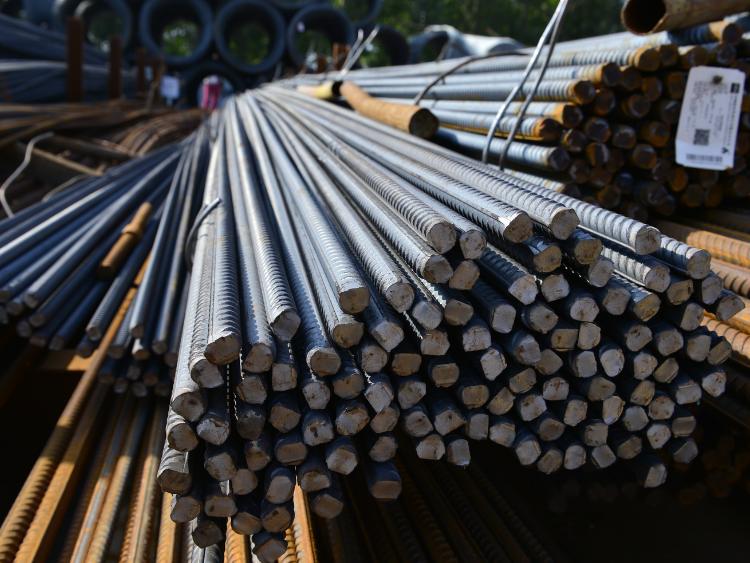
Rebar and wire rod prices continued to edge down in Northern Europe in the week to Wednesday July 30 amid the summer holiday, lower consumption and pressure from imports, according to sources.
Workable levels for locally produced rebar in Germany narrowed down to €620-625 per tonne delivered in the week to July 30 from €620-630 per tonne delivered a week earlier.
Polish material was available for customers in Germany at €600-610 delivered per tonne.
In Austria, estimates of workable prices for Italian rebar remained around €600 per tonne delivered.
As a result, Fastmarkets’ weekly assessment of the price for steel reinforcing bar (rebar) domestic, delivered Northern Europe widened down to €600-625 per tonne on Wednesday from €600-630 per tonne on July 23.
Fastmarkets’ weekly assessment for steel wire rod (mesh quality), domestic, delivered Northern Europe also widened down to €590-600 per tonne on July 30, from €590-610 per tonne on July 23.
Material from local mills in Germany was reported available within the range of €590-600 per tonne delivered, according to producer and trader sources.
Polish wire rod was available in Germany at €590 per tonne delivered, with a supplier reporting difficulties to push through this price among buyers.
Another producer source noted that the wire rod market in Northern Europe was influenced by the arrival of previously booked tonnages of Asias imports, which explains the gap between local rebar and wire rod prices, according to them.

Tata Steel’s European operations see improvement in earnings
Tata Steel’s operations in the UK and the Netherlands have seen an improvement in earnings during its quarter ended June 30, Kallanish learns from its exchange filings.
In the UK, revenues were at £536 million ($712m) for the first quarter of its full year 2026, with an Ebitda loss of £41m, narrowing from a loss of £80m the previous quarter.
Deliveries stood at 0.60 million tonnes, marginally lower from 0.63mt quarter-on-quarter and 0.68mt year-on-year. The decline is linked to subdued demand.
Tata notes decreased raw material costs for the UK segment primarily due to lower purchase of substrate during the quarter relative to Q4. It reported a slight increase in revenues, “primarily driven by higher realisations despite moderation in volumes.”
The earnings filings mention that global steel prices moderated between April and June. In the UK, “steel prices are still below year ago levels,” the company adds.
European steel demand has been affected by macro dynamics and policy uncertainty regarding global trade. The UK economy was in fragile state, with steel prices affected by mismatch between local demand and safeguard quotas.
In the Netherlands, revenues were €1.519 billion ($1.74 billion) for the quarter with Ebitda of €64m, rising from €14m the previous quarter.
Liquid steel production was 1.7mt, down on-quarter from 1.63mt and 1.69mt on-year. Deliveries stood at 1.5mt, down from 1.75mt q-o-q but up from 1.47mt y-o-y.
Tata recorded higher raw material for iron ore and ferroalloys costs in the Netherlands, as well as an inventory buildup.
T V Narendran, chief executive and managing director, states: “In UK, we recently had the groundbreaking ceremony for the EAF at Port Talbot which marks yet another milestone in our journey to become a sustainable green steel operations. In Netherlands, our liquid steel production was 1.7mt and was close to rated capacity and performance was aided by favourable sales mix and higher realisations in the downstream business.”
Tata reported an increase in profits for its Q1 results on a consolidated basis.
Narendran says the company had demonstrated robust profitability across geographies despite volatile global macro conditions and heightened uncertainty.
Carrie Bone UK

NW European plate mills attempt increases
Plate suppliers in northwestern Europe are trying to make July the turning point for prices, which have been softening since April.
“I do see offers now that are slightly higher than before,” a Belgian buyer tells Kallanish. The offers appear to be €20/tonne ($23/t) above previous quotations and come as an echo to the hike attempts for coil, which were made public a week earlier.
The higher quotes are confirmed by a mill source, who notes that the summer lull is a good time to get customers prepared for the period when business resumes. “It is better to start testing the waters at a time when no big decisions are being made,” he says.
This year’s summer lull comes in addition to the month-long reservation on the plate market to make investments and purchases, meaning it will take weeks before transactions show if and to what extent hikes are accepted.
“The comeback of business might well take until the end of August,” the mill source predicts.
The bottom line for S355 in northwestern Europe has lately been at around €670/t ($774) delivered by domestic mills.
Mills in Italy have also announced increases.
According to one observer, southern German buyers would be looking at close to €700/t delivered. The main cost factor here are transport prices, which have gone up sharply, the observer says. “The transport prices are running away on us. If you want to make a proper calculation, you need to add €65/t now.”
Christian Koehl Germany

Italian rebar prices rise again on shortages
Italian rebar contract prices and producer quotations are on the rise. Some steelmakers have suspended sales, while others are now quoting an additional €20/tonne ($23/t) compared to last week.
The first round of increases took place in mid-July, when producers were seeking around €270/t base ex-works. A second round followed last week, pushing quotes to €290/t base ex-works. This week, steelmakers are quoting even higher at €300-310/t base ex-works.
This surge is driven by producers’ efforts to recover margins after prices have continued to fall since May. The steep hikes are also due to a severe material shortage that is emerging in the Italian market.
Rebar in coil is hard to find as well diameters from 12mm to 20mm to 6 metres. One steelmaker is reportedly out of stock, and others are facing similar situations due to low production levels in July combined with strong sales and lower prices in July.
Buyers are now purchasing to replenish their inventories ahead of the planned production stoppages in August. Most mills are scheduled to be idled between 8–24 August, Kallanish notes.
Current base transaction levels for rebar now range are at €280-300/t base ex-works, reflecting an average increase of €20/t compared to last week. Effective rebar prices, including size extras averaging €260-270/t, are reported at €540-560/t ex-works.
Domestic mesh prices are also trending up, averaging at €400/t ex-works, excluding transport and size extras which add approximately €300/t. Producers are asking for €410/t base ex-works.
Natalia Capra France
EU rebar outlook steady as CBAM uncertainty and summer closures weigh
European domestic long steel prices largely held their ground in the week ended July 30, with mills attempting to lift rebar offers amid seasonal supply tightening, although buyer appetite remained restrained by persistent uncertainty around import dynamics and carbon-related costs.
In Northern Europe, some mills indicated rebar offers as high as Eur630/mt ex-works, but buyers largely pushed back, seeking deals closer to Eur600-610/mt, according to multiple trading sources.
Despite muted activity, market players flagged growing caution around post-summer import competition, particularly if low-priced Turkish and Egyptian material remains sub-Eur500/mt CFR.
“Mills are testing higher prices, but buyers aren’t fully engaging — there’s still too much on the horizon that’s unclear,” one Northwest European trader said, pointing to the looming impact of CBAM and Q3 import arrivals.
In Southern Europe, Italian producers also pushed rebar offers up to Eur530-540/mt ex-works, driven by an approaching wave of August stoppages and a spillover effect from recent flat steel hikes. However, some buyers were hesitant, warning that a rollback in early September could disrupt market confidence heading into Q4.
“Everyone’s watching the first two weeks of September,” one distributor said. “If producers hold firm, there’s a chance prices stabilize. But if they panic and drop again, it’ll spook the market.”
Medium sections hovered at Eur760/mt delivered in both Italy and Benelux, supported primarily by limited availability rather than active procurement interest.
Further east, weak construction activity and softening domestic rebar prices in Romania added a note of caution to the otherwise balanced sentiment. Market players also highlighted growing stockpiles at key European ports and rising chatter around Brazilian pig iron offers, reflecting shifting trade flows as Russian quotas near exhaustion.
Platts assessed Northwest European rebar at Eur610/mt ex-works, stable on the week, and medium sections at Eur762.50/mt delivered, down Eur2.50 on the week.