


Chancellor Merz: Germany’s steel industry should be strengthened
German Chancellor Friedrich Merz visited Saarland as part of his inaugural tour of all 16 German federal states. Hosted by Saarland Minister-President Anke Rehlinger, the visit focused on strengthening the Germany steel industry.
 Strengthening the steel industry: a strategic priority
In his remarks at the Völklinger Hütte industrial monument, Chancellor Merz reiterated the importance of maintaining steel production within Germany. “Germany will continue to need a steel industry in the future – a modern steel industry, and, in the long term, a green steel industry. Maintaining steel production in our own country is in our country’s strategic interest,” Mr. Merz said. Steel remains vital to Germany’s industrial value chain, but the sector is under pressure due to high energy prices, US import tariffs and a slowing global economy.
The federal government is actively working on a new steel strategy that emphasizes competitiveness and green transition. Chancellor Merz noted that discussions with steel production hubs across the country are underway to shape a strong and reliable national policy.


European steel HRC producers slowly push price increases through
Steel producers in Europe were slowly pushing ahead with higher prices for steel hot-rolled coil to local customers, Fastmarkets learned on Tuesday August 5.
Sell-side sources were using the uncertainty about the future of imported material ahead of the introduction of the EU’s Carbon Border Adjustment Mechanism (CBAM), as well as a possible tightening of safeguard measures, as an opportunity to raise sale prices.
Market sources reported that HRC cargoes scheduled for delivery in October were changing hands in Northern Europe at €560-570 ($648-660) per tonne ex-works, with official offers largely varying within the range of €580-590 per tonne delivered or ex-works.
And although these higher prices have not been fully accepted, several sources said that, for the fourth quarter of 2025, integrated mills in the region would be looking to achieve €600-610 per tonne ex-works.
At the same time, a supplier in the Benelux region was said to be still offering material at €560 per tonne delivered, €550 per tonne ex-works.
There was information circulating in the market about some volumes of material from integrated mills with earlier delivery in August or September, available at €540 per tonne ex-works.
That said, buyer sources estimated the current workable prices in the wide range of €540-570 per tonne ex-works.
As a result, Fastmarkets’ calculation of the daily steel HRC index, domestic, exw Northern Europe, was €560.18 ($648.67) on August 5, up by €0.18 from August 4.
The Northern European index was up by €1.85 per tonne week on week and by €10.18 per tonne month on month.
Market sources noted that sellers in Italy also managed to increase transactions prices to €530-540 per tonne ex-works, and in some cases up to €550 per tonne ex-works, while offers varied within the range of €550-550 per tonne ex-works.
Fastmarkets’ daily steel hot-rolled coil index, domestic, exw Italy, was calculated at €535.00 per tonne on Tuesday, up by €7.50 per day on day.
The index was also up by €6.87 per tonne week on week and up by €5.00 per tonne month on month.


European Commission to suspend US countermeasures
The European Commission is to suspend by six months countermeasures against the US, which were due to impact a large range of US-origin flat, long and stainless steel imports from 7 August.
This follows last week’s signing between the US and EU of a framework trade agreement to impose tariffs of 15% on most goods imported by the US from Europe (see Kallanish passim).
On 31 July, the US issued an Executive Order (EO) confirming the first step in the implementation of the agreement, namely the introduction on 8 August of a single, all-inclusive 15% tariff on goods from the EU. Unlike other US trade partners, this 15% tariff rate includes existing Most Favoured Nation (MFN) rates, meaning no stacking above the 15% ceiling, a European Commission spokesperson notes.
“The EU continues to work with the US to finalise a Joint Statement, as agreed on 27 July,” the spokesperson continues. “With these objectives in mind, the Commission will take the necessary steps to suspend by six months the EU’s countermeasures against the US, which were due to enter into force on 7 August.”
Commission adoption of the necessary measures was foreseen for 5 August, via urgency procedure.
Adam Smith Austria


New size extras change German rebar pricing game
The size-extra charges that form one component of rebar pricing in Germany and Austria have been increased by some mills, a rare occurrence, Kallanish hears from the market.
Rebar prices are traditionally composed of a base price which is subject to market fluctuations, and a “size extra” for the range of thicknesses, which remains fixed. The last adjustment of these size extras occurred in 2015. Since then, 12mm rebar, for example, has been charged an extra €265/t ($306). That value has now been lifted by €15 to €280. Other size extras now range between €255 for 16, 20 and 25mm, and €365 for 8mm.
The new prices have been heard from two mills. In a bulletin to customers, a German distributor names Baustahlgewebe/Badische Stahlwerke as a publisher of a new list valid from 1 August. One mill that has followed suit is Austria’s Marienhütte, according to the distributor. “For buyers, it will now become more difficult making comparisons on the basis of the new lists, as long as the other mills stay with the previous prices,” the bulletin reads.
The German distributor’s information is confirmed by an Austrian buyer, who notes that “the last list has been valid for unusually long; earlier on, size extras used to be adjusted much more often.” He believes that “mills had forgotten about that tool,” but have now rediscovered and redefined the charges, after hurting increasingly from profitability pressure.
The rebar base price in Germany has recently reached a floor at €350/t. With the previous size extra, bar of 12mm would now be at €615/t; under the new size extra, it would be at €630/t.
Kallanish has contacted all mills in Germany and Austria for comments on the move, but had not received replies before Tuesday deadline.
Christian Koehl Germany

German car production grows slightly in first half
Production of passenger cars at German assembly lines from January through June came to 2.174 million units, up 4% on the first half of 2024, according to national automotive association VDA.
A year-on-year increase in production already appeared in the first quarter, with output up by 5% on-year (see Kallanish passim). March alone saw growth of as much as 8%, but this did not necessarily indicate a long-term trend of further increase. In June, the figure of 360,000 units produced was only 3% higher than in June 2024.
VDA notes that production remains low in comparison to the pre-Covid year of 2019 – it is still almost 13% below that level.
Of the total June output, around two thirds – 274,700 – of new cars were exported from production facilities in Germany, 5% more than in the same month last year. Since January, almost 1.7m new cars were exported, up 3% on the same period last year.
VDA’s monthly statistics do not discuss to what extent US import tariff policy has affected trans-Atlantic export activity. In a separate statement, VDA managing director Hildegard Müller welcomes the recent agreement between US president Donald Trump and European Commission president Ursula von der Leyen, to prevent a further escalation of trade measures.
However, she emphasises that the US tariff of 15%, including for automotive products, will cost the German automotive industry billions annually and place an additional burden on it amid its energy transition.
Christian Koehl Germany
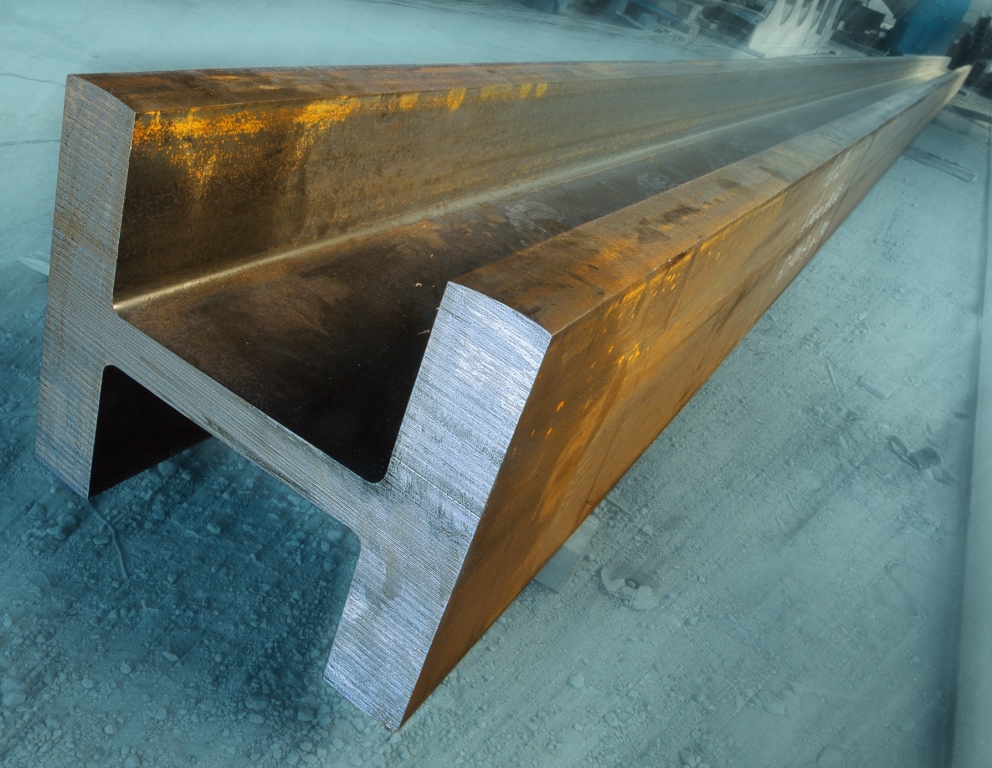
Italian merchant bar producers seek increases amid slowdown
Trading activity in the Italian long products market has slowed significantly due to the August lull. However, before the seasonal maintenance shutdowns begin, merchant bar producers are seeking increases of €30/tonne ($34) on July levels.
Over the past four weeks, market conditions have remained weak, with merchant bar and beam prices showing little movement. Scrap prices declined notably in July but have stabilised since last week.
Several market participants view the subdued demand for merchant bar as a structural issue. Multiple distributors reported stable beam sales volumes in July, while merchant bar sales remained subdued, highlighting the deep challenges the segment is facing, Kallanish notes.
Italian domestic merchant bar levels are at €670-680/t delivered inclusive of size extras. The price increase is set to take effect from 25 August, coinciding with the resumption of production at mills following the traditional summer shutdown. The first category of sections is also holding steady at €770-780/t delivered, with competitive Spanish-origin offers being tabled in July.
Natalia Capra France

ArcelorMittal increases northern Europe coil prices again: sources
ArcelorMittal has raised coil prices by a further €20/tonne ($23) across northern Europe. The increase applies to new contracts for remaining third-quarter delivery slots and for October shipments, according to market sources.
The new base price for hot rolled coil is now at €610/t delivered, up from €590/t at the end of July. This move follows growing import restrictions, including a safeguard replacement measure expected from the European Commission.
According to buyers who spoke to Kallanish, the increases will consolidate in the coming weeks as options to buy from Asia are now fading due to the future costs of the Carbon Border Adjustment Mechanism (CBAM), which takes effect in January 2026.
European steel association Eurofer recently expressed strong support for a French-led proposal outlining a “highly effective” new trade instrument aimed at tackling global overcapacity and safeguarding the European steel industry (see Kallanish 30 July).
The French non-paper urges the European Commission to quickly propose a new safeguard mechanism that should be in place by 1 January 2026, in advance of the safeguard measure expiration at end-June. This should reduce imports’ share back to 2012-2013 levels.
A major coil buyer, who sources spot market material priced on indices, believes Eurofer is likely to achieve “strong results” in European trade policy. As a result, the market could soon face reduced import quotas and anti-dumping duties of up to 50%. According to the buyer, these measures may be introduced earlier than expected.
Natalia Capra France