


German mechanical engineers despair over US duties amendment
German machinery builders are hugely confused over the latest amendment of tariffs by the US government, says German mechanical engineering industry association VDMA.
“The earlier agreement between the USA and Europe on 15% duties is hardly worth more than the paper it has been written on, if the USA keeps widening its tariffs on steel and aluminium,” says managing director Thilo Brodtmann.
Last week, the US Department of Commerce added 407 items to the list of derivative products with steel and aluminium portions, which will be charged a 50% tariff. The idea of derivative “can go very far downstream,” a VDMA spokesman explains to Kallanish. The list of 407 items covers 165 products from typical mechanical engineering firms, “like agricultural or construction machinery”, he adds.
“Our companies would need to report the content of different kinds of steels in their machinery – and their value – to US Customs,” he notes. While this in itself creates significant extra effort and paperwork for the companies involved, Commerce’s requirements take the game even one step further, with authorities now asking for the origin of the cast semi-finished steel from which machinery parts are fabricated.
“Our companies would hardly know the value of the steel, or its origin,” the spokesman says. If no origin can be given, US Customs will automatically apply the maximum tariff for Russia, which is 200%. “Our companies are despairing over the looming bureaucratic effort”, which is nearly impossible to meet, he adds.
He also points to the fact the list is updated every four months, “so we have no long-term reliability”. He dismisses hopes that the updates could also mean a reduction in the number of items: “The US government is not keen on making exemptions,” he concludes.
Christian Koehl Germany

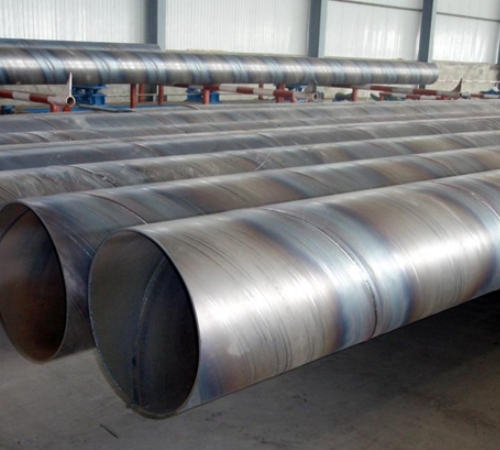
Polish seamless pipe mill finds buyer
Boryszew has signed a letter of intent with an unnamed foreign investor for the sale of its Rurexpol seamless pipe mill subsidiary located in Czestochowa, which has been in liquidation since last November.
The potential buyer will now carry out due diligence on the Polish unit, with the final sales contract expected to be signed by 15 October, Polish industrial holding Boryszew notes.
It decided to liquidate 70,000 tonnes/year capacity Rurexpol as a result of its to inability to compete on the market due to outdated technology and the deteriorating European steel industry situation (see Kallanish passim). This followed the liquidation earlier in the year of another of its pipemaking units, Walcownia Rur Andrzej (WRA), for the same reasons.
Netherlands-based industrial consultancy KRUDO Industrial B.V. was appointed to sell both units.
In March, Huta Czestochowa signed a letter of intent to define a framework of cooperation with Rurexpol, following the Polish defence ministry’s decision to exercise its right to acquire Huta Czestochowa.
Boryszew said in its first-half-of-2025 earnings report published last week that metals segment profitability fell significantly. Steel operations were most impacted due to the decline in steel product prices on the European market, lower sales margins, and a reduction in the scale of operations due to the liquidation of its pipemaking mills.
Adam Smith Austria

Piotr Sikorski appointed as new president of PUDS
The Board of the Polish Union of Steel Distributors (PUDS) has appointed Piotr Sikorski as the new President of the Board, effective August 27, 2025. He succeeds Ms. Iwona Dybał, who has led the organization for the past 13 years and has stepped down from her role.
The organization extends its sincere gratitude to Ms. Iwona Dybał for her long-standing commitment, dedication, and significant contribution to strengthening the steel distribution sector in Poland, for representing the interests of the Union’s members in dialogue with stakeholders, and for her role in the professionalization and development of PUDS.
Piotr Sikorski, the new President of PUDS, has been closely associated with the steel industry for many years and previously served as the organization’s Director. Since December 2024, he has also been a member of the Presidency Board of EUROMETAL, the European federation of steel tubes and metals distribution and trading.
“As President of PUDS, my priority is to continue strengthening the organization as the representative voice of the steel distribution industry in Poland, while expanding the circle of companies we can support. With the growing importance of regulatory issues, it is crucial for the Union to remain a strong and recognized voice of the steel sector in Poland. I intend to deepen dialogue with public authorities, economic partners, and industry organizations, while also supporting our members in adapting to new challenges such as decarbonization, sustainable development, digitalization of processes, and the increasing barriers in international trade” emphasized Piotr Sikorski.
With extensive managerial experience, he has consistently advocated for reinforcing the role of the steel distribution sector in the economy, highlighting its importance not only in trade but also in value-added services and processing. Mr. Sikorski is a graduate of the University of Warsaw, Faculty of Journalism and Political Science.

CBAM implementation continues as planned
The European Commission has informed EUROMETAL that the Carbon Border Adjustment Mechanism (CBAM) will come fully into force from 1 January 2026, as planned, the European steel distributors association notes.
In response to a EUROMETAL request for urgent clarification, the Directorate-General for Taxation and Customs Union asserted: “The date of coming into effect of CBAM on 1 January 2026 is EU Law. It can only change with a legal proposal by the European Commission and the agreement of the European Parliament and the European Council. There is no such proposal on the table.”
This comes following multiple instances over recent weeks of steel market participants suggesting CBAM implementation could be delayed.
In one high-profile case, Danish stainless steel distributor Dacapo suggested last month the measure would be postponed since several key variables – such as official benchmarks and default values – remain unavailable. The International Association of the Carbon Border Adjustment Mechanism (IACBAM) also said the CBAM implementation timeline, in its current form, remains a serious concern for many of its members.
The Commission is expected to publish the CBAM benchmarks in the fourth quarter. This will be accompanied by a legislative proposal extending CBAM to downstream products and introducing additional anti-circumvention measures.
Adam Smith Austria