

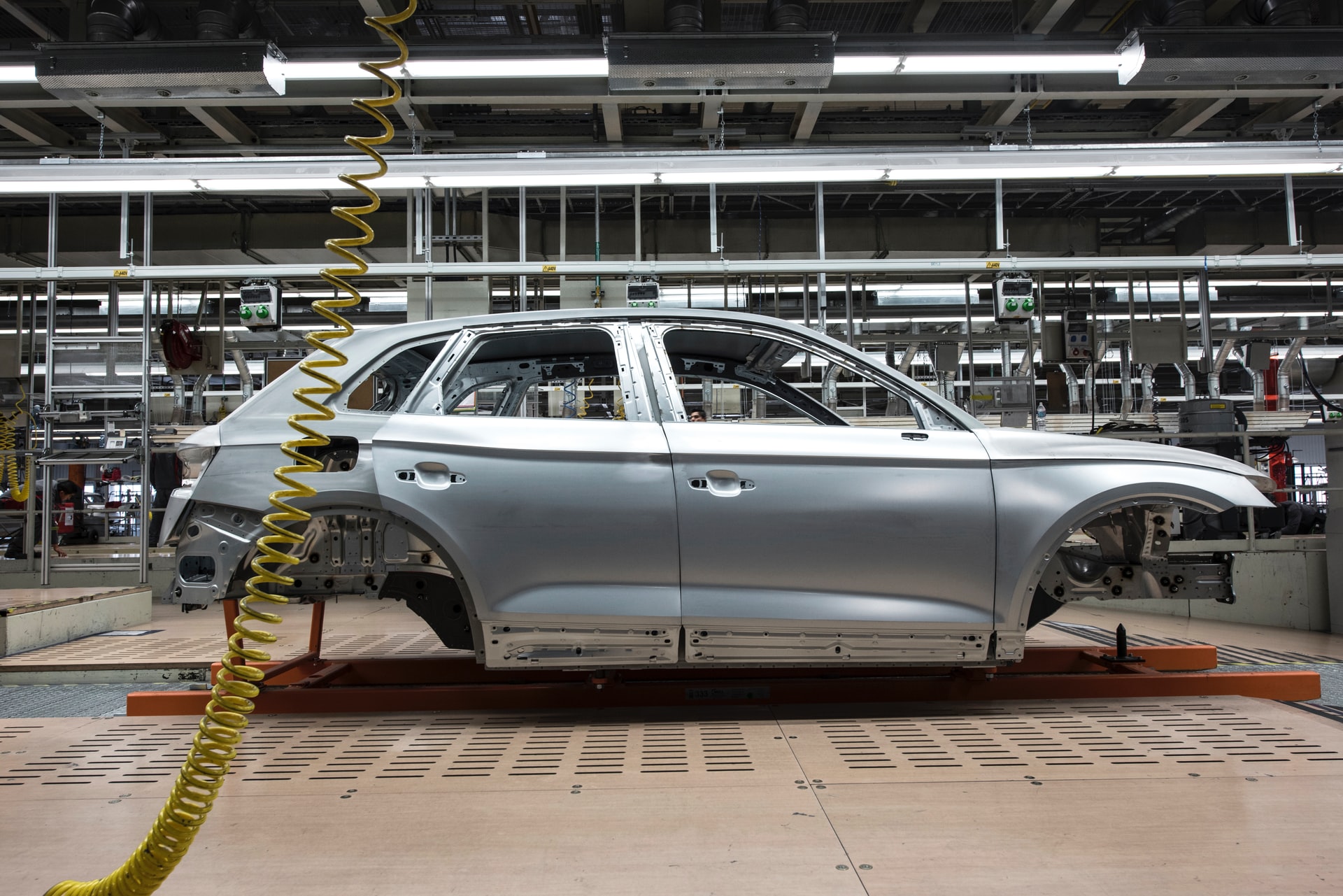
UK car production rises for consecutive month
UK car production has risen for a second consecutive month, Kallanish learns from Society of Motor Manufacturers and Traders (SMMT) data.
Car production in July stood at 69,127 units, up 5.6% on-year, while total vehicle output fell 10.8% in the month to 72,006 units.
This was due to a large fall in commercial vehicle output, which reflected restructuring and a bumper month last year.
Car production for domestic and export markets improved, SMMT notes, rising 13.6% and 3.7% respectively, with overseas markets taking the majority of output at 79.4%.
The EU remained the main destination with a 45.6% share, followed by the US at 18.1%, China at 7.7%, Turkey at 7.2% and Japan at 3.4%.
While shipments to the EU and China fell by 7.9% and 7.1% respectively, output for Turkey and Japan grew 35.4% and 14.9%.
SMMT notes the US remains the largest single national market for British-built cars, underscoring the importance of the UK-US trade deal. Exports to the US rose by 6.8% to almost 10,000 units, reversing three straight months of decline.
In the year to date, total vehicle output is down 11.7% with 489,238 units produced.
In a separate outlook, SMMT notes “a slightly brighter picture for UK vehicle manufacturing is expected in 2026 as some investments come to fruition with, hopefully, a return to annual growth as new products on factory lines help to ensure the automotive industry remains a cornerstone of Britain’s economy, trade, employment and, indeed, decarbonisation.”
Carrie Bone UK

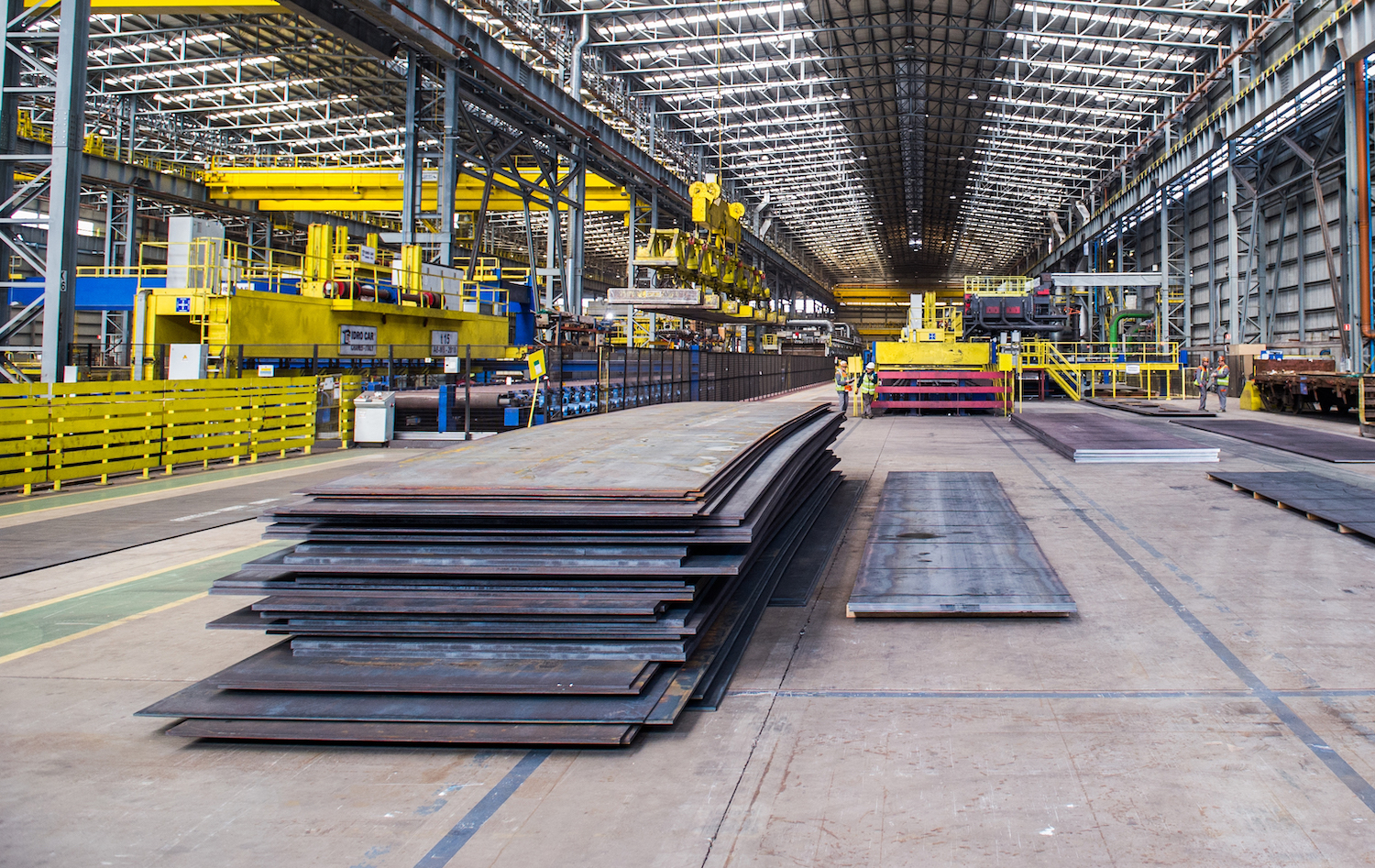
Northwest European plate inert after hike attempt underwhelms
Northwest European heavy plate stockholders are still bemoaning the lack of demand and business activity, with a rebound not anticipated in the autumn following the summer holidays.
Price hikes attempted one month ago, from at least one northern mill along with several Italian mills, have not been accepted so far. “It probably went up in smoke, like the one [hike attempt] in May, when the downward trend was still in full swing,” one German manager tells Kallanish.
Prices at least seem to have remained stable at the floor they reached at end-July, which would be around €670/tonne ($784) for S355 delivered from domestic European mills. Some mills are confident enough to offer elevated rates, with one German mill, for example, providing quotes “starting with a big bold 7”, a source says.
The deterioration in plate prices in the first half year was not perceived as dramatic as the price collapse for coil. According to the source, ”plate makers seem to have had a better grip on their capacity management”.
Imports do not seem to be attracting buyers or scaring mills. “I spoke with a mill today, and everyone is expecting import orders to fade out going forward, with CBAM at the doorstep,” one buyer says, who is in general not a friend of importing. “An order from India scheduled for three months ahead can easily take four months; whereas from domestic mills, you often get the delivery earlier than expected,” he adds.
Christian Koehl Germany

European HRC market steady after summer break; buyers cautious about price hikes amid weak demand
European steel hot-rolled coil prices were largely flat on Monday September 1, with buyers remaining cautious about a new round of price increases amid insufficient demand, sources have told Fastmarkets.
The first day after summer break was quiet for the European HRC market, according to sources.
Buyers and sellers were seen gradually coming back to the market, but trading was still subdued since participants were still assessing the situation.
Integrated producers in Northern Europe were heard to be aiming for €600-630 ($701-736) per tonne ex-works for October-November.
At the same time, most buyer sources estimated achievable prices at no higher than €580 per tonne ex-works on Monday.
“Mills are asking for higher prices [for HRC], but there will be no big volumes [of HRC] ordered because buyers already bought higher volumes for the third quarter and there is no immediate need to restock,” a buyer in Germany said.
The buyer added that a lack of new imports might support price rises for HRC with lead times in the first quarter of 2026.
“Because of [the] unclear implementation [of the] Carbon Border Adjustment Mechanism (CBAM) we have basically stopped at this moment the import activities,” a second buyer said.
Fastmarkets’ calculation of the daily steel HRC index, domestic, exw Northern Europe was €579.17 per tonne on Monday, up by €0.84 per tonne from €578.33 per tonne on Friday.
The Northern European index was up by €5.42 per tonne week on week and up by €19.17 month on month.
Meanwhile, Fastmarkets’ daily steel HRC index, domestic, exw Italy was €543.75 per tonne on Monday, up by €2.08 per tonne from €541.67 on Friday.
The Italian index was up by €2.92 per tonne week on week and by €15.42 per tonne month on month.
The Italian market was said to be restarting slowly after the summer break.
Estimations of achievable prices were reported at €540-550 per tonne ex-works, while target offers from integrated mills and re-rollers in Italy for October-delivery coil were heard at €570-580 per tonne ex-works.
A European mill was heard to be offering HRC to Italy at €600 per tonne delivered.

More suitors line up for ADI assets
Acciaierie d’Italia (ADI) is continuing talks with the Azerbaijan consortium comprising Baku Steel, Azerbaijan Investment Company, Jindal Steel International, and Bedrock Industries Management. Multiple Italian companies are also joining the race for ADI’s individual assets, sources close to the matter tell Kallanish.
Marcegaglia and Sideralba are reportedly interested in the tubemaking facility in Salerno, southern Italy. Eusider, Profilmec, and Marcegaglia have shown interest in the Racconigi tube plant near Cuneo in northern Italy, while Marcegaglia is also said to be eyeing the Socova tube mill in Sénas, southern France. The interest, which excludes the Taranto plant, is seen as part of a broader market consolidation strategy.
SiderAlba acquired the former Ilva coil rolling facility at Bizerte in Tunisia in 2017, which processes pickled and zinc-coated coils.
The second tender for the sale of the steelmaker opened on 1 August, with the process expected to conclude by October. The move is intended to give other potential buyers the opportunity to submit offers. Earlier this month, the Ministry of Enterprises and Made in Italy (MIMT) reached an agreement with local authorities on Taranto’s decarbonisation, marking a significant step towards the long-awaited programme agreement with them (see Kallanish passim).
“It is unacceptable that uncertainty still prevails in Taranto: the programme agreement has not been implemented, and we are stuck with a simple memorandum from 12 August that changes nothing. There is talk of new buyers, but the same names keep coming up, with no clarity on the assets or on the decarbonisation path,” general secretary of the Uilm unions Rocco Palombella told national television news outlet Rainews24. “In the meantime, workers remain suspended in uncertainty over requests for wage support, which risk expanding further.”
Natalia Capra France

Appeals court rules against Trump tariffs
The US Court of Appeals for the Federal Circuit has ruled that Donald Trump’s global tariff actions are unlawful, Kallanish learns. The decision was issued on 29 August.
In a 7-4 ruling, the court upheld a lower court’s finding that Trump’s measures were “invalid as contrary to law”. The majority found that Section 232 of the Trade Expansion Act does not give a president authority to unilaterally impose or revise tariffs. The court also ruled that neither trade deficits nor the opioid crisis constitute a national emergency that would allow sweeping tariffs to be imposed.
The judgment, however, does not take effect immediately. Enforcement has been delayed until 14 October to allow the Trump administration time to appeal to the Supreme Court.
The ruling marks a major setback for Trump’s tariff strategy.
Trump responded within hours in a lengthy Truth Social post. “ALL TARIFFS ARE STILL IN EFFECT!” he wrote, calling the court “highly partisan” and warning that removing tariffs would be “a total disaster for the Country”. He added that the decision would “literally destroy the United States of America,” insisting tariffs are “the best tool to help our Workers, and support Companies that produce great MADE IN AMERICA products.”
Margie Palmer USA

Thyssenkrupp Steel calls for effective trade protection against cheap imports
The European steel industry faces a defining moment as global overcapacity and cheap imports threaten its future. In a guest article for German weekly business news magazine WirtschaftsWoche, Dennis Grimm, spokesperson of the Executive Board of German steelmaker thyssenkrupp Steel, issued a strong call for effective trade protection, a robust Carbon Border Adjustment Mechanism (CBAM), binding “European Content” quotas, and structural reforms to keep Germany and Europe competitive.
Mr. Grimm warned that blast furnaces across Europe are being shut down due to shrinking demand and fierce global competition. Transformation projects and new investments are being postponed, while jobs vanish at an alarming rate. The ripple effect extends beyond steel, hitting automotive, chemicals and mechanical engineering sectors. Grimm stressed the need for a clear strategy as China and India have shifted from partners to competitors, with China emerging as a systemic rival.
Global steel overcapacity is projected to reach 700 million mt – six times EU’s total demand. Much of this comes from China, where steel is subsidized up to 10 times more than the OECD average. Grimm argues that without protection, European producers stand no chance against such dumping practices.
Adding to the pressure, the EU-US tariff deal has fixed a 50 percent import tariff into the US, diverting even more global steel excess to Europe while closing export routes for EU producers. “Doing nothing in the face of overcapacity would have catastrophic consequences for Europe’s steel industry and its value chains,” Grimm warned.
The three urgent measures
- Effective Trade Protection
- Robust Carbon Border Adjustment (CBAM)
- “European Content” Quotas
Brussels has proposed halving duty-free import quotas and applying a 50 percent tariff on excess imports. Eleven EU states support the plan – but Germany has yet to follow.
Grimm criticized loopholes in current CBAM rules, which allow circumvention. He stressed extending CBAM to processed steel products and maintaining free EU ETS allocations until reforms take effect.
To avoid subsidizing foreign producers with domestic funds, Grimm urged binding quotas ensuring public procurement uses a fair share of EU-made steel.
Grimm revealed that thyssenkrupp is losing contracts to non-European competitors offering steel up to 50 percent cheaper.