


European heavy plate round-up: prices rise amid CBAM uncertainty and trade shifts
European heavy plate prices strengthened in the week to 24 October in line with bullish sentiment in the flat steel market driven by changes in trade restrictions and the forthcoming introduction of the carbon border adjustment mechanism (CBAM).
Italian re-rollers have consolidated around the target price for plate of EUR650/t ex-works. Sources said that some deals have already been settled at EUR640-650/t ex-works.
Italian suppliers have not closed the December order books yet and they are expected to target further increases for January.
Although prices for imported slab have not changed the costs will rise due to implementation of CBAM from the start of 2026.
Several sources suggested that due to lack of clear guidance that would allow calculation of exact CBAM duties, some re-rollers in Italy have started to offer plate prices plus CBAM duties, instead of invoicing for effective prices.
An Italian mill representative, however, said that buyers were not keen to book material with a variable price that could significantly change and that the higher offers were targeted to cover both semi-finished, CBAM and production costs. The same source said that the price of EUR650/t will barely cover all the costs the re-rollers will face from next year.
Prices for imported slab from Asia have been heard at $510-520/t CFR Italy.
The availability of cheaper slab is likely to drop, after the EU introduced another package of sanctions against Russia. The measures now include Evraz PLC, a UK-headquartered company with core steel manufacturing and mining assets in Russia.
Evraz has been supplying slab to the EU, particularly to Czech Republic at competitive prices – around $50/t below those from Asian exporters.
In the Northwest European market, domestic heavy plate prices have been heard around EUR690/t ex-works.
| Unit | Term | 24-Oct-25 | Change | ||
|---|---|---|---|---|---|
| Weekly heavy plate | |||||
| Northwest Europe ex-works heavy plate | EUR/t | EX-WORKS | 690.00 | 15.00 | |
| Germany delivered heavy plate (Northwest Europe) | EUR/t | DEL | 700.00 | 0.00 | |
| Italy ex-works HRC | EUR/t | EX-WORKS | 580.00 | 25.00 | |
| Weekly steel slab | |||||
| Italy CFR slab | $/t | CFR | 515.00 | 0.00 | |
| Weekly green steel | |||||
| Green heavy plate premium (scopes 1-3 CO2 1t) | EUR/t | 25.00 | 0.00 | ||
Maria Tanatar Associate Director, Steel and Green Steel
Benjamin Steven Journalist, Steel


Morocco and the Netherlands cooperate to supply green hydrogen to Europe
Morocco and the Netherlands plan to deliver renewable hydrogen produced in Morocco to steel and heavy industry facilities in the Netherlands through the “Green Hydrogen Bridge” project. This initiative is expected to play a key role in enabling the steel sector’s transition to low-carbon production, contributing to Europe’s 2050 carbon neutrality targets.
Tomas Olejniczak, Project Lead for Climate and Energy in the Netherlands, stated, “By 2050, we will need between 300 and 500 petajoules of renewable hydrogen. Hydrogen will replace coal in the steel and chemical sectors and help reduce industrial carbon emissions.”
Morocco, with its abundant solar and wind resources, can provide low-cost renewable energy, making it a reliable supplier for the Dutch steel industry. Its geographic proximity and short maritime routes reduce transport costs, positioning Morocco as a natural green hydrogen hub for Northwest Europe. Morocco’s largest investment, the Jorf Hydrogen Platform, backed by a €30 million grant from Germany’s KfW PtX Fund, will start producing 100,000 tons of green ammonia annually in 2026, supplying hydrogen for steel production.
Rotterdam Port is preparing the necessary infrastructure for importing hydrogen and its derivatives. The port facilities will be integrated with the Hydrogen Network Netherlands and the Delta-Rhine Corridor to ensure continuous supply to industrial clusters in the Netherlands and Germany. In the short term, ammonia and methanol shipping will be used, while pipeline connections are planned for longer-term cost reduction. Joint R&D and certification processes will ensure the hydrogen supply is traceable and sustainable.
The Netherlands’ projected hydrogen demand by 2050 offers new investment opportunities for Moroccan producers. The partnership will help reduce carbon emissions in Europe’s steel sector and allow Morocco to scale up its green hydrogen capacity globally.

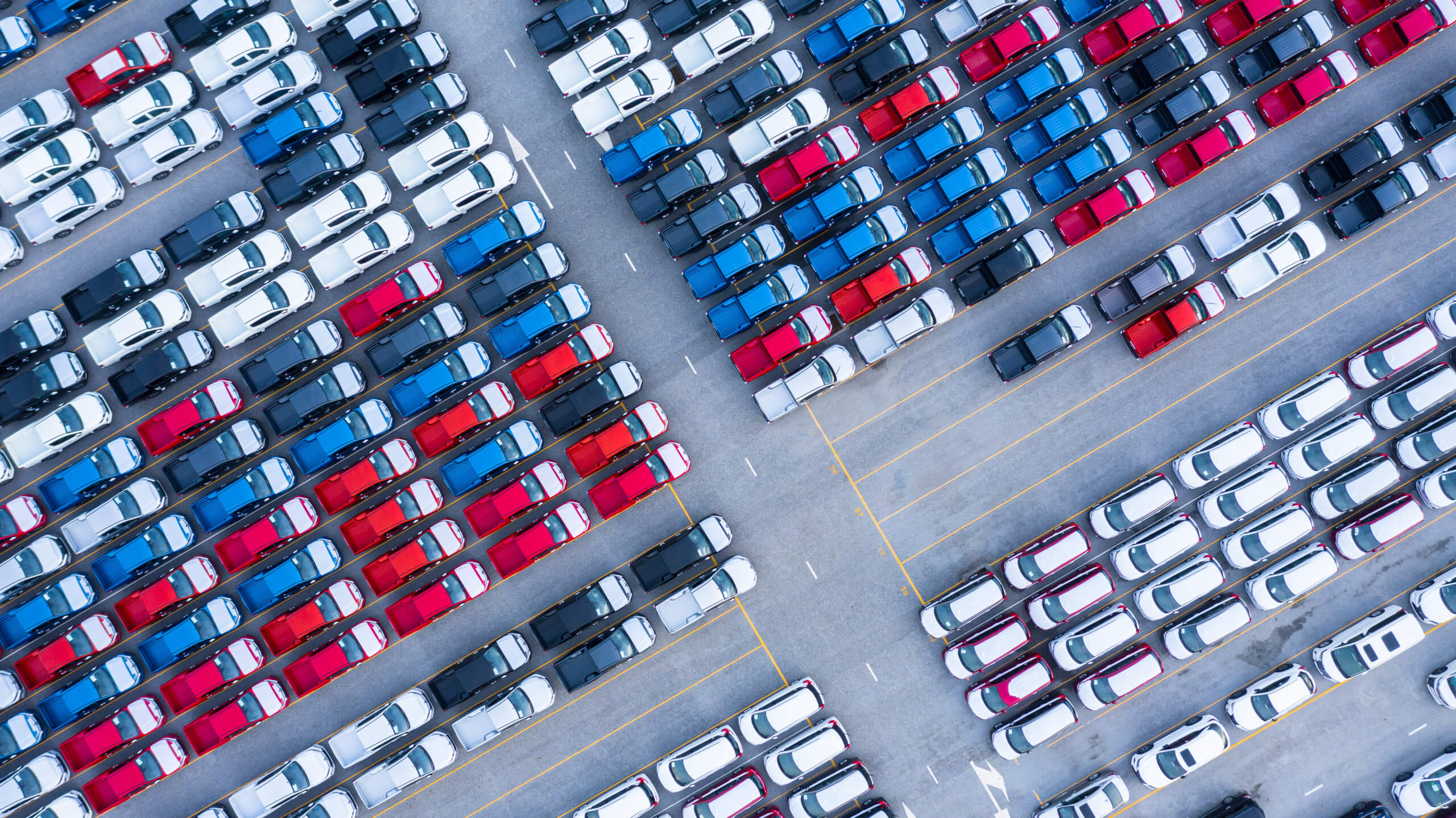
Steel, automotive must remain competitive: European Council
Particular attention needs to be paid to the automotive and steel industries, among others, so that they remain resilient and competitive in a global market and a challenging geopolitical environment, the European Council concluded during its 23 October meeting in Brussels.
“In this regard, it welcomes the recent [European] Commission proposal to protect the European steel sector from unfair impacts of global overcapacity,” the Council statement notes.
The Commission proposed earlier this month a new trade measure to replace existing safeguards, which aims to reduce quota volume by 47% and raise the out-of-duty quota to 50%, but does not encompass steel derivatives (see Kallanish passim). The legislation must be approved by the European Council and Parliament before it is enacted into law.
“It welcomes the Commission’s intention to take forward the review foreseen under the Regulation on CO2 emissions performance standards for cars and vans, and calls for the swift presentation of this proposal, taking into account technological neutrality and European content,” the Council adds.
The Council has also called for an urgent stepping up of efforts to secure the supply of affordable and clean energy and build an Energy Union before 2030, including by leveraging the new Energy Union Task Force. “This will require ambitious electrification using all net-zero and low-carbon solutions, and investment in grids, storage and interconnections at national and EU level,” it notes.
“In light of the negative impact of high energy prices on the global competitiveness of European industries, on the Union’s strategic autonomy and on European households, the European Council calls on the Commission to accelerate work aimed at lowering energy prices and supporting sustainable energy production in the Union,” it adds.
Adam Smith Austria


Fos-sur-Mer redirects orders, plans temporary production restart
ArcelorMittal is redirecting certain orders to other plants in France to minimise customer impact. It has sourced slab externally to meet year-end delivery commitments following a fire in October that resulted in a complete production stoppage at the Fos-sur-Mer site, Kallanish learns.
According to a company note, the blast furnace and steelmaking plant are currently shut down, while the sintering line is extending its scheduled downtime.
The coking plant is operating using its own gas, and the conveyor train, finishing lines, and logistics are handling and shipping existing stock.
The site teams are now focused on dismantling and rebuilding the damaged sections. “Based on analyses and supply lead times, the steel plant is scheduled to restart in early December in a temporary operating mode. The timeline for returning to full, normal operations is being finalised,” it notes.
According to market sources, Fos-sur-Mer will resume full production towards January, although this has not been confirmed by the company.
During this period, managers will allocate personnel according to the condition of the installations and the needs of the restoration work. For facilities that remain shut down, employees will spend 50% of their time on activities such as maintenance, instruction updates, improvements, and training, and 50% on downtime.
Natalia Capra France

Italian rebar prices gain traction
Italian rebar prices are beginning to rise following an increase attempt by domestic steelmakers in mid-October.
This week, mills are quoting at around €270/tonne ($314/t) base ex-works, with no offers accepted at below €260/t. One producer says that further increases may be introduced in November.
Some material shortages are being reported as certain steelmakers have not been operating at full capacity in recent weeks. While many buyers continue to adopt a wait-and-see approach, one tells Kallanish he is purchasing small volumes at €260/t base ex-works, adding that he doubts the sustainability of the current price increases.
A construction company notes that activity has slowed compared with June and July, though projects are still ongoing. A distributor reports some demand for rebar and mesh this month. Meanwhile, several French distributors in the south are complaining about a strong Italian presence, with material being offered at lower prices than domestic suppliers.
Recent domestic transactions are reported at around €250-260/t base. Including size extras of €260-270/t, effective prices are in the range of €520-530/t ex-works. Mesh prices are also trending upwards, averaging at €250-260/t base ex-works, excluding an additional €300/t in size extras.
Natalia Capra France

European HRC prices climb gradually; buying slow
Deals for January delivery have not been numerous yet in Northern Europe, as some mills have not been active in offers. But some volumes were heard booked at €610 ($710) per tonne ex-works, in line with earlier voiced expectations versus mills’ bullish targets of €620-650 per tonne ex-works.
Nevertheless, €610 per tonne ex-works is still a progress from the level of €580-590 per tonne ex-works which was widely seen in deals for December-delivery material.
Market participants expected the next several weeks to be quiet with customers still digesting price rises and upcoming changes in protection measures, with buying activity expected to pick up by December.
Additionally, information came to light about a fire halting production at thyssenkrupp’s hot strip mill in Duisburg, Germany, late on Friday October 24. The market is still assessing the effect of the accident.
Fastmarkets’ daily steel hot-rolled coil index domestic, exw Northern Europe was €602 per tonne on October 27, up slightly from €600.88 per tonne on October 24.
The index was up by €10.54 per tonne week on week and by €24.29 per tonne month on month.
In Italy, the situation with December-delivery coils was quite similar to Northern Europe, with January volumes not widely available yet, according to sources.
Current workable levels were heard at €575-585 per tonne ex-works, versus offers at €600-610 per tonne ex-works.
Fastmarkets’ corresponding daily steel hot-rolled coil index domestic, exw Italy was calculated at €591.25 per tonne on Monday, up from €590 per tonne on October 24.
The Italian index was up by €6.25 per tonne week on week and by €40.62 per tonne month on month.
After last week’s information about a booking of 40,000 tonnes of Indonesian HRC at €465-470 per tonne CFR with delivery in 2026 and a buyer covering all costs, several market sources reported news about the possible inclusion of Indonesia in safeguards as early as January 2026. No official document confirming this was seen by Fastmarkets.


Daimler Truck, HHLA, and Kawasaki launch collaboration to develop a liquid hydrogen supply network in Europe
Daimler Truck, Hamburger Hafen und Logistik AG (HHLA), and Kawasaki Heavy Industries have launched a strategic partnership to establish a green liquid hydrogen supply chain in Europe. The system, which will extend from the Port of Hamburg to inland regions of the continent, aims to accelerate the use of hydrogen in logistics and industrial applications.
At the Hydrogen Technology World Expo in Hamburg, Daimler Truck, Hamburger Hafen und Logistik AG (HHLA), and Kawasaki Heavy Industries signed a Memorandum of Understanding (MoU) to develop a safe and cost-efficient supply chain for green liquid hydrogen. The project will enable imports of liquid hydrogen from producing countries to Germany and strengthen Hamburg’s position as Europe’s leading hub for sustainable energy logistics.
Under the joint initiative, the partners will assess the logistics infrastructure for transporting liquid hydrogen via road and rail through Hamburg in the coming months. The plan also includes establishing an international hydrogen consortium covering the entire supply chain.
Dr. Andreas Gorbach, Member of the Board of Management at Daimler Truck, emphasized hydrogen’s key role in Europe’s energy transition: “Our Mercedes-Benz GenH2 trucks not only run on liquid green hydrogen but can also transport it. This technology is key to accelerating decarbonization and overcoming the limitations caused by the slow expansion of the energy grid.”
Annette Walter, Chief Financial Officer at HHLA, highlighted hydrogen’s flexibility in transport and logistics: “Liquid hydrogen offers major advantages for SMEs and industries because it can be transported independently of pipeline infrastructure. Our goal is to ensure a reliable hydrogen supply to industry through our pan-European logistics network.”
Kei Nomura, Head of Hydrogen Strategy at Kawasaki Heavy Industries, noted the company’s long-standing expertise: “Kawasaki has been developing technologies for the production, storage, and transportation of liquid hydrogen for many years. Our collaboration with HHLA and Daimler Truck marks a significant step toward building an integrated hydrogen supply network in Europe.”
Experts say this partnership sends a strong signal for Europe’s energy transition. Kawasaki is developing tanker vessels of various capacities capable of transporting liquid hydrogen, while HHLA aims to expand the use of fuel cell technologies in port operations as part of its goal to achieve a carbon-neutral logistics network by 2040. Daimler Truck, pursuing both battery-electric and hydrogen-based strategies, plans to start small-scale hydrogen truck production by 2026 and move toward full-scale series production in the 2030s.

EU should advance competitiveness, close trade loopholes
Market participants have called for the promotion of a competitive industry, a support system to make financing the energy transition feasible, and the closing of loopholes that allow the entry of products from third countries which creates unfair competition.
The comments were made at the recent “Forging the future: key factors for a competitive EU steel industry” conference.
All these challenges come within a framework of enormous difficulties, such as reaching agreements within the EU amid the multiple interests of its member countries, steel industry representatives noted during a seminar held in Avilés last week by the Commission for Economic Policy under the European Committee of the Regions (CoR).
According to the executive director of ArcelorMittal Spain, Philippe Meyran, EU policy must be more engaged in promoting the consumption of low-emission steel. Maintaining a strong steel industry is essential for developed economies and social welfare.
“We have to tackle Europe’s problems by tackling the problems of the steel industry,” Meyran commented at the event monitored by Kallanish. “Companies must be profitable, but we have problems, such as with dumping from third countries, CO2 emissions taxes that account for 25% of costs, the energy price and the high level of wages compared to other non-EU producers.”
The executive explained that the sector must have a level playing field across Europe, with sufficient electricity generation at an acceptable cost to achieve decarbonisation goals, and a sufficient electricity transmission grid.
His point of view was supported by German MEP Isolde Ries, who warned of the risk of a legal gap that allows Chinese products to enter the EU via Turkey.
“We need real protectionist measures, abundant energy at affordable prices and solidarity,” she remarked.
“Europe needs a decarbonised steel sector and must promote low-emission products, while raising awareness among society to consume them, even if this means paying a little more,” she concluded.
The European Commission is considering including the steel processing industry, in particular the metalworking sector, into its new protection plan. Alberto Cirio, president of the Commission for Economic Affairs, explained that the CoR is in the final stages of drafting its report on the action plan, and the conclusions drawn from it will be very important for the Commission’s final decision.

Todor Kirkov Bulgaria
Overcapacity, protectionism impact European steel
Overcapacity and protectionist measures are exacerbating pressure on the European steel industry, Kallanish heard at the Steel Tech 2025 conference in Bilbao last week.
In recent years, China, along with Southeast Asia and North Africa, has significantly increased its installed capacity, while no answer has been found on how to contain the new volume within the countries where it is generated.
“The sector is witnessing a global increase in trade protectionism measures. Furthermore, the constant increase in capacity in certain regions and increasingly aggressive export behaviour are having an impact on the trading environment,” Enrique Arrieta, European Commission policy officer for trade and economic security, said at the event.
Currently, countries such as the United States, Canada, Mexico, Colombia, the United Kingdom, Turkey, India and Egypt have adopted protective measures to safeguard their markets. China is meanwhile attaining export records every year, resulting in the disruption of traditional markets.
One of the most illustrative cases is Vietnam, which in the last eight years has doubled its installed capacity from around 15 million tonnes/year to almost 30mt. “The problem arises because, given China’s aggressive export behaviour, the Asian country is not only flooding the Vietnamese market, but also displacing Vietnam from its traditional export destinations, such as Thailand or the United Arab Emirates,” the expert explained.
As a result, Vietnamese steel exports to the EU have increased by 70% since the pandemic, making the country the fourth largest steel supplier to Europe, a shift that occurred “very quickly”, according to the official.
A similar phenomenon can be observed in Japan, which, despite not having increased capacity in recent years, has redirected volumes to Europe after losing influence in key markets such as Indonesia, South Korea and Thailand, which are now dominated by Chinese steel. Japan went from exporting marginal quantities to the EU to shipping close to 2mt between 2023 and 2024.
“These trends are occurring while the EU maintains a quota-based system of safeguards, which limits its capacity to respond. The combination of third-country protectionism and the effects of global overcapacity are creating a very unsustainable situation for Europe,” Arrieta said. “Ideally, the problem of overcapacity should be addressed globally. But as the past has shown, this has not been possible. If overcapacity is not discussed, it is very difficult to attack its causes without punishing those who create the problem.”
The European Commission is open to the possibility of reopening the debate on overcapacity, intending to seek a global solution that reinforces the protection of European industries while minimising the impact on international supply chains, Arrieta confirmed.
Todor Kirkov Bulgaria