


Czech steel sector urges government action as Germany introduces subsidized electricity tariff
Czech and Slovak steel producers and processors association Ocelářská unie has issued a strong warning about the deteriorating situation in the European steel market, emphasizing that Germany’s new subsidized electricity tariff, due to take effect in January 2026, and which will keep energy prices for businesses at half the Czech level, will significantly undermine the competitiveness of Czech steelmakers.
According to the association, the European steel market is “crumbling” under the weight of high costs, weak demand and surging imports – and, unless Prague acts, Czech industry will fall behind.
Under Berlin’s plan, the German government will introduce an industrial electricity price of €50/MWh. This support, financed through €6.5 billion in state funds, will apply to energy-intensive industries including steel and smelting.
In contrast, Czech industrial electricity prices are around €100/MWh. Třinecké železárny, the only domestic producer of crude steel in the country, alone consumes about 1 TWh per year, so the price gap could cost the company CZK 3-4 billion annually. Roman Heide, CEO of Třinecké železárny, warned that, without similar national measures, long-term steel production in the Czech Republic may no longer be viable.
Call for urgent national action
The association is calling on the Czech government to adopt immediate measures to protect industrial competitiveness, including potential energy-cost support, before the German tariff enters into force. Without national action, the association warns the Czech Republic could face a long-term decline in steel production, job losses and further erosion of its industrial base.


Swedish steel output dips in September, October
Swedish mills registered a considerable decline in crude steel production in September and October compared with the corresponding previous-year months.
In September, Sweden produced 273,000 tonnes of crude steel, 11% less than in September 2024, Kallanish learns from national steel association Jernkontoret. From January through September, a total of 3.03 million tonnes of crude steel was produced in Sweden, which was 0.5% less on-year.
In the third quarter alone, however, production increased by 4% compared with the same period last year. According to Jernkontoret, production fluctuated significantly during the summer months due to several maintenance shutdowns and other overhauls. This caused a freaky compensation effect in August, which reported a 53% on-year surge.
“After a weak first half of the year, we are now seeing positive results for the third quarter. Annual production remains close to last year’s level, albeit slightly lower,” said Mathias Ternell, director of Trade Policy at Jernkontoret.
However, October continued the downward trend brought by September. At 282,000t, output was down 8.5% on-year. “Production stoppages for maintenance and other reasons continued into October, resulting in a weak start to the third quarter. The annual rate remains just below last year’s level,” equating to a 1.2% decline for the first ten months, Ternell concludes.
Christian Koehl Germany


Italian steel output continues to grow
Italian crude steel production increased again in October following strong hikes in the previous months, industry association Federacciai says in a note obtained by Kallanish.
Federacciai says October production increased by 2.2% on-year to 1.9 million tonnes. Output in the first ten months of the year also increased, by 3.1% on-year, to 17.5mt.
“Long hot-rolled products continue to see production growth … while flat products posted a decline for the month … although both categories still show overall increases since the start of the year,” Federacciai states.
Flat steel output decreased by 2.6% to 779,000t in October but increased by 4.7% to 7.5mt in January-October. Longs output, meanwhile, increased by 11.6% in October to 1.2mt and rose 4.4% to 10.4mt in January-October.
Only February and June have registered slight overall production declines so far this year.
Italian output has declined over recent years, falling by 5% on-year in 2024 to 19.9mt, by 2.5% on-year in 2023 to 21mt, and by 11.5% y-o-y in 2022 to 21.6mt.
Natalia Capra France

Saarstahl acquires Dutch company FNSteel
Saarstahl has agreed to acquire Dutch long steel manufacturer FNsteel, Kallanish hears from the German maker of special bar qualities (SBQ).
Based in Alblasserdam, FNSteel specialises primarily in the production of high-quality cold heading steels for customers in the automotive and construction industries.
“FNsteel has state-of-the-art plants, excellent product quality and an established market position. This is a superb fit for us and will help to consolidate our position in the cold heading steel sector,” says Saarstahl chief executive Stefan Rauber.
Cold heading steel has been specially developed for cold forging, Saarstahl explains. The cold heading process enables economical production of precision parts that can withstand extreme loads. Cold heading steels are known for their especially high purity and formability, toughness, and reliable strength.
FNSteel has been owned by British Steel since 2017 but was left out of the UK government rescue of British Steel earlier this year.
Separately, Saarstahl says it has certified its first CO2-reduced products in accordance with the Low Emission Steel Standard (LESS). Saarstahl has received a “Low Emission C” certification for its bar steel, wire rod and rail product groups.. The crude steel for these products is manufactured at the Saarstahl Ascoval plant in Saint-Saulve, France, using the electric arc furnace route with scrap as an input material.
Christian Koehl Germany

EU-US steel pact hinges on digital rules: Lutnick
EU-US negotiations over a steel and aluminium pact will make progress once the two sides reach an agreement over the EU’s digital rules, US commerce secretary Howard Lutnick said in Brussels on Monday.
After a meeting between Lutnick, US trade representative Jamieson Greer and the 27 EU trade ministers, Greer highlighted US concerns that the EU’s Digital Markets Act and Digital Services Act only impact US firms, despite the EU insisting it is not discriminating against them.
“Enforcement is quite aggressive,” he noted during a press briefing monitored by Kallanish. “At times … complying with the law can become challenging. Sometimes our companies feel like the goal posts are moved. The fines can be quite large.”
Lutnick suggested the EU’s trade ministers “deeply consider trying to analyse their digital rules.” He added: “If they can come up with that balanced approach, which I think they can, then we will, together with them, handle the steel and aluminium issues and bring that on together. So that is on the table.”
The US expects the EU to propose a digital rules framework it is “comfortable with” and “understands”, and for the outstanding cases to be resolved. Once that occurs, “we can go and attack the steel and aluminium, try to come up with a list and a model that works very, very well for the European Union, and resolves many of these issues in a very positive way,” Lutnick added.
European Commissioner for Trade Maroš Šefčovič said reducing US tariffs on EU steel and derivatives, as well as tackling global overcapacity are priorities, while the EU’s new tariff-rate quota system proposal “speaks volumes about how seriously we take this issue”.
Steel derivatives are of special importance. “I think that especially if you look at capital goods, steel products, where we are talking about machinery, where we are talking about the robots. I think we both, I would say, realise that America wants to industrialise and a big part of it are also the machines which are supplied from the European Union to the United States of America. So I’m very glad that with the secretary, we discussed how we can actually launch the discussion on the steel and derivatives.”
When it comes to steel products exports, “we are not each other’s problem, because we do not export that much steel to each other, but we have a common issue, and this is global overcapacity, and with the recent safeguards which we adopted, which is, I think, [are] very, very similar to the measures which the US has taken to protect the market, that now we have all the preconditions in starting this discussion in earnest,” he added.
“And we’ll be looking into the ways how we can … launch this process on the digital matters,” he continued.
Adam Smith Austria
kallanish.com
Italian merchant bar production hits multi-year low: Federacciai
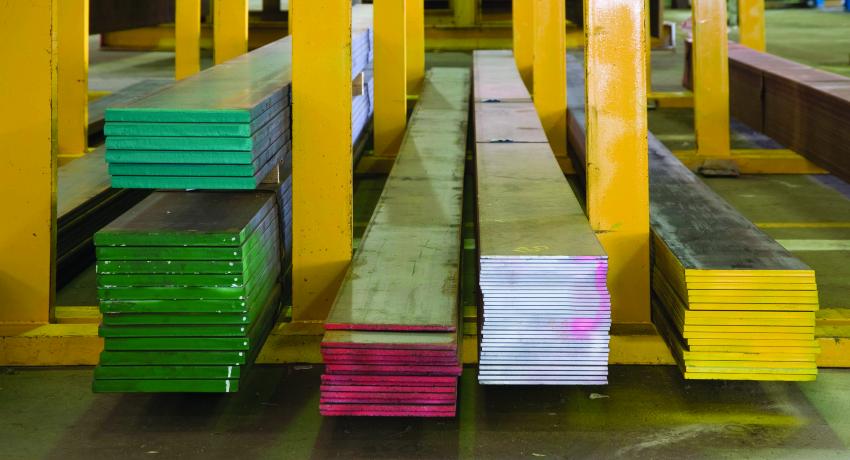
Long products remained the more resilient component of Italy’s steel industry in 2024, with output broadly stable at 11.7 million tonnes, only 0.2% below the previous year. This represented 57.6% of national steel production, Italian steelmakers association Federacciai says in its annual report obtained by Kallanish.
However, performance across long products categories diverged. Rebar and beams increased their share, wire rod remained broadly stable, while merchant bar showed the weakest result. The latter saw production fall to 3.1mt, down 7.2% on-year.
Rebar registered the strongest growth in absolute tonnage terms, rising to 2.8mt, up 4.8%. Beams and structural steel also increased, reaching 849,000 tonnes, up 7.6% compared to 2023. Wire rod returned to growth after two years of decline, totalling 4.9mt, up 0.5%.
Against this backdrop, Italy’s overall steel production continued its declining trend last year. National output fell for the third consecutive year to slightly over 20mt, a reduction of 964,000 tonnes or 4.5% compared with 2023. The contraction was largely driven by persistent weakness in hot rolled flat steel, Federacciai’s report states.
In 2024, hot-rolled flat products output recorded a sharp deterioration, not only compared with the previous year but also in relation to volumes seen over the past two decades, reaching a new historic low. Production of hot-rolled flats fell by 9.8% from 2023 to 8.6mt. Hot rolled coil declined to 6.2mt, an on-year drop of 8.7%, while plate and other flats fell to 2.4mt, a decrease of 12.5%.
Natalia Capra France