


Producer prices in French industry stable in October 2025 from September
In October this year, producer prices in French industry remained stable month on month and were down by 0.8 percent year on year, according to the statistics released by France’s National Institute of Statistics and Economic Studies (INSEE). Producer prices for manufactured products in France fell by 0.1 percent in October compared to September and were up by 0.5 percent year on year.
In the given month, prices for exported manufactured products increased by 0.1 percent and prices of exported transport equipment rose by 0.4 percent, both month on month. On year-on-year basis, in October prices of exported manufactured products went down by 0.8 percent, while prices of exported transport equipment remained stable.
Meanwhile, import prices for manufactured products in France in October increased by 0.1 percent month on month and were down by 0.8 percent year on year.


ArcelorMittal criticizes France’s nationalization move, cites structural EU steel challenges
The French National Assembly, the lower house of the French parliament, has passed the bill to nationalize ArcelorMittal France, the largest steelmaker in the nation, in a vote held overnight from Thursday 27 to Friday 28 November 2025, Fastmarkets learned.
The bill was backed by the left-wing groups in the Assembly, and opposed by parties supporting the government, but passed by 127 votes to 41, a result its authors describe as a political signal on the future of steelmaking in France.
Since it is a parliamentary initiative, however, and not a government bill, the text now moves to the Senate, where a conservative majority is expected to reject or heavily amend it, and ministers have repeatedly stressed that the executive remains firmly opposed to nationalization.
ArcelorMittal’s position
When contacted by Fastmarkets, ArcelorMittal stressed that the nationalization of its assets “would in no way resolve the challenges faced by the steel industry in France and Europe.”
“The European steel market is flooded with massive low-priced imports, which have a devastating effect on European producers. Europe must defend its steel market and swiftly implement the trade defense measures announced in October, as well as an effective carbon border adjustment mechanism [CBAM],” the company’s statement, seen by Fastmarkets, reads. “Changing ArcelorMittal’s shareholder structure would do nothing to address these structural issues – quite the opposite. Breaking up French assets and separating them from the rest of the group would only severely worsen their situation.”
In March 2025, the company launched a major maintenance program worth more than €270 million ($314 million) at its two main French sites, including a three-month shutdown of the largest blast furnace at Dunkirk, on France’s north coast, against a backdrop of delays in a €1.8 billion decarbonization project for the same site.
In May 2025, the company reconfirmed its decarbonization plan for its French assets after several months of uncertainty, but other green investments in Europe remain on hold.
“Over the past five years, ArcelorMittal has invested approximately €1.7 billion in France. Recent investments have included a ladle furnace at Fos-sur-Mer on the south coast (€76 million) and a new electrical steel production unit soon to start operations in Mardyck on the north coast, representing ArcelorMittal’s largest investment in Europe in the past 10 years (€600 million),” the statement reads.
Trade unions and left-wing parties, however, criticize what they see as chronic under-investment in French facilities and argue that job cuts and postponed green investments are inconsistent with the public support and subsidies the group has received in France and at EU level.
ArcelorMittal’s assets in France
ArcelorMittal runs several assets in France and is the largest steelmaker in France and in Europe.
ArcelorMittal Dunkirk has capacity to produce around 7 million tonnes of pig iron per year and over 6.5 million tpy of crude steel. The asset is focused on hot-rolled coil (HRC) production.
ArcelorMittal Fos-sur-Mer can produce 5 million tpy of pig iron at two blast furnaces and around 5 million tpy of crude steel. The facility produces HRC and cold-rolled coil (CRC).
The company, however, pointed out that both facilities have been working at reduced rates recently.
“Our major sites in Dunkirk and Fos-sur-Mer deliver less than 30% of their production to France, due to the deindustrialization that has affected our country.
“Without European customers and without other ArcelorMittal companies to which we supply steel, our sites would be in a far more precarious position,” a company spokesperson told Fastmarkets.
The Florange site, northeastern France, can produce up to 2.8 million tonnes of flat steel products a year, including hot-rolled, cold-rolled, galvanized coil and tinplate.
The Mardyck site is equipped with pickling and cold-rolling mill and two galvanizing lines. Estimated yearly output at the site is over 3 million tonnes of flat steel products.
The Desvers site, in the north, can produce around 400,000 tonnes of galvanized coil per year.
The Basse-Indre site, in the west, produces tinned and electrolytic chromium steel coils and sheets.
The Montataire site, north of Paris, has three galvanizing lines and one organic coating line, with a total capacity of over 1 million tonnes of coated coil per year.
And the Mouzon site, in the northeast of the country, has two lines to produce corrosion-resistant flat steel products.
Through its Industeel subsidiary, the group operates plate mills at Le Creusot, eastern France, and Châteauneuf, in the south, EAF-based facilities that make heavy steel plate and forged blocks for demanding industries; facilities that have recently been certified under the ResponsibleSteel standard.
EU Steel market challenges
Earlier this year, ArcelorMittal announced massive job cuts across French assets due to poor fundamentals, Fastmarkets reported.
The European steel sector continues to struggle amid rising production costs, growing pressure from low-priced imports from Asia, and a worsening demand-supply imbalance, industry sources told Fastmarkets.
And ArcelorMittal is not alone in planning workforce reductions. In April 2025, Tata Steel Netherlands announced plans to cut 1,600 jobs, Fastmarkets reported.
In November 2024, Germany’s largest steelmaker, Thyssenkrupp, announced plans to reduce its steel output and cut around 11,000 jobs to adapt to the fundamental changes taking place across the European steel market.
At the end of October 2025, ThyssenKrupp had already idled one BF in Duisburg, West Germany, in response to deteriorating market conditions in Europe, Fastmarkets reported.
Apparent demand for flat steel in Europe saw a brief uptick between late July and early August, driven by restocking, expectations surrounding the implementation of the EU’s Carbon Border Adjustment Mechanism (CBAM), and anticipation of tougher steel safeguard measures scheduled to reshape import flows in 2026.
By September, however, prices had leveled off and European mills struggled to secure further increases due to weak end-user demand.
In mid-October, shortly after the European Commission proposed a new, stricter trade regime to replace existing steel safeguards, European mills began announcing price increases for HRC for first-quarter delivery.
Under the proposal, only 18.3 million tonnes of steel per year would be allowed into the EU tariff-free; any volumes above that threshold would incur a 50% duty. For context, EU carbon steel imports totaled 26.36 million tonnes in 2024, up by 6.4% from 24.78 million tonnes in 2023, according to Eurofer.
The price increases, announced in late-October by European flat steel producers, were only partially accepted by the market, which, however, allowed steelmakers to secure some volumes for the first quarter. Despite muted trading activity in the past few weeks, CBAM and safeguard uncertainty have been sustaining European HRC prices. Local mills were comfortably booked and were quite optimistic regarding first-quarter price developments, expecting CBAM and safeguards to further limit import activities.
Fastmarkets’ daily steel hot-rolled coil index domestic, exw Northern Europe moved marginally to €615.00 per tonne on November 28, down by just €0.17 per tonne from €615.17 per tonne on November 27.
The index was up by €2.92 per tonne week on week and by €12.95 per tonne month on month.
Julia Bolotova, Todor Shishkov

Polish rebar prices drop slightly on regulatory uncertainty, sluggish demand
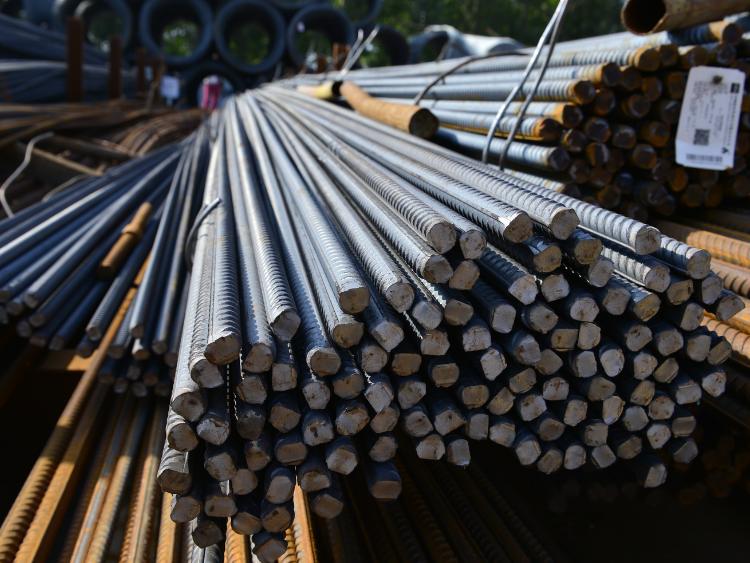
Polish steel rebar prices decreased slightly in the week to Friday 28 November, while the market prepares for the implementation of the EU’s Carbon Border Adjustment Mechanism (CBAM) and the prospect of higher scrap prices in 2026, sources told Fastmarkets.
Polish steel rebar prices decreased slightly during the week to Friday November 28 while the market prepared for the implementation of the EU’s Carbon Border Adjustment Mechanism (CBAM) and the prospect of higher scrap prices in 2026, sources told Fastmarkets.
“Right now, we don’t know what will happen with CBAM or what importers will have to pay at the border,” one distributor source said, adding that more expensive scrap will also lead to “slow increases in prices” from January.
Over the week to Friday, estimations of workable levels for rebar were heard at 2,420-2,450 zloty ($662-670) per tonne CPT, with some offers reported around 2,450-2,480 zloty per tonne CPT, the same as the previous week.
But a purchase of more than 1,000 tonnes of rebar was also reported at a lower price of 2,380 zloty per tonne CPT during the week.
Fastmarkets’ weekly price assessment for steel reinforcing bar (rebar) domestic, cpt Poland was 2,380-2,450 zloty per tonne on Friday, widening downward by 40 zloty from 2,420-2,450 zloty per tonne one week prior.
Meanwhile, wire rod prices were stable during the week.
Estimates of workable levels were reported around 2,600-2,650 zloty per tonne CPT during the week to Friday, the same as the previous week.
Fastmarkets’ weekly price assessment for steel wire rod (drawing quality), domestic, delivered Poland was 2,600-2,650 zloty per tonne on Friday, unchanged week on week.

ArcelorMittal Spain upgrades coating line, BF restart troubled
ArcelorMittal has temporarily halted the coating line at its Avilés steelworks to undertake improvement work to enhance the quality of production and improve performance, Kallanish notes.
The project includes the replacement of the hydrochloric acid tanks used to treat the steel that comes out of the hot strip mill, the company explains. The upgrade is scheduled to last until 26 December, ArcelorMittal’s spokesperson explains.
This shutdown comes in addition to the maintenance works carried out at sinter plant A and the troubled restart of blast furnace B at ArcelorMittal’s nearby Gijón plant.
Gijón has not produced pig iron normally since last summer’s maintenance shutdown. After the failed start-up at the end of September, the company began a new BF ignition operation using the complex oxypropane method. This process causes significant wear and tear on the facility, as it requires drilling into the furnace crucible.
Due to the solidification of part of the crucible, there is less space inside the furnace for pig iron, which ultimately causes the hot air nozzles to burn out and makes it impossible to stabilise the furnace’s operation. This was understood from last week’s meeting between trade unions and the blast furnace department of ArcelorMittal Spain.
“On Friday, oxypropane technology was reintroduced into the blast furnace, and we are currently attempting to restart it,” the company adds.
According to workers’ representatives, BF B production could stabilise between the end of January and the first week of February if the start-up is successful, with the first pig iron smelting taking place at the end of December.
Todor Kirkov Bulgaria

Safeguard amendment proposes permitting carry-over, easing melt-and-pour proof
The European Parliament’s Committee on International Trade (INTA) has published its draft report on the proposed trade measure to replace existing EU steel safeguards next year. This suggests allowing the carry-over of unused quarterly tariff quota volumes, providing more flexibility on “melt and pour” origin proof, and banning all steel from Russia and Belarus.
Rapporteur and INTA Committee vice chair Karin Karlsbro published the draft last week after receiving feedback from a fairly limited number of sector participants including thyssenkrupp, Eurofer, Jernkontoret, the European Steel Processors Association and Metal Packaging Europe External Affairs ASBL, as well as certain diplomatic bodies, Kallanish notes.
Unlike the European Commission’s proposal in October, which prohibited the carry-over of unused quota volumes into the following quarter, Karlsbro’s report suggests this should be permitted to ensure continuity and avoid supply disruptions.
It also expands the list of documents to be accepted as proof of the country of “melt and pour” of the steel used in the production, compared to the Commission’s proposal to accept only mill certificates.
Also to be permitted are invoices; delivery notes; quality certificates; long-term declarations from suppliers; cost accounting and production documents; customs documents from the exporting country; commercial correspondence; production descriptions; or declarations made by the manufacturer if they relate directly to the consignment in question.
All products from Russia and Belarus should meanwhile be subject to an automatic prohibition.
Imports originating in Ukraine should be fully exempted for as long as that country is facing an exceptional and immediate security situation.
The draft also proposes more frequent re-evaluations of the new trade measure. The Commission should assess the measure’s effectiveness at the latest within one year from the date of entry into force. It should draw up an annual report on the implementation of this regulation and submit it to the European Parliament and to the Council, while also making it public.
Before the end of the second year from the date of entry into force of the regulation, and every two years thereafter, the Commission should evaluate the evolution of the parameters that justified its adoption. Besides the impact on the steel market, the effect on downstream value chains must also be assessed, the report suggests.
During a hearing earlier this year, INTA Committee chair Bernd Lange said Karlsbro was scheduled to present her report on the matter on 2 December, after which it would be open for amendments and a vote by the ITRE Committee by mid-January. Parliament was expected to vote on the final report in February (see Kallanish passim).
Adam Smith Austria

Lack of clarity ‘undermines’ CBAM objectives: summit
A lack of clarity and guidance over the EU’s Carbon Border Adjustment Mechanism (CBAM) has undermined its policy objectives and created trade friction, panellists said during Friday’s CBAM summit in London organised by advisory firm Goyder and attended by Kallanish.
One panellist said CBAM was a “lighting rod issue” that had “galvanized the entire network” globally, rather than being an isolated regional trade issue. They noted CBAM could be a “powerful catalyst” for global carbon pricing but warned “the devil is in the details”, with not enough detailed guidance available.
They added that market participants were “operating in a very murky environment”, risking unnecessary trade friction which impedes and weakens the global supply chain.
“Ultimately, it undermines what is a very good policy objective,” they concluded.
A second panellist said that mistakes in CBAM’s implementation have resulted in paralysis as an industry reaction. They highlighted how many businesses have a “very limited understating of how substantially CBAM will change what they do”.
They added the “transitional period has been wasted” and warned that mid-size companies will suddenly find they have a bill to pay. Other companies will meanwhile not have taken CBAM seriously and will have entered deals they cannot make money on when they have to pay for CBAM certificates.
“There have been changes along the way and a lot of businesses say they expect there to be more change,” they noted. The panellist also said the EU should make clear that “enforcement is now real; this tax is here”.
“This isn’t theory, it’s practice,” said a third panellist who added there is an understanding at larger companies but this “gets foggier and foggier” as company size decreases. “The publication of outstanding information so that businesses have clarity is not there today. It needs to be published and it needs to be clear,” they added.
The second panellist queried why the data and learnings from the transition period had not been used by the European Commission for the default values. “The methodology does not rely on transitional period information,” they highlighted. This was “a big, missed opportunity to collect accurate data and learn lessons from it and that’s disappointing.”
They see this as a “chicken and egg” situation, where companies are very distrustful of data they are collecting as none of it has been verified. They also highlighted how communication from the European Commission had deteriorated from “extremely good” initially, with webinars organised, before drying up in late 2024. This came as the Commission “started fighting political fires and an enormous amount of climate regulations were scrapped”.
The participant also said the switch from quarterly reporting to annual was the “wrong step” which could lead to “incredible” cash flow swings.
“The Commission has created an absence of process,” they noted, meaning that getting actual values during the first year of CBAM will be “exceptionally difficult to do”.
However, a fourth panellist said that the EU’s recent simplification package was “a direct learning” and it was an ongoing process, with policymakers “open” to learning.
Carrie Bone UK
Spanish rebar prices seen moving up
The Spanish rebar market closed November with prices unchanged, with most sellers and distributors expecting mills to hike values for the next purchasing round.
“Prices have been stable since the end of September. However, values should move up in the next few days,” a market source tells Kallanish. “Some producers are already showing signs that current high production costs are reducing their margins, making price increases inevitable.”
Apart from ArcelorMittal, which appears to be making no exceptions despite market uncertainty, some long product producers in Spain seem to be more flexible in offering discounts for new contracts.
“The price increase comes at a time when construction activity is on the rise. Distribution centres are faced with the dilemma of how much material to stock up on, as demand is high,” says one seller. “Prices are not expected to fall. We are facing uncertainty due to the new market regulations [CBAM], which suggest that high levels will continue for some time.”
Based on the increase in pre-bookings in recent weeks, traders confirm they expect purchases to remain stable until mid-December and before the Christmas market closes, even with higher prices.
According to Spanish Chamber of Commerce data, the monthly index for Spanish domestic rebar prices (B-500 SD 12 metre/12mm) increased for a tenth consecutive month in November. The index stood at 201.26, up 0.5% over October. It was also 12.77% higher year-on-year. The index is based on a value of 100 in 2014.
Current offers for 16mm rebar in Spain are at €368-373/t ($426-432) base. Including €262/t size extras and loading expenses, transaction values are at €630-635/t ex-works.
Todor Kirkov Bulgaria

Danieli Corus acquires NewFer
German iron ore and pelletising technology provider NewFer has been acquired by engineering firm Danieli Corus, becoming its subsidiary from 1 December, Kallanish notes.
The companies have signed an agreement under which all NewFer activities will be transferred to Danieli Corus, including 35 employees from the Eschborn head office and the Kolkata representative office. A new entity, Danieli NewFer, has been created and will supply pelletising technology, ore beneficiation packages, engineering, equipment and related services to the global mining and primary steel sectors.
“This strategic move comes at the right moment, with the global steel industry looking at an increased demand for high quality iron ore concentrates and higher pelletising capacities to accommodate decarbonisation requirements,” NewFer ceo Lars Dümmel comments in a joint note sent to Kallanish.
The integration combines NewFer’s expertise in beneficiation and agglomeration with the Danieli Corus network and its capability to execute large scale projects.
NewFer’s technologies will expand Danieli’s upstream offering, giving it a full portfolio from iron ore through to steel, Danieli Corus chief commercial officer Guido van Hattum explains.
Danieli NewFer will continue to operate from Eschborn, while the India operations will relocate to the Danieli Corus office in Kolkata.
Natalia Capra France