


Celsa completes refinancing, eyes improved operating environment
Celsa has successfully completed its refinancing. As part of the transaction, Celsa is issuing €600 million ($702m) of HoldCo PIK notes, co-led by funds managed by Strategic Value Partners and its affiliates (SVP), alongside a €1.2 billion issuance of senior secured bonds, SVP says.
Celsa’s low-emission EAF-based production is expected to create a competitive advantage for the firm ahead of anticipated EU changes that will reduce free CO2 allowances for European industrial producers as of 1 January 2026, an SVP spokesperson tells Kallanish.
“The completion of our debt refinancing marks the final milestone in the operational and financial transformation we began in 2023,” says Celsa chief executive Jordi Cazorla. “We are entering a favourable environment and are now able to capitalise on the positive market and expected regulatory developments in the near term. The continued support of our shareholders and financing partners remains invaluable throughout this journey.”
SVP co-led the financial restructuring of Celsa in 2022 and subsequently became a significant minority shareholder. Since then, Celsa, under a new management team, board and shareholder base, has completed a financial and operational turnaround, with shareholders contributing more than €900m of equity to facilitate the development of a comprehensive value-creation plan and complete refinancing.
“The business is now well positioned to take advantage of significant tailwinds in the coming years including the positive outlook for one of its main markets, construction, that will present an opportunity to strengthen its financial performance,” notes Álvaro Fabián, managing director, European Investment Team at SVP.
Celsa generated sales of €3.35 billion and adjusted Ebitda of €451m in the 12 months to September 2025, and employs 5,232 people.
SVP believes Celsa’s performance will be strengthened going forward by the value-creation plan providing cost and revenue enhancements, as well as the EU’s new trade regime supporting increased steelmaking utilisation and margins. Construction sector growth is also anticipated in Celsa’s markets, by 3.4% in Spain and 5.2% annually in Poland between 2024 and 2027.

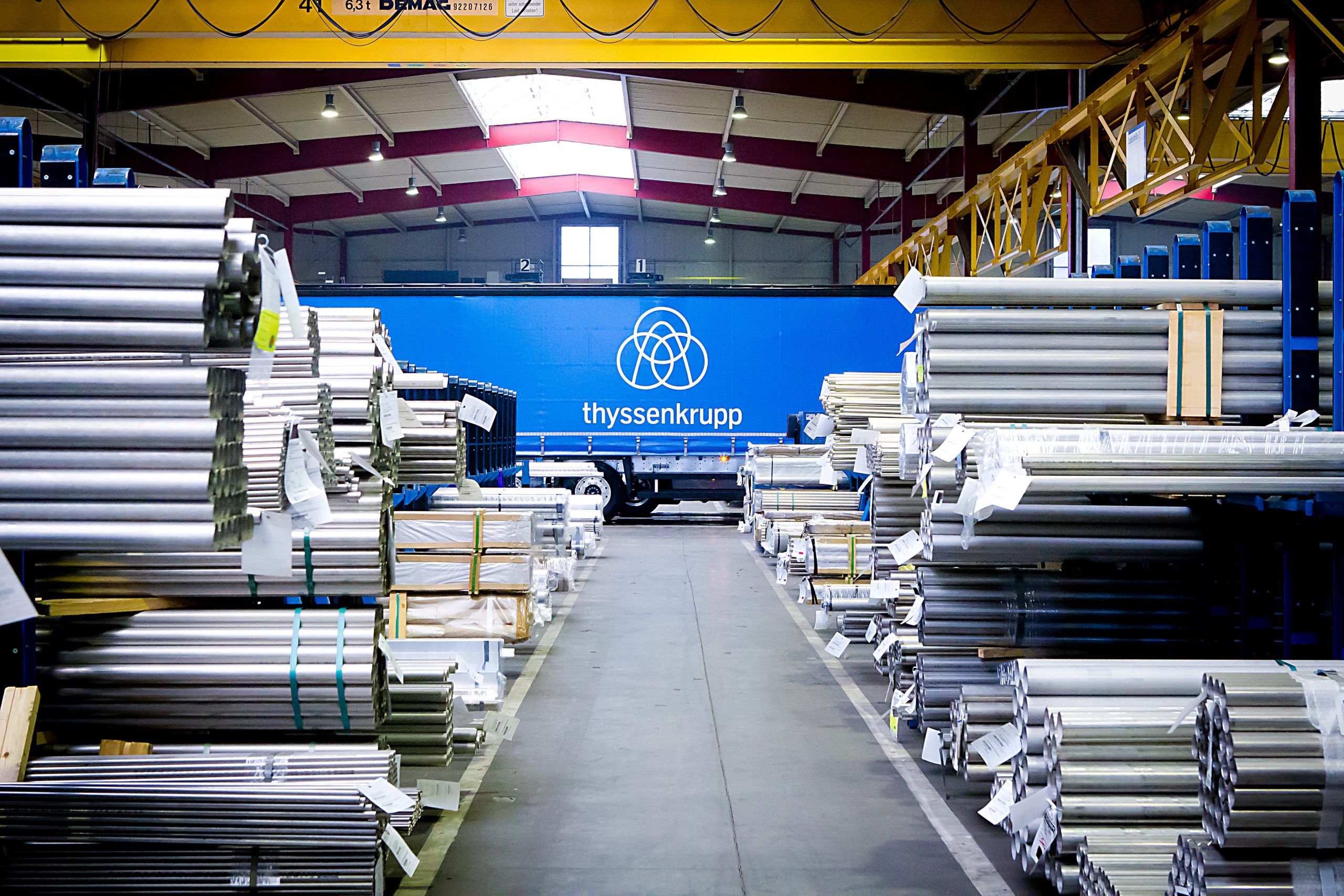
Thyssenkrupp forecasts steel growth but hefty restructuring costs
Germany’s thyssenkrupp AG anticipates revenue growth of between negative 2% and positive 1% in its fiscal year through September 2026.
This outlook appears cautious mainly due to expected declines in thyssenkrupp’s Automotive Technology and Decarbon Technologies divisions. Against that, the firm says it expects demand-induced growth for its steel units, distribution division tk Materials Services and steelmaking division tk Steel Europe. The group did not justify its positive sentiment on steel demand in the report or during its annual press conference on Tuesday.
Nevertheless, costs arising from the restructuring of the Steel division will affect the parent group to the point that it is forecasting a loss for the 2025/26 year. The overall restructuring involves layoffs and a reduction of steelmaking capacity.
The group is in close negotiations with Jindal Steel, which is testing a takeover of tk Steel. According to thyssenkrupp chief executive Miguel López, Jindal is fully aware of the restructuring efforts at tk Steel. “Without our campaign to make tk Steel competitive again, Jindal would not have come knocking in the first place,” Kallanish heard him say during the conference.
In the fiscal year ending September 2025, finished steel production reached 8.3 million tonnes, significantly below the prior-year level of 9.4mt. Apart from weaker market activity, the drop was also caused by temporary production restrictions for crude steel and at some downstream plants, as a result of conversion measures and technical problems, the firm says.
Order intake and revenue of the Steel division each fell by 9% on-year, to €9.1 billion ($10.6 billion) and €9.8 billion, respectively. Notably, the division achieved a big leap in earnings, coming from an Ebit loss of €770 million to a profit of €189m, caused by the one-off effect of the sale of thyssenkrupp Electrical Steel India.

Unrealistic regulations threaten EU automotive industry: Ford ceo
European policymakers say they want a sustainable automotive industry, but they are setting unrealistic regulations only to adjust them at the end of each year, says Ford chief executive Jim Farley.
“However, when consumers do not show up, this is a recipe for turmoil,” he writes in the Financial Times. “This approach disrupts a complex cycle of product design, engineering and supply chains that require long lead times and billions in investment. We urgently need a regulatory framework for Europe that provides a realistic and reliable ten-year planning horizon.”
According to Farley, on one side, the industry faces the world’s most aggressive carbon mandates, regulations that demand a pace of electrification that is decoupled from the reality of consumer demand. “On the other, we face a flood of state-subsidised electric vehicles [EVs] imports from China, structurally designed to undercut European labour and manufacturing,” he adds.
China has more than enough manufacturing overcapacity to sell to every new vehicle customer in Europe. Chinese brands have doubled their market share in the region in just 12 months, reaching a record 5.5% in August. Meanwhile, the market share of EVs in the EU has stagnated at about 16% – well behind the 25% required to meet Brussels’ 2025 targets.
EU vehicle production is now 3 million units below pre-Covid levels, Kallanish notes.
“This is not a transition, but it’s more like a wind-down of Europe’s automotive industry,” Ford’s ceo warns. “To be clear, the industry is not asking for a bailout. We are not asking for protectionism to shield inefficiency. The approach to regulation – mandate it and they will buy it – has failed. We must align carbon targets with actual market adoption and provide automakers with a realistic and reliable horizon. This includes giving consumers the option to drive hybrid vehicles for longer, bridging the gap rather than forcing a leap to EVs they aren’t ready to take.”
European car manufacturers have invested hundreds of billions in EVs. Governments should match that commitment with consistent incentives to buy these vehicles and a charging infrastructure that extends into rural areas, he adds.
According to Farley, aggressive carbon targets on commercial vehicles unfairly penalise the small and medium-sized businesses that generate more than 50% of Europe’s GDP. “But Europe faces a binary choice. It can foster a thriving, competitive auto industry that leads the world in green technology. Or it can cling to unachievable targets and watch as its market is dominated by imports while its own factories rust,” he concludes.

European steel CRC prices supported by regulatory changes, strong mill order books
European prices for steel cold-rolled coil were stable to slightly higher across various regions in the week to Wednesday December 10, with buyers’ appetite for steel coil still muted while the market prepares for the implementation of new trade regulations from January, Fastmarkets heard.
According to market sources, both buyers and sellers were postponing decisions because of prolonged uncertainty about the EU’s Carbon Border Adjustment Mechanism (CBAM) and other trade regulations, keeping demand low.
The import market remains “subdued” while the steel sector prepares for a “potential shift” in trade dynamics, a buyer source in Northern Europe said.
On Wednesday, Fastmarkets’ weekly price assessment for steel cold-rolled coil, domestic, exw Southern Europe, was €710-750 ($831-878) per tonne ex-works, widening upward from €710-720 per tonne ex-works in the previous week.
The upper end of the assessment reflected a CRC purchase reported at €750 per tonne ex-works, while estimates of workable prices were heard around €710-720 per tonne ex-works during the week.
The only CRC supplier in Italy was sold out for January and even February, trade sources said, but was holding back from announcing new offers, awaiting more clarity on CBAM.
On December 10, finalized CBAM benchmarks and default values passed a European Commission CBAM committee vote.
But the adopted values have yet to become official – they were expected to be published in the EU’s Official Journal before December 25, Fastmarkets heard.
Meanwhile, domestic CRC prices in Northern Europe remained stable.
Fastmarkets’ weekly price assessment for steel cold-rolled coil, domestic, exw Northern Europe, was €710-720 per tonne ex-works on Wednesday, unchanged week on week.
Market sources said that trading was subdued due to high stocks at buyers. Suppliers were comfortably booked as well, and were in no rush to put new offers on the table.
Market sources noted some increase in offer prices for cold-rolled and galvanized coil from one European supplier – to €780 per tonne delivered for March delivery, compared with €750 per tonne delivered for January and February. This was because of tighter availability, especially for cold-rolled coil, which was predominantly supplied by imports, but currently more than half of import CRC volumes were under anti-dumping investigations.
On December 3, the European Commission presented a new registration process for some imports of cold-rolled steel products from India, Japan, Taiwan, Turkey and Vietnam. Under the new rule, duties would be applied retroactively on imports from those jurisdictions that were found to have been dumped into the EU market between July 1, 2024, and June 30, 2025.
The Commission’s announcement was the next step in its anti-dumping investigation into cold-rolled flat steel imports, launched on September 18, 2025.
This step was intended to enable the possible imposition of anti-dumping duties on these imports following an investigation, Fastmarkets understands.
Therefore, European buyers have been very cautious with CRC bookings recently, choosing “safer” origins outside of the AD investigation.
“South Korea and Brazil are ‘reliable’ suppliers, more or less,” a buyer in Italy said. “Besides, Brazil has relatively low default emissions values under CBAM, so it’s additional advantage.”
Meanwhile, CRC import prices were broadly stable in the week to Wednesday.
Fastmarkets’ price assessment for steel cold-rolled coil, import, cfr main port Southern Europe, was stable at €600-620 per tonne CFR, while the price assessment for steel cold-rolled coil, import, cfr main port Northern Europe, was €604-620 per tonne CFR, also unchanged week on week.
On the other hand, the DDP assessment for CRC imports to Southern Europe edged upward slightly on Wednesday.
Some traders were increasingly offering DDP deals and taking on CBAM-related risks on the seller’s side, but buyers remained wary of potential cost escalations.
Fastmarkets’ weekly price assessment for steel cold-rolled coil, import, ddp Southern Europe, was €700-725 per tonne this week, widening upward from €700-720 per tonne on December 3.
Estimates of workable prices were reported around €700-720 per tonne DDP this week. Meanwhile, a deal from South Korea for 10,000 tonnes of material was heard at €725 per tonne DDP, reflected in the assessment’s upper end margin.
Fastmarkets’ weekly price assessment for steel cold-rolled coil, import, ddp Northern Europe, was €700-730 per tonne on Wednesday, unchanged week on week.


Slow demand, ample stocks keep European HRC market flat as industry digests CBAM updates
European hot-rolled coil (HRC) prices were broadly stable in a quiet market while participants digested the recent Carbon Border Adjustment Mechanism (CBAM) updates, Fastmarkets heard on Thursday December 11.
In Northern Europe, trading was quiet. Buyers held sufficient stocks and suppliers were sold out for January delivery and partially for February in some cases, therefore there was no rush for booking from either side.
“Our stocks [of HRC] are more than enough. Overall, there is no shortage of material and still plenty of imports in the ports,” a buyer in Germany said.
“The situation will change dramatically as of January, when CBAM becomes fully operational and new imports costs will jump by €150-200 ($176-235) per tonne or even higher for some origins,” they added.
The European Commission voted to accept benchmarks and default emissions values – key instruments for the implementation of the Carbon Border Adjustment Mechanism (CBAM) – on December 10, Fastmarkets reported.
Due to generally lower benchmarks and higher default values than in previous versions of the documents, CBAM costs for imports were expected to rise dramatically for many origins.
“There is not a single viable import option on the table [for HRC] as of today – all too risky because of CBAM,” a second trader said. “European mills will have an opportunity to push through another round of increases in the first quarter 2026,” they added.
Meanwhile, offers for February delivery HRC were reported at €630-650 per tonne ex-works in Germany and the Benelux area – largely flat since November.
Italian coil was offered to Germany at €650 per tonne delivered, with some transactions heard at €630-630 per tonne delivered.
Deals for domestic HRC in Germany were reported at €610-625 per tonne ex-works recently.
One German source said that for bigger volumes – of 3,000-5,000 tonnes – it was still possible to negotiate €600 per tonne ex-works, but “nobody was booking such big lots lately.”
As a result, Fastmarkets’ daily steel hot-rolled coil index domestic, exw Northern Europe was calculated at €621.17 per tonne on Thursday, up by €1.59 per tonne from €619.58 per tonne on Wednesday December 10.
The index was up by €1.17 per tonne week on week and by €10.29 per tonne month on month.
Sources noted some increase only in offer prices for downstream flats – cold-rolled and galvanized coil – and from only one European supplier to €780 per tonne base delivered for March delivery compared to €750 per tonne base delivered for January and February.
The European CRC market is traditionally dominated by imports, especially for base grades. However, currently over 70% of import CRC volumes are under anti-dumping investigation, Fastmarkets reported, which prompted local buyers to rely more on European mills.
“Mills are also not in a huge hurry to increase flat steel prices. They are well booked and [will] watch how the market develops when CBAM is in,” a third buyer said.
Meanwhile, Fastmarkets’ corresponding daily steel hot-rolled coil index domestic, exw Italy was calculated at €612.50 per tonne on Thursday, up by €0.50 per tonne from €612.00 per tonne on Wednesday.
The index was also up by €10.62 per tonne week on week and by €13.75 per tonne month on month.
Local suppliers were sold out for January volumes, aiming for €610-625 per tonne ex-works for February delivery, but sales were “very limited,” Fastmarkets heard.
“Demand is very slow, buyers are well stocked and the market has already slowed for the festive period,” a seller source in Italy said.
“We will see how the market restarts after holidays in January. Booming prices are unlikely because of the demand situation, but mills will keep pushing prices up,” a buyer source in Italy said
In the secondary market, meanwhile, 4mm HR sheet was trading around €740-750 per tonne CPT, largely stable over the past two weeks.
Meanwhile, market participants said appetite for fresh import bookings remained subdued due to the EU’s forthcoming CBAM rules, the shift to the new trade regime and uncertainty around the quota volumes still available under existing safeguard measures.
Earlier in December, a large cargo of India-origin HRC was heard sold to Italy at $500 per tonne CFR for 2026 first quarter arrival, so already subject to CBAM costs. For Indian HRC, using default emissions values, CBAM costs would be over €200 per tonne.

Italian rebar prices hold steady; European markets slow ahead of Christmas break
Rebar prices in Italy’s domestic market remained stable in the week to Wednesday December 10 following a spike in the previous week, sources said.
Fastmarkets’ weekly price assessment for steel reinforcing bar (rebar) domestic, exw Italy was €560-600 ($652-699) per tonne on Wednesday, unchanged week on week.
Market participants in the region cited factors such as the upcoming Christmas holiday closure and slowing demand, sources said.
Other factors included lower availability of material, higher scrap and electricity costs and upcoming Carbon Border Adjustment Mechanism (CBAM) cost considerations.
Rebar prices also remained stable in Northern Europe, though some sources said higher scrap costs were adding some upward pressure on the market.
Fastmarkets’ price assessment for steel reinforcing bar (rebar) domestic, delivered Northern Europe was €595-600 per tonne on December 10, stable week on week.
Fastmarkets’ corresponding price assessment for steel reinforcing bar (Rebar) domestic, delivered Spain was €645-650 per tonne on December 10, also unchanged from the previous week.

Distributors struggle for competitiveness, downstream needs protection: DM-Stahl
The supply chain downstream from steel products must also be supported to ensure EU indigenous manufacturing of steel-containing products critical not only for defence but also energy infrastructure.
As extensively as some EU distributors have invested into efficiency, meanwhile, costly energy and distorted economic conditions mean they cannot compete. Measures are therefore needed to ensure a level playing field for imports in Europe.
So said German service centre DM-Stahl managing director Marcus Fix at last week’s EUROMETAL Steel Trade Day in Düsseldorf attended by Kallanish.
Using the example of a German automotive parts manufacturer that uses domestic grain-oriented steel as feedstock, Fix said the final product price would be 15% cheaper if the input material is sourced from China and produced in Germany. It would be 30% cheaper if the final product was bought in China. If the parts are bought from China and assembled in a free trade zone in Serbia, it would be 1.3% cheaper still than importing the final product from China.
“Let’s look at the big transformers we need for electrical grids,” Fix said. “Is it our pure will that we will buy these transformers in the future from China, knowing that they are not only transforming the power, but that there is always IT infrastructure behind that? How big is the risk at that moment that somebody shuts off our electricity with a push on the button? It’s not only defence. It’s about infrastructure, critical infrastructure, and the resilience of our whole economy.”
Like mils, distributors have invested into improvements and downsized their workforces but costly energy makes competition difficult. Environmental and trade regulations have also drastically increased the bureaucratic burden on small firms that do not have the resources to keep up.
Market visibility is very unreliable, given the unpredictable US presidency, uncertain CBAM costs and a big question mark over how EU steel suppliers will remain competitive in export markets under CBAM. Therefore, although Fix is a fan of open trade, “we need to shut the door to create a level playing field”, he argued. Thanks to efficiency investments, “we have the fittest mode over the last decade, and we enter the ring and the opponent stands up, takes a Magnum 45 and shoots us. That’s the situation,” he added bluntly.
Fix said he understands mills’ complaints about unfair imports and competition but that distributors are also under pressure from customers who can – as things stand – still buy cheaper steel derivatives from abroad. “We are in an industrial death spiral,” he exclaimed. “If you lose the steel processors, we will not need steel production in Europe.”
He also criticised some mills for complaining about imports as mill-related steel service centres and distributors are sill importing considerable tonnages. “I think all the mills who are currently asking for help in the European Commission should be more consequent and more consistent in their behaviour in that respect,” he noted.
Another potential issue is that EU mills have previously been unwilling to sell commercial grade steel such as S235 as they have branded themselves premium, high-value-added suppliers. With imports about to become more restricted, “we will be facing very interesting discussions regarding the portfolio that we can buy”, he concluded.

EU needs steel value chain approach: Ronald de Haan
The EU must protect its entire steel value chain from imported competition that plays by a different set of rules, and should mandate sustainability criteria for procurement supported by digital passport use for steel, says Tata Steel Nederland director markets, pricing & services Ronald de Haan. The alternative is that the value chain will migrate outside the bloc.
Participants at each stage of the EU supply chain must collaborate closely to ensure its integrity. “Because in the end, if … a certain part of the value chain breaks, I think the whole value chain will break, because … the whole value chain will migrate towards a different country,” de Haan said during last week’s EUROMETAL Steel Trade Day in Düsseldorf attended by Kallanish.
Macroeconomic indicators in Europe are relatively positive, with inflation normalising back towards 2%, interest rates coming down, PMIs hovering at 50 or just above, and fixed investment performing satisfactorily. One issue however has been the loss of share in export markets due to competition with subsidised products.
Moreover, a lack of consumer and investor confidence amid US unpredictability and wars, as well as high energy costs, low productivity and delaying bureaucracy are stifling EU industry growth. Companies are “in survival mode” and not investing with long-term perspectives, de Haan said.
EU imports of steel derivatives have accelerated in recent years. China now produces around 27 million cars annually but does not consume this output entirely. “So what do you do if you have empty stamping plans? Well, you often stamp the parts. I mean, some of our, I would say, dear, automotive customers, they actually pick up that opportunity. So there’s a huge amount of parts being imported [into the EU], so demand that we cannot satisfy locally, that will not be serviced to service centres … We see import of empty cans, some imports of air,” de Haan added.
Germany was once a market leader in solar panels, but the majority of production has now migrated to China, which simply ships them in boxes for construction in Europe, he added.