


EU agrees on 90% emissions reduction target for 2040 under revised climate law
Negotiators from the European Parliament and the European Council have reached a provisional political agreement to amend the EU Climate Law, setting a new, binding intermediate climate target for 2040. Under the deal, the EU will cut net greenhouse gas emissions by 90 percent by 2040 compared with 1990 levels, reinforcing the bloc’s pathway toward climate neutrality by 2050.
The agreement introduces additional flexibility in how member states can meet the 2040 target, reflecting the view of both Parliament and Council that the green transition should proceed alongside efforts to strengthen EU competitiveness. From 2036, up to five percentage points of the required emissions reductions may be achieved through the use of high-quality international carbon credits that are compatible with the Paris Agreement. This represents a higher allowance than originally proposed by the European Commission. At the insistence of Parliament, safeguards have been added to ensure that such credits do not finance projects in partner countries that conflict with the EU’s strategic interests.
Commission to assess role of carbon credits and protect ETS integrity
In parallel, the Commission committed to further analyzing the role of international carbon credits in the upcoming climate legislation linked to the 2040 target. In doing so, it emphasized the need to preserve the stability and integrity of the EU Emissions Trading System (ETS).
The agreement will also allow domestic permanent carbon removals to offset emissions that are difficult to abate under the ETS, while expanding flexibility across sectors and policy instruments to ensure cost-effective emissions reductions.
ETS2 introduction postponed to 2028
As part of the compromise package, negotiators agreed to delay the start of ETS2 by one year. The new system, covering emissions from fuel combustion in buildings and road transport, will now begin in 2028 instead of 2027. The postponement is intended to provide additional time for implementation and to allow households, businesses and member states to adapt to the new framework.
Biennial review mechanism built into revised climate law
The amended Climate Law introduces a structured two-year review cycle. The Commission will regularly assess progress toward the 2040 target, taking into account latest scientific evidence and technological developments, adequacy of net carbon removals at EU level, implementation challenges across sectors and broader economic factors, including energy prices and impacts on businesses and households. Based on these assessments, the Commission may propose further amendments, including potential adjustments to the 2040 target or additional policy measures, with the aim of safeguarding competitiveness, economic prosperity and social stability.
The provisional agreement will now be submitted for a vote in the European Parliament and must also be formally endorsed by the Council. Once adopted, the amended EU Climate Law will enter into force 20 days after publication in the Official Journal of the European Union.


UK government confirms continued British Steel support, to publish national steel strategy in 2026
The UK government has reaffirmed its commitment to supporting the local steelmaker British Steel under the Steel Industry (Special Measures) Act 2025, confirming ongoing financial backing, regular parliamentary oversight and a clear timeline for a national steel strategy.
British Steel under special measures
According to the Parliamentary Under-Secretary of State for Business and Trade Chris McDonald, a central priority remains the safe and continuous operation of British Steel’s blast furnaces. Government officials are continuing to provide on-site support in Scunthorpe, ensuring uninterrupted domestic steel production while overseeing the appropriate use of public funds.
Funding position and budget framework
The government confirmed that all funding for British Steel is being drawn from existing budgets. To date, approximately £274 million has been provided as working capital. This funding has covered:
- Procurement of raw materials
- Payment of employee salaries
- Settlement of unpaid bills, including amounts owed to SMEs within the supply chainThese expenditures will be recorded in the Department for Business and Trade’s accounts for the 2025-26 financial year.
UK steel strategy to be revealed in early 2026
The government reiterated its commitment to supporting the UK steel sector and confirmed that a national steel strategy will be published in early 2026. A robust trade policy will be a core pillar of the strategy, aimed at:
- Defending the domestic industry against unfair trade practices
- Developing new measures against global steel overcapacity
- Preparing for the expiry of UK steel safeguard measures in 2026Ensuring balanced import levels while engaging with international partners

EU domestic HRC market in stalemate, digests update on import regulations
Trading activity in the European domestic hot-rolled coil market remained limited on Monday December 15 as neither buyers nor sellers felt compelled to transact.
Customers booked sufficient quantities of material scheduled for delivery in January, while mills’ order books were also adequately filled.
At the same time, the market continues to digest the European Commission’s newly accepted benchmarks and default emission values under the Carbon Border Adjustment Mechanism (CBAM), which will come into force on January 1, 2026.
“There seems to be more people convinced that prices could really surge once the excess stock that has been brought in pre-CBAM is digested,” a buyer source said.
So far, however, prices in both the Northern and Southern regions have been stable.
In the North, mills’ offers from key suppliers varied within the range of €630-650 ($740-763) per tonne ex-works, while estimates of workable prices varied within the wide range of €610-630 per tonne ex-works, depending on tonnage. However, customers have shown no interest in large tonnages now.
Fastmarkets’ daily steel hot-rolled coil index domestic, exw Northern Europe was €621.67 per tonne on Monday, stable since Friday December 12.
The index was down by €0.58 per tonne week on week but up by €8.75 per tonne month on month.
In Italy, offers varied within the range of €610-640 per tonne ex-works, while workable levels were estimated at €600-620 per tonne ex-works.
Fastmarkets’ daily steel hot-rolled coil index domestic, exw Italy was calculated at €611.67 per tonne on Monday, up by €0.42 from Friday.
The index was up by €0.42 per tonne week on week and up by €10.42 per tonne month on month.


Weak demand keeps Polish long steel prices flat; holiday lull
Polish steel rebar and wire rod prices remained flat in the week to Friday December 12, with reports of “no price changes” owing to subdued demand and a “silent” market before the holidays, Fastmarkets heard.
According to market sources, higher scrap prices and the implementation of new trade regulations, including the EU’s Carbon Border Adjustment Mechanism (CBAM), could help boost long steel prices in 2026.
However, some market players are still uncertain about the possibility of new price rises as demand levels remain low in the country, Fastmarkets heard.
During the week to Friday, market sources estimated workable levels for wire rod at around 2,600-2,650 zloty ($722-736) per tonne CPT, the same as in the previous assessment period.
Fastmarkets’ weekly price assessment for steel wire rod (drawing quality), domestic, delivered Poland was 2,600-2,650 zloty per tonne on Friday, unchanged week on week.
Polish rebar prices, meanwhile, were also stable in the week to Friday.
Estimates of workable levels were heard at around 2,400-2,450 zloty per tonne CPT, the same as in the previous week. An offer was also reported at 2,420 zloty per tonne CPT.
Therefore, Fastmarkets’ weekly price assessment for steel reinforcing bar (rebar) domestic, cpt Poland was 2,400-2,450 zloty per tonne, also unchanged week on week.

Thyssenkrupp announced that it expects losses of up to EUR 800 million in 2026
German industrial giant thyssenkrupp faced heavy sell-offs in the markets due to its weak outlook for the 2026 financial year. The company stated that it could post a net loss of up to €800 million in 2026, driven by provisions related to the planned restructuring of its steel division. Following this outlook, thyssenkrupp shares fell by as much as 13% during the day.
The company’s management stated that negotiations are ongoing with India-based Jindal Steel International regarding the sale of thyssenkrupp Steel Europe (TKSE), which lies at the core of the expected losses. It was noted that a binding offer could be considered once the due diligence process is completed, while thyssenkrupp CEO Miguel Lopez described a potential deal with Jindal as a “perfect fit.” Lopez added that an alternative plan is also in place should the transaction not materialize, but said details would be disclosed at the appropriate time.
thyssenkrupp has long been seeking to divest TKSE, Germany’s largest steel producer. However, previous sale attempts have failed largely due to EUR 2.5 billion in pension liabilities tied to the business. TKSE’s current book value stands at EUR 2.4 billion.
The company also announced that intense competition from Asia, US tariffs, and a weak European economic outlook led TKSE to record an impairment of EUR 600 million in the last financial year. These adverse conditions have also weighed on thyssenkrupp’s other business segments.
Highlighting the challenging market environment, the company expects free cash flow before M&A—a key metric closely watched by investors—to come in between minus EUR 300 million and minus EUR 600 million in 2026. This represents a significant deterioration compared with the positive free cash flow of EUR 363 million recorded in 2025, which marked the company’s third consecutive year of positive cash flow.
Meanwhile, adjusted operating profit for 2026 is forecast to range between EUR 500 million and EUR 900 million, below the EUR 918 million market expectation reflected in a company-compiled analyst survey.
Following the recent listing of a minority stake in its naval vessels unit TKMS, thyssenkrupp continues to evaluate potential share sales across all business segments in its portfolio. Despite the challenging financial outlook, the company plans to maintain its dividend at the 2024 level, proposing a dividend of EUR 0.15 per share for 2025.
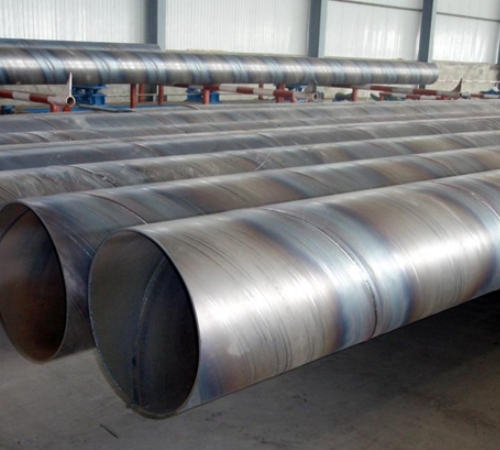
Interpipe enters agreement to purchase AMTP Roman shares
Interpipe has entered into an agreement to acquire shares in Romania-based ArcelorMittal Tubular Products (AMTP) Roman, the Ukrainian steelmaker tells Kallanish.
“Completion of the transaction remains subject to the satisfaction of customary closing conditions, including the receipt of required antitrust and foreign direct investment approvals,” Interpipe’s spokesperson says. “Until completion, the two companies will continue to operate independently and maintain their respective business activities as usual.”
“We look forward to finalising the transaction in due course and until then, no further comments will be provided,” he adds.
AMTP Roman is a major seamless pipe producer, formerly known as Petrotub, specialising in pipes for energy, structural, and pressure applications. Its capacity is 320,000 tonnes/year.
Earlier, Interpipe confirmed its strategic commitment to continuous investment and production modernisation, even during wartime. The company is placing particular emphasis on developing export markets. Europe and the United States remain its primary sales markets, but they are strengthening protection for their domestic producers, the pipemaker notes.
In 2026, Interpipe will invest further in new equipment. It intends to continue its $120 million investment programme to modernise its railway division through 2032.
Interpipe chief executive Luca Zanotti said previously the company has all the prerequisites for scaling globally and becoming truly international (see Kallanish passim). Over the past ten years, it has undergone a dramatic transformation in diversifying its sales markets. Its products are supplied to more than 80 countries, with a focus on Europe, North America and the Middle East.
Interpipe decreased crude steel production in the first half of the year by 17.8% on-year to 352,000 tonnes. Pipe output was up by 7.7% to 278,000t and pipe sales rose 14.4% to 302,000t, according to the latest figures.
Earlier, the European Commission approved Metinvest’s acquisition of Romania’s ArcelorMittal Tubular Products Iasi (AMTP Iasi), concluding that the deal does not pose competition concerns. The Ukrainian steelmaker will obtain sole control of AMTP Iasi, a producer of small welded carbon steel tubes.


German rebar price hikes remain restricted
Despite efforts by Germany’s rebar mills to bring up prices, the achievable value is not much above €600/tonne ($702) delivered and unlikely to see another uptick this year.
In earlier years, mid-December sometimes brought a jump in offer prices after mills had sufficiently filled their books into January and then demanded higher values for late sales. That effect appears weaker this year. Mills made a hike attempt already in November, with minor success. “They tried to push through an increase of €40, but achieved only €20,” a buyer tells Kallanish.
The offered base price would now be at €340/t – plus the standard size extra of €265, this would result in a delivered price of €605/t.
Although recent figures by Germany’s construction association, Hauptverband der Deutschen Bauindustrie, indicate an upward price trend that started in autumn, it seems to be occurring more in the segment of larger buildings and infrastructure. This is the playground of larger cut-and-benders, characterised by the rule that projects are seized in rough competition at low offer prices, sometimes below rebar intake costs.
According to the manager, that rule applied already in earlier times when construction sector activity was more favourable. Big players “compete at dumping prices to keep their staff occupied,” he says. He blames not so much the construction companies as he blames the benders, naming one group as especially notorious in this game.
“Mills are perfectly right with trying to achieve higher prices amidst high electricity and other costs, but they cannot succeed as long as the benders cannibalise one another,” he concludes.

CBAM default-value cost seen nearing €300/t, importers warn
An initial reading of the latest leaked CBAM benchmark values last week suggests default values could become prohibitive, levying costs approaching €300/tonne ($350.62/t), several coil importers tell Kallanish.
Despite the complexity of calculating them, sources say the actual value parameters would be “workable” if confirmed. Importing hot rolled coil from lower-emission Asian mills is estimated to incur €30-60/t in CBAM charges.
Buyers note all default values have been raised, including for countries previously seen as undervalued, such as China and Thailand. “The revised document doesn’t overhaul the system, but it makes it more complicated and harder to calculate,” a source says. The actual values benchmark remains low at 0.044 for hot rolled coil, versus default benchmark standing at 0.072 for scrap-based producers and 1.37 for blast furnace operators.
Importers are budgeting €60-70/t to continue buying from Asia. A mill source warns the emissions declaration process could prove extremely lengthy, while another buyer highlights the uncertainty created by the absence of a confirmed list of accredited inspectors.
Asian coil continues to arrive into Europe, but at a slower pace, as earlier bookings arrive at southern and northern ports. Indian HRC is expected to be penalised most heavily due to its coal-intensive steelmaking route, although costs vary by mill. One Indian supplier is offering HRC into southern Europe at around €510/t cfr and will have an estimated CBAM cost of €92-93/t.
Indian and Indonesian tonnages remain competitive, but customs clearance and quota constraints remain the key barrier to imports, a service centre says.
European coil prices, meanwhile, continue to firm. HRC is trading at €600-630/t base ex-works, while cold rolled and hot-dip galvanized coil are rising to €730-750/t base delivered in Belgium, France and Italy. Poland remains lower, at around €720/t. A German mill offering at €730-740/t delivered for HDG and CRC is said to be struggling to secure bookings.
“I think the market will rebalance by Q2,” a source notes. “Traders will gain clarity on CBAM costs in Q1, and visibility will improve.”