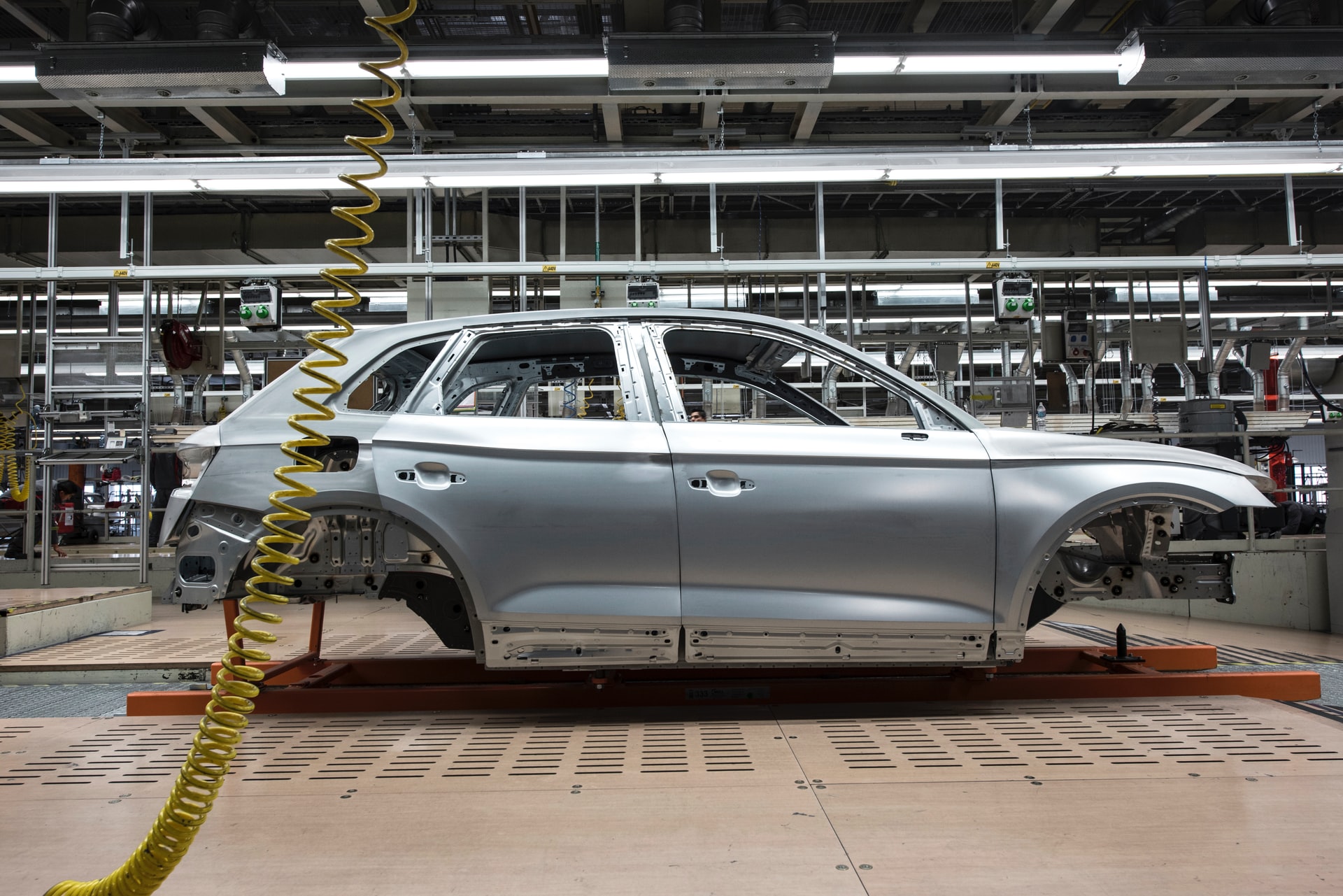
Volkswagen is closing its first factory in Germany in its 88-year history


WV Stahl: EC’s proposed CBAM fixes fail to meet steel industry needs
The European Commission (EC) has presented a new package of regulatory proposals aimed at addressing identified shortcomings in the design of the Carbon Border Adjustment Mechanism (CBAM). However, representatives of the steel industry have argued that the proposed measures do not yet go far enough to ensure that CBAM functions effectively.
Identification of gaps not sufficient
According to Kerstin Maria Rippel, CEO of the German Steel Federation (WV Stahl), the Commission has rightly identified key weaknesses in the current CBAM framework, but the remedies proposed remain insufficient. From the federation’s perspective, closing existing gaps decisively is a prerequisite for CBAM to deliver on its core objective.
Anti-circumvention measures seen as too weak
One of the main concerns raised by WV Stahl relates to the proposed approach to preventing circumvention. The federation described the measures as overly slow, vague and non-binding. Instead, WV Stahl has called for the mandatory application of country-specific standard emission values during a transitional period.
Export-related burden remains unresolved
A second key issue identified by the federation is the absence of a targeted and structural solution to relieve the burden on EU steel exports to third countries. In the federation’s view, this gap should be addressed through the continued free allocation for exported volumes.
Limited value-chain coverage creates risks
WV Stahl also criticized the proposals for failing to sufficiently cover the entire steel value chain. To prevent such outcomes, WV Stahl argued that CBAM would need to be comprehensively extended to steel-intensive downstream products, rather than applied in a fragmented manner.
Timing and urgency ahead of 2026
The federation further expressed concern over the timing of the proposed measures. With CBAM set to enter into force on January 1, 2026, WV Stahl noted that the need for corrective action has been evident for some time, yet effective solutions are still not in place. It therefore urged swift action to address the shortcomings and stressed that, until a fully functional CBAM framework is established, the German federal government should continue to advocate strongly for maintaining existing exemptions.
Against the backdrop of intensifying global competition, WV Stahl warned that partial or incomplete solutions carry significant risks. Without substantial improvements, there is a danger of large-scale shifts in emissions and value creation outside Europe. The federation therefore called on EU member states and the European Parliament to push for meaningful improvements to the CBAM framework.
Author: SteelOrbis Editorial Team


ArcelorMittal SSC completes modernization of Fimi cross-cutting line in Kraków
ArcelorMittal Steel Service Centres (SSC) Europe, Poland-based subsidiary of Luxembourg-based ArcelorMittal, has announced that it has completed a major modernization of its Fimi cross-cutting line in Kraków by implementing a hybrid straightening technology that significantly improves material quality and manufacturing stability. The project enables delivery of steel sheets with tighter flatness tolerances and reduced internal stresses, enhancing safety and efficiency for thermal cutting processes.
A comprehensive modernization
The comprehensive project, valued at over PLN 29 million ($8.08 million), encompassed the purchase and installation of a modern stretcher straightening machine, electrical infrastructure upgrades, advanced measurement systems, and integration with the existing production line.
With the new technology, ArcelorMittal SSC can annually supply approximately 150,000 mt of enhanced performance sheets to the European market, targeting demanding sectors such as railway, automotive and construction machinery manufacturing.
Testing across multiple steel grades including S355JR, S355MC, S500MC and S700MC showed that 92 percent of samples achieved the top Laser Premium standard, while all met Laser Classic requirements after straightening and thermal cutting. This performance demonstrates the effectiveness of the new straightening process in reducing deformation and improving material reliability.
Project leaders highlighted that the innovation not only improves flatness and process predictability but also strengthens ArcelorMittal SSC’s competitiveness and delivers tangible benefits for customers, such as greater production reliability.
Author: SteelOrbis Editorial Team

EU’s new steel safeguard regime to come into effect on July 1, 2026
The EU’s new steel safeguard regime is scheduled to enter into force on July 1, 2026, with the expiry of the current safeguard measures on June 30, 2026, according to the latest draft of the regulation. The post-safeguard regulation is intended to provide continuity and predictability for the EU steel market following the end of the current safeguard measures, while allowing for adjustments based on evolving market conditions.
According to the draft regulation, Norway, Iceland and Liechtenstein will be exempt from the measures pursuant to the European Economic Area agreement. All other third-country suppliers will fall within the new framework once it takes effect.
The EU Council noted that the total value of adjusted quotas must be capped to remain between 15.2 million mt and 22.2 million mt, as SteelOrbis previously reported. In addition, the Council allowed unused tariff quota volumes in one quarter to be carried over to the next quarter within the same yearly period of application of the tariff rate quota. Under the proposed rules, unused volumes will remain available for 20 working days into the following quarter, offering greater flexibility for importers and market participants.
The European Parliament’s International Trade Committee is expected to vote on the draft at the end of January 2026, a step that would clear the way for inter-institutional negotiations between the Parliament, Council and Commission early next year.
Author: SteelOrbis Editorial Team

Italian crude steel production down 2.8 percent in November 2025
According to the latest data released by Federacciai, the Italian federation of steel companies, in November this year crude steel production in Italy totaled 1.8 million mt, down from 2.0 mt in October, while down 2.8 percent on year-on-year basis. In the January-November period this year, Italian crude steel production rose by 2.5 percent year on year to 19.3 million mt.
| 2025 | Crude steel | |||
| Month | 000/mt | Y-o-y change (%) | Cumulative (000/mt) | Y-o-y change (%) |
| Jan | 1,698 | 3.9 | 1,698 | 3.9 |
| Feb | 1,817 | -0.5 | 3,515 | 1.6 |
| Mar | 2,044 | 7.5 | 5,559 | 3.7 |
| Apr | 1,800 | 6.1 | 7,359 | 4.2 |
| May | 1,961 | 3.8 | 9,320 | 4.1 |
| Jun | 1,792 | -3.2 | 11,112 | 2.9 |
| Jul | 1,727 | 2.2 | 12,839 | 2.8 |
| Aug | 822 | 7.5 | 13,661 | 3.1 |
| Sep | 1,878 | 4.4 | 15,539 | 3.2 |
| Oct | 1,989 | 2.2 | 17,528 | 3.1 |
| Nov | 1,754 | -2.8 | 19,282 | 2.5 |
As for long products, the monthly output amounted to 1.1 million mt in November, up 7.2 percent year on year, whereas flat product output totaled 709,000 mt, down by 5.2 percent year on year. Italian long steel production amounted to 11.5 million mt in the first eleven months, exceeding the volume in the same period last year by 4.7 percent, whereas Italian flat steel production increased by 3.8 percent year on year to 8.3 million mt.

Romanian rebar prices edge higher due to CBAM, demand shows signs of recovery
Romania’s long steel market has seen another round of price increases this week, mainly driven by clearer CBAM related cost expectations and firmer pricing signals from other EU suppliers ahead of the extended Christmas holiday period. With both mill and spot prices moving higher, buyers looking to replenish stocks and hedge against potential post New Year increases have returned to the market, resulting in a modest improvement in demand compared with recent weeks. However, market sources stress that this recovery remains fragile. Much of the buying activity appears precautionary rather than demand led, as purchasers seek to secure material before further price hikes rather than in response to stronger underlying consumption. With year end holidays approaching and financial constraints still present, trading activity is expected to slow again, raising questions over the sustainability of the latest price increases.
As a result, domestic rebar prices have risen further. The country’s sole producer has increased its offers to €570-575/mt ex-works, up from €560-565/mt previously. In the retail market, traders have also lifted their quotations to €580-605/mt ex-warehouse, compared with €570-590/mt ex-warehouse last week.
In contrast, the wire rod segment has seen a more limited response. Although demand remains noticeably weaker than in the rebar market, prices have nevertheless edged higher in line with broader market movements. Traders report current offers at €575-585/mt ex-warehouse, up from €560-570/mt ex-warehouse a week earlier.
On the import side, buying interest has increased slightly, particularly toward nearby suppliers, while prices have continued to rise under CBAM related pressure, especially from EU origin material. According to sources, the Bulgarian supplier has raised rebar offers by €10/mt to €610-620/mt CPT, while Moldovan suppliers remain absent from the market with no offers reported. Among non EU suppliers, Egyptian mills have increased rebar offers to €490-495/mt CFR and wire rod to €495–500/mt CFR, up from last week’s €485-490/mt CFR and €490-495/mt CFR, respectively. Turkish suppliers, by contrast, have continued to soften their offers, now quoting €490-505/mt CFR, down from €495-515/mt CFR last week, based on an exchange rate of €1 = $1.17 and estimated freight costs of €15-20/mt.

European steel HRC market slows ahead of year-end break; some H1 2026 contracts closed at higher prices
European steel hot-rolled coil prices were largely flat in the spot market, with trading slowing down even more ahead of the year-end break, and with some long-term contracts for the first half of 2026 finalized at increased prices, Fastmarkets heard on Thursday December 18.
In Germany and the Benelux area, offers of HRC with February and March lead times were reported at €630-670 ($740-787) per tonne ex-works. Some suppliers claimed to have been “largely sold out for February already,” Fastmarkets heard.
Italy-origin HRC was offered to Germany at €650 per tonne delivered.
Buyers’ estimates of achievable prices were around €620-630 per tonne ex-works, but transactions were rare.
“The market is winding-down for the Christmas break, buyers have booked what they needed, mills have good order books – the market will restart in January,” a buyer in Germany said.
As a result, Fastmarkets’ daily steel hot-rolled coil index, domestic, exw Northern Europe, was €623.75 per tonne on Thursday, up by €0.42 per tonne from €623.33 per tonne on Wednesday.
The index was up by €2.58 per tonne week on week and by €10.00 per tonne month on month.
Some long-term HRC contracts for the first half of 2026 with automotive OEMs were finalized, with some €50 per tonne increases to “slightly above €700 per tonne,” Fastmarkets heard.
“This is a positive signal, considering how much resistance to price increases end-users showed in the beginning of the negotiation process,” a mill source said.
Producers had quite bullish expectations for the first quarter, considering good order books and expecting full implementation of the Carbon Broder Adjustment Mechanism (CBAM) to further limit import options and therefore support domestic prices rebound.
On December 17, the European Commission published a package of CBAM documents on the web portal of its Directorate-General for Taxation and Customs Union (DG TAXUD).
The updated CBAM annexes were considered technically final but remained subject to formal adoption and publication in the EU Official Journal. They were expected to be published before December 25, sources familiar with the matter said.
Lower benchmarks and higher default emissions values for a number of origins were expected to push import prices sharply upward.
“CBAM compliance costs are unbearable for smaller market participants, so we already see buyers prioritizing domestic steel bookings,” a steel-service centre in Germany said.
Meanwhile, Fastmarkets’ daily steel hot-rolled coil index, domestic, exw Italy, was calculated at €613.75 per tonne on Thursday, up by €1.25 per tonne from €612.50 per tonne on Wednesday.
The index was up by €1.25 per tonne week on week and by €15.00 per tonne month on month.
The Italian market was very quiet, with trading close to nil, sector sources said.
Offers of February-delivery HRC were heard at €610-640 per tonne ex-works, depending on supplier.
Buyers estimated achievable prices at €610-620 per tonne ex-works on Thursday.
Interest in new import bookings remained weak, market participants said, amid the EU’s upcoming CBAM requirements, the transition to a new trade framework, and uncertainty over remaining safeguard quotas.
Because of the CBAM costs uncertainty, import purchases on a CFR basis were no longer viable for many buyers, leaving DDP-based bookings – with CBAM costs at least partially incorporated – as the only practical option, typically offered by large trading houses. Smaller buyers have largely withdrawn from the market due to the complexity of managing CBAM-related costs.
Algerian coil was offered in Italy at €610 per tonne DDP, while Turkish HRC offers were reported at €620 per tonne DDP.


EU steel plate producers seek price rises as CBAM pressure mounts, but market tepid
Steel plate producers in Europe attempted to impose price increases amid the approaching introduction of the EU’s Carbon Border Adjustment Mechanism (CBAM) in January 2026. But the new higher levels were not widely accepted in the week to Thursday December 18, with transaction prices largely stable.
Implementation of CBAM was expected to affect significantly the price in the region for imported slab, which is widely used as a feedstock for local re-rollers, as is imported heavy plate.
The final document released by the European Commission last week showed higher default emissions values compared to those in the previous version, especially for key suppliers such as China, Indonesia, Vietnam and Russia.
Default values are emission values that importers must use under CBAM when actual emissions data is not reported or cannot be verified.
Based on finalized default CBAM values for 2026 estimated by Fastmarkets, the estimated costs for slab imports using default emission intensities are approximately €144 ($169) per tonne for China, around €149 per tonne for Russia, about €230 per tonne for India and €541 per tonne for Indonesia.
Meanwhile, Brazil’s defaults have been calculated at a comparatively lower €22 per tonne, making the country an attractive option in the near future.
In such conditions, European platemakers increased their offers in the domestic market.
Key Italian re-rollers targeted €700-720 per tonne ex-works, Fastmarkets learned on December 18. But most recent sales were reported within the range of €650-680 per tonne ex-works.
Fastmarkets’ weekly price assessment for steel domestic plate, 8-40mm, exw Southern Europe, widened downward to €650-680 per tonne on December 18 from €660-680 per tonne on December 11.
After the assessment was filed, however, information came to light that some customers had already accepted the price of €700 per tonne ex-works.
In Northern Europe, the price range was also wide, depending on the policy of the supplier. Sales were heard within the range of €650-700 per tonne ex-works, with some mills targeting even higher prices.
Fastmarkets’ weekly price assessment for steel domestic plate, 8-40mm, exw Northern Europe, was €650-730 per tonne on December 18, widening downward slightly from €660-730 per tonne a week earlier.
Activity in the import plate market was minimal, with buyers unwilling to take CBAM-related risks. A buyer source reported ample stocks of the material available in ports.
Slab
The import slab market was almost as quiet for the same reason.
Offers from Asia, including China and Vietnam, varied within the range of $500-520 per tonne CIF.
A cargo of Chinese slab was, nevertheless, heard booked at $506-507 per tonne CIF last week.
There was also Russian material heard available within the range of $480-495 per tonne CIF. Nevertheless, the volumes of Russian supply to third parties in Italy have been minor recently. Moreover, it may be difficult for buyers to provide actual emissions values from Russian mills due to the tense geopolitical situation caused by Russia’s military aggression against Ukraine.
As a result, Fastmarkets’ weekly price assessment for steel slab, import, cif Italy, was $500-520 per tonne on Thursday, stable week on week.

Northern European long steel producers eye further price increases on active trading, while southern market remains quiet
Long steel prices in Northern Europe edged higher and producers with reasonably filled order books for January delivery are now looking for further increases in response to rising scrap costs, sources told Fastmarkets on Wednesday December 17.
In contrast the market in Southern Europe remained relatively quiet, they added.
A supplier from Germany said trading had been “pretty good,” recently, which had allowed mills to fill their January order books.
The latest rebar sales were done at €600-615 per tonne delivered, while wire rod sales were closed at €590-600 per tonne delivered, with both reflected in Fastmarkets’ relevant weekly assessments.
Fastmarkets’ price assessment for steel reinforcing bar (rebar) domestic, delivered Northern Europe was €600-615 per tonne on December 17, up from €595-600 per tonne on December 10.
The corresponding weekly price assessment for steel wire rod (mesh quality) domestic, delivered Northern Europe, narrowed up to €590-600 per tonne on December 17, from €580-600 per tonne on December 10.
Following sufficient sales and considering increased scrap costs and its reduced availability, mills in the region intend to raise long steel prices further after teh holidays, which should help them improve margins, Fastmarkets understands.
“Nobody is making money with the current margins,” the producer said.
In Italy, a price rally that started in the second half of October has finally cooled off, with Fastmarkets’ weekly price assessment for steel reinforcing bar (rebar) domestic, exw Italy unchanged at €560-600 per tonne ex-works on December 17, reflecting three weeks of inactivity.
The Italian market was said to be already in holiday mode and is not expected to revive until early in January, with market participants largely bearish for the beginning of 2026.
“Producers are not so optimistic regarding 2026, ” a trader told Fastmarkets.
“Maybe we will see a demand decrease, due to the end of some big public [construction] jobs. But the private sector continues to be weak, so we can’t have big expectations up to the new year,” the trader added.
Fastmarkets price assessment for steel wire rod (mesh quality) domestic, delivered Southern Europe was unchanged at €570-590 per tonne ex-works on December 17.