


EU iron ore supply at risk as subsidence threat grows in Kiruna
In Sweden’s Kiruna, which supplies around 80% of the European Union’s iron ore demand, a serious risk of ground subsidence has emerged due to the expansion of the underground iron ore mine.


European HRC market quiet amid year-end holidays
The European HRC market remained quiet on Monday December 29, with most players absent due to year-end holidays. Many sources said they will return to work after the first week of January.
As a result, no fresh business was heard during the day.
Before the Christmas holidays, buyers secured sufficient volumes for January delivery and partly for February, while mills began offering coils for March delivery.
Sellers’ post‑holiday expectations were bullish, driven by upcoming changes in import regulations — notably the Carbon Border Adjustment Mechanism (CBAM), which takes effect on January 1, 2026, and the introduction of a new safeguard system later that year.
The latest official offers for February/March-delivery HRC from Northern European mills were heard at €630-670 ($742-789) per tonne ex-works or delivered, but recent deals and tradable values were still hovering below at €620-630 per tonne ex-works.
With the quiet market, Fastmarkets’ calculation of the daily steel HRC index, domestic, exw Northern Europe was €627.5 ($738.53) per tonne on Wednesday December 29, unchanged since Wednesday December 24. The index was up by €1.25 per tonne week on week and by €12.5 per tonne month on month.
The corresponding, Fastmarkets’ daily steel hot-rolled coil index domestic, exw Italy was calculated at €623.12 per tonne ex-works on Monday, stable from Wednesday. The index was up by €3.12 per tonne week on week and by €20.62 per tonne month on month.
Offers of February-delivery HRC were heard at €610-640 per tonne ex-works, depending on supplier.
Latest buyers’ estimates of workable prices came at €610-620 per tonne ex-works before Christmas.


Türkiye imposed anti-dumping measures on cold-rolled stainless steel imports from China
7219.31.00.00.00, 7219.32.10.00.00, 7219.32.90.00.00, 7219.33.10.00.00, 7219.33.90.00.00, 7219.34.10.00.00, 7219.34.90.00.00, 7219.35.10.00.00, 7219.35.90.00.00, 7220.20.21.00.11, 7220.20.21.00.12, 7220.20.29.00.11, 7220.20.29.00.12, 7220.20.41.00.11, 7220.20.41.00.12, 7220.20.49.00.11, 7220.20.49.00.12, 7220.20.81.00.11, 7220.20.81.00.12, 7220.20.89.00.11, and 7220.20.89.00.12.

German fabricators highlight green shoot during poor year
Germany’s steel and metal working industry saw another dip in production in January through October, by 1.6% compared with the first ten months of 2024, according to representative association WSM.
The association points at a thin lining on the horizon given that October output was 1.9% above October 2024, Kallanish hears. Still, it notes that steel and metal fabricators are lagging behind other industries, with the continued negative trend of the first ten months.
Germany’s industries in general have regained a modest optimism, economic institute Institut der Deutschen Wirtschaft (IW) has reported after Christmas, citing a survey it conducted earlier this month. The majority of industries expect better order intake in 2026 than in 2025, especially IT, banks, and services. Of typical steel consuming industries, IW cites construction, on the basis of the government’s special funds for roads, railways and bridges.
WSM’s managing director, Christian Vietmeyer, underlines the effect of such measures, and that fabricators need the government to pave the way. “Our wish list does not include any luxuries,” Vietmeyer says. “We only ask for basics, like competitive energy prices, affordable wage costs, and taxes, and regulations we can actually meet.”


Italy approves low-emission stainless steel production support
Italian authorities have approved a new financial support measure in the 2026 budget aimed at sustaining domestic low-emission stainless steel production based on scrap.
According to an Italian Senate document obtained by Kallanish, the measure aims to promote low-emission production processes and restrict pressure from imports. Acciai Speciali Terni, part of Arvedi, is the main beneficiary, a source close to the company confirms.
There is no distinction in the text between flat and long products. The benchmarks are set per tonne of steel, which shows the measure targets the primary production stage, not specific finished products. Both stainless flat and long products are eligible, as long as they are produced with low carbon energy and scrap.
The measure provides for €35 million ($41.21m) in public funding between 2026-2028. According to Article 134-bis of the Senate document, eligibility requires that at least 90% of input consists of stainless steel scrap, although 70% is allowed for certain special steel grades. In addition to scrap requirements, the beneficiary must comply with energy efficiency conditions.
The contribution may be combined with other forms of state aid covering production costs. According to the document, the measure is designed to reinforce the competitiveness of Italy’s stainless steel industry, safeguard domestic production capacity, and align industrial policy with national and EU decarbonisation objectives.
AST has meanwhile just started up the new slab walking beam furnace in Terni which produced its first slab earlier in December. “The plant plays a fundamental role in the production process, both in terms of its impact on product quality and its contribution to reducing CO2 emissions. The new furnace is built with the most innovative technologies to reduce methane consumption and emissions, while ensuring high performance in terms of product quality,” says Arvedi founder Giovanni Arvedi.
This represents the most significant investment for the plant in the last 30 years, he adds.

Production resumes at ArcelorMittal Fos-sur-Mer
Following a fire in October at Fos-sur-Mer that resulted in a complete production stoppage, ArcelorMittal has resumed production at the mill in southern France, Kallanish learns from the company.
Blast furnace No.2 was restarted in mid-December with the first slab produced on the night of 21-22 December for a Greek customer, marking a key step in the restart of operations. The slab measured 6 metres in length, 1,620mm in width and 229mm in thickness. Rolling operations have also resumed, converting the slab into steel plate with thicknesses ranging from 1.5-25mm depending on the product.
Following the fire, production at the site had initially been curtailed and then almost completely halted, with the exception of the coke plant, the steelmaker reveals in a note.
Due to the fire, Fos-sur-Mer had to redirect certain orders to other plants in France to minimise customer impact. It sourced slab externally to meet year-end delivery commitments (see Kallanish passim).
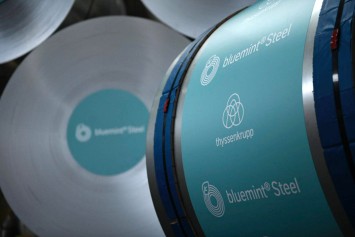
TSR supplies TSR40 for thyssenkrupp’s bluemint
German recycler TSR Group and thyssenkrupp Steel have signed a long-term supply agreement for TSR’s proprietary recycled product, TSR40, Kallanish learns.
TSR40 is made exclusively from post-consumer material such as end-of-life vehicles or mixed scrap. It has been produced on an industrial scale at TSR’s recycling plant in Duisburg since 2023 and, since 2024, also in Hamburg and Amsterdam.
The specification guaranteed by TSR qualifies the material for the blast furnace at tk Steel, reducing CO2 emissions and thus forming the basis for its bluemint steel. According to tk Steel, strip made from bluemint is suitable for all usual applications, like automotive, packaging, household appliance industries, transformers, wind turbines, and electromobility.
Except for its reduced specific CO2 emissions, the material properties of bluemint Steel do not differ from those of conventionally produced steel grades, tk Steel claims.
TSR’s Duisburg facility started operating in May 2025, to process up to 450,000 tonnes/year of input material into TSR40. It was developed in cooperation with tk Steel as part of the publicly sponsored REDERS research project. REDERS is a German acronym for “reducing CO2 emissions by increasing the rate of recycled materials in steel production”.
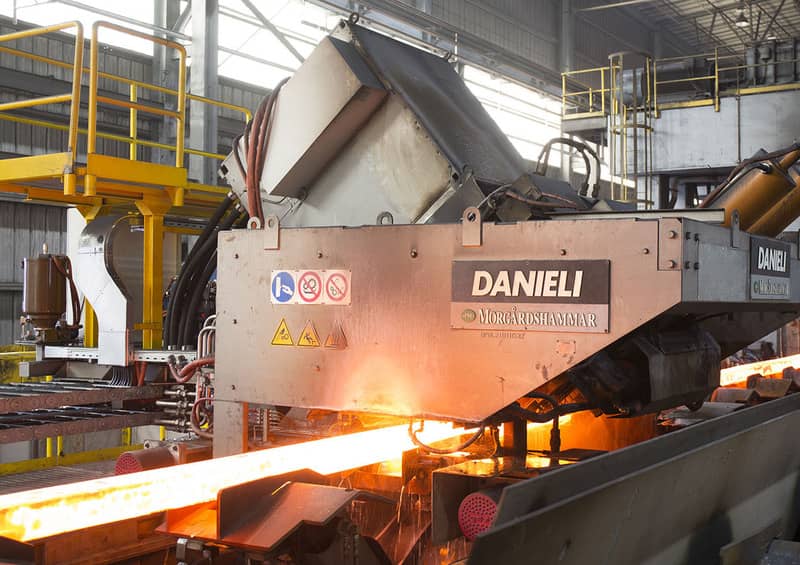
Kurum to build Danieli MIDA plant in Albania
Türkiye-headquartered Kurum has signed an investment agreement with Italian engineering group Danieli to build a new steel production plant in Albania, with total investment valued at around €150 million ($176.8m), Kallanish notes.
The new facility will be located in the metallurgical industrial zone of Elbasan and will be based on Danieli’s MIDA Steel Concept technology. The concept, implemented for the first time in Europe, is designed to significantly reduce energy consumption and carbon emissions.
According to Danieli, the plant’s annual capacity will be in the range of 700,000-750,000 tonnes/year of bars and compact coils.
Kurum International finance director Arif Shkalla says the MIDA concept will enable near-zero carbon emissions and align production with European decarbonisation policies.
Danieli representative Federico Rocchetti notes that the technology meets the parameters required for green steel certification and could serve as a model for future investments across Europe, according to media reports.
The project is expected to be completed within around 24 months.