


Primetals upgrades pickling and tandem mill at voestalpine
Primetals Technologies is implementing a software upgrade across the process control systems at voestalpine Stahl’s BETA 2 pickling line and tandem cold mill (PLTCM) in Linz, Austria.
The upgrade will strengthen IT security, increase system availability, and ensure that the PLTCM meets the latest standards in automation, with commissioning scheduled for mid-2026, the technology supplier tells Kallanish.
The BETA 2 line produces high-strength and ultra-high-strength steels for the automotive, household appliance, and construction industries, as well as electrical steel. According to Primetals, the modernisation will improve operational reliability and ensure long-term compatibility with the latest hardware and software.
To maximise system availability and streamline software maintenance, all automation engineering systems will be integrated into voestalpine’s virtualisation environment. This approach will streamline operations and maintenance for staff working across multiple lines, the equipment supplier explains.
Primetals previously carried out a major upgrade of the BETA 3 cold rolling mill and a 2013 project involving new pickling tanks and a complete electrics and automation upgrade at BETA 2.

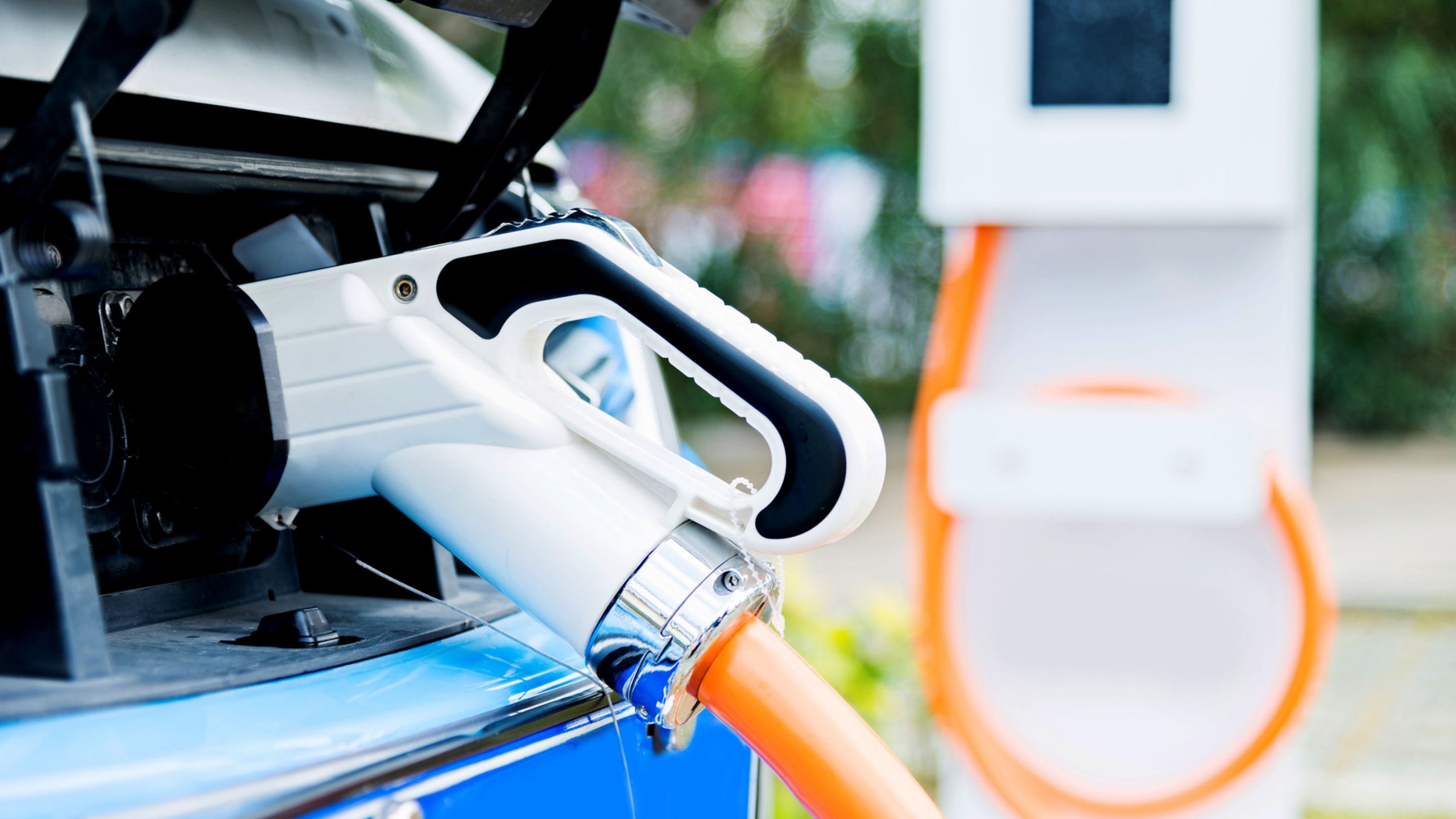
Electric vehicles increase German production share in 2025
Germany’s carmakers kept their production in 2025 largely at the previous-year level, but their association VDA expects a decline in 2026, due to overall economic weakness. The association points at the growing share of electric car production, which it says will continue this year.
Domestic passenger car production in 2025 was 2% above the year-earlier level, at 4.15 million units. This marks the third consecutive year that domestic passenger car production has remained at roughly the same level, Kallanish hears from VDA. However, it remains significantly below pre-crisis levels. The 2025 output was still 11% lower than in 2019, the last year before the pandemic.
In December, 263,500 passenger cars were produced in Germany, representing a strong year-on-year increase of 17%. To put this in perspective, however, December 2024 was extremely weak and saw the lowest December production figure since German reunification, VDA notes.
In terms of order activity, in 2025 total order intake was 2% lower than in the previous year. The trend was more pronounced in December, which was 8% below December 2024. For car production in 2026, VDA predicts a slight decline of 1% to 4.11m units.
The total number of electric cars produced in Germany in the first 11 months of 2025 came to almost 1.56m. This already represents over 200,000 units more than in the entire year of 2024, which was the previous record year for domestic e-car production.
“The German automotive industry is continuing to accelerate its efforts in e-mobility, and Germany is consolidating its position as the world’s second-largest production location for electric cars,” says VDA president Hildegard Müller. “It is now crucial that policymakers further improve the framework conditions for e-mobility.”

US export bureaucracy hurts German mechanical engineering
The export-driven German machinery manufacturing and mechanical engineering industry is suffering badly from US import restrictions, its association VDMA reports in its latest annual review.
The punitive US tariffs on steel and aluminium will likely affect around 56% of German machinery exports to the US in the near future, Kallanish hears from the federation. According to a new VDMA survey of nearly 400 member companies, 47% of companies report a decline in orders from the US since last April. Two-thirds of respondents expect a drop in sales due to the tariffs.
“What’s more, it’s not just about the absolute level of the tariffs, but also about the associated bureaucratic burden, such as correctly declaring the value of steel and aluminium,” says VDMA president Bertram Kawlath. “Only around a quarter of our companies believe they can meet the American requirements. The tariffs are absolutely counterproductive for both sides!”
In September 2025, German machinery exports amounted to €16.3 billion ($19 billion), marking a 3.4% decline compared to the previous year. Adjusted for price changes, this corresponds to a real decrease of 4.7%. To the USA, exports fell by 10.8% in September. The USA accounts for more than 12% of German exports, rendering it still the largest single foreign market for German mechanical engineering, followed by China with 8% and France with 6%.
As a gentle compensation for the trade issues with the USA, exports to other EU members turned out more favourable than previously assumed. These were still down by 2.2% y-o-y in the first three quarters but have recently gained momentum. To the eurozone, especially, the decline was only 1.1%, VDMA notes.

EU TRQs closing rapidly for Turkish flats, pipe
Turkish flat steel exports to the EU are approaching effective closure for the remainder of the first quarter, with most Q1 volumes already tied up in awaiting allocation.
Pipe product quotas were meanwhile effectively used up within the first working days of the year, Kallanish notes.
By contrast, long products and stainless steel still retain some trading opportunities, according to EU customs portal data.
More than 312,000 tonnes of hot-rolled sheet and strip are currently awaiting allocation, leaving just 81,127 tonnes available, equivalent to 21% of the 393,978t quarterly quota for Türkiye’s largest flat steel category.
Cold-rolled sheet and coated flat products are even tighter, with availability limited to 7% for CR sheet, 9% for metallic-coated sheet and 6% for organic-coated sheet.
Tin mill products are already heavily oversubscribed, with bookings exceeding the quarterly quota by nearly 4,000t.
A similar situation is evident for Turkish pipes and tubes, with gas pipes, hollow sections and large welded tubes all exceeding their quarterly allocations and showing negative availability.
By contrast, long products retain greater availability, with merchant bars and light sections showing 66% quota availability, angles and sections 59%, rebar 40% and wire rod 32%.
Stainless cold-rolled sheet and strip stand out as largely untouched, with 96% of the quarterly quota still available, while railway material remains almost fully open at 99%.
| Product | TRQ volume | Avaliable balance | Awaiting allocation | Avaliable TRQ tonnes | Available TRQ % |
| HR sheets, strips | 393,978 | 393,978 | 312,851 | 81,127 | 21 |
| CR sheets | 43,033 | 43,033 | 39,995 | 3,039 | 7 |
| Metallic coated sheets | 116,832 | 116,832 | 106,183 | 10,649 | 9 |
| Organic coated sheets | 15,559 | 15,559 | 14,669 | 890 | 6 |
| Tin mill products | 7,347 | 7,347 | 11,318 | -3,970 | -54 |
| Stainless CR sheets, strips | 20,620 | 20,620 | 722 | 19,898 | 96 |
| Merchant bars, light section | 104,916 | 104,916 | 35,841 | 69,075 | 66 |
| Rebars | 93,455 | 93,455 | 56,518 | 36,937 | 40 |
| Wire rod | 97,074 | 97,074 | 66,418 | 30,657 | 32 |
| Angles, shapes, sections | 22,395 | 22,395 | 9,251 | 13,143 | 59 |
| Railway material | 1,541 | 1,541 | 23 | 1,518 | 99 |
| Gas pipes | 48,939 | 48,939 | 54,716 | -5,778 | -12 |
| Hollow sections | 83,110 | 83,110 | 111,529 | -28,419 | -34 |
| Large welded tubes | 14,782 | 14,782 | 19,553 | -4,771 | -32 |
| Other welded Pipes | 37,698 | 37,698 | 21,916 | 15,782 | 42 |
Source: EU TARIC, as of 6 January. Complied by Kallanish
Author: Elina Virchenko

Damstahl sees 2026 price surge for Stainless Longs amid CBAM shift
European producers’ stainless steel long products prices could see a boost in 2026, given import restrictions and extra fees caused by the Carbon Border Adjustment Mechanism (CBAM), German distributor Damstahl believes.
The new trade regime projected to take effect from 1 July will see an increase in duty on Asian-origin imports above the quota from 25% to 50%. “This announcement has already caused European importers to turn more to domestic producers, which towards the end of 2025 reported higher order intake and longer lead times,” Damstahl writes in its latest market report.
Under pressure from Asian-origin imported material, European special bar qualities (SBQ) saw a long period of prices at a low level, with little change throughout 2025, Damstahl’s authors write. They expect European mills to push prices up in the second quarter at the latest, and note that some increase has already occurred. For imported material, the firm expects a price increase by 15-20%.
An additional factor possibly causing a shortage for certain bar products this year is that European mills need to ramp up production to meet the redirected demand. This will need a longer period, which Damstahl expects to take 6-8 months, following several years of reduced utilisation.
“The ramp up of the European mills has been assumed in this range since they have reduced their capacities throughout the last two years significantly,” the authors explain to Kallanish.