


German Rheinmetall prepares first Lynx armored vehicle deliveries to Ukraine
German defense manufacturer Rheinmetall has confirmed that deliveries of the Lynx KF41 infantry fighting vehicles planned for Ukraine will begin early this year.
In a statement released on January 12, 2026, the company announced that the first batch is ready for delivery under the contract finalized in December 2025.
The initial batch, financed by the German government, consists of five Lynx KF41 vehicles. Rheinmetall noted that the contract value is in the ‘double-digit million euro’ range and emphasized that deliveries will begin following comprehensive testing and evaluation procedures.
According to company officials, this first shipment represents only the initial phase for Ukraine. The limited initial delivery is expected to pave the way for larger follow-up orders and potentially long-term local production partnerships. As a result, the Lynx platform is anticipated to play a central role in the modernization of Ukraine’s mechanized forces.
The KF41 configuration destined for Ukraine has been specifically tailored to meet the country’s operational requirements. The vehicles are equipped with a LANCE 2 turret, a 30 mm automatic cannon, optional anti-tank guided missiles, stabilized firing capability, advanced day-and-night sensors, and modern digital battlefield network integration. These features make the Lynx KF41 an effective platform for operations in diverse weather conditions, high-threat environments, and long-range missions.


India’s European exports highlight Spain, Germany, Belgium and Poland
India’s export structure to the European Union is undergoing a quiet yet steady transformation.
According to the latest data from the Ministry of Commerce, traditional markets are maintaining their positions, while new and strong growth areas are emerging within the EU.
Spain, Germany, Belgium and Poland are increasingly standing out as reliable and steadily more important destinations for Indian goods. This trend indicates that India is adopting a more balanced and diversified export strategy across Europe.
Record increase in Spain with growth above 56 percent
Spain has emerged as a rising market among EU countries, delivering a notable boost to India’s export performance. During the April to November period of the current fiscal year, India’s exports to Spain increased by more than 56 percent, rising from USD 3 billion in the same period last year to USD 4.7 billion.
This strong increase lifted Spain’s share in India’s total exports by 0.5 percentage points to 2.4 percent. As a result, Spain became the EU country that recorded the largest market share increase over the same period.
Germany maintains its position as a reliable market
Germany, India’s largest export destination in Europe, continues to stand out for stable demand rather than rapid growth. Exports to Germany increased by 9.3 percent year on year during the April to November period, reaching USD 7.5 billion from USD 6.8 billion.
Officials stated that Germany maintained a 2.6 percent share in India’s total exports and achieved a 0.2 percentage point increase in market share. This outlook underlines that Germany remains a reliable and stable market for Indian products.

Serbia imposes import quotas on certain iron and steel products
Serbia has launched a six-month import quota scheme on selected steel products under a regulation that entered into force on January 1.
Serbia has introduced a temporary quota regime on imports of cement and certain steel products in order to maintain market stability in strategic sectors. Covering the period from January 1 to June 30, 2026, the measure limits imports of Portland cement and selected iron and steel products through tariff quotas for a six-month period. Once the quota thresholds are exceeded, an additional 50% customs duty will be applied to the relevant products.
The regulation covers five product groups, including Portland cement, hot-rolled steel, cold-rolled steel, ribbed concrete reinforcing steel, hot-rolled wire rod, and ribbed reinforcing bars. The total quota volume exceeds 420,000 tonnes, with cement accounting for the largest share at 250,350 tonnes. Quotas will be allocated to countries and customs territories based on their respective shares of total imports over the past five years.
Phased implementation over two quarters
The largest allocations are expected to be granted to the European Union, Türkiye, Bosnia and Herzegovina, Albania, and other countries in the region. The quota scheme will be implemented in two quarterly phases: January 1–March 31 and April 1–June 30, 2026. Any unused quota volumes may be carried forward to the following quarter.
Quota distribution will follow a “first come, first served” principle. The Customs Administration will be responsible for implementation and monitoring, while utilization data will be reported on a monthly basis to the Ministry of Internal and Foreign Trade.
Author: SteelRadar Editorial Team
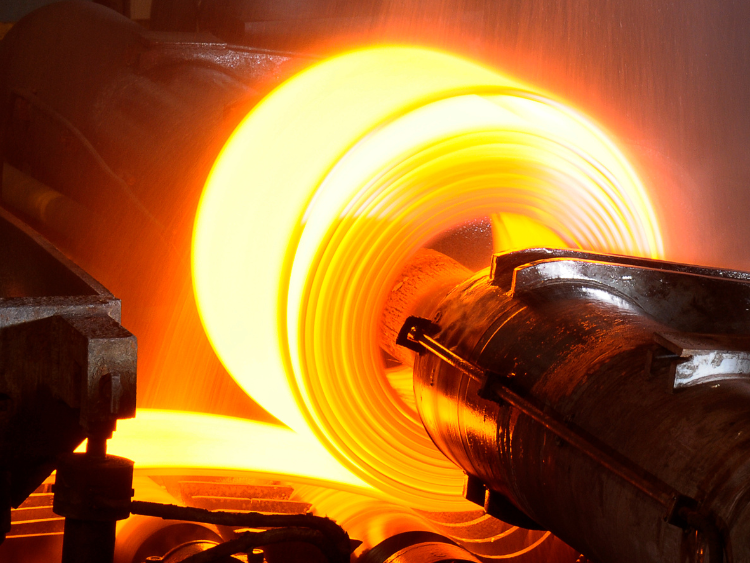
European domestic steel HRC prices stable, demand subdued
European domestic prices for steel hot-rolled coil were largely unchanged on Monday January 12 with trading being quiet. Market sources from both Northern and Southern Europe reported subdued demand, but offered different reasons.
Suppliers from Northern Europe offered HRC for delivery in March-April at €650-670 ($758-782) per tonne ex-works. Some special volumes from February delivery were said to be available at lower prices, but tonnages were limited.
Meanwhile, workable prices were said to be €630-635 per tonne ex-works with no bookings heard during the day.
A trading source said that service centers building stocks higher than normal at the end of 2025, expecting price rises to be caused by the EU’s Carbon Border Adjustment Mechanism (CBAM), was the reason for quiet demand after the winter holidays.
Fastmarkets’ daily steel hot-rolled coil index, domestic, exw Northern Europe, was €635.63 ($739.19) per tonne on January 12, up by just €0.63 per tonne from €635.00 per tonne on January 9.
The index was up by €5.63 per tonne week on week and by €13.96 per tonne month on month.
The Italian market was also said to be quiet, with no major deals heard during the day.
A local market source suggested low consumption and a struggling economy, as well as Europe’s low competitiveness in export markets, as reasons for the low demand.
The latest buyers’ estimates of tradable prices were heard at €620-630 per tonne ex-works, while offers of February- and March-delivery HRC were heard around €630-650 per tonne ex-works, depending on supplier.
Fastmarkets’ daily steel hot-rolled coil index, domestic, exw Italy, was calculated at €627.50 per tonne on Monday, down by €2.50 per tonne day on day.
The index was up by €4.38 per tonne week on week and by €16.25 per tonne month on month.
The import HRC market in Europe was at a stalemate with buyers facing a lack of clarity over the new import mechanism following the introduction of CBAM on January 1.
“I do not think anyone knows how much we are going to pay, and what are actual versus default values,” one buyer said.
Indian HRC was available within the range of €490-510 per tonne CFR, while Turkish material was offered at €510 per tonne CFR.

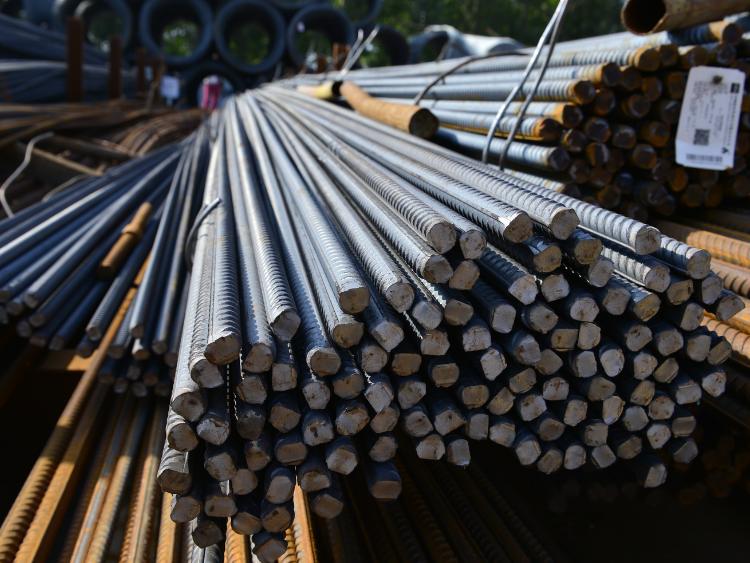
Polish domestic steel prices stable, market returning from holiday break
Domestic prices in Poland for steel rebar and wire rod remained flat in the week to Friday January 9 due to low levels of activity with market participants still coming back to the market following the year-end holidays, Fastmarkets heard.
According to trade sources, the market had not fully restarted after the break, with more movement expected in the next few days.
For drawing quality wire rod, estimates of workable prices were heard at 2,600-2,650 zloty ($721-735) per tonne CPT during the assessment period.
Meanwhile, the latest offers were heard around 2,650 zloty per tonne CPT before Christmas.
Fastmarkets’ weekly price assessment for steel wire rod (drawing quality), domestic, delivered Poland, was 2,600-2,650 zloty per tonne on Friday, unchanged since late November.
Rebar prices were also unchanged in the week to Friday, with the market still thin after the holidays and due to low demand during the winter months, according to trade sources.
One market source reported selling 100 tonnes of rebar at 2,430 zloty per tonne CPT during the assessment period, while also reporting offers heard around 2,420 zloty per tonne CPT.
But due to low liquidity in the market following the holidays, and with most market participants remaining on the sidelines during the assessment week, Fastmarkets’ assessment was unchanged.
Fastmarkets’ weekly price assessment for steel reinforcing bar (rebar), domestic, cpt Poland, was 2,400-2,450 zloty per tonne on Friday, unchanged for a month.

EU steel imports hit early 2026 bottleneck with some Q1 TRQs exhausted within days
Quarterly tariff-rate quota (TRQ) allocations on a variety of steel product imports into the EU over January-March 2026 have already been exhausted by some suppliers, less than just two weeks into the new reporting period, Fastmarkets learned on Monday January 12.
Flat steel
India has entirely exhausted its allocation for hot-rolled coil for the first quarter of 2026, just nine days after it was renewed. HRC quotas for Turkey and Taiwan were nearly full by January 9, according to European Commission customs data.
Market sources noted, however, that there were plenty of “old tonnages” that buyers did not have an opportunity to clear through customs in October-December 2025 due to high demand, so these volumes had to be transferred for clearance in January.
“We could not customs-clear all [of the HRC that] we booked from Turkey duty-free for the fourth quarter of 2025,” a buyer in southern Europe said.
Quotas allocated to traditional suppliers – Egypt, Vietnam and Japan – were intact (see table) because these three countries have also been subject to an anti-dumping (AD) duty in the EU. Definitive duties against these three suppliers were imposed at the end of September.
For downstream flat steel, a market traditionally more reliant on imports ,the situation was more dramatic.
In cold-rolled coil (CRC), Turkey had nearly fully exhausted its allocation by January 9, while Taiwan’s quota was fully used. And Vietnam had used nearly 80% of its allocation for January-March.
For hot-dipped galvanized coil (HDG), quota utilization was also high (see table).
Tight quotas and the rollout of the EU’s Carbon Border Adjustment Mechanism (CBAM) on January 1 have made imports of new steel “extremely difficult” or even “ close to impossible,” trade sources said.
The sources indicated that, on seeking customs-clearance of new imports in January 2026, customs agents requested down-payments to account for CBAM costs.
CBAM implementation was expected to increase import prices on flat steel by perhaps €35-600 ($41-702) per tonne, depending on the country of origin, assuming default emission values are used to calculate the CBAM charge.
“Imports [have] become unmanageable. There is no shortage of coil in the market so far, but domestic mills are definitely a more reliable option,” a buyer in Germany said.
Turmoil with new imports supported a bullish trend in the domestic market, despite stable end-user demand, Fastmarkets understands.
Fastmarkets’ daily steel hot-rolled coil index, domestic, exw Northern Europe, was €635.00 per tonne on Friday, up by €0.75 per tonne from €634.25 per tonne on January 8.
The index was up by €7.50 per tonne week on week and by €12.19 per tonne month on month.
Suppliers in Northern Europe offered HRC scheduled for shipment in February-March at €630-650 per tonne ex-works, while tonnages scheduled for delivery in March-April were available at €650-670 per tonne ex-works, with some mills even giving price idea for the second quarter at €700 per tonne ex-works, market sources said.
Long steel
In the long steel sector, quota uptake was markedly lagging behind that of flat steel products, with CBAM being named as a key obstacle.
Significant quota utilization was seen only in Turkish rebar and wire rod, where 60.5% and 68.4% of the quotas were taken up respectively.
This was followed by Algeria, with 29.4% of rebar quota and 39.9% of wire rod quota taken up.
“In my opinion, quota [take-up] is weak because normally Algerian, Egyptian and Turkish origins are taken up on the first day of the quarter,” one trader said. “What we are seeing now is that there are plenty of tonnages left for all countries and products, because many people are staying away from imports due to CBAM because they do not understand the cost calculations.
“ Domestic flat steel prices in Europe have increased significantly over the past several months,” he added, “while the long steel sector was slow to react, so demand shifted to local suppliers.”
Fastmarkets’ price assessment for steel reinforcing bar (rebar), domestic, delivered Northern Europe, has averaged €607.50 to date in January, versus the average of €603.50 per tonne in December 2025.
The corresponding weekly price assessment for steel wire rod (mesh quality), domestic, delivered Northern Europe, has been €595 per tonne to date in January, versus an average of €591 per tonne in December 2025.
