


Merz discusses thyssenkrupp sale during India visit: reports
German Chancellor Friedrich Merz will discuss Jindal’s potential takeover of thyssenkrupp steel with Indian authorities during his visit to the country this week, according to German media reports. Any sale of the German steelmaker to the Indian group could be done gradually in tranches.
Citing three insiders of the negotiations, Reuters reported last week that tk’s Steel division could initially transfer 60% ownership to Jindal. This intermediate step would give thyssenkrupp more time to secure the pension debts, Kallanish notes.
The German group did not provide comment on intermediate stages of the negotiations, but did reconfirm that Jindal is in the process of due diligence.
India is about to order submarines from thyssenkrupp’s Maritime Industries division, a key topic of discussion during Merz’s visit.
The chancellor previously met with representatives of tk Steel’s workforce, and called steel a “key industry” for Germany.


Stegra to supply non-prime steel to thyssenkrupp Materials
Stegra will supply significant non-prime steel tonnages to thyssenkrupp Materials Services, Kallanish learns from the Germany-based distribution group. Its business unit thyssenkrupp Materials Processing Europe has signed a multi-year agreement with the Swedish greenfield steelmaker.
Due to the nature of steel production, steel mills produce a certain amount of non-prime steel. This is material that does not meet the highest quality standards that certain applications may require, but is still a strong and durable material eligible for various uses. As a result, non-prime steel makes up a relevant portion of the steel market in Europe, tk Materials explains.
“A partner for non-prime steel is important for the ramp-up of our steel mill and we see this as the start of a long-term partnership with thyssenkrupp Materials Services as a key player in the market,” says Stephan Flapper, commercial head at Stegra.
Although Stegra’s future steel plant in Boden will use only hydrogen and renewable electricity, the non-prime steel purchased by tk Materials will not be considered to be CO2-reduced, the buyer group notes.
First deliveries are expected to start in 2027. The total tonnage of the agreement will be in the high-six-digit range. “At thyssenkrupp Materials Processing Europe, we have the customer base, the logistics capabilities and the processing network to handle these large amounts of steel,” says Heather Wijdekop, chief executive of the unit. It plans to supply customers in various industries across Europe.

Albania greenfield MIDA plant will be Europe’s first
Italian technology provider Danieli has reconfirmed a contract with Kurum International for a new MIDA (micromill Danieli) plant to be installed in Elbasan in Albania, marking the first greenfield MIDA installation in Europe, according to Danieli.
Startup is scheduled for the fourth quarter of 2027.
The project will be based on the MIDA-QLP concept for Quality Long Products, Kallanish notes from a Daniali statement. At its core are Danieli’s patented OctoCaster and an innovative mill layout designed for endless casting and rolling.
The new facility will have an annual capacity exceeding 700,000 tonnes of deformed bars and compact coils. Danieli’s scope of supply includes a meltshop with a 75-tonne electric arc furnace equipped with the ECS continuous scrap-charging system, a 75-tonne ladle furnace, material-handling systems and a fume treatment plant.
Casting will be carried out via a 12-metre-radius continuous casting machine with an octagonal mould, enabling stable endless casting at speeds above 7 m/min. The rolling mill will comprise housingless stands and a high-speed finishing block, producing straight bars from 10-32mm and spooled coils from 8-25 mm, with customised coil weights of up to 5 tonnes.
According to Danieli, MIDA-QLP enables true “green” steel production while delivering the lowest achievable transformation costs from scrap to finished long products, supporting highly sustainable operations.
In December, media reports mentioned a roughly €150 million ($175.27m) investment by Kurum International for the Elbasan plant.
Micromill Danieli or MIDA is Danieli’s patented, scrap-based steelmaking concept for long products, using a compact endless casting and rolling process to cut capital expenditure, energy use and CO₂ emissions. The concept has scaled to capacities of 700,000 t/year or more, enabling its first greenfield adoption in Europe as decarbonisation and cost pressures intensify.
Danieli says it has supplied or is executing 29 MIDA plants worldwide, across the US, Latin America, Asia, the Middle East and Africa.

Italian plate seen increasing as CBAM costs soar
Italian heavy plate contract prices are expected to continue rising, driven by higher slab procurement costs linked to the Carbon Border Adjustment Mechanism (CBAM), Kallanish learns.
Market activity is gradually resuming after the Christmas break, with mills describing both sales performance and price levels as satisfactory. Lead times are now extending into late February, while import offers are not currently disrupting the domestic market.
Mill sources say further price increases are being considered this month due to uncertainty over CBAM-related slab costs, which remain difficult to quantify. Asian suppliers are currently unable to declare actual emissions values, as the European Union has yet to publish the list of accredited verifiers. As a result, all suppliers are declaring default values, leaving mills to estimate the effective CBAM burden.
“We are working blindly,” one mill source says. “For now, we are treating all suppliers as default-value producers and adjusting prices in the hope that increases will cover total slab costs, including CBAM. We will only know next year whether we worked well or not.”
Interest is emerging in Brazilian slab, whose CBAM costs are expected to be relatively low, at around €20-30/tonne ($23.37-35.06/t). However, Brazil has limited slab production capacity. The Tubarão plant, part of the ArcelorMittal group, will be expected to ship its slab supply internally.
Moreover, sources warn that slab producers incurring lower CBAM costs are likely to raise prices significantly. This will leave European plate re-rollers in a difficult position as they pass on cost increases without certainty over downstream consumption and whether customers will absorb those increases.
“There will be little or no slab allocation from Brazil,” another source says, adding that if suppliers do not certify actual values, responsibility for CBAM cost falls entirely on the buyer. Based on the latest EU documentation, CBAM costs for Chinese slab are estimated at around €160/t, while Indian material could face charges of around €300/t or slightly less. Indonesian CBAM costs will be entirely prohibitive.
Italian mills are currently quoting and achieving €700/t for S235 plate, with premiums of €30-35/t for S355 and about €10-15/t for S275. Their idea is to push S235 to the level of €750/t base ex-works this month and reach February with quotes starting with an 8.
Imported slab into Italy is currently assessed at about $500/t cfr, market participants note.
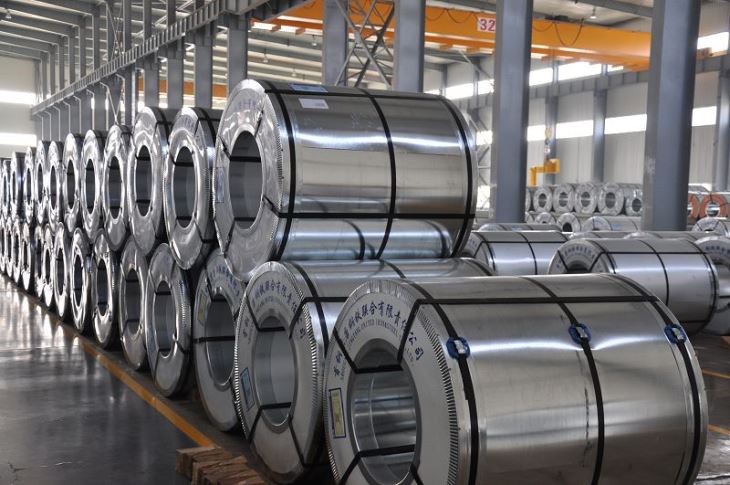
European HRC prices steady, with CBAM confusion limiting imports
European hot-rolled coil prices held steady on Tuesday January 13, despite quiet trading, with positive sentiment in the domestic market largely being driven by regulatory updates limiting imports, sources told Fastmarkets.
The European steel markets are still restarting after the winter holiday break, with buyers in no rush to restock, Fastmarkets understands.
“Trading remains thin,” a mill source said. “Buyers rushed their bookings in the fourth quarter ahead of [the implementation of the] Carbon Border Adjustment Mechanism (CBAM) and booked more than usual, so there is now no immediate need to restock.
“But we will see restoking for second-quarter tonnages at the end of January-start of February,” the mill source added.
In terms of hot-rolled coil, the mills were said to be largely sold out for February delivery, with only minor tonnages left at some suppliers. Prices for these tonnages were hovering around €630-640 ($735-747) per tonne ex-works.
For March-April delivery, mills were aiming to get prices closer to €650-670 per tonne ex-works, source said.. And some suppliers were even suggesting higher price ideas for second-quarter deliveries – “testing the waters” at around €680-700 per tonne ex-works, according to one market participant.
Buyers, however, said that such levels remained just “wishful thinking,” given the still-slow end-user demand.
“We can realistically speak about €650 being widely achieved soon, but going any higher will be complicated because it’s hard to pass on [any] increase in prices to the downstream market,” a source at a steel service center in Germany told Fastmarkets.
Another source said there had been a transaction for a small tonnage of March delivery HRC in Germany at €650 per tonne ex-works on Tuesday.
But most buyer sources still put the workable level at €630-640 per tonne ex-works.
Fastmarkets’ daily steel hot-rolled coil index, domestic, exw Northern Europe, was €638.33 per tonne on January 13, up by just €2.70 per tonne from €635.63 per tonne on January 12.
The index was up by €8.33 per tonne week on week and by €16.66 per tonne month on month.
In Southern Europe, Fastmarkets’ corresponding daily steel hot-rolled coil index, domestic, exw Italy, was calculated at €629.27 per tonne on Tuesday, up by €1.77 per tonne from €627.50 per tonne on Monday.
The index was up by €6.15 per tonne week on week and by €18.02 per tonne month on month.
Trading in the Italian market also remained slow, however, with only minor tonnages booked. according to sources.
Offers for March delivery HRC were heard at around €630–650 per tonne ex-works, depending on the supplier. Some producers still had some February tonnages left, sources said.
And buyers estimated the tradable price for HRC in Italy at around €620–640 per tonne ex-works on Tuesday.
But very few new import offers have been reported since the implementation of CBAM regulations, sources said.
“There are some import tonnages in ports and on the way to Europe, but there are very few new offers,” a buyer in Italy said.
“CBAM has brought a lot of confusion to the market,” the buyer added.
HRC from Saudi Arabia, meanwhile, was of offer to Europe at €530 per tonne CFR, excluding CBAM costs, sources said, and with default emissions values not outlined for steel products for Saudi Arabia, they therefore fall under the default values for “other countries and territories.”
CBAM costs for HRC from this origin will therefore exceed €200 per tonne, unless actual emissions data can be verified.
CBAM implementation was expected to increase import prices on flat steel by perhaps €35-600 per tonne, depending on the country of origin, assuming the use of default emissions values to calculate the CBAM charge.
I addition, steel safeguard quotas for HRC were fully used up by some suppliers less than two weeks into the new reporting period.


Van Leeuwen acquires Corrotherm International
Dutch pipe distribution group Royal Van Leeuwen has acquired the global business activities of Corrotherm International. a supplier of high-quality nickel alloy seamless pipe, fittings, and flanges.
Corrotherm is a UK-based company with headquarters in Southampton. Founded in 1992, it supplies material to sectors such as oil and gas, and the petrochemical industry, Kallanish hears from Van Leeuwen.
As of January, the business operations and assets, including the office, warehouse, stocks and the specialist team in Amersfoort, the Netherlands, will be integrated into the Royal Van Leeuwen organisation. Amersfoort will serve as the operational base for Corrotherm International’s global activities, the buyer company says.
The acquisition will widen Van Leeuven’s portfolio of products and staff of experts, and enable it to offer an even more comprehensive package of material to customers in the energy sector, it adds.