

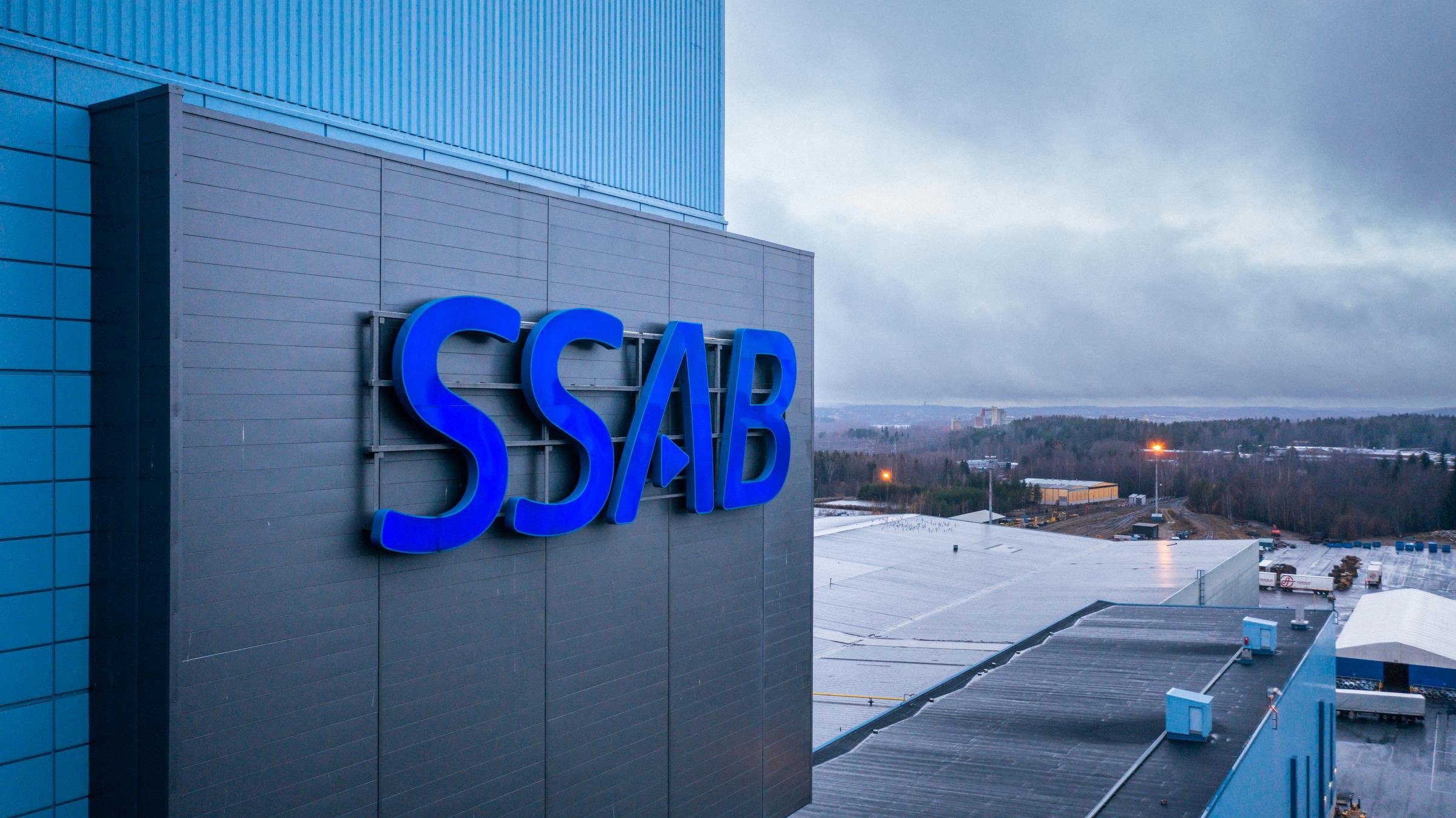
Swedish output declines, SSAB to replace key bridge
November’s y-o-y drop was deeper than the year-to-date figure. From January through November, a total of 3,640,000t of crude steel was produced in Sweden, 1.4% less than in the corresponding 2024 period.
The production statistics compiled by Jernkontoret are based on data from eleven crude steel plants in Sweden.
Meanwhile, the federation has also disclosed plans by SSAB to replace the old Mjälga Bridge over the Dalälven River in Borlänge.
The existing bridge, which is central to the transport of steel within SSAB’s industrial area, has reached the end of its technical life. It will be replaced by two new bridges – a railway bridge and a road bridge with a pedestrian and cycle path. The project will start in 2027 and last for two-three years.

SMA urges Congress to safeguard Section 232 tariffs
The Steel Manufacturers Association (SMA) is urging Congress to safeguard Section 232 tariffs, Kallanish learns from a SMA press release.
In testimony at the State of Steel hearing, SMA chairman Barry Schneider notes that the US steel industry is in a strong position, supported by pro-manufacturing policies and past tax reforms. He did warn that challenges like Chinese oversupply, high interest rates and slow permitting still threatens progress.
Schneider calls on the White House to maintain strict enforcement of Section 232 to prevent unfairly traded imports.
“The 232 tariffs on steel have been a tremendous asset to the American steel industry and bolstered national security since they were first introduced in 2018,” states the SMA chairman.
The panel urges strengthening the United States-Mexico-Canada Agreement (USMCA) by adding tougher rules, including “melt and pour” standard for steel, stronger labour value requirements and aligned border measures in Canada and Mexico. These steps aim to reduce dependence on non-market steel from countries including China and to increase North American steel demand.
“A strengthened USMCA could be instrumental in boosting steel demand across the region, advancing both the American steel industry and the administration’s broader trade policy goals,” adds Schneider.
Federal infrastructure spending, including the Infrastructure Investment and Jobs Act, is crucial for boosting demand for American steel. Passing the Leveling the Playing Field 2.0 Act would strengthen the tools needed to fight unfair trade practices, according to the testimony.

European rebar producers push for higher prices, but buyers resistant
Rebar producers in some key European markets attempted to push up their offers in the week to Wednesday January 14, after fully returning from the winter holiday, but buyers were in no mood to accept higher prices, sources told Fastmarkets.
Suppliers were also aiming to pass on increases in scrap and energy costs – aiming to benefit from the generally upbeat sentiment since the introduction of the Carbon Border Adjustment Mechanism (CBAM) at the start of January.
The CBAM is widely expected to reduce steel imports to the EU, sources said
But buyers were in no hurry to accept price rises, mainly because of seasonally slow demand from the construction sector, where previous purchases at lower prices meant producer stocks were already sufficient.
“Currently, demand from cut-and-bend producers is low because not all construction sites have returned to work,” one Italian producer told Fastmarkets.
All cut-and-bend producers have warehouses, so they prefer see whether the prices will actually increase or not,” the producer added.
And an Italian trader said: “Demand is not so good these days – maybe customers are still in waiting mode. The first January weeks are cold, so building activity [only resumes] very slowly.”
Deals were done at around €550-580 ($640.52-675.46) per tonne per tonne ex-works in the week to Wednesday, sources said, while offers started at €590 per tonne ex-works or higher, with mills expected to push them to well above €600 in the coming weeks.
Fastmarkets’ weekly price assessment for steel reinforcing bar (rebar) domestic, exw Italy widened down to €550-600 per tonne on January 14, from €560-600 per tonne a week earlier.
In Spain some of the producers made attempts to raise their offers to €665 per tonne delivered from €650 per tonne delivered, but new offers were left without a reaction from customers.
As a result, Fastmarkets’ corresponding price assessment for steel reinforcing bar (rebar) domestic, delivered Spain remained stable in week on week comparison at €645-650 per tonne on January 14.
In Northern Europe mills’ offers moved to €610-635 per tonne delivered from €600-615 per tonne delivered before holidays. However, even some producers noted that their increases failed to gain traction.
Consequently, Fastmarkets’ price assessment for steel reinforcing bar (rebar) domestic, delivered Northern Europe also remained stable in the week to January 14, at €600-615 per tonne.


European steel HRC import prices grow amid trade regulations, fewer suppliers
Prices for imported steel hot-rolled coil in Europe increased in the week to Wednesday January 14, as new trade regulations limited the number of suppliers and cheaper offers in the market, sources told Fastmarkets.
Buyers remain cautious about accepting cheaper offers from countries with higher default values under the EU Carbon Border Adjustment Mechanism (CBAM), some of which are no longer available in the market.
The rollout of CBAM on January 1 meant the implementation of the European Commission’s finalized benchmarks and default emission values, which dictate the carbon costs that importers must pay to trade with the bloc.
Default values remain particularly elevated for several countries that are major flat steel suppliers to the EU, including India, Indonesia and China.
Fastmarkets’ weekly price assessment for steel hot-rolled coil import, cfr main port Northern Europe was €490-530 ($570-617) per tonne, rising from €480-520 per tonne the previous week.
Offers from Saudi Arabia and Turkey were at the higher end of the assessment at €530 per tonne CFR, while offers from India were heard at €500 per tonne CFR.
Estimates of workable prices were also reported at €490-520 per tonne CFR during the assessment period.
Meanwhile, the DDP assessment for HRC imports to Northern Europe also increased on Wednesday.
Fastmarkets’ weekly price assessment for steel hot-rolled coil import, ddp Northern Europe was €610-630 per tonne on Wednesday, rising from €595-620 per tonne in the previous week.
The increase in the DDP assessment is in line with higher offers heard in the market, also hovering at €610-630 per tonne DDP.
HRC import prices to Southern Europe also increased in the week to Wednesday.
Fastmarkets’ weekly price assessment for steel hot-rolled coil import, cfr main port Southern Europe was €490-530 per tonne this week, rising from €475-520 per tonne during the previous assessment period.
The lower end of the assessment aligns with offers from India heard at €490 per tonne CFR, while the upper end matches offers from Saudi Arabia heard at €530 per tonne CFR.
A market source also reported an offer at €543 per tonne CFR from Algeria, but it was not included in the final assessment because no trading was reported at that level.
Fastmarkets’ weekly price assessment for steel hot-rolled coil import, ddp Southern Europe was €610-630 per tonne this week, rising from €590-620 per tonne during the previous assessment period.
The assessment matches some estimates of workable levels heard around €610-630 per tonne DDP, while offers were also reported around €615-630 per tonne DDP.
European steel CRC, HDG domestic prices grow amid limited import availability
European flat steel prices increased in the week to Wednesday January 14, supported by good order books at suppliers; near-term expectations remained upbeat as new regulations curb import flows, Fastmarkets heard.
According to sources, market mood remains positive as mills remain comfortably booked while the EU’s Carbon Border Adjustment Mechanism (CBAM), which came into full effect on January 1, is already affecting import volumes.
“I can see that a lot of people who were very much import-oriented are now saying that they do not want to take risks,” a distributor source said, pointing to a shift in people’s focus towards domestic producers.
In December, the European Commission finalized the benchmarks and default emission values that indicate the carbon costs that importers must pay to adhere to CBAM rules. These costs can vary significantly based on the place of origin.
CBAM’s cost exposure for importers and the proposed introduction of updated steel import safeguards later in the year are expected to profoundly shift trade flows in 2026, supporting domestic production in the process.
Mills across Europe were said to be already broadly sold out for the first quarter, for both cold-rolled coil (CRC) and hot-dipped galvanized (HDG), with the products already mainly offered for April delivery, Fastmarkets heard.
Northern Europe
Fastmarkets’ weekly price assessment for steel cold-rolled coil, domestic, exw Northern Europe, was €740-750 ($862-873) per tonne on Wednesday, rising from €720-740 per tonne the previous week.
The upper end of the assessment reflects estimates of workable levels heard at €750 per tonne ex-works during the assessment period.
A German market source reported a higher offer at €770 per tonne ex-works during the week to Wednesday, but it was not included in the final assessment as no deal had yet been confirmed.
One market source reported a target offer for April-delivery CRC at €800 per tonne ex-works from one European supplier, but this was not widely confirmed by other sources.
Meanwhile, CRC import prices for Northern Europe were stable for both CFR and DDP assessments this week, indicating low interest from the market in buying imported materials.
Fastmarkets’ weekly price assessment for steel cold-rolled coil, import, cfr main port Northern Europe was unchanged at €604-620 per tonne on Wednesday, while the weekly price assessment for steel cold-rolled coil, import, ddp Northern Europe, was stable at €700-730 per tonne.
No new trading activity was reported during the assessment period.
According to a market source, most of the “big traders” in the region are offering CFR prices for imported materials, with the customers having to ultimately deal with the burden of CBAM-related costs and potential implications with the safeguards.
“Most of the Northern European customers don’t want to risk having to pay much, much higher prices at the end of the day,” the source said.
On the other hand, domestic HDG coil prices also increased in Northern Europe.
Fastmarkets’ weekly price assessment for steel hot-dipped galvanized coil, domestic, exw Northern Europe, was €745-770 per tonne on Wednesday, rising from €735-745 per tonne during the previous week.
The assessment reflects estimates of workable levels heard hovering at around €745-770 per tonne during the assessment period. An offer was also reported at around €780-800 per tonne during the week to Wednesday, for April-delivery material.
Italy-origin HDG was offered to Germany at €770-780 per tonne base delivered.
HDG imports to Northern Europe were also stable, with no new trades reported during the assessment period amid market uncertainty regarding new regulations.
Fastmarkets’ weekly price assessment for steel hot-dipped galvanized coil, import, cfr main port Northern Europe, was stable at €680-720 per tonne on Wednesday, while the weekly price assessment for steel hot-dipped galvanized coil, import, ddp Northern Europe, was flat at €730 per tonne.
Following the publishing of this week’s assessment, a source also reported offers for domestic, March-delivery CRC and HDG at €750 per tonne ex-works.
Southern Europe
Domestic CRC and HDG prices in Southern Europe also increased in the week to Wednesday, with a trader source in the region saying that prices are “destined” to increase with the introduction of new trade regimes and safeguards.
The source, however, also pointed to persistent “weak demand” following the holiday period while the market digests the new changes brought in with CBAM.
Fastmarkets’ weekly price assessment for steel cold-rolled coil domestic, exw Southern Europe, was €750-770 per tonne on Wednesday, rising from €730-750 per tonne heard in the previous week.
The assessment reflects estimates of workable levels heard hovering at around €750-770 per tonne ex-works, compared with €730-750 per tonne ex-works during the previous assessment period.
A regional market source also reported an offer at €760-780 per tonne ex-works during the week to Wednesday.
CRC import prices in Southern Europe remained flat for both CFR and DDP assessments.
Fastmarkets’ weekly price assessment for steel cold-rolled coil, import, cfr main port Southern Europe, was stable at €600-620 per tonne, while the weekly price assessment for steel cold-rolled coil, import, ddp Southern Europe, was €700-725 per tonne, also unchanged.
An offer for Thailand-origin CRC was reported at €655 per tonne CFR to Italy, excluding CBAM costs. But it was deemed unworkable by buyer sources.
Similarly, domestic HDG prices in Southern Europe also grew.
Fastmarkets’ weekly price assessment for steel hot-dipped galvanized coil, domestic, exw Southern Europe, was €760-770 per tonne on Wednesday, rising from €730-750 per tonne during the previous week.
The assessment matches estimates heard at €760-770 per tonne ex-works during the week to Wednesday, while offers for HDG were reported within the range of €760-780 per tonne ex-works.
Resembling similar trends with CRC imports, HDG imports were also affected by low market interest amid new CBAM regulations.
Fastmarkets’ weekly price assessment for steel hot-dipped galvanized coil, import, cfr main port Southern Europe, was stable at €680-700 per tonne on Wednesday, while the price for steel hot-dipped galvanized coil, import, ddp Southern Europe, was also flat at €720-730 per tonne.
–Julia Bolotova in Brussels contributed to this report
Steady EU HRC prices supported by good order books at local mills, CBAM bullishness
European hot-rolled coil prices held steady on Thursday January 15, with suppliers reporting strong order books and aiming for higher prices for second quarter material, with sentiment boosted by the Carbon-Border Adjustment Mechanism (CBAM), sources told Fastmarkets.
In Germany and the Benelux area, integrated mills were said to be largely sold out for February delivery coil, while some suppliers claimed to have also “nearly closed” their March order books, Fastmarkets understands.
Offers for HRC with March delivery were reported at €650-670 ($757-780) per tonne ex-works in these regions, but these levels were not widely achieved in bookings, source said.
Italy-origin HRC was offered to Germany at 6€60-680 per tonne base delivered.
Tradeable values were estimated by buyers at €630-640 per tonne ex-works – in line with recent bookings.
For second-quarter delivery coil, some suppliers indicated price ideas at around €680-700 per tonne ex-works, but buyers remained sceptical about more steep increases.
“Even the most aggressive mills are not accepting lower prices anymore,” a buyer in Germany said, “[so] €650 per tonne ex-works looks like a realistic target. But going any higher than that will be difficult unless demand picks up.”
No major restocking activity was reported so far this week, with sources not expecting apparent demand to pick up until early February.
As a result, Fastmarkets’ daily steel hot-rolled coil index, domestic, exw Northern Europe, was €639.58 per tonne on January 15, up by €1.67 per tonne from €641.25 per tonne on January 14.
The index was also up by €5.33 per tonne week on week and by €17.91 per tonne month on month.
In Southern Europe, meanwhile, Fastmarkets’ daily steel hot-rolled coil index, domestic, exw Italy, was calculated at €631.25 per tonne on Thursday, up by €1.25 per tonne day on day.
The index was also up by €1.25 per tonne week on week and by €19.58 per tonne month on month.
Italian producers were also largely sold out for February delivery coil, sources said, with one mill claiming to be sold out for entire first quarter already.
Offers for March delivery HRC were reported at €650 per tonne ex-works, but no transactions at that levels have been reported so far and sources estimated the achievable price at €620-630 per tonne ex-works.
In the secondary market, 4mm HR sheet was trading at around €750 per tonne delivered, which is a slight increase compared with December levels, sources said.
But market participants said appetites for fresh import bookings remained subdued, mainly due to the EU’s CBAM rules and the shift to a new trading regime.
Many buyers continued to report that their preferred approach to import bookings was on a DDP basis, to at least partially account for CBAM costs.
Several trading houses in Italy were heard offering such options.
“Booking on CFR or CIF basis is not manageable for anyone – except, maybe, for a couple of big buyers in Italy,” a source in Italy said.
HRC from Saudi Arabia, meanwhile, was available in Italy at €615 per tonne DDP, while Turkish HRC was on offer to Italy at €620-630 per tonne DDP and HRC from Algeria at $633 per tonne CFR.
Indian HRC was offered to Italy at €490 per tonne CFR, but no fresh bookings were reported on Thursday.
CBAM shifts focus to verification for Indian steel
Indian steel exporters are adjusting production routes, emissions reporting systems and certification processes as the EU’s Carbon Border Adjustment Mechanism (CBAM) enters its financially liable phase.
While several large producers have begun early compliance steps, uncertainty around emissions verification is emerging as a key risk, Kallanish understands.
CBAM requires exporters supplying steel to the EU to submit verified data on embedded carbon. Where emissions are not verified by EU-accredited agencies, country-level default values are applied. This can sharply increase the carbon levy and undermine export competitiveness.
Leading Indian steelmakers are aligning EU-bound shipments with lower-emission production routes. Electric arc furnace steel, which relies on scrap and emits less carbon, is being increasingly prioritised for Europe, while blast furnace routes continue to serve other markets.
Producers such as Tata Steel, AMNS India and others are also investing in renewable energy and emissions-reduction technologies to lower overall carbon intensity (see table). These include captive solar and wind power, coal gasification and redesigned plant layouts. Such investments are aimed at improving emissions performance rather than achieving immediate CBAM compliance.
However, most compliance activity remains preparatory as sources say current efforts are limited to the “pre-verification” stage. Only a handful of mills have begun preliminary work, while formal audits and final verification will start only after the EU publishes its list of approved certification agencies. The expected timeline for this is August-September, industry sources tell Kallanish.
CBAM entered its payment phase from January, turning emissions reporting from a regulatory exercise into a direct cost consideration for exporters and their customers.
Legal advisers warn that limited availability of EU-accredited emissions verifiers in India could create a bottleneck. Once self-reported data is no longer accepted, exporters unable to secure verification risk having shipments assessed using default emissions values. Although the levy is legally paid by EU importers, the cost is expected to be passed back to exporters through pricing.
Smaller producers are particularly exposed. Limited access to verification slots, weaker balance sheets and less favourable contracts increase the risk of margin erosion or loss of EU market access.
Low-carbon investment snapshot
| Producer | Technology focus | Approx capacity / detail | Timeline |
| Tata Steel | Captive wind-solar, onsite solar | 966 MW round-the-clock hybrid renewable project under long-term PPA, plus ~41 MW onsite solar |
Commissioning targeted for 2025; onsite solar operational |
| JSW Steel | Renewable power procurement | Around 2,500 MW of wind and solar capacity tied up through group PPAs |
Additional capacity targeted by 2025 |
| Jindal Steel | Coal gasification | Coal gasification unit at Angul steel plant | Operational |
| AM/NS India | Solar and wind | Around 550 MW of planned renewable capacity to support Hazira operations |
Phased completion by 2027-28 |
| SAIL | Rooftop and floating solar | Floating and rooftop solar projects identified across plants, including at Bhilai; total potential estimated at ~15-196 MW |
Phased rollout to 2028-29 |
Source: company reports, Kallanish
CBAM is often viewed as a test of carbon efficiency, but in the near term it is shaping export competitiveness through process readiness. Indian steelmakers are investing in lower-emission production, yet access to verification is emerging as the decisive factor.
In practice, CBAM may initially consolidate Indian exports to the EU among larger, better-prepared producers rather than drive immediate emissions reductions across the sector. However, compliance timelines and administrative capacity may matter as much as technology choices for Indian exporters.