European HRC market flat amid quiet trading
The European domestic hot-rolled coil market was quiet on Monday February 9, with trading activity limited and prices largely flat.
Offers from European integrated flat steel producers for April-delivery coil continued to vary within €670-685 ($791.51-809.24) per tonne ex-works.
Both sellers and buyers reported contracts being signed within €645-655 per tonne ex-works. Trading activity, however, was said to be moderate because customers’ inventories remain high.
Fastmarkets’ daily steel hot-rolled coil index domestic, exw Northern Europe was €653.33 per tonne on Monday, down by €2.92 per tonne from €656.25 per tonne on Friday February 6.
The index was up by €2.50 per tonne week on week and by €18.33 per tonne month on month.
Italy-origin HRC was reported traded to Northern Europe at €655-660 per tonne delivered.
A similar situation was observed in the domestic market of Italy. Local suppliers have largely sold out March-delivery HRC, with April-delivery coil offers quoted at €660-685 per tonne ex-works.
Tradeable levels, meanwhile, continued to vary within €640-650 per tonne ex-works.
Fastmarkets’ daily steel hot-rolled coil index domestic, exw Italy was calculated at €645.00 per tonne on Monday, down by €2.92 per tonne from €647.92 per tonne on Friday.
The index was down by €6.67 per tonne week on week but up by €15.00 per tonne month on month.


Polish long steel buyers resist price rises
Long steel products buyers in Poland have withstood price increases attempted by mills in recent weeks, particularly in the segment of wire rod, Fastmarkets heard on Friday February 6.
High competition and the availability of cheap-import downstream products were named as the key reasons for the pushback against price rises.
A wire rod buyer source reported that nails (a finished product made from drawing quality wire rod, CN code 7317) are not included in the Carbon Border Adjustment Mechanism (CBAM) and therefore can be imported without additional costs.
Screws (another downstream product, CN code 7318), meanwhile, do fall within CBAM.
Under such conditions, some wire rod buyers resisted rises for drawing quality wire rod, as they face difficulties in passing on these costs, at least in the nails market segment.
Mills, at the same time, are being pressured by growing production costs, particularly of scrap and electricity.
Offers varied within the range of 2,750-2,950 zloty ($770-826) per tonne delivered, whereas estimates of workable prices came in at 2,700-2,780 zloty per tonne delivered.
Fastmarkets’ weekly price assessment for steel wire rod (drawing quality), domestic, delivered Poland dropped to 2,700-2,780 zloty per tonne on February 6, falling by 20-50 zloty from 2,750-2,800 zloty per tonne on January 30.
In the rebar segment, customers’ behavior was similar, but the reason for the pushback was seasonally slow activity in the construction sector and a colder-than-normal winter.
Mills’ offers varied within the range of 2,650-2,700 zloty per tonne cpt, while transactions were heard at 2,550-2,600 zloty cpt over the reported period.
Fastmarkets’ weekly price assessment for steel reinforcing bar (rebar), domestic, cpt Poland was 2,550-2,600 zloty on February 6, down from 2,600-2,650 zloty per tonne on January 30.
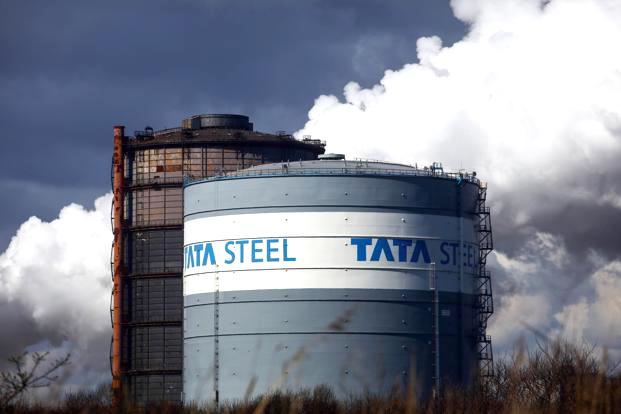
Tata Steel adopts differing European, Indian decarbonisation strategy
Indian steel major Tata Steel is adopting differing approaches to decarbonisation in Europe and India, reflecting local market realities, the company’s chief executive officer and managing director T.V. Narendran has told Kallanish’s Green Steel Challenge podcast.
In Europe, high carbon costs and stricter regulations are pushing the company towards electric arc furnace (EAF) steelmaking and greater use of scrap. At Port Talbot, Tata Steel is utilising this model, backed by a €500 million ($630m) government grant. Narendran says Europe faces a “survival and transition” challenge, with limited availability of affordable green hydrogen and renewable energy.
In India, steel demand remains strong and capacity additions are ongoing. Tata Steel is therefore focusing on gradual emissions reduction rather than wholesale asset replacement. The company is investing in gas-based direct reduced iron (DRI), hydrogen injection trials in blast furnaces, and the development of a professional scrap supply chain through its Tata FerroBaling programme. Tata FerroBaling part of the steelmakers recycling business, designed to formalise India’s largely unorganised scrap market and improve supply quality and transparency.
Narendran says the global steel transition is multi-speed, adding, “while the goal is global, the journey is regional.” He notes that “Europe has a clear case for rapid transition due to high carbon taxes and public demand for cleaner production, while India’s focus is on greening the growth as capacity continues to expand.”
He further adds: “No steel company in the world can realise the transition… without government support.” He points out that Europe is ahead because governments are footing 40%–60% of the capital costs.
Since India is adding 100–150 million tonnes of capacity every decade, he insists the priority is keeping that growth sustainable rather than just replacing old assets, which is the European focus.
The two-pronged strategy highlights how policy frameworks, geography and raw material availability are shaping the economics of green steel.
India is likely to remain a key production hub in the near term, while Europe continues to lead in low-carbon branding and circular steelmaking.
Tata’s split approach allows it to remain competitive in price-sensitive Indian markets while complying with tighter European decarbonisation rules, potentially widening the gap between domestic and export-oriented mills.


EU recyclers need payment for higher grades: conference
European scrap recyclers are able to invest in improving grades, but this must be done through communication with steelmakers, with margins sufficient to justify the investment, delegates heard at the Kallanish Steel Scrap 2026 conference in Istanbul on 5 February.
Higher grades of scrap will be necessary as the European steel industry targets the production of more flat steel through electric arc furnaces. In Europe, only 15% of flat products are produced from EAF steel, compared to 55% in the USA.
The difference between the two is not just technical but about communication, argues Alain Eeckman, commercial director of Casier Recycling.
In the USA, scrap suppliers and EAF mills openly discuss the best way to produce scrap products that allow the EAFs to produce better quality steel.
This has resulted in specialised low copper grades and also joint investment in scrap processing capacity. In the EU meanwhile, mills and scrap suppliers do not talk to each other effectively, Eeckman warns.
Olivier Francois, president of industry association Recycling Europe agrees, noting that European mills would always say they wanted higher quality scrap but then would not be willing to pay sufficient premium when offered it.
Recyclers would lose money if they invested heavily for a product which did not achieve a higher price.
Meanwhile, on the sidelines of the conference, a scrap buyer from a major European steelmaker said it was true there needed to be investment in upgrading the quality of scrap.
However, he noted that he could not be expected to pay more if his customers also would not be willing to pay more for greener steel products. If he accepted a higher scrap price without being able to pass this on to customers, it would be his margins which would be squeezed.
Author: Tomas Gutierrez UK
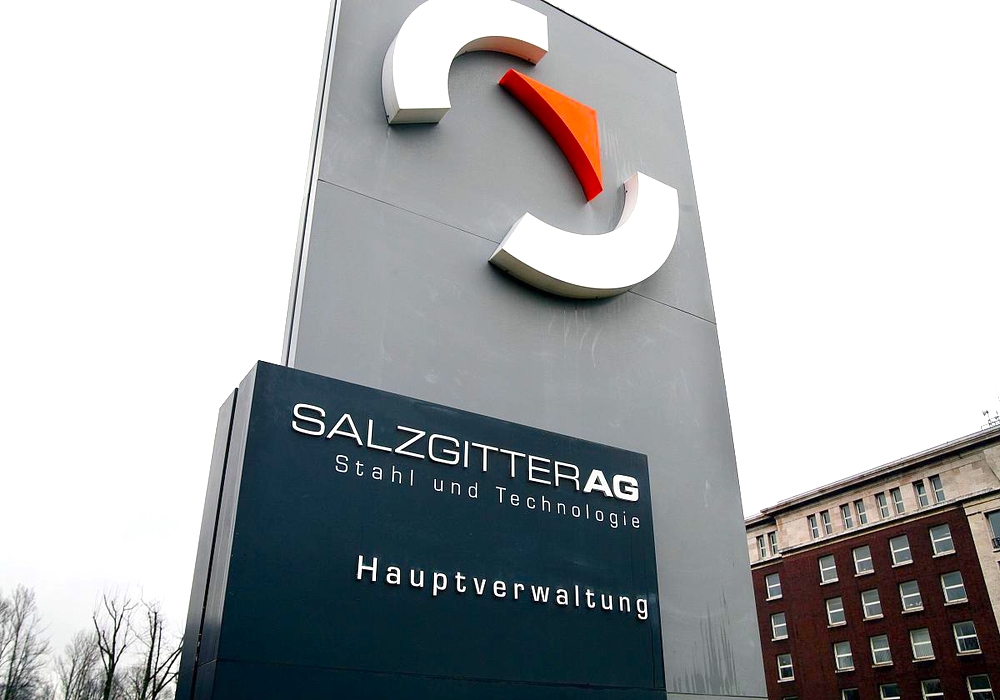
Salzgitter, thyssenkrupp reach agreement on future of HKM
German steelmakers thyssenkrupp Steel and Salzgitter have signed a framework agreement over their jointly owned mill Hüttenwerke Krupp-Mannesmann (HKM) in Duisburg.
Following intense negotiation that involved a former German state premier as mediator, the two groups have reached the terms over a transfer of tk Steel’s 50% stake to Salzgitter, effective 1 June. Salzgitter so far has held 40% in HKM, with the remaining 10% held by Vallourec, which has long declared that it wants to pull out of the joint venture. To become effective, the agreement between the bigger owners involves Vallourec, too, selling its stake to Salzgitter.
HKM, one of the biggest German slab mills with a potential capacity of more than 5 million tonnes/year of crude steel, has long been problematic for tk Steel’s parent thyssenkrupp AG. In its endeavour to make its steel division a separate independent company, HKM was a massive hurdle.
Salzgitter repeatedly signalled that it would continue with HKM if the stakeholders agree on conditions. HKM’s slab are used as pre-material for some of Salzgitter’s tube production. Salzgitter says it will continue operating HKM on a smaller scale.
One of HKM’s problems in the market is its slab prices, Kallanish is told by an experienced player. But with the EU’s market barriers and a shortage of imported slab ahead, HKM’s could soon see European re-rollers knocking, he says.
The announcement was sent out on Friday afternoon, followed by commentary from IG Metall. The union welcomes the news as “a good signal for HKM’s staff, for state North Rhine-Westphalia, and for steel in Germany.” The agreement “secures an important value-adding chain in our country, and beyond.” The union underscores that it appreciates that the parent groups have stood up to their responsibility for the employees. But the labour leaders note that a hard road lies ahead.
“Following difficult talks and disputes, the real work is starting only now,” says Thomas Hay, the representative of the employees on the supervisory board of HKM.

Italian plate prices continue to increase
Italian heavy plate prices are increasing compared to January, following a further increase implemented by regional producers driven by higher imported slab costs linked to CBAM, Kallanish learns.
Market activity remains quiet as buyers are now adopting a wait-and-see attitude, but mills say they have enough orders until the end of March.
Italian mills are currently quoting at around €750/tonne ($888.33/t) for S235 plate, with premiums of €30-35/t for S355 and approximately €10-15/t for S275 material.
Current transaction values for S275 material are now increasing to €735-750/t delivered on average and €765-780/t delivered for S355.
Sellers believe values will continue to increase in the coming days as buyers are seen coming back to purchasing after a quiet January.
Slab values, excluding CBAM costs, are reported at around $530/t cfr southern European ports. Mill sources say they are considering CBAM charges of more than €100/t.
Meanwhile, Northwestern European plate mills have increased offer prices by around €30/t in January, amid a prevailing lull in demand. This has lagged the stronger upward price movement seen in Italy.
Current offer prices for S355 plate appear in a wide range of €730-770/t ex-works, according to distributor sources.
One manager bemoans that his selling prices are not much higher than that, at €760-790/t, albeit the material was bought at still somewhat lower mill prices in previous months.
According to one Ruhr-based observer, Italian S355 offers to northern markets “do not start with a 7 anymore”, meaning they would be at or above €800/t delivered Ruhr, and absolutely not competitive against local offers (see Kallanish 2 February).

20th sanctions package to close EU market to more Russian metals
The 20th package of sanctions the European Union will adopt against Russia ahead of the fourth anniversary of the Russia-Ukraine war will include import bans on more Russian metals and critical minerals worth over Eur570 million ($679 million), according to Ursula von der Leyen, president of the European Commission.
She did not specify Feb. 6 which metals and minerals will become subject to restrictions. Also, an EC spokesperson declined to name them, saying, ‘We will be in a position to provide more information once the proposal is approved by the European Council.”
In January-November 2025, the EU imported $2.1 billion worth of Russian ferrous metals, of which steel slab comprised $1.6 billion, with pig iron and direct reduced/hot briquetted iron being the next largest imports at $266 million and $196 million, according to S&P Global Market Intelligence’s Global Trade Analytics Suite.
However, Russia’s sales of ferrous metals in the EU have this year become limited to slabs. Quotas for their imports will remain in place through Sept. 30, 2028, with bans on Russian pig iron and DRI/HBI in full effect since January.
Russian slabs — those produced by NLMK — remain an important source of feedstock for rerolling in Europe because of NBH, NLMK’s joint venture with Belgian state-backed investment fund Wallonie Entreprendre. NBH owns strip and plate mills in Belgium, Denmark, France and Italy that depend on slabs from NLMK’s Novolipetsk steelworks for their combined maximal output in excess of 3.1 million mt/year of steel.
Russian nickel was the second-largest import item in monetary terms, with $965.2 million imported in January-November, according to Market Intelligence. The volume was largely stable year over year, but compared with the same 11 months of 2023, contracted by 42.5%.
Nickel matte accounted for $653.4 million of the total, with the entire amount imported by one EU country: Finland. It is home to Harjavalta refinery, which receives most of its feedstock — nickel matte – from its parent company, Russian nickel, copper and platinum group metals producer Nornickel.
In January-November, the EU imported $812.9 million worth of Russian aluminum, 6% less year over year. Compared with the same period two years ago, imports slumped by 48%.
2026 will see minimal volumes of Russian aluminum entering the EU as a result of a ban on unwrought aluminum imports from Russia that the EU adopted with the 16th sanctions package in February 2025. The ban has been phased in gradually, following the use-up of a 275,000 mt quota over a 12-month period, and so will be fully implemented this year.
In January-November, the EU also imported $279.2 million of Russian copper, of which $242.8 million is refined copper; these imports were 15% lower year over year, and when compared with the same period in 2023, they reduced by half, according to Market Intelligence.
The bloc’s imports of platinum group metals from Russia, at $328.5 million, of which palladium comprised $328.4 million, declined too, by 12% from January-November 2024 and almost halved from two years ago.
Only the EU’s imports of Russian titanium remained stable compared both with last year and earlier periods: At $213.5 million they were flat year over year and only 5% lower in monetary terms compared with January-November 2024, according to Market Intelligence.
Given the $679 million reduction envisaged in metals inflows, long-standing vertical integrations between NLMK and European rerollers, and Nornickel and nickel refining operations in Finland, as well as Europe’s reliance on Russian titanium, the pending new sanctions could target copper and PGMs.