

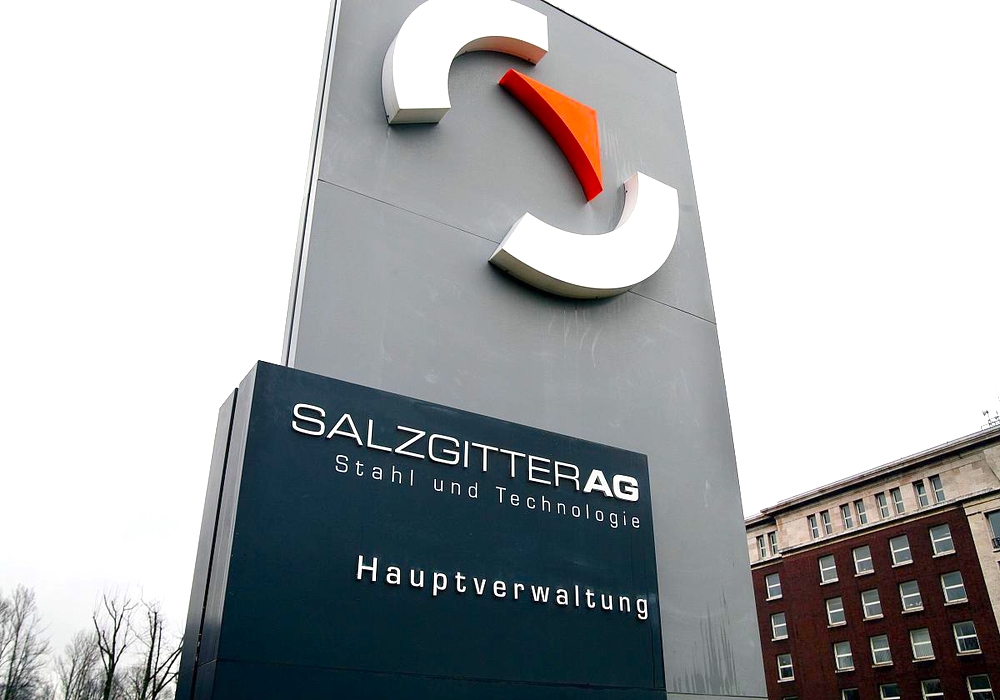
Salzgitter acquires maker of defence components
Salzgitter says it is expanding its portfolio in the field of defence with the strategic acquisition of Thyrolf & Uhle, a medium-sized processor of security steels, Kallanish learns.
Thyrolf & Uhleis makes steel components for infrastructure and ballistic protection, and for civil and military vehicle construction. At the company headquarters in Dessau-Rosslau, Germany, around 100 employees process over 12,000 tonnes/year of steel.
For Salzgitter, the acquisition of Thyrolf & Uhle represents an expansion of expertise, as the company holds the necessary certifications for processing parts made from security steels, as well as the manufacturer qualification stipulated by German standard DIN 2303.
“Germany and Europe need an efficient defence industry with a qualified materials base in order to prevail in the face of geopolitical upheaval. This is precisely where we as Salzgitter AG are strengthening our offerings,” says chief executive Gunnar Groebler.


EU needs market integration, not trade barriers: Gerber
EU policymakers should prioritise integrating the Single Market rather than establishing trade barriers to ensure small and medium-sized enterprises (SMEs) thrive, says German stainless steel trader Gerber Group.
As EU leaders met at Alden Biesen on Thursday, Gerber warned that tackling rising costs, expanding bureaucracy, and an “increasingly dysfunctional” Single Market are key to solving Europe’s competitiveness problem, rather than trade protection. “Non-tariff barriers, regulatory fragmentation, and administrative requirements now function effectively as internal tariffs ranging from 65-100%,” the firm tells Kallanish.
“The European Single Market is stagnating while prices and production costs continue to rise. Protective instruments such as tariffs, quotas, or origin requirements increase the cost of European value creation instead of safeguarding it,” with additional costs passed on to consumers, says chief executive Thorsten Gerber.
Unlike large corporations, SMEs are unable to absorb rising costs or relocate production internationally. Trade barriers exacerbate existing imbalances within the EU, a Single Market composed of highly diverse economies, the firm notes.
It suggests policymakers implement no new trade barriers without an integrated overall impact assessment, remove protection measures that exclusively benefit large industries, and prioritise eliminating internal market barriers.
Also required are mandatory SME impact checks for new and planned initiatives, a measurable reduction of bureaucracy as a competitiveness objective, and for trade policy to be a complement to, not substitute for, a functioning Single Market, Gerber concludes.

Spanish rebar market rebounds, scrap suffers weak demand
Spanish rebar demand is strong despite prices remaining elevated, Kallanish learns from local market sources. Most distributors started February by stocking up on larger volumes of material, in anticipation of an albeit slight price hike by mills.
Scrap suppliers, however, have doubts over the evolution of the market following the international movements seen in recent weeks.
“Spanish rebar prices have been stable after recovering at the end of January,” one source comments. “Mills are once again trying to up their offers by €5-10/tonne ($5.93-11.87/t) so far this week.”
Most distributors locked in purchases ahead of the expected price increase, securing larger-than-usual tonnages, another market participant says. “The long steel market in Spain is now more predictable, as private construction activity and the progress of major public works projects are moving forward. Therefore, this increase in restocking ensures business stability in the face of possible price volatility in the coming months,” he observes.
Current offers for 16mm rebar in Spain are at €388-393/t ($460.87-466.81) base. Including €262/t size extras and loading expenses, transaction values are at €650-655/t ex-works.
The domestic scrap market situation, meanwhile, appears somewhat unusual at present, a supplier notes. “Most large plants experienced shortages of material, but preferred to limit their purchases. There was a situation of bypassing the increase in international prices in anticipation of them falling, and collectors were unable to take advantage of the situation,” he says.
Another seller confirms the increase in sales expected at the beginning of the month did not materialise. “Even so, scrap collection activity remains strong, and market demand is expected to rebound by the end of February and early March, although without price growth,” he adds.
The second week of February began with auto bundle quality scrap quoted at €355/t delivered in the Spanish market. Both new E8 grade scrap and shredded E40 grade are generally offered at €325/t. Other qualities, E3 and E1, are respectively at €315/t and €275/t delivered.
Italian rebar prices seen weakening on slow consumption
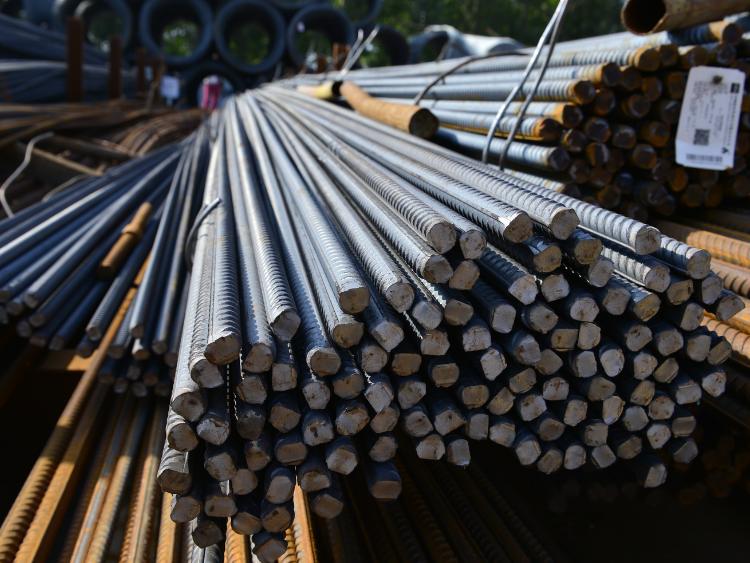
After Italian rebar prices ticked up by around €15/tonne ($17.77/t) last month, momentum for further increases appears to be fading, with the €320/t base ex-works level targeted by producers in January now widely seen as unachievable, Kallanish notes.
The €320/t base level has been concluded only in isolated cases for single truckload volumes. Current market assessments place contract prices at around €300/t base ex-works, although several participants are expecting levels to soften further in coming weeks, potentially retreating to €280–290/t base ex-works.
Buyers say that in the current sluggish market, price increases rarely hold for more than a couple of weeks. Activity among construction companies and distributors remains weak. In central Italy, prolonged heavy rainfall has delayed activity at building sites, while sources agree that private residential construction has slowed significantly and demand from new projects remains unreliable. One source adds that despite cost pressure from higher scrap and energy prices, producers may be forced to accept lower rebar prices in the second half of the month.
Mesh prices are also stable at €390-400/t base ex-works, plus approximately €300/t in extras. Including size extras of €260-270/t, effective rebar transaction prices are currently assessed at €560-580/t ex-works, sources suggest. One steelmaker is rumoured to have decreased extras only for some commodity grade mesh by €20/t to possibly stimulate demand. Others may follow, sources believe.
Trading muted in European domestic HRC market
“Demand is not great. Overall consumption leaves much to be desired while customers are working through their stocks [created earlier with domestic and import material],” one trader from Northern Europe told Fastmarkets.
Still, domestic prices remained firm “as customers finally recognize the effect of the mix of the Carbon Border Adjustment Mechanism (CBAM) and the forthcoming change of safeguard in the second half of 2026,” the trader said.
HRC offers in the German and Benelux markets were heard at €680-685 ($807.32-813.25) per tonne ex-works, while tradeable levels were estimated within €650-660 per tonne ex-works.
No major sales were heard during the day.
Fastmarkets’ daily steel HRC index, domestic, exw Northern Europe was €655.83 per tonne on Friday, up by €0.83 per tonne from €655.00 per tonne on Thursday February 12.
The index was down by €0.42 per tonne week on week and by €17.50 per tonne month on month.
The Italian market was somewhat livelier, with a large cargo heard sold within €630-640 per tonne ex-works.
Estimates of workable prices for standard tonnages of 1,000-3,000 tonnes were reported at €650 per tonne ex-works, compared with offers at €660-685 per tonne ex-works from integrated suppliers and re-rollers.
Fastmarkets’ daily steel HRC index, domestic, exw Italy was calculated at €647.50 per tonne on Thursday, down by €3.50 per tonne from €651.00 per tonne on Thursday.
The index was down by €0.42 per tonne week on week and up by €18.23 per tonne month on month.


European Parliament approves steel trade regime interinstitutional negotiations
The European Parliament plenary has confirmed the International Trade Committee (INTA)’s decision to enter into interinstitutional negotiations on the proposed new steel trade regime.
The Parliament, Council and Commission have now been authorised to negotiate the final wording of the document, before it goes back to Parliament for a reading. Time is of the essence, as once this is completed, the Commission will still need to negotiate access to the EU steel market with free trade agreement partners, before the new measure is due to come into force from 1 July, Kallanish notes.
INTA voted last month to approve the proposed new steel trade regime with amendments.
The committee has since released a document summarising its position. It says the proposed measure needs regular evaluation to ensure production increases at highly competitive companies and it “goes hand in hand with efforts to ringfence export markets and cooperation in fighting global overcapacity together with likeminded trading partners”. Annual reporting would be in line with this type of trade instrument, it adds.
The importance of the melt and pour rule was also stressed, to ensure product traceability and prevent circumvention. It is proposed that importers provide “verifiable” evidence at the moment of importation. This includes a mill certificate issued by the original steel producer, identifying the corresponding heat number and containing the technical and production data necessary to trace the origin of steel.
Steel imports from Russia and Belarus are banned. Slab imports from Russia, currently exempted and receiving a quota, are to be reviewed.
“For products currently subject to derogation under Article 3g(1), point (d), of Council Regulation (EU) No 833/2014 until 1 October 2028, a significant price gap has been materialised since the Russian invasion in 2022 between products originating from Russia vis-à-vis other third countries, and such products originating from Russia have increased their market shares in relation to other third countries, especially in relation to Ukraine,” the document states.
“Those import flows also provide the Russian Federation with significant revenues, thereby directly contributing to its ability to sustain its war of aggression, while simultaneously maintaining strategic dependencies. The Commission should deliver an assessment of Union industry’s substantially unutilised capacity to supply such products”, with a view to phasing out slab imports from Russia.

Salzgitter acquires German steel processor Thyrolf & Uhle to bolster defense offerings
Salzgitter has acquired Thyrolf & Uhle, a German steel processor specializing in ballistic protection components, as the second-largest German steelmaker seeks to expand its presence in Europe’s growing defense sector.
The deal, announced on Feb. 11, gives Salzgitter access to Thyrolf & Uhle’s expertise in processing high-grade security steels, including 400, 450, 500, and 600 SECURE grades used in military vehicle construction and infrastructure protection, the German steelmaker said in a statement.
Thyrolf & Uhle, based in Dessau-Rosslau with around 100 employees, processes over 12,000 metric tons/year of steel at its facility and holds key certifications for manufacturing ballistic protection components under German military standards TL-2350-0000 and DIN 2303 Q3 BK.
The acquisition positions Salzgitter to capture growing demand for armored steel components as European nations boost defense budgets, the company said in the statement.
“This acquisition marks a further step in our active portfolio management involving targeted acquisitions in growth markets,” said Gunnar Groebler, CEO of Salzgitter AG. “Germany and Europe need an efficient defense industry with a qualified materials base in order to prevail in the face of geopolitical upheaval. This is precisely where we as Salzgitter AG are strengthening our offerings,” Groebler added.
Germany announced plans to significantly increase military spending following Russia’s invasion of Ukraine in 2022, driving demand for specialized steel products used in military vehicles and protective infrastructure.
Thyrolf & Uhle has operated as a steel processor since 1859, providing steel construction, component manufacturing, and sheet metal processing services. The company supplies steel components for both civil and military vehicle construction across Germany and Europe.
Financial terms of the transaction were not disclosed, with the transaction subject to the fulfillment of the agreed closing conditions, in particular, official approvals.
Platts, part of S&P Global Energy, assessed Feb. 10 domestic hot-rolled coil in Northern Europe at Eur650/mt ex-works Ruhr, stable day over day.

European carbon prices slide as Germany’s Merz says EU ETS may need revamping
European carbon prices were trading near six-month lows on Feb. 12 after German Chancellor Friedrich Merz said the EU’s Emissions Trading System should be revised or postponed if it undermines industrial competitiveness, comments that could reshape debate at an EU leaders’ summit.
EU Allowances stood at Eur73.01/mtCO2e ($86.75mtCO2e) at 1207 GMT on Feb. 12, the lowest since Aug. 14, according to Intercontinental Exchange data.
EUAs have slumped by almost Eur20/mtCO2e since Jan. 15 amid news that the European Commission is looking to reform the EU ETS, with changes expected around free allocations and allowance supply caps.
“This system [EU ETS] is not the system to generate new revenues. This system is implemented to reduce CO2 emissions and, at the same time, to enable the companies to come to CO2-free production lines,” Merz said at the European Industry Summit in Antwerp late Feb. 11. “If this is not achievable and if this is not the right instrument, we should be very open to revise it or at least to postpone it as we did with EU ETS2.”
Other European leaders have adopted a similar stance on reforming the bloc’s carbon market.
On Feb. 12, ahead of the EU summit, Czech Prime Minister Andrej Babis said EU Allowances were “destroying our industry” and called for a revision of the ETS, arguing that carbon prices should be capped at Eur30/mtCO2e to save European industry.
High carbon and energy costs
Merz acknowledged that the EU was discussing this matter seriously and assured the industry that steps would be taken to address their concerns.
“The elephant in the room is the EU ETS question, but note that we are talking about it in the EU Council,” Merz said. “We had some very strong comments from colleagues in the east but also from the western parts of the EU.”
Merz’s intervention comes as European manufacturers face mounting pressure from high energy costs and carbon prices that exceeded Eur90/mtCO2e in mid-January.
The comments suggest growing political willingness to reconsider the pace of EU climate policy implementation if it threatens industrial output and jobs.
The summit will see EU leaders discuss “European competitiveness in a changing geoeconomic context,” according to the meeting’s agenda.
Merz’s comments follow European Commission President Ursula von der Leyen’s defense of the EU ETS at the same event, in which she said she would push member states to reinvest more of the revenues from carbon permit auctions into industrial decarbonization.
The European Commission has already scheduled an ETS review for the third quarter of 2026, with many governments pushing for greater price predictability through extended free allocations or changes to allowance caps.
The sharp fall in EUAs reflects growing pushback against the expected increase in carbon prices, with an expanding political coalition keen to revisit carbon market rules to ensure prices remain manageable for industry, according to Coralie Laurencin, director of European gas, power, and carbon policy at S&P Global Energy CERA.
“The discussion will take many months to find a landing zone, but many are in favor of a less tight carbon market and lower prices,” said Laurencin. “This is no longer just some countries ranting; this is Europe’s industrial heartland that wants significant change.”

ArcelorMittal to halt blast furnace in Spain for ‘several months’
ArcelorMittal Spain said in a statement Feb. 13 that it will take its halted blast furnace B at Aviles, Spain, offline for “several months” after failing to repair a production issue that started after a maintenance in 2025.
The unit will be cooled and fully halted so that the blast furnace can be completely cleaned out in order to allow a “safe restart at a later date,” the company said in the statement.
Aviles is Spain’s largest steel production site, with a capacity of 4.7 million metric tons/year via its two blast furnaces, a company spokesperson said Feb. 13, without providing a breakdown.
The fault in blast furnace B originated following a maintenance-related halt in September 2025, the spokesperson told S&P Global Energy.
Specialist operators have been working on the issues since October 2025, the spokesperson said, with the last attempt made Feb. 12, before taking the decision to empty out the unit.
According to a report in local press La Nueva Espana dated Feb. 10, the site has been operating at a reduced rate of around 20% since the issues. AM did not comment on the operating rate.
The company said in its statement that it will aim to “minimize the impact” and “protect the needs of its clients” during the unit’s time offline.
AM is the largest operator in terms of capacity in Spain at around 9 million mt/year, according to company data.
It is also in the process of expanding capacity while decarbonizing its production in Spain. Its Sestao EAF is carrying out upgrades to boost capacity from 1.1 million mt/year to 1.6 million mt/year, while the company is also installing a new 1.1 million mt/year EAF at the Gijon cluster, close to the Aviles site.
Both upgrades could be operational in 2026, according to company estimates.
A third decarbonization project, to build a 2.3 million mt/year hydrogen-fed direct reduced iron plant at Gijon was put on hold in November 2024 amid a slower-than-expected development of green hydrogen infrastructure.
Platts, part of S&P Global Energy, assessed hot-rolled coil CIF Antwerp at a midpoint $611.05/mt Feb. 12, up 5% from a month prior.