


European CRC, HDG prices aided by changing landscape for importers
European flat steel prices increased in the week to Wednesday February 18 amid heightened pressure on imports from new regulations, although higher offers are still not achieved in the market, Fastmarkets heard.
According to sources, the domestic market has seen some improvement since the introduction of the EU’s Carbon Border Adjustment Mechanism (CBAM) earlier this year, which has affected buyers’ appetite for imported products.
“There is low interest in imports because they have become too risky,” a distributor source said, adding that there is a “big focus” on domestic production.
With limited supply of imported materials due to regulatory changes, and increasing trade risks, domestic producers have found themselves in a better position to push for higher offers, Fastmarkets understands.
Northern Europe
In Northern Europe, mills were heard offering April delivery CRC at around €795-830 per tonne ex-works. However, these levels were yet to be reflected in transactions.
Estimates of tradable market levels were heard hovering €770-780 per tonne ex-works, compared with €760-770 per tonne ex-works during the previous assessment period.
Fastmarkets’ weekly price assessment for steel cold-rolled coil domestic, exw Northern Europe was €770-780 per tonne on Wednesday, rising from €760-770 per tonne the previous week.
According to a market source, mills are looking to achieve levels closer to €800 per tonne for CRC, which they said are “absolutely not workable” as buyers are not in a hurry to make “big decisions”.
Meanwhile, CRC import prices for Northern Europe were stable for CFR, while DDP prices edged up slightly.
Fastmarkets’ weekly price assessment for steel cold-rolled coil, import, cfr main port Northern Europe was stable at €630-660 per tonne on Wednesday, unchanged week on week.
Fastmarkets’ weekly price assessment for steel cold-rolled coil, import, ddp Northern Europe was €730-770 per tonne ex-works on Wednesday, widening up from €730-760 per tonne the previous week.
The lower end of the assessment was pegged on offers from Brazil at €730 per tonne DDP, while the upper end represents offers from China and South Korea, heard hovering €760-770 per tonne DDP.
No new trading activity was reported during the assessment period.
On the other hand, domestic HDG coil prices also increased in Northern Europe.
Fastmarkets’ weekly price assessment for steel hot-dipped galvanized coil domestic, exw Northern Europe was €770-780 per tonne on Wednesday, rising from €760-770 per tonne the previous week.
Estimates of workable levels were heard hovering €770-780 per tonne ex-works, compared with €760-770 per tonne ex-works the previous week.
Higher offers were also reported at €790-820 per tonne ex-works, but no transaction was heard at those levels.
Regarding HDG import prices in Northern Europe, DDP levels narrowed in the week to Wednesday, while CFR levels remained stable.
Fastmarkets, weekly price assessment for steel hot-dipped galvanized coil import, ddp Northern Europe was €760-770 per tonne on Wednesady, narrowing up from €740-770 per tonne the previous week.
The lower end of the assessment is pegged to an offer from Vietnam heard at €760 per tonne DDP, while offers from other Asian origins were also reported within the range of €760-770 per tonne DDP.
Fastmarkets’ weekly price assessment for steel hot-dipped galvanized coil import, cfr main port Northern Europe was stable at €650-700 per tonne on Wednesday.
Sources attributed the lack of offers for imported HDG to complications with CBAM and safeguard measures.
Southern Europe
Domestic CRC and HDG prices in Southern Europe were mostly stable in the week to Wednesday, despite reports of higher offers in the market.
For domestic CRC, offers were heard hovering €800-820 per tonne ex-works, but these levels had not been yet reflected in transactions.
An offer for May-delivery CRC was also heard at €865 per tonne ex-works but was discarded as it fell outside Fastmarkets’ specified timeframe for evaluation.
Fastmarkets’ weekly price assessment for steel cold-rolled coil domestic, exw Southern Europe was €770-780 per tonne ex-works, unchanged week on week.
The lower end of the assessment was pegged to a deal heard at €770 per tonne ex-works, while estimates of workable levels were reported around €780 per tonne ex-works.
Meanwhile, Fastmarkets’ weekly price assessment for steel hot-dipped galvanized coil domestic, exw Southern Europe was €775-780 per tonne on Wednesday, narrowing up from €770-780 per tonne the previous week.
Estimates of workable prices were heard around €775-780 per tonne ex-works.
Higher offers were also reported within the range of €790-820 per tonne ex-works, but no transaction was reported happening at those levels.
An offer for May-delivery HDG was also heard at €855 per tonne ex-works but was discarded as it fell outside Fastmarkets’ specified timeframe for evaluation.
Regarding imported CRC to Southern Europe, DDP levels increased in the week to Wednesday, while CFR levels were stable.
Fastmarkets’ weekly price assessment for steel cold-rolled coil import, ddp Southern Europe was €730-780 per tonne on Wednesday, compared with €710-750 per tonne the previous week.
The lower end of the assessment matches offers from Brazil heard at €730-740 per tonne DDP, while the upper end of the assessment matches offers from South Korea heard at €780 per tonne ex-works.
Fastmarkets’ weekly price assessment for steel cold-rolled coil import, cfr main port Southern Europe was €620-650 per tonne on Wednesday, unchanged week on week.
Fastmarkets’ weekly price assessment for steel hot-dipped galvanized coil import, ddp Southern Europe was €750-770 per tonne on Wednesday, narrowing up from €740-770 per tonne the previous week.
The lower end of the assessment matches an offer from Taiwan heard around €750-770 per tonne DDP, while offers from other Asian origins were heard within the range of €760-770 per tonne DDP.
A bid was also reported at €750 per tonne DDP.
On the other hand, Fastmarkets’ weekly price assessment for steel hot-dipped galvanized coil import, cfr main port Southern Europe was stable at €660-700 per tonne on Wednesday.

Italian rebar prices extend decline; other markets hold firm
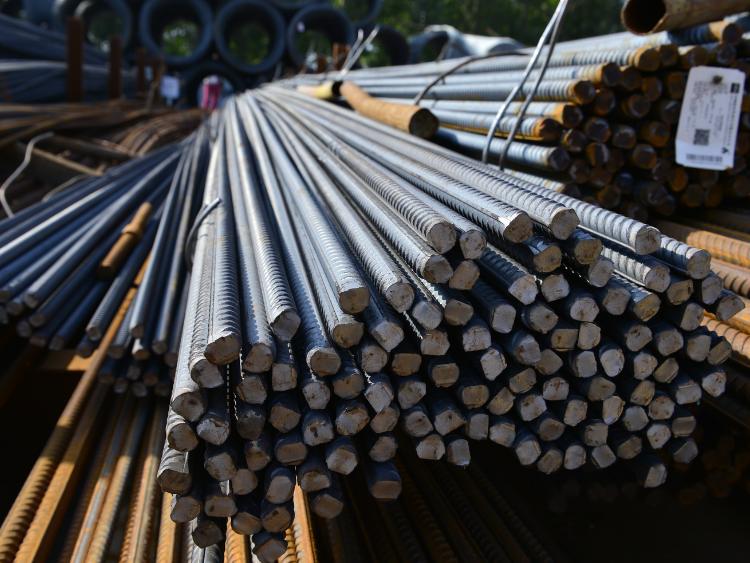
Rebar prices in the domestic market of Italy continued moving downward in mid-February while other European markets remained firm, Fastmarkets heard on Wednesday February 18.
“Unfortunately, weather conditions are not in our favor. It has been raining for quite some time and this doesn’t help construction activities,” a cut-and-bend producer said.
“Rebar price continues to be under pressure,” a trading source said.
Prices varied within the range of €565-600 ($668-709) per tonne ex-works during the reported week compared with €570-620 per tonne ex-works a week earlier. Prices closer to the lower end traditionally refer to northern regions while the upper end refers to the south.
Fastmarkets’ weekly price assessment for steel reinforcing bar (rebar) domestic, exw Italy changed accordingly, falling to €565-600 per tonne on February 18 from €580-620 per tonne ex-works on February 11.
In Spain, meanwhile, rebar prices remained strong with the base price, which corresponds to 16 mm diameter 12 m length material, hovering at €665 per tonne ex-works. The average extra for other diameters is said to be €15 per tonne.
Thus, Fastmarkets’ weekly price assessment for steel reinforcing bar (rebar) domestic, delivered Spain remained stable on February 18 at €665-680 per tonne.
In northern Europe, prices also remained stable although market participants noted some tension between buyers and sellers.
Sellers in the region are trying to at least maintain prices, referring to high production costs, particularly scrap and electricity, while buyers cite sufficient stocks and a lack of demand, which is traditional for the winter season, which this year is tougher than normal.
Offers for rebar varied within the range of €615-640 per tonne delivered, depending on supplier and country, with higher levels traditionally observed in the Netherlands and Nordic countries while the lower end is for Germany and Austria. Estimates of workable prices in the latter were heard at €610-620 per tonne delivered.
Fastmarkets’ weekly price assessment for steel reinforcing bar (rebar) domestic, delivered Northern Europe continued varying within €610-640 per tonne, stable week on week.
European steel HRC prices up again on firm offers, strong order books at local suppliers
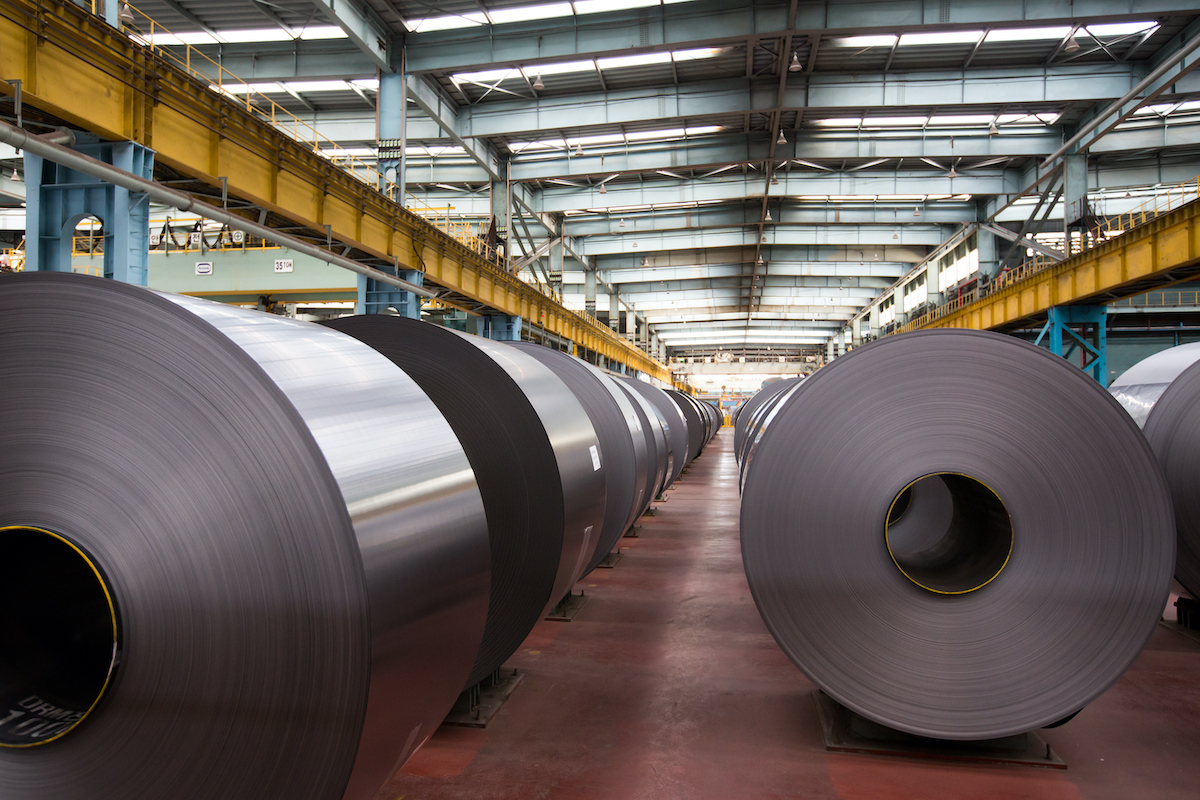
European prices for steel hot-rolled coil (HRC) have gone up in the latest trades, following ArcelorMittal’s move to increase offer prices for May-delivery coil, Fastmarkets heard on Thursday February 19.
Even though transaction prices are still lagging behind offer levels, sentiment was still firm, supported by the effects of trade regulations on new imports and good order books at European mills.
In Northern Europe, transactions were heard at €680 ($807) per tonne ex-works in Germany and the Benelux area.
German suppliers were said to be hoping for €700 per tonne delivered (around €685 per tonne ex-works) with minor tonnages of April delivery coil said still to be available.
Italy-origin coil was offered to Germany at €700-720 per tonne delivered with April and May lead times.
Several market sources noted that availability of Italian coil in Germany has been lower over the past few weeks because Italian suppliers preferred to focus on domestic sales.
“Italy is missing import tonnages because of the Carbon Border Adjustment Mechanism [CBAM] and local mills can get better prices there,” a buyer source in Italy said.
In the Benelux area, offers of May-delivery HRC were reported at €680 per tonne ex-works from one supplier.
Earlier this week, leading European flat steel producer ArcelorMittal increased prices for HRC with May lead times to €750 per tonne delivered (around €735 per tonne ex-works).
“ArcelorMittal’s move gave the market another push. Even though they are not achieving these new offers in deals, overall prices continue to climb and other suppliers are pushing offers up as well,” a trading source in Germany said.
Domestic prices for coil across Europe continued to strengthen, following the ArcelorMittal move, even though some buyers remained skeptical about the sustainability of the current uptrend, citing a lack of support from real steel consumption.
As a result, Fastmarkets’ daily steel hot-rolled coil index, domestic, exw Northern Europe, was €671.50 per tonne on Thursday, up by €8.69 per tonne from €662.81 per tonne on Wednesday.
The index was up by €16.50 per tonne week on week and by €30.87 per tonne month on month.
Another market source pointed out that ArcelorMittal’s new offers to the spot market were actually in line with, or even exceeded, long-term contract prices for the first half of 2026, which was a rather unusual situation.
“Some long-term HRC contracts for the first half of 2026 with automotive [original equipment manufacturers] were finalized at slightly above €700 per tonne, which is very close to the spot market now. So for the second half of 2026, mills will definitely try to get substantial increases [for contracts],” a steel-service center (SSC) in Germany said.
“Spot sales might not be actually very interesting for European mills that have contracts with automotive OEMs,” a second SSC said. “They are well booked so far. [European producers] need to give a clear signal to end-users that prices [for flat steel] are rising in the spot market in order to strengthen their position in the second round of negotiations [of long-term contracts for the second half of 2026].”
In Southern Europe, meanwhile, Fastmarkets’ daily steel hot-rolled coil index, domestic, exw Italy, was calculated at €662.50 per tonne ex-works on Thursday, up by €7.50 per tonne from €655.00 per tonne on Wednesday.
The index was also up by €11.50 per tonne week on week and by €30.83 per tonne month on month.
Italian integrated suppliers were heard to be hoping for €720 per tonne delivered (around €705 per tonne ex-works) for May-delivery HRC, although April-delivery coil was heard still to be available.
Re-rollers were offering their last tonnages of April-delivery coil at lower prices, with market sources reporting prices of €660-670 per tonne ex-works. But target offers for May delivery were heard at €700 per tonne ex-works.
Buyers estimated achievable prices at €660-670 per tonne ex-works.
In the secondary market, meanwhile, 4mm HR sheet was on offer around €750-760 per tonne delivered, up slightly week on week. But market source said that SSCs that were using old HRC feedstock for production had practically run out of stock, so new offers were likely to increase to around €800 per tonne CPT, taking into consideration more expensive HRC.
Meanwhile, in the import coil market, because of the CBAM cost uncertainty, import purchases on a CFR basis were no longer viable for many buyers, leaving DDP-based bookings – with CBAM costs at least partly incorporated – as the only practical option, typically offered by large trading houses.
Market sources reported a transaction for 20,000 tonnes of Turkey-origin HRC around €630-650 per tonne DDP to Italy, inclusive of CBAM costs.
Indian HRC was offered to Europe around $600-620 per tonne CFR.
Several market sources also reported offers of Indonesian coil at €475 per tonne CFR – but this was before Lunar New Year celebrations in Asia. One source suggested that Indonesian material was offered at lower prices than other origins due to extremely high default emissions values for Indonesia, which were making this origin more risky and therefore less attractive for European buyers.

European steel HRC imports hit by new regulations; CFR prices lower while DDP shows growth
Demand for imports of steel hot-rolled coil has weakened further in the European market following the introduction of new regulations, with the focus now shifting toward domestic production, Fastmarkets heard on Wednesday February 18.
The introduction of the EU’s Carbon Border Adjustment Mechanism (CBAM) and new trade policies, which will replace current safeguard measures, was affecting buyers’ appetite for imported coils.
According to a market source, imports of flat steel products have become “too risky” due to uncertainty about the costs of CBAM and other regulations, improving the situation for local producers, although demand levels remained low.
Fastmarkets’ weekly price assessment for steel hot-rolled coil, import, cfr main port Northern Europe, was €490-530 ($578-625) per tonne on Wednesday, widening downward from €500-530 per tonne the previous week.
The lower end of the assessment matched a deal from India heard at €490 per tonne CFR, while the higher end of the assessment was estimated on offers from Turkey heard around €530 per tonne CFR.
Fastmarkets’ weekly price assessment for steel hot-rolled coil, import, cfr main port Southern Europe, was €475-530 per tonne on Wednesday, also widening downward from €500-530 per tonne the previous week.
The lower end of the assessment related to an offer from Indonesia reported at €475 per tonne CFR, with the upper end to an offer from Turkey heard at €530 per tonne CFR.
A deal from India was also heard at €490 per tonne CFR.
Meanwhile, European buyers have focused more on DDP-based bookings to overcome some of the challenges of CBAM-related cost hurdles.
Fastmarkets’ weekly price assessment for steel hot-rolled coil, import, ddp Northern Europe, was €610-640 per tonne on Wednesday, narrowing upward from €600-640 per tonne the previous week.
The lower end of the assessment matche an offer from India heard at €610 per tonne DDP, while an offer from Turkey was heard at €630-640 per tonne DDP.
Meanwhile, Fastmarkets’ weekly price assessment for steel hot-rolled coil, import, ddp Southern Europe, was €610-650 per tonne on Wednesday, rising from €600-630 per tonne in the previous assessment.
The increase was supported by a deal from Turkey for 20,000 tonnes of HRC heard around €630-650 per tonne DDP. Additional Turkish offers were heard around €610-640 per tonne DDP.

German fabricators demand increased ‘local content’
The association of German steel and metal fabricators, Wirtschaftsverband Stahl- und Metallverarbeitung (WSM) is calling on policy makers in Berlin and Brussels for regulations that make local procurement mandatory.
WASM is demanding a strategic framework with the idea of “Buy European” that is practical and binding, so that fairness can be reinstated on European markets.
“We need to react adequately to the strategies of the USA and China that work to the disadvantage of European industries,” says WSM’s managing director, Christian Vietmeyer. “When others close their markets, or push into ours, we need to take such measures, too,” he adds.
Requirements and standards of local content should be introduced on a broad scale, including the commercial procurement sector to retain added value, employment and taxes for resilient Europe, Kallanish hears from Vietmeyer.
He underlines that “such wishes are not a result of protectionist thinking, but of economic realism.” WSM considers a “EU content standard” the only way to balance the clear disadvantage for European companies in international competition.
In this context, WSM demands that subsidies for electric cars should only be granted to cars made in Europe. “It makes little sense that other economies benefit from subsidies paid by our taxpayers,” says WSM president Ulrich Flaken (see Kallanish 18 Feb).


Badische bemoans lack of profitability for domestic rebar
Badische Stahlwerke (BSW) saw a loss during 2025 despite high utilisation, Kallanish learns from a statement by the German rebar mill, located in Kehl in the southwest.
The company finds that the steel industry is at a crossroads at which increasing imports are compounding low domestic demand and low margins on a battled market.
The family-owned company does not reveal figures of production volume, revenue, or profits, but states that 2025 was its third year of losses in a row.
“Our target markets, especially residential construction, continues to be a cause for concern in Germany and Europe,” says managing director Florian Glück.
To meet the challenges, Badische has strategically repositioned itself, and merged with Dutch group Van Merksteijn in spring 2025 to become Reinforcing Steel Europe, with locations in Germany, the Netherlands, Belgium and France.
Besides Badische Stahlwerke (BSW), this also includes its associated processing and distribution companies Moselstahlwerk (MSW), Baustahlgewebe, Neckardraht and Bewehrungsstahl Vertriebsgesellschaft (BVG).
With Van Merksteijn as the largest independent wire processor in Europe as partner, “we are positioning ourselves more broadly and more stably in the market,’ says Glück. “We now operate as a European entity. The group’s greater sales potential ensures high capacity utilisation for production at BSW.”
The wire rod produced in Kehl is processed entirely within the new group.
“For 2026, we must continue to review routines, optimise processes and reduce costs,” Glück says.
Governmental politics will play a main role in improving the economic environment, he adds. “Above all, we need better framework conditions for steel production in Germany.”

Europe cannot afford ‘green’ steel hesitation: SEI
Europe cannot afford to hesitate on “green” steel, an industry that could still unlock industrial competitiveness for the region, according to researchers at the Stockholm Environment Institute (SEI).
“Scaling up European primary green steelmaking is essential for supply chain resilience and the competitiveness of strategically important downstream industries. By failing to move from innovation to deployment, the EU risks losing its relevance in global industrial development,” they warn in a report seen by Kallanish.
Chinese producers are squeezing European firms out of global markets. This has happened in sectors such as solar panels, battery cells and electric vehicles. Similar dynamics are now emerging in wind turbines and electrolysers, SEI notes.
The paper comes as Swedish firm Stegra struggles to close a funding round to implement its green hydrogen, green iron and green steel ambitions. Last year, the prospective producer received state aid from the Swedish government, which was below the amount approved by the European Commission. Despite securing customer deals, Stegra still faced additional state aid rejection for port infrastructure and write-downs.
“As the case of Sweden and Stegra illustrates, EU-level initiatives must be complemented by effective coordination across the Commission and member states to ensure delivery of the European Green Deal,” comment SEI research associate Jindan Gong and co-authors, including Max Åhman, professor and head of division, Environmental and Energy Systems Studies at Lund University.
Green steel is estimated to have a premium price of 20-30%, although costs will vary geographically. Northern Scandinavia, Portugal and Spain are said to offer unique cost advantages in Europe.
Separate research by Åhman suggests that the EU Emissions Trading System and the enforcement of the Carbon Border Adjustment Mechanism (CBAM) could make hydrogen-based steel production in these locations competitive by 2026. With a green hydrogen cost of €4.12-5.5/kg ($4.8-6.5/kg), the H2-DRI-EAF steelmaking route could be competitive with conventional production routes, the researchers claim.
However, the institute argues that if the costs of producing green steel are likely to be higher everywhere else in the near term, “the strategic question for Europe is not whether to act, but how decisively [it will act]”.
It notes the EU has three clear options: transition to low-carbon primary steelmaking using domestically produced clean energy or green iron imports; offshore its steel production; or continue to rely on fossil fuel imports. SEI concludes the consequences of delaying or retreating would be “profound” for European innovation, strategic autonomy and competitiveness.
The institute suggests that by 2030, green steel cost will range from €625 to €906/tonne.
Slovakian tubemaker prioritises hot-rolled, eyes policy-driven price improvement
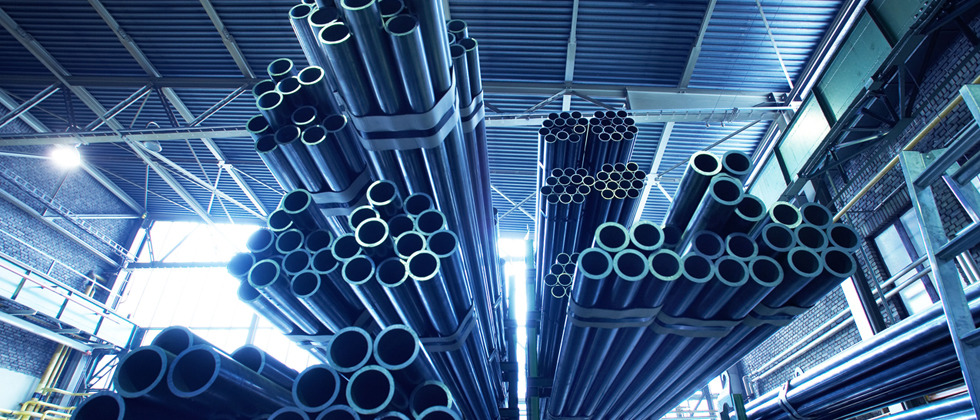
Železiarne Podbrezová is looking into reducing precision seamless cold-drawn tube sales in favour of growing seamless hot-rolled tube deliveries, which it can sell in larger volumes and are more profitable, the Slovakian producer notes. The firm hopes the EU’s new trade regime will allow it to increase product prices later this year.
In 2025, the firm failed to meet sales targets amid a challenging market. Cold-drawn tube activity was more difficult as automotive, mechanical engineering and energy sector output remained on the decline. However, overall sales were “satisfactory”, the firm says, without providing tonnages, with hot-rolled tube performing better for a third consecutive year.
Precision tube sales are not threatened by imports from outside the EU, with competition being almost exclusively between EU mills, but the market is shrinking. Hot-rolled tube is seeing growing imports from China and Ukraine in the long term, but imports are also currently having a limited impact given this is a low value-added product and transport costs play a major role in trade.
In terms of electricity prices, “we would accept comparable conditions as EU countries. However, we know that even if any state aid were to come, it would not be at a level that would make us competitive in the world,” commercial director Vladimír Soták Jr says in the company’s latest newsletter seen by Kallanish. The firm expects the Slovakian government to implement support measures this year.
Sourcing electricity competitively is a problem as both European futures contracts and spot market prices are elevated, it adds, leaving state compensation as the only solution.
As for the prospects for increasing exports, “if we want to gain new customers or some new markets, we have to be better than current suppliers in something. However, competition is very strong in the world and everything also depends on the input costs of individual manufacturers. So I do not see a very realistic massive expansion of our customer portfolio,” says Soták.
“We see a light at the end of the tunnel, which is also due to the fact that we have better gas contracts agreed and purchased in advance every year. And also, because imports from countries outside the EU will be limited to a certain extent [by the new trade regime], we will be able to slightly increase the prices of our products, which will also certainly help us,” he concludes.
Electric arc furnace-based Železiarne Podbrezová increased crude steel production 12% on-year in 2024 to 273,160 tonnes, according to the latest data, of which 215,031t was used captively for tube production. Tube production rose 8% to 176,508t, utilising 88% of capacity.
Steel bloom sales totalled 59,752t, all for export, with hot-rolled tube sales up 6% to 122,668t and precision tube sales falling to 40,160t. Exports comprised 94% of overall tube sales.
The firm installed a new 63-tonne ladle at the EAF in 2025. It uses mainly scrap as feedstock.