


Saarstahl renews long-term steel supply agreement with Max Bögl for turbine tower production
Germany-based long steel producer Saarstahl AG has announced that its subsidiary DWK Drahtwerk Köln GmbH (DWK) has renewed its long-term cooperation agreement with energy equipment manufacturer Max Bögl Wind AG, extending a partnership that has been in place since 2015.
The renewed agreement increases both delivery and purchasing volumes while deepening strategic collaboration between the companies as demand for wind energy infrastructure continues to grow across Europe.
Prestressing steel critical for hybrid wind turbine towers
Under the agreement, Max Bögl will continue securing long-term supplies of prestressing steel wire used in hybrid wind turbine towers. These high-strength wires are applied to concrete tower structures to generate tensile stress, improving structural stability, durability, and resistance to operational loads such as wind pressure and turbine rotation forces.
High-performance long steel products are essential components in large-scale renewable energy installations, particularly as wind projects move toward larger turbines and more demanding structural requirements.
UK steel price outlook firm as safeguard reform and CBAM reshape market
According to the latest market evaluation by UK-based steel supplier All Steels Trading Ltd., the UK steel market is entering a major structural shift as existing safeguard measures approach expiry in June 2026 and as stronger protectionist policies are under consideration.
The report warns of significant price escalation driven by the EU’s CBAM already in force, pending UK safeguard amendments and the planned introduction of a UK CBAM from January 1, 2027.
According to the report, EU and UK mills have implemented merchant bar increases of £40/mt, while hollow and structural sections have risen by £50/mt. UK safeguard quotas for the first quarter were exhausted on the opening day across many long product categories, with All Steels reporting a £300,000 duty charge.
Quotas may be halved, duties could double
Industry speculation suggests that from July 1, 2026, UK safeguard quotas could be cut by up to 50 percent, while out-of-quota duties may rise from 25 percent to 50 percent. If implemented, such measures would materially reshape supply dynamics and pricing across the UK steel market.
Rising input costs – scrap, gas and transport
Cost pressures are intensifying across raw materials and energy. Scrap prices have increased steadily, with a $30/mt rise translating into roughly £25/mt higher manufacturing costs. European gas prices remain elevated at around €31.55/MWh, while freight costs have also firmed up.
Meanwhile, supply constraints are tightening, with 7-Steel facing an outage of four to five weeks, with Tata Tubes recovering from a January shutdown, and quotas allocated for Turkey exhausted in multiple categories, limiting new arrivals. British Steel output is reported to have slipped as production is prioritized for rail and export contracts.
The report concludes that 2026 pricing will be driven more by protectionist policy than by demand fundamentals. All Steels expects total price increases of £150-£200/mt this year and has opted not to forward-sell for the third quarter amid regulatory uncertainty.

Salzgitter’s SALCOS project to receive extra funds
The German government has approved EUR322 million in additional funding for Salzgitter’s SALCOS decarbonisation project, according to a state press release.
The Federal Ministry for Economic Affairs and Energy (BMWE) approved the funds following the European Commission’s authorisation under EU state aid rules earlier in February.
Salzgitter’s SALCOS – Salzgitter Low CO2 Steelmaking – strategy initially aimed to reduce CO2 emissions by over 95% by the end of 2033, replacing its existing blast furnace-basic oxygen furnace (BF-BOF) route production with direct-reduced iron fed electric-arc furnace (DRI-EAF). The DRI plant would operate on a mix of hydrogen and natural gas, neither of which are very competitive at present in Europe, due to insufficient scale and high costs.
As noted in the German government’s statement, a financing gap was identified at the time of initial state aid approval in 2022, despite the EUR1bn pledged by the German state. Salzgitter’s construction relating to the first stage of SALCOS – the 2.1 mt/y DRI plant, 1.9 mt/y EAF, and 100 MW hydrogen electrolyser – is ongoing, now supported by the additional EUR322m grant, which according to the BMWE “further secures the project’s timely implementation.”
Salzgitter’s leadership stated last year that it expected relevant green steel production to begin in the first half of 2027. The latter stages of the SALCOS project remain on hold until final investment decisions are taken – expected for 2028-2029 – which could see plans to expand the H2 electrolyzer cancelled in preference for external supply.
The German government had previously assumed that additional funding to fill the SALCOS financing gap could be allocated from other state aid initiatives and instruments due to the project’s consumption of hydrogen produced as part of the EU’s Important Projects of Common European Interest (IPCEI) framework, but such an allocation “proved unfeasible,” requiring approval for additional funds.
More information on SALCOS, and other decarbonisation projects in the global steel sector, can be found in McCloskey’s Global Green Steel Profile.
Acciaierie d’Italia restarts BF No. 2
Italian flat steel producer Acciaierie d’Italia (ADI) restarted blast furnace No. 2 at its Taranto plant on 10 February, the steelmaker’s extraordinary administration said on 21 February.
Earlier this month the company announced plans to double steel production to 4 mt/y by April 2026. The steelmaker has also scheduled maintenance on BF No. 4, which will start on 28 February and will last for 60 days.
Market sources commented that the decision to increase output is well timed for the steelmaker, as European buyers have faced higher import prices due to the introduction of the Carbon Border Adjustment Mechanism (CBAM) from January. In addition, import quotas are expected to fall sharply from July, making imports riskier.
As a result, more European buyers have turned to domestic suppliers, allowing domestic prices to rise despite a lack of end-user demand recovery.
In Italy, deals for domestic hot-rolled coil (HRC) have been reported at EUR660-670/t ex-works, matching prices in Northwest Europe, which before was traded at a premium. Some domestic steelmakers have also been more ambitious in their offers in southern Europe, due to the region’s traditionally greater reliance on imports, aiming to get EUR750/t delivered for May rolling HRC.
ADI is currently in the process of being sold, with Flacks Group, a United States-based investment firm focused on the turnaround of distressed businesses, discussed in the market as a likely new owner. The tender has not yet been finalised.
Author: Maria Tanatar


Thyssenkrupp to supply low-CO2 steel to BMW Group
German steelmaker Thyssenkrupp Steel will supply its bluemint recycled green steel to BMW Group for the production of selected car body parts, the producer said on 23 February.
Deliveries will start this year and will be used for the outer panels and battery housing of the BMW iX3 series. The company did not disclose the exact volumes to be supplied.
Thyssenkrupp said the material has a high proportion of recycled feedstock and achieves CO2 reduction verified by TÜV Süd compared to conventional steel. Bluemint recycled is a mass‑balanced recycled product.
Bluemint recycled has CO2 emissions of 0.75t per 1t of hot-rolled coil, achieving a 1.35t emission reduction.
To learn more about decarbonisation initiatives of Thyssenkrupp and other steelmakers globally – check Global Green Steel Profile.
The company said bluemint steel meets the standards required by the automotive industry. European carmakers have been the most active end-users to incorporate green steel. They also have been accepting higher green steel premiums as the additional charges for flat steel are easier diluted in total costs.
The automotive industry, however, has higher quality standards compared to spot buyers. And market sources expressed concerns that equipment replacement at the steel plants needed for decarbonisation or purchases from greenfield projects might make steel sales to carmakers more challenging.
European market participants are reporting green steel premiums between EUR70-100/t for workable green hot-rolled coil (HRC) spot premia, with buyers increasingly preferring electric-arc furnace (EAF) steel to mass-balanced blast-furnace material, especially on the import market.
Spain’s car sector recovers in January
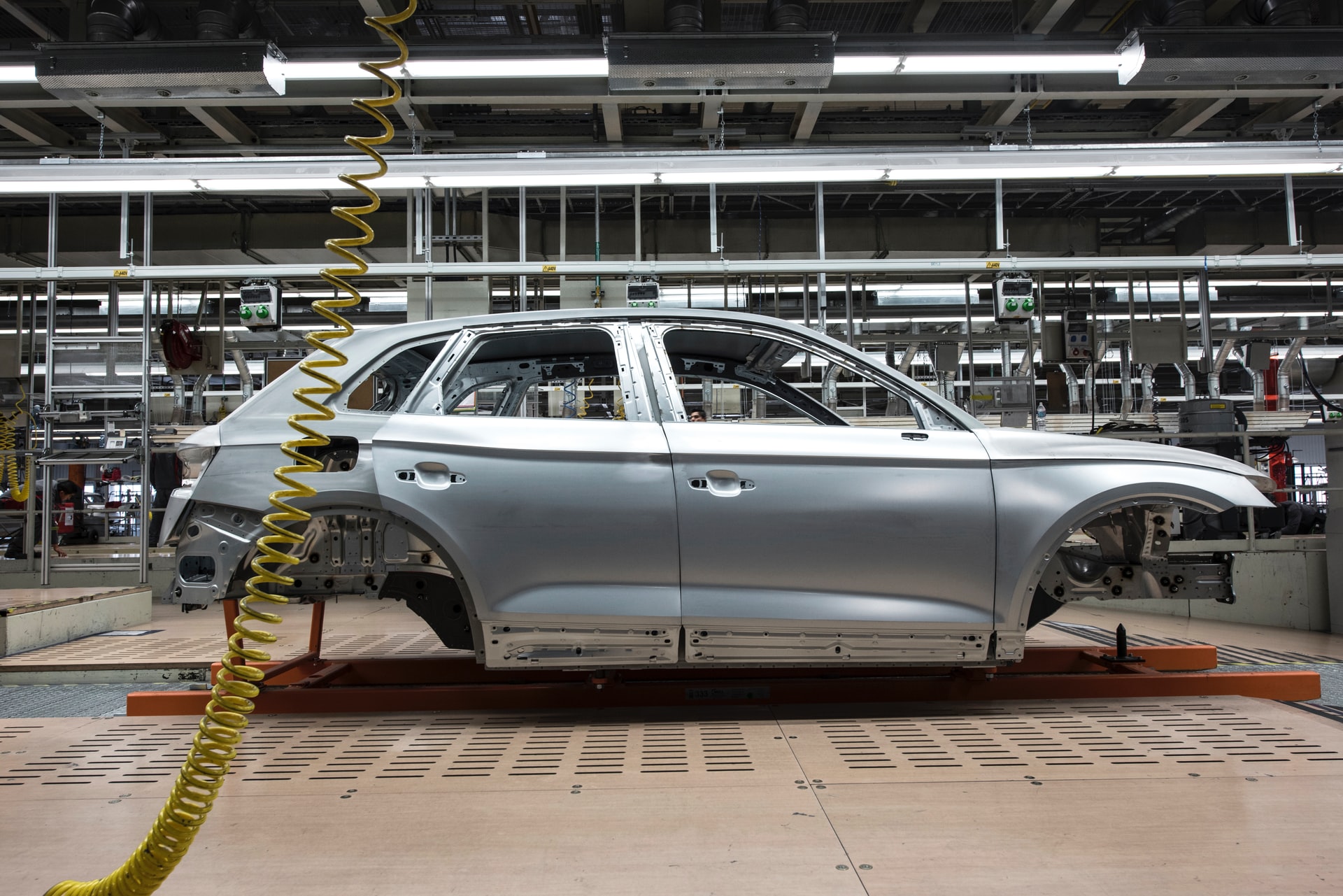
The Spanish automotive industry saw production and exports recover sequentially in January, Kallanish notes, with both indicators also higher year-on-year.
“Ending the first month of the year with an upturn is positive, although we must not lose sight of Germany and France, where demand has fallen by between 10% and 17%,” says José López-Tafall, general director of the Spanish automobile association, Anfac. “We must be cautious in the coming months, because if the contraction of the two main markets for Spanish vehicles continues, this will affect the production volume of our factories.”
Spain’s January production reached 173,406 units, compared with 144,245 vehicles in the previous month. This volume was up 2.6% from January 2025.
The Iberian country’s vehicle exports rose to 146,283 units in the month, from 125,289 units in December, and were 0.8% more year-on-year. European markets had a 91.8% share in Spanish deliveries in December, down 0.4 percentage points on-year.
The main export destinations in January were Germany with 25,350 units, followed by France (22,638 units) and the UK (19,928 units), according to Anfac data.

Saarstahl boosts prestressing steels for wind power
Saarstahl and its wire making unit, DWK Drahtwerk Köln GmbH (DWK), have agreed to significantly increase deliveries of prestressing steels in their strategic partnership with Max Bogl Wind AG.
The wind power engineering division of German construction group Max Bögl is Germany’s market and technology leader in hybrid tower construction for wind turbines, with 4,000 units built so far, according to Saarstahl. DWK has been supplying Max Bögl since 2015, Kallanish notes.
Max Bögl has now secured its long-term supply of prestressing steel wire for the construction of modern hybrid towers. Prestressing steel wire is used to place the individual concrete sections of each tower under compressive stress, which makes wind turbines stable and resilient, Sasrststahl explains.
The upper section of Max Bögl’s hybrid towers is made of steel, while the lower section – which can be up to 120 metres high – is made of environmentally friendly concrete. The strength and quality of the prestressing steel wire are decisive in ensuring the stability of the concrete tower.
Max Bögl manufactures up to 35 individual concrete rings. To achieve the required stability, the company produces tendons and uses these to prestress the concrete tower. This prestressing is the most efficient way to transfer the high loads of the turbines through the concrete tower, Saarstahl says.

Slovenia state holding seeks new SIJ owner: reports
Slovenia’s Sovereign Holding (SDH), which manages state equity stakes, is supporting efforts to find a new, preferably strategic and financially strong owner for Slovenian Steel Group (SIJ), says SDH chairman Ziga Debeljak.
“Since 2007, when the majority share of the steelmaker was sold, Slovenia has only had a 25% ownership stake [in SIJ], so it has not been able to influence the company’s operations,” he said in an interview with newspaper Delo. “The current challenges of the SIJ Group also stem from objective circumstances on the European market in the steel industry. The current situation is not a result of poor management, but primarily objective market conditions.”
At the same time, ownership is a responsibility and companies, especially those undertaking cyclical activities such as steelmaking, must have financially strong owners who can support the firm in difficult times, Debeljak added.
“The current owner does not seem to be like that, so SSH, within its competence, supports activities to find a new, preferably strategic, financially strong owner for the company, which will enable it to continue developing both at the Jesenice and Koroshka locations,” he noted. “It is positive that the group has invested heavily in technology in recent years and today has modern, competitive technology that also enables the production of green steel. This is also key for its future operations and development.”
If the new owner wants to buy a 100% stake, SDH will sell the state’s shareholding, he notes. “If the state wants to remain a co-owner, we are ready to continue to remain a minority co-owner,” he adds.
In response to these comments, SIJ tells Kallanish: “SIJ Group cannot confirm the statements from SDH.”
SDH did not reply to request for comment before Monday deadline.
The SIJ Group is primarily owned by Dilon, which holds a 72.2% stake. Dilon is a Slovenian company controlled by Russian businessman Andrey Zubitskiy.
Earlier, the Slovenian steelmaker expressed interest in acquiring Montenegro-based Zeljezara Niksic.
SIJ produced 248,100 tonnes of crude steel in the first half of 2025, down by 6% year-on-year, according to latest available data. Revenue was €518 million ($611m), down from €582m in the same period in 2024.
ADI restarts another blast furnace in Taranto
Acciaierie d’Italia’s (ADI) is restarting blast furnace No. 2 at its Taranto steelworks, the company confirms to Kallanish.
Additionally, scheduled maintenance of BF No.4 will start on 28 February and last around 60 days. By 28 February the coke plants will also be restarted, with batteries 7, 8 and 12 returning to operation after being shut down for maintenance works on the catalyst.
The special commissioners are expecting BF No. 2 and No. 4 to be fully operational by April with the currently idled coke batteries also restarted. With BF No. 2 and 4 online, the plant will reach a production capacity of 4 million tonnes of steel/year.
“The restart of the plant, which ensures the recovery of a strategic production asset, forms part of the actions and commitments of the special commissioners aimed at guaranteeing operational continuity and safeguarding the industrial and employment perimeter during the current phase,” the company says in a note.

Unesid demands priority for steel made in Europe
Spanish steel association Unesid has called for the European Union’s Industrial Accelerator Act (IAA) to include steel in the mechanisms designed to prioritise the purchase of products manufactured in Europe, Kallanish notes.
In a letter to the EU’s industry and economy ministers, the organisation has expressed serious concern about the latest draft of the act, which does not include steel in the list of materials or services that must be sourced in the EU for public tenders. Unesid warns that investment and industrial jobs will be lost if priority is not given to steel manufactured in Europe.
“If the exclusion is confirmed on 25 February, Europe will send a negative signal to investors at one of the most delicate moments for the steel industry,” Unesid states. “The European steel industry is facing historic investments to decarbonise its production, but it needs a clear signal that strategic demand, infrastructure, defence, automotive and green technologies will support production within the EU.”
For Unesid, losing productive capacity is not just an industrial issue for Europe, but one of economic security and strategic autonomy.
“The Spanish and European steel sector is undergoing the greatest transformation in its history, which will only materialise if there is regulatory certainty and effective demand. That is why the priority given to products manufactured on the continent must be real and limited to steel produced in the European Economic Area,” Unesid concludes.
German steel players also expressed concern last week that the IAA draft suggests low-emission steel could be sourced outside the EU (see Kallanish passim). The IAA is due to be presented by the European Commission on 25 February.