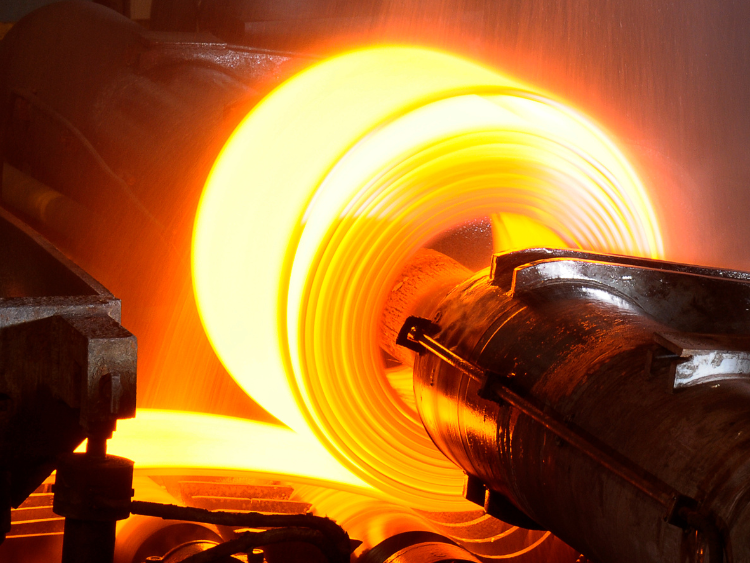
European HRC prices hold firm on restocking, regulations-driven import squeeze
The reduction in imports was due to the effects of the EU’s new Carbon Border Adjustment Mechanism (CBAM) and expectations of a new trade regime.
Across Northern Europe, more and more sources were reporting improved buying activity in the spot market during the current week.
“Even steel-service centers [SSCs] with reasonable stocks are looking to book [HRC] now, because waiting a couple more weeks would mean paying a higher price,” a mill source in the region told Fastmarkets.
Transactions in Germany and the Benelux area were reported around €685 ($809) per tonne ex-works on Thursday.
Estimates of achievable prices were reported at €670-690 per tonne ex-works for April-May delivery coil, depending on tonnage.
At the same time, offers from integrated mills in the region were heard at €700-720 per tonne delivered (around €680-705 per tonne ex-works), with limited room for discounts. Most sellers claimed to be largely sold out of April-delivery coil.
Italy-origin coil was offered to Germany at €720-730 per tonne delivered, with some April-delivery tonnages said to be still available. But market sources said that Italian suppliers have preferred to focus on domestic sales more recently.
Fastmarkets’ daily steel hot-rolled coil index, domestic, exw Northern Europe, was €685.73 per tonne on February 26, down just by €0.10 per tonne from €685.83 per tonne on February 25.
The index was up by €14.23 per tonne week on week and by €39.48 per tonne month on month.
Market sources said, however, that in the secondary market, prices for 4mm HR sheet were still lagging, with some SSCs selling aggressively at €730-740 per tonne CPT, using old HRC feedstock for production, purchased at lower prices. New offers, however, were heard at prices closer to €800 per tonne CPT, to reflect higher feedstock costs, Fastmarkets heard.
Meanwhile, in Southern Europe, Fastmarkets’ corresponding daily steel hot-rolled coil index, domestic, exw Italy, was calculated at €670.63 per tonne on Thursday, up by €4.80 from €665.83 per tonne on Wednesday.
The index was up by €8.13 per tonne week on week and by €33.13 per tonne month on month.
In Italy, trade sources reported offers of May-delivery HRC at €700-720 per tonne delivered (around €685-705 per tonne ex-works) from integrated suppliers and re-rollers. But workable prices were still reported at €680-690 per tonne delivered (around €665-675 per tonne ex-works).
One buyer suggested €680-685 per tonne ex-works could be achieved for minor tonnages.
While mills were officially holding firm on offers for May lead times, market participants believed that April availability was still possible, with greater flexibility on pricing for earlier delivery.
Meanwhile, in the secondary market, prices for 4mm HR sheet were edging upward, albeit slowly. Official SSC offer prices in Italy were reported at €800 per tonne CPT for S235 grade, although transaction levels were still lagging behind, being negotiated on a case-by-case basis. Market sources indicated achievable prices as low as €750-760 per tonne CPT.
On the import side, options were still limited due to CBAM and a new safeguards regime.
The bulk of second-quarter delivery volumes from Turkey, Saudi Arabia and North Africa were reported to have already been booked by traders, who were now hoping to resell material at €640-650 per tonne DDP or more, CBAM costs included, to mid-sized customers.
Offers from Turkey for end-May-early June delivery HRC were heard around €555-580 per tonne CFR. Several trade sources said that a new round of negotiations for Turkish coil was under way in Europe.
In early February Turkey sold large cargoes of HRC to Europe at around €515-520 per tonne CFR


European CRC, HDG prices stable; upbeat market mood despite limited demand
After the introduction of the EU’s Carbon Border Adjustment Mechanism (CBAM) and other trade regulations, European mills have been pushing for higher offer levels, but it remains to be seen whether the market will accept the new prices, according to sources.
One source in Northern Europe said recent price rises for flat steel products were mainly driven by mills and current demand levels are “not supporting these increases,” with consumption remaining dull.
A second source noted that sentiment remained “bullish” in the market with mills targeting higher levels but activity continued to be slow.
Limited imports and higher trade risks have led domestic mills to aim for higher offers in recent weeks, Fastmarkets understands.
Northern Europe
In Northern Europe, domestic and imported cold-rolled coil and hot-dipped galvanized coil prices were stable.
Fastmarkets’ weekly price assessment for steel CRC domestic, exw Northern Europe was €770-780 per tonne on Wednesday, unchanged week on week.
Fastmarkets’ weekly price assessment for steel HDG coil domestic, exw Northern Europe was €770-780 per tonne on Wednesday, also stable week on week.
Import prices for these products were also unchanged in the reported week, highlighting reduced market appetite and a shift in market dynamics, Fastmarkets understands.
Sources said that with CBAM and heightened risks linked with imported material, buyers were being “very careful” when trading outside the EU.
Fastmarkets’ weekly price assessment for steel CRC, import, cfr main port Northern Europe was €630-660 per tonne on Wednesday, unchanged from the previous week.
The weekly price assessment for steel CRC, import, ddp Northern Europe was €730-770 per tonne, also unchanged week on week.
Fastmarkets’ weekly price assessment for steel HDG coil import, cfr main port Northern Europe was stable at €650-700 per tonne on Wednesday, while the assessment for steel HDG coil import, ddp Northern Europe was €760-770 per tonne, also unchanged week on week.
Southern Europe
In Southern Europe, domestic and imported CRC and HDG coil prices were also broadly unchanged, Fastmarkets heard.
Fastmarkets’ weekly price assessment for steel CRC domestic, exw Southern Europe was €770-780 per tonne on Wednesday, unchanged week on week.
The weekly price assessment for steel HDG coil domestic, exw Southern Europe was also stable at €775-780 per tonne.
Import prices for these products were unchanged in the week to Wednesday, with no new trading reported during the assessment period.
Fastmarkets’ weekly price assessment for steel CRC import, cfr main port Southern Europe was stable at €620-650 per tonne, while the weekly price assessment for steel CRC import, ddp Southern Europe was €730-780 per tonne, also unchanged from the previous week.
Fastmarkets’ weekly price assessment for steel HDG coil import, cfr main port Southern Europe was €660-700 per tonne, unchanged week on week.
Fastmarkets’ weekly price assessment for steel HDG coil import, ddp Southern Europe was €750-770 per tonne on Wednesday, also stable.
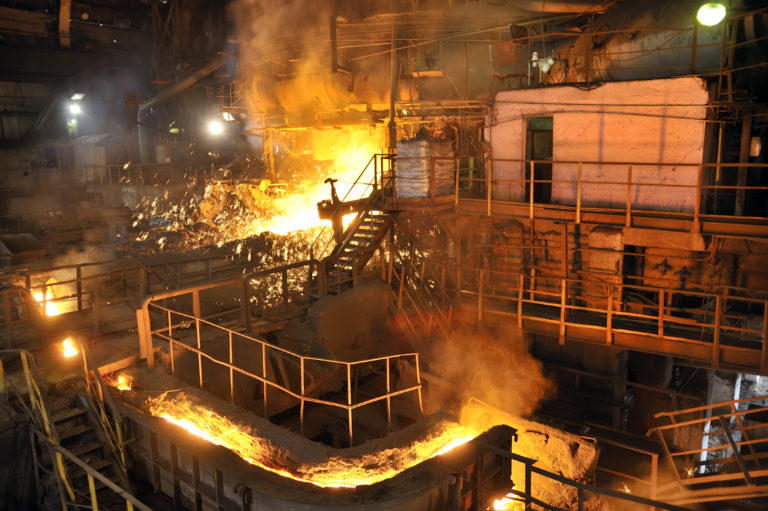
EUROFER: EU needs to recognize steel as strategic sector under Industrial Accelerator Act
Europe’s steel industry has warned that the current draft of European Union’s Industrial Accelerator Act (IAA) risks unintentionally directing public financial support for low-carbon steel production toward suppliers located outside the European Union unless stricter “Made in Europe” provisions are introduced.
According to industry representatives, the absence of clear production-origin requirements could weaken Europe’s industrial base at a time when large-scale investments are required to decarbonize steelmaking capacity.
Under the European Commission’s draft proposal, at least 25 percent of steel used in public procurement projects and public support schemes would need to comply with low-carbon criteria. However, the proposal does not currently require that qualifying steel be produced within Europe.
While welcoming efforts to stimulate demand for low-carbon materials, Axel Eggert, director general of the European Steel Association (EUROFER), stated that steel should be formally recognized as a strategic sector due to its essential role in Europe’s clean energy, automotive and defense value chains. He emphasized that strengthening European strategic autonomy requires binding “Made in Europe” rules directly linked to production origin.
EUROFER argued that only steel melted and poured within the EU should qualify under lead-market support mechanisms, potentially including closely integrated European Economic Area countries such as Iceland, Liechtenstein and Norway.
Without clearly defined origin rules, the association warned that EU funding designed to accelerate industrial decarbonization could end up subsidizing green steel production abroad rather than supporting domestic transformation projects.
The association highlighted that the transition toward low-carbon steel production requires investments worth tens of billions of euros, while persistently high electricity prices continue to increase operating costs for emerging technologies such as hydrogen-based steelmaking. In the absence of predictable demand for European-produced low-carbon steel, companies may delay or redirect investment decisions.
EUROFER therefore called on EU lawmakers to introduce a legally enforceable definition of “Made in Europe” based on melt-and-pour criteria, apply both low-carbon and European-origin requirements under the Industrial Accelerator Act, and formally recognize steel as a strategic industrial sector within the EU’s clean industrial policy framework.

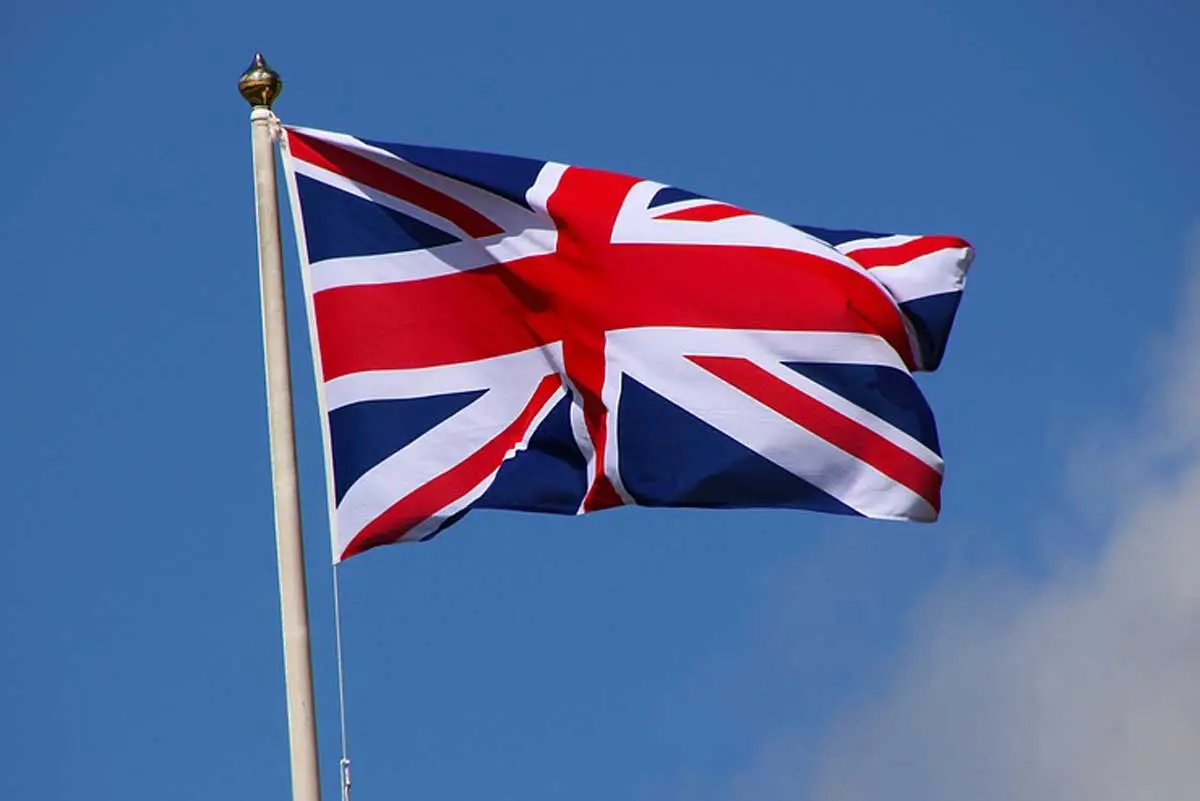
Welsh government calls for immediate UK policy support for steel sector
Wales First Minister Eluned Morgan has called on the UK government to take immediate policy action to safeguard the country’s steel industry following discussions with UK Prime Minister Keir Starmer.
Morgan stressed that steel remains a foundation industry underpinning construction, infrastructure, manufacturing, transport, utilities and consumer goods production. With Wales hosting a significant share of the UK’s steelmaking capacity, she noted that strong national policy backing is essential as the sector undergoes structural transformation, including Tata Steel’s transition toward electric arc furnace production and ongoing developments at the 7 Steel facility.
Trade uncertainty and energy costs remain key concerns
According to the Welsh government, the UK steel sector continues to face mounting pressure from high electricity prices, persistent global overcapacity and expanding trade barriers.
Officials warned that uncertainty surrounding international trade policies, particularly potential EU trade measure changes, poses significant risks given the EU’s position as the UK steel industry’s largest trading partner.
Wales has therefore urged London to protect existing UK-EU steel trading arrangements during the transition toward net-zero steel production.
Safeguards and US market access in focus
The Welsh authorities have also emphasized the need for robust replacement measures once current UK steel safeguard protections expire in June 2026. Without renewed protections, the sector could become increasingly exposed to dumped imports while competing economies continue applying defensive trade instruments.
At the same time, the government reiterated calls for tariff-free quota access for UK steel exports to the US under the UK-US economic prosperity agreement, noting that remaining US tariffs continue to weigh on exporters despite the strategic importance of the US market.
UK Steel Strategy expected to provide policy clarity
Beyond trade measures, industry stakeholders are seeking competitive electricity pricing, stronger domestic steel procurement rules for public projects, effective trade remedies and policies aimed at preventing carbon leakage.
The Welsh government is contributing to the development of the forthcoming UK Steel Strategy through participation in the UK Steel Council alongside companies, unions and industry representatives. The strategy, expected to be published in March, is viewed as crucial for addressing structural challenges, supporting decarbonization investments and providing long-term certainty for steel producers and workers.

World crude steel output down 6.5 percent in January 2026
Global crude steel production in January this year decreased by 6.5 percent year on year to 147.3 million mt, according to the World Steel Association (worldsteel).
In January, crude steel output in Asia amounted to 107.6 million mt, down 8.6 percent, with China’s output at 75.3 million mt, down 13.9 percent, with 6.8 million mt produced by Japan, decreasing by 0.5 percent, 15.1 million mt produced by India, rising by 10.5 percent, and 5.6 million mt produced by South Korea, moving up by five percent – with all comparisons on year-on-year basis.
EU-27 countries produced 10.3 million mt of crude steel in January, down by 2.3 percent year on year. In the given month, Turkey’s output amounted to 3.4 million mt, up 5.8 percent year on year. Germany produced 3.1 million mt of crude steel in January with a 15 percent increase compared to the same month in the previous year.
The CIS registered a crude steel output of 6.5 million mt, falling by 8.5 percent on year-on-year basis, with Russia’s estimated output at 5.5 million mt, down 7.4 percent year on year.
In North America, in January, crude steel output totaled 9.2 million mt, down by 0.6 percent, with the US producing 7.1 million mt, rising by 3.3 percent, both year on year. Crude steel output in South America in January amounted to 3.4 million mt, decreasing by 1.2 percent compared to the same month in the previous year, with Brazil’s output totaling 2.7 million mt, decreasing by 1.4 percent year on year.
In the given month, Africa produced 2 million mt of crude steel, up by 5.8 percent year on year. In the Middle East, crude steel output totaled 4.8 million mt, moving up by 12.6 percent year on year.


ArcelorMittal Belgium completes consultation phase on planned Ghent tailored blanks closure
ArcelorMittal Belgium has announced that the information and consultation phase regarding the planned closure of its tailored blanks operations in Ghent has officially been completed.
The company had previously revealed its intention to discontinue the activity earlier this year, citing persistent financial losses and declining automotive production levels across Europe as key drivers behind the proposed shutdown, as SteelOrbis reported previously.
During the consultation process, management provided additional clarification on the restructuring plan, while employee representatives and social partners submitted questions, feedback and counterproposals. According to the company, these discussions were conducted within a transparent and constructive social dialogue framework.
In parallel, ArcelorMittal and labor representatives jointly developed a social plan designed to mitigate the impact on affected employees during the transition period. The agreed social plan received approval from 71.11 percent of the employees concerned.
ArcelorMittal stated that it remains committed to supporting workers throughout the transition and implementing all agreed accompanying measures.
Following the completion of consultations, the final decision regarding the proposed closure of the Ghent tailored blanks operations will now be taken by the company’s board of directors.

European Commission launches trilogues on new steel measure addressing global overcapacity
On 24 February 2026, the European Commission confirmed the start of trilogue negotiations on the upcoming EU steel measure aimed at addressing the negative effects of global overcapacity. Maroš Šefčovič represented the Commission in the first round of discussions with the European Parliament and the Council.
The proposed regulation is intended to replace the current steel safeguard measure, which expires on 1 July 2026. The objective is to ensure continuity of protection for the EU steel market while adapting the framework to evolving global conditions.
According to the Commission, the new measure would:
-
Reduce tariff-free import volumes to 18.3 million tonnes per year, representing a 47% reduction compared to 2024 quota levels;
-
Increase out-of-quota duties to 50%;
-
Apply to all origins except EEA countries;
-
Introduce a “melt & pour” requirement to strengthen traceability and transparency in the EU steel supply chain.
The proposal responds to what the Commission describes as unsustainable levels of global steel overcapacity, projected to reach 721 million tonnes by 2027 — approximately five times the EU’s annual steel consumption. The measure is presented as a means to protect the EU’s industrial base, support decarbonisation objectives, and safeguard an estimated 2.5 million jobs linked to steel production.
Trilogue negotiations between the Commission, the European Parliament and the Council will focus on finalising the legal text in time for the new framework to enter into force by 1 July 2026.
The Commission has indicated that the measure is designed to remain WTO-compatible and will be accompanied by continued engagement with international partners on collective solutions to global overcapacity.
Further details are available here: policy.trade.ec.europa.eu

Revista InfoAcero Febrero 2026
En el siguiente enlace pueden ver la edición de FEBRERO de nuestra revista InfoAcero
Destacamos a continuación algunos de sus contenidos:
- Opinión – D. Enrique Gimeno- Junta Directiva UAHE
- Índice UAHE: Evolución precios de aprovisionamiento Septiembre 24 – Diciembre 25.
- Metal: Actividad productiva y comercio exterior- Informe Confemetal – Febrero 26
- Asesoría Legal: “La empresa familiar”- D. Javier Edo, Asesor Legal UAHE
- Steel Net Forum Santander: Programa preliminar, 27 y 28 abril 2026
- Información Asociativa – Conferencias del mes de febrero “Perspectivas del sector siderúrgico”
- Colaboración RRHH –D. Agustín Barroso– Director RRHH HIEMESA


Europe faces industrial hollowing without steel trade reform
Europe’s industrial base could be hollowed out within a few years unless policymakers urgently rethink trade and climate policies, steel distributors association EUROMETAL has warned.
At the EUROMETAL Southern Europe meeting in Milan on Feb. 26, attended by S&P Global Energy, President Alexander Julius criticized European steel policy for focusing solely on steelmaking, neglecting the broader ecosystem of distribution and downstream manufacturing that supports millions of jobs.
“Without steel distribution and the steel-using industries, we don’t need steel in Europe,” he said.
The association is calling for a “level playing field” for steel-based products, urging national governments to push for measures comparable to those already applied to raw steel, and arguing that EU institutions are unlikely to act without sustained pressure from EU member states.
Over the past year, EUROMETAL has lobbied Brussels to address what it sees as a growing imbalance. While raw steel imports face safeguards and quotas, downstream steel products often enter the EU market with fewer restrictions.
Julius noted that this discrepancy has contributed to a steady erosion of European steel consumption over the past 15 years, as imported finished and semi-finished goods displace domestic materials.
The issue is intensifying as the US and Canada expand protections to derivative products, with exporters such as China, India and Turkey consequently diverting more steel towards Europe, which Julius described as “completely unprotected.”
He cautioned that planned changes to EU steel safeguards from July — including significant quota cuts and a 50% duty for out-of-quota volumes — could sharply raise EU steel prices without boosting European production.
Meanwhile, unchecked derivative imports would widen the cost gap for EU manufacturers and accelerate industrial relocation, with customers shifting capacity to countries like India and Serbia.
CBAM concerns: uncertainty remains
Julius also highlighted concerns about the EU’s Carbon Border Adjustment Mechanism (CBAM). While supporting decarbonization, he criticized unresolved methodological issues, including emissions benchmarks and certification procedures.
He warned that ambiguous draft guidance and impractical global certification requirements could leave companies unable to model future liabilities, potentially resulting in unexpected costs when payments begin.
Julius reiterated the need for coordinated national action to ensure fair treatment for steel-based products, emphasizing that only sustained member-state pressure will prompt EU institutions to act.


Polish steelmakers call for Ukraine steel, scrap quota
Polish steelmakers are pushing for the imposition of safeguard quotas for steel and scrap from Ukraine to curb arrivals of lower-priced finished products, Polish union of steel distributors president Piotr Sikorski said at an industry event in Milan on Thursday.
Sikorski’s comments came in the wake of remarks made by EU trade commissioner Maros Sefcovic this week that alluded to the possible inclusion of Ukraine in the new steel safeguard due to come into effect on 1 July.
Ukraine’s scrap export ban has made mills across the border from Poland even more competitive, Sikorski said. Scrap exports in Poland are about 2mn t/yr, and Ukraine was sending a lot less than that. The main issue lies in the fact that Ukrainian steelmakers have become even more competitive, Sikorski added, pointing out that the ban was not driven by any surge in steel demand in Ukraine.
Ukraine has been exempt from the current EU steel safeguard, and other duties, to assist its economy during the conflict with Russia.
This remains an unresolved issue and it is possible there may be a quota for steel and scrap — Polish producers are pushing for this but there is no certainty over the outcome, Sikorski said.
EU imports of Ukrainian hot-rolled coil rose from less than 508,000t in 2022 to nearly 1.3mn t in 2025.
Some Ukrainian steel exports to the EU have increased by 50pc, showing how competitive its sector is despite the conflict, Sefcovic said on Tuesday.