


European Commission mandates low-emission steel, drops ‘made-in-EU’
The European Commission has confirmed its Industrial Accelerator Act (IAA) legislative proposal includes a stipulation that 25% of steel volume procured for public projects launched from 2029 must be low-emission. However, given the forthcoming new steel trade regime, a “made in EU” requirement has not been included, and neither has the voluntary label for low-emission steel.
For public procurement and other projects that require some form of public intervention, the volume of steel, and any product the performance of which depends mainly on steel, will need to comprise minimum 25% low-emission material. This will be effective for projects launched and schemes updated or established from 1 January 2029.
However, contrary to aluminium and cement, the proposed made in EU mandate for public procurement is not included for steel. “In light of the recently proposed trade measure addressing the negative trade-related effects of global overcapacity on the Union steel market, introducing a European preference for steel is not considered necessary,” the Commission says in a document seen by Kallanish.
The legislation proposal also does not follow the preferred policy option to adopt a voluntary steel label in support of low-carbon steel investment decisions.
Instead, the forthcoming delegated act on steel products under the Ecodesign for Sustainable Products Regulation (ESPR) will provide the necessary elements to implement the lead market provisions for steel. This is “taking into account the differing decarbonisation characteristics of primary and secondary steel producers and rewarding circularity,” the Commission notes.
“In designing labelling and information requirements based on performance thresholds for different products, such thresholds should take account of the recycled content of the industrial product, the threshold decreasing with the increase of recycled content in the products, where relevant,” it adds.
The IAA aims to increase the manufacturing sector’s share of EU GDP to 20% by 2035, compared with 14.3% in 2024.
It also proposes to amend conditions for major investments in strategic sectors exceeding €100 million ($116m) where a single third country controls more than 40% of global manufacturing capacity. These will include the need for technology transfer, 50% of staff being EU based, foreign participation being limited to 49%, and 1% of turnover being invested in EU research & development.
It aims to streamline and digitalise permitting procedures for industrial projects, including tacit approval at intermediate stages of the permit-granting process for energy-intensive decarbonisation projects. The creation of “Industrial Acceleration Areas” will facilitate essential energy infrastructure investments, the Commission says.
The proposed regulation must now be negotiated by the European Parliament and Council before its adoption and entry into force.
Outokumpu was one of the first steelmakers to react to the proposed legislation, welcoming the measure but urging the Commission to introduce an EU low-carbon steel label and expand the made in EU requirement to also include steel (see separate story).


EU Industrial Accelerator Act drops EU-origin steel rule, narrows emissions sliding scale to primary steel
The European Commission’s long-awaited Industrial Accelerators Act (IAA) confirmed a shift in the EU’s approach to steel public procurement rules, prioritizing low-carbon production criteria over strict “Made in EU” origin requirements. The IAA did not provide any precise labelling for low-carbon steel as widely expected, Fastmarkets learned on Wednesday March 4.
The IAA, published on Wednesday, introduced demand-side measures designed to strengthen strategic industrial value chains while accelerating decarbonization across energy-intensive sectors such as steel, cement and aluminium.
Softer “Made in EU” rules for steel confirmed
The final text generally confirms an earlier leaked draft seen by Fastmarkets that suggested public procurement would require only low-carbon steel, removing the strict EU-origin requirement.
Public procurement procedures would require that at least 25% of the steel used in buildings, infrastructure and transport projects be low carbon. A parallel 25% threshold would apply to aluminium.
But the wording differed for the two materials. For steel, the text specifies that “at least 25% of the total volume of steel used shall be low carbon.” For aluminium, it states that “at least 25% of the total volume of aluminium used shall be low carbon and of Union origin.” This confirms a rules-of-origin requirement for aluminium that is not present for steel.
This means the IAA effectively removes a potential double requirement that would have obliged public projects to use steel that was both low carbon and produced within the EU.
The Commission explained that strict origin requirements for steel procurement were not considered necessary in the final proposal, partly because other policy tools are already addressing trade distortions in the steel market. These include existing and proposed steel safeguard measures as well as the EU Carbon Border Adjustment Mechanism (CBAM), Fastmarkets understands.
The new trade regime set to replace existing safeguard measures for steel imports as of July 1 suggests nearly a 50% quota reduction for steel imports, Fastmarkets reported.
Companies from non-EU countries covered by the EU’s international procurement commitments, such as the World Trade Organization (WTO) Government Procurement Agreement or bilateral trade agreements, may participate in EU procurement markets under existing rules. At the same time, the Commission retains the possibility to restrict access where necessary to protect the EU’s economic security or supply-chain resilience, Fastmarkets understands.
No clear low-carbon steel labelling
The IAA did not provide any clear labelling for low-carbon or green steel, despite expectations in earlier drafts.
Low-carbon steel will instead be defined through emissions accounting frameworks aligned with existing EU climate policies, including the EU Emissions Trading System and the CBAM.
The reference to a sliding scale for emissions performance has also been narrowed in the final text. Earlier drafts seen by Fastmarkets suggested that the mechanism would apply across all hot-rolled steel products, including both flat and long steel. The published proposal limits its scope to “product categories that typically require primary steel production [blast furnace-basic oxygen furnace route, BF-BOF], as necessary.”
This wording indicates that the system is designed to account for differences in scrap availability between production routes. Steel grades that rely more heavily on primary BF-BOF steelmaking — where scrap share in the raw materials mix is technically limited — may therefore receive adjusted emissions thresholds compared with electric-arc furnace (EAF) steelmaking.
In Europe, around 80% of carbon steel long products are produced via the EAF route, while more than 90% of flat products are produced using the BF-BOF route, industry sources estimate.
This suggests that the adjustment mechanism will apply mainly to flat steel products, where primary steelmaking remains dominant and scrap usage is more constrained.
Potential impact
Industry participants said the regulation could still stimulate demand for low-carbon steel through public infrastructure projects, although they expressed disappointment over the lack of clear labelling for low-carbon steel.
A lack of unified definitions has been considered one of the barriers to green-steel uptake, making the label an important step toward market clarity, sources said.
Steelmakers across Europe are investing billions of euros in decarbonization technologies, including EAFs and hydrogen-based direct-reduced iron (DRI) modules, but have repeatedly warned that demand signals for green steel remain insufficient. Several projects have been revised or scrapped, Fastmarkets reported.
Public procurement is therefore viewed as one of the most effective tools available to stimulate green-steel uptake.
“If authorities do not push for green steel use through public procurement, then green steel will remain a niche market,” one European mill source said.Fastmarkets has two different assessments for low carbon steel premiums, based on production route and emissions thresholds
Fastmarkets’ methodology defines European green flat steel as “steel produced with Scope 1, 2 or 3 emissions at a maximum of 0.8 tonnes of CO2 per tonne of steel.” For this assessment, scrap-based production and steel made using hydrogen-based DRI are considered.
Fastmarkets’ weekly assessment of the green steel domestic, flat-rolled, differential to HRC index, exw Northern Europe was unchanged at €100-150 ($118-177) per tonne on Thursday February 26.
Fastmarkets defines reduced carbon flat steel in Europe as steel produced with scope 1,2,3 emissions of 1.4-1.80 tonnes of CO2 per tonne of steel. This assessment captures blast-furnace produced steel with reduced CO2 emissions.
Fastmarkets’ assessment of the flat steel reduced carbon emissions differential, exw Northern Europe was €0-50 per tonne on February 26, also stable week on week.

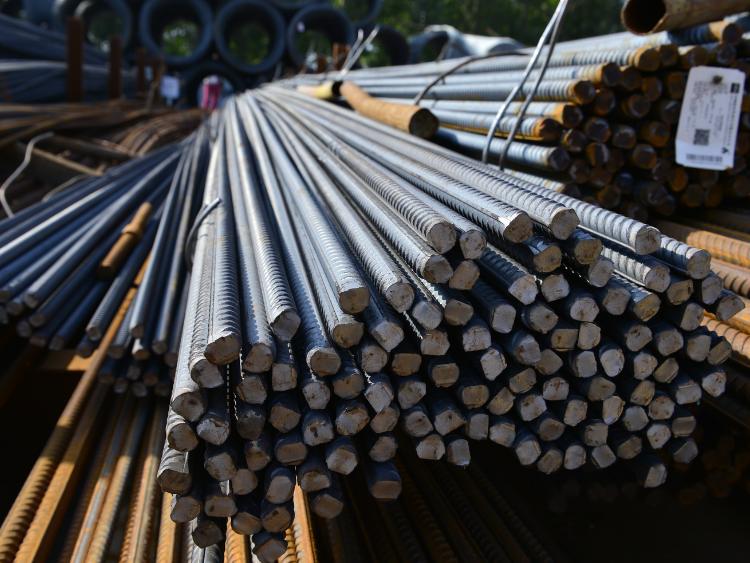
European rebar producers withdraw from market amid higher energy costs
Rebar producers from Europe withdrew offers from the market due to the rise in energy costs, particularly gas, which has direct effect on electricity prices, Fastmarkets heard on Wednesday March 4.
According to market sources, gas prices in Europe surged by 30-50% week on week following the escalation of the conflict in the Middle East, which has had wide-ranging impact on the international market.
Amid fluctuating energy prices, long steel producers either completely withdrew offers — while trying to estimate new market conditions and evaluate new offers — or provided some with very short validity.
“Honestly, I’m a bit stunned. Since [Monday] everyone’s been crazy, everyone has suspended sales. They [mills] gave me prices [on Monday] morning and after five minutes they called me to tell me it was no longer valid. I have no idea what’s going on, they’re not giving us prices or availability,” an Italian rebar buyer told Fastmarkets on Tuesday.
“The atmosphere strongly resembles what we experienced in 2022, at the outbreak of the war in Ukraine, when prices escalated dramatically. At that time, mills were revising prices several times a day — one price at 8am, another at 10am, and yet another in the afternoon. The market was in total confusion and within two months prices doubled,” a second Italian buyer said.
As of Wednesday afternoon, several mills in Italy indicated offers at €620 ($720) per tonne ex-works with very limited validity. Few customers said they could potentially accept such prices.
Nevertheless, there was no information about fresh deals because market leader Pittini has not yet announced its offers.
“The problem is that currently no one [producers and retailers] wants to commit themselves because whoever makes the first move risks losing the month. On the other hand, no one bought in February, so within a couple of days we will have to make do with the price,” a third Italian buyer said.
Meanwhile, demand in Italy has been limited so far in 2026, with rains and snow hampering work of construction sites and delivery in winter months. Sources, however, hoped for improvement in the spring.
Before the escalation of the conflict in the Middle East, domestic rebar prices in Italy were falling, with a large number of participants reporting tradeable levels in the north of the country ranging €550-570 per tonne ex-works, and slightly higher levels of €570-600 ex-works heard in the South.
Considering such adverse conditions, Fastmarkets weekly price assessment for steel reinforcing bar (rebar) domestic, exw Italy widened to €550-620 per tonne ex-works on Wednesday, compared with €560-590 per tonne on February 25.
Mills in Spain and Northern Europe also largely withdrew offers from the market.
Several sources reported offers for small tonnages of rebar with short lead times emerging in the German market at €640-650 per tonne delivered, which is €10 per tonne higher week on week. It was not immediately clear whether customers were accepting the new, higher levels.
As a result, Fastmarkets’ weekly price assessment for steel reinforcing bar (rebar) domestic, delivered Northern Europe widened upward to €610-640 per tonne on Wednesday, from €610-630 per tonne on February 25.
Fastmarkets’ weekly price assessment for steel reinforcing bar (rebar) domestic, delivered Spain was stable on Wednesday at €665-680 per tonne.

German construction sees first uptick in five years
German construction companies reported a year-on-year revenue increase of 2.5% in 2025, after five years of successive decline, according to association Hauptverband der Deutschen Bauindustrie.
“This ends the long period of recession,” says Tim-Oliver Müller, managing director of Bauindustrie. “But it is not enough to balance the losses of the past years,” he notes. The federation, however, expresses optimism that the trend will continue, and that 2026 will bring another increase by 2.5%. “The order books have refilled somewhat,” Müller says.
Order intake at companies went up by 6.8% last year, with a year-end rise of as much as 10.2%, helped by railway projects, pipeline construction and building of data processing centres. “But it will take time until these projects go down in revenue, and it will benefit only few companies initially,” Müller notes. This is why the sentiment in the industry remains modest, according to a recent survey.
This sentiment is shared by a manager at a distributor of structural steel, pointing at the overall still ailing economy.
“Construction of buildings remains subdued; it would not occur to any Audi or VW to build new warehouses or production halls now,” they tell Kallanish. “The one thing with some perspective is gas power plants, which are subsidised by the government.”
Bauindustrie notes that it is mainly railway and computing centres that could lift commercial construction by 4% this year. Residential and public construction are expected to recover by a lesser degree of 2%.
Residential construction, mainly a customer sector for rebar, dipped by another 1.5% in terms of revenue. Order intake did go up, by 10%, but from a low level, with companies remaining concerned over a lack of orders.
The race for orders in construction translates to bending operations, many of which offer services at little above the intake price of rebar to secure employment.
UK manufacturing needs temporary energy subsidies: Kyle
Energy costs for manufacturers in the UK will need to be subsidised until structural change takes place, Peter Kyle, secretary of state for business and trade, said at the Make UK National Manufacturing Conference in London on Tuesday, attended by Kallanish.
“We inherited the highest energy costs in Europe, four times that the wholesale price of the United States,” he told delegates. “Until we change the structural nature of our energy markets, which I don’t think anybody in this room thinks we can do in 18 months of government, then we only solve the challenge by subsidising.”
He highlighted the British Industry Supercharger policy and the British Industrial Competitiveness Scheme as two fundamental initiatives to support highly energy-intensive industries.
“I am deeply frustrated that I can’t move faster,” he added, noting the requirements for legalisation and consultations.
“We are looking at ways where we can use subsidies wisely until we can get to the point we can fundamentally lower the energy costs,” he noted.
He also pushed back against suggestions that increasing North Sea production could sustain the entirety of domestic energy demand, following a large rise in energy prices after the escalation of conflict in the Middle East in recent days.
“We would always be dependent on parts of the world which are fundamentally unstable, so therefore, doubling down on the renewables … is essential,” Kyle asserted. This is especially given instability in certain regions “is creeping into our energy prices, for which the British government has no agency.”
He said other political parties seeking to return to North Sea production and overturn environmental energy targets “will exacerbate the exposure we have at times like this”.
Therefore, the UK Government is “doubling down as quickly as possible so the transition is about national resilience … [and] sovereignty.”
Kyle added the government wants to increase resilience in the manufacturing sector, which supports the country’s economic and national security.

NW European sections mills lift prices, distributors hesitate
Northwestern European distributors are struggling to hand down the price increases that have been gradually implemented by mills since the beginning of the year.
“Compared with orders I placed in December, the mills by now ask for €60/tonne ($70) more,” a manager at a German distribution group tells Kallanish. But on the selling side, “we could exert only a €35 increase,” he admonishes.
The increases came in two tranches, in January and February, while €50-60 has been witnessed in Scandinavia.
In Germany, buyers are now looking at prices reaching €750/t for S235 category 1 sections, delivered. In Scandinavia, with over-proportionally higher transport costs from mainland mills, delivered prices can reach €770 in Denmark, and €780 in Sweden, according to a Danish buyer.
At the lower end, a German observer reports intake prices are still €720 or less. Although mills are fairly aligned at the new price level, they might concede January’s prices still, if stockists do not buy because they cannot sell, as demand among user industries remains dull.
The overall lack of demand is noted by a mill manager as the weakest part of the chain against rising costs, mainly for scrap. He quotes prices in a wide range of €700-800, with some deals occurring above €800 for S355 material for destinations that are “challenging in logistical terms.”
The lead times for rolling and delivery are customary, at three weeks, but the manager suggests that there are still capacity slots left in next week’s rolling plan for additional payments.

European longs mills stop sales following Iran conflict
ArcelorMittal and several other European long steel producers are understood to have suspended sales of rebar, sections and wire rod amid a sharp surge in energy costs, market sources tell Kallanish.
Gas prices have climbed by more than 50% following the Iran-US-Israel conflict escalation, while electricity prices are also expected to continue to rise in line with higher gas values. Steelmakers and scrap suppliers also anticipate sudden increases in logistics costs.
“For now, the market is not panicking, but production costs are rising abruptly. Unless selling prices move up, some mills may have to consider production stoppages,” one source says.
The scale of potential price increases remains unclear as the situation continues to evolve rapidly. Several market participants expect significant hikes. “Energy costs are spiking and no one knows when this will stabilise. The level of uncertainty and volatility is extreme,” another source comments, noting that the daily fluctuations make it difficult to assess the full impact.
Some producers are reported to be cancelling or reviewing orders agreed last week, as market conditions have now radically changed. A third source suggests that in the coming days, steelmakers should give clearer indications on the extent of price increases, but stresses that energy prices need to stabilise before mills can return to the market with quotations.
One participant adds that ArcelorMittal has also suspended its longs quotations for the UK market amid the uncertainty.

Dutch Parliament calls for urgent dialogue on CBAM cost impact
The Dutch Parliament has adopted a motion calling on the government to urgently engage with the steel and aluminium sectors regarding unexpectedly high costs arising from the implementation of the EU’s Carbon Border Adjustment Mechanism (CBAM).
According to statements published by Koninklijke Staalfederatie and FME, delays in the CBAM system and a shortage of recognised emissions verifiers are forcing many companies to rely on EU default emission values. These standard values are often significantly higher than the actual emissions of imported materials, resulting in higher-than-expected costs for companies processing steel and aluminium in their supply chains.
Industry representatives warn that this situation risks creating unnecessary price increases and undermining the level playing field that CBAM is intended to ensure.
The motion adopted by the Dutch Parliament urges the government to consult with industry in the short term and to explore possible temporary national measures within four months, while also working toward structural solutions at EU level.
Industry leaders stressed the urgency of the issue, noting that many manufacturing companies must determine product pricing for the following year during the summer months and therefore require clarity on CBAM-related costs as soon as possible.
FME and Koninklijke Staalfederatie indicated their willingness to work with the Ministry and their members to identify both short-term solutions and longer-term improvements at EU level, including better access to verified emissions data for CBAM reporting.
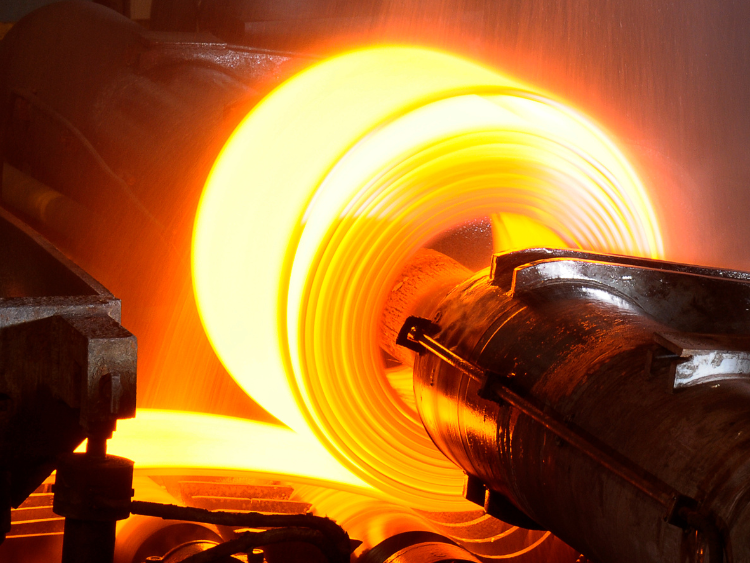
European HRC prices jump on import disruption fears
Transaction prices for domestic hot-rolled coil (HRC) increased in Europe on 4 March due expected import supply disruptions caused by the conflict in the Middle East. European coil producers are expected to withdraw offers soon and return seeking higher prices.
Deals for HRC in Northwest Europe have been settled at EUR690-710/t ex-works, with a majority of the indications reported at EUR700-710/t ex-works. The deals were settled for smaller lots of material of a few hundred tonnes per lot.
The achieved prices are EUR20-30/t higher than deals settled a week earlier.
Some buyers have said that the major European coil producers have started to withdraw offers from the market. But this information has not been confirmed by steelmakers.
European rebar mills have unanimously withdrawn offers from the market.
Flat steel market participants believe that the coil steelmakers would do the same or attempt another price rise as the latest deals have almost reached their target prices of EUR720-730/t delivered.
“Buyers did not want to accept higher prices [of around EUR700/t ex-works]. But now the situation fully changed. The offered volumes are limited, and buyers would now accept higher prices, because they understand that after some time the supply will be even more scarce with no import and high prices from stocks,” a distributor said.
Some larger traders have stopped offering imported coil available from European stocks, preparing to increase prices.
The expected delays of import steel shipments to Europe due to rerouting from the Suez Canal to the Cape of Good Hope, and rising freight and energy costs helped steelmakers achieve higher HRC prices. Market sources estimated that steel deliveries to Europe from Asia and the Middle East might take an additional two to four weeks compared with original expectations.
Opinions in the market are divided as some believe that import delays of a couple of weeks would not have a material impact and the price rise was mainly a panic response of some buyers. Others, however, point out that the timing of the potential delays is critical as the EU’s new quota system is expected to come into force from July this year.
Under the new quota system, a 47% reduction in volume and a doubling of duties to 50% have been proposed. Lack of details on the country-specific quotas or any caps in the global quotas has made European importers extremely cautious on steel imports arriving in the third quarter. The delivery delays greatly increase the likelihood of exceeding the new tighter quotas.
Multiple sources compared the current market situation to 2022, when domestic coil prices in Europe skyrocketed after Russia attacked Ukraine. Later in 2022, however, prices tumbled as the war had a greater negative impact on demand than on supply.


European long steel round-up: mills withdraw offers
Producers in the Northwest European rebar market pulled offers in the week beginning 2 March, amid the escalating conflict in the Middle East.
Steelmaking and distribution sources confirmed that rebar producers were withholding offers since the start of the week, awaiting clarity on potential cost drivers, and gauging demand prospects for near-term price increases.
“European mills are totally out of the market for now,” said a domestic steelmaker, “it makes more sense to wait and see before trying for higher prices, which we need, but we first have to assess what buyers will actually be able to accept.”
McCloskey’s sources were unwilling to speculate on the price point at which mills might return to the market; buyers have visibility of rising natural gas prices and upward pressure on electricity costs, which they expect sellers to attempt to pass on to consumers.
European steelmakers were said to be capitalising on the Middle Eastern conflict by pressuring for a review of the EU’s electricity market design, which sets the market price of wholesale electricity in reference to the most expensive energy input utilised – which for the EU means natural gas prices often inflate industrial electricity costs.
Somewhat surprisingly, sentiments were mixed as to whether the EU would see enough inflation in electricity prices to force buyers to meet producers mid-way on cost coverage, with some in the market anticipating a minimal impact due to recent US commitments to both insure and escort natural gas transit through the Strait of Hormuz.
Import offers – where valid – were reported at stable prices, though traders remain generally unwilling to engage with international trading of rebar due to poor profit margins against domestic production. Turkey, the dominant rebar exporter to Europe, is increasingly dealing directly between mill and EU consumers, presenting further limits on traders’ speculative opportunities.
This week McCloskey reported increased rebar demand in Europe for Turkish origin material at a price point of $545/t FOB, coinciding with the withdrawal of domestic steelmaker offers. Said material could reach Northwest Europe at prices competitive enough to incentivise distributor orders, especially given the potential for material to arrive in advance of the EU’s revision of its steel safeguard system, which is expected to be implemented for July.
However, both buy- and sell-side sources tell McCloskey that domestic rebar demand remains subdued, and doubt whether price increases will be accepted in the market at all, regardless of the subsequent sustainability of any uptrend.
|
Weekly European long steel markers |
|||
| EUR/t | Term | 04-Mar-26 | Change |
| Northwest Europe DEL rebar | DEL | 620.00 | 0.00 |
| Northwest Europe CFR rebar | CFR | 510.00 | 0.00 |