

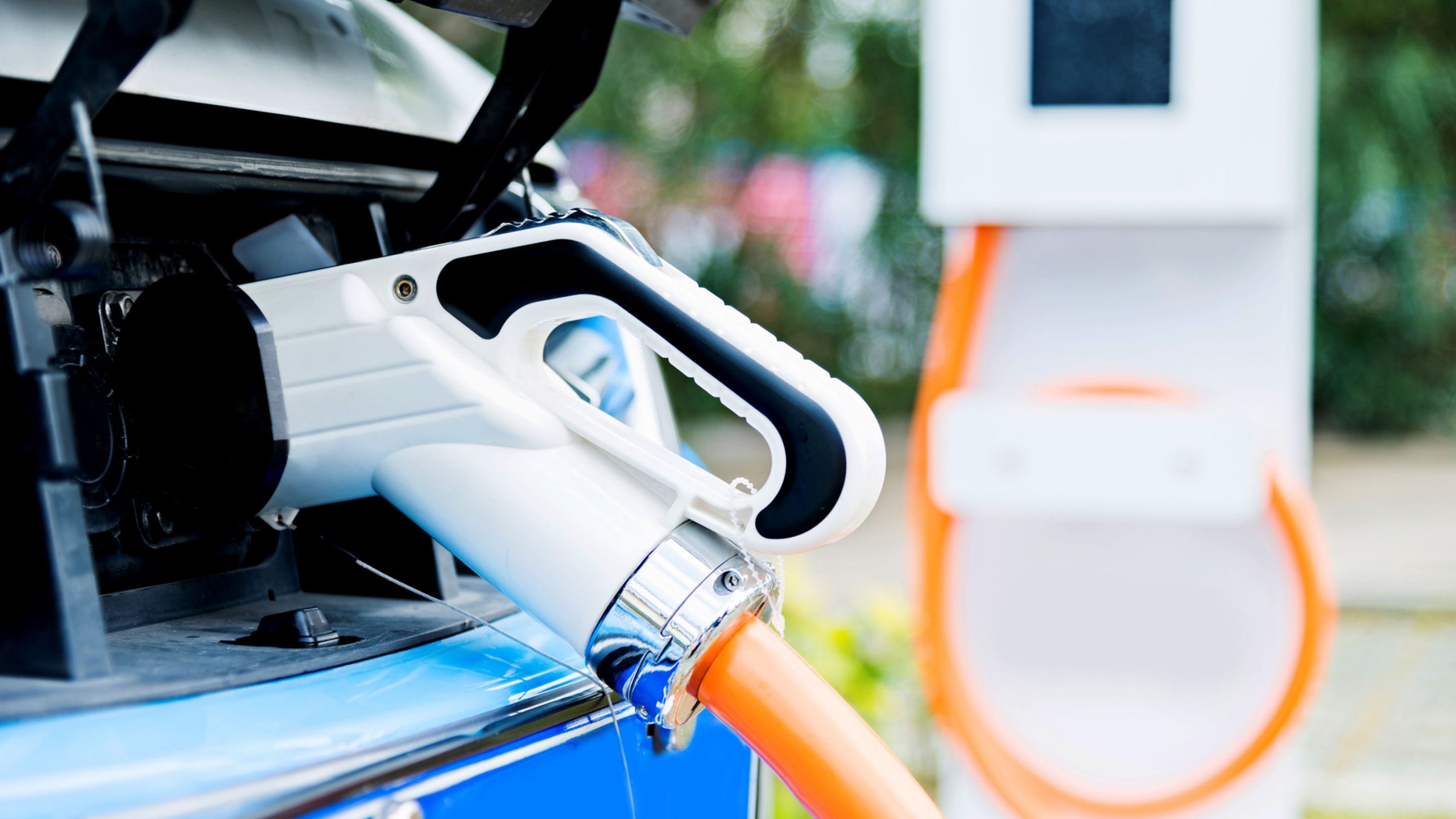
Auto a key market to drive steel decarbonization: SteelWatch Published by: Alesha Alkaff
The auto industry is well positioned to accelerate the use of lower emissions steel and automakers are increasingly using the material to boost competitiveness in the electric vehicle (EV) market, according to a global climate-focused watchdog.
“We’re in the beginning of a new era where green premiums and market demand are beginning to support the first wave of green or low-emissions steel,” Roger Smith, Asia lead at non-governmental organization SteelWatch, told Fastmarkets on Friday March 6.
The auto sector is a key sector for the decarbonization of the steel industry because of its ability to support a green premium, Smith said. He estimated a 20%-30% premium per tonne of green steel produced by hydrogen-based direct reduced iron (DRI) compared with traditional coal-based blast furnace steel.
The effect on the final price of an automobile is minimal, typically adding “a few hundred dollars” to the cost of the vehicle based on the vehicle weight and the amount of steel used, Smith explained.
Automakers are increasingly using low-carbon steel and aluminium to increase competitiveness in new EV models, according to the fourth edition of the Lead the Charge Auto Supply Chain Leaderboard report.
The leaderboard ranks and assesses the supply-chain sustainability of 18 carmakers globally, including Tesla, Ford, Volvo, Mercedes and Hyundai.
The report, published on Wednesday March 4, showed that demand for green steel among automakers has increased in recent years. The number of automakers taking action to decarbonize the steel used in their vehicles rose from 7 out of 18 in 2023 to 13 out of 18 in 2026.
The analysis was published by a network of climate, human rights and investor groups, including SteelWatch.
“The Lead the Charge leaderboard is only a few years old. At the beginning, most companies scored 0 on the steel section. There was really no procurement, no talk about procuring low-emission steel and that’s changed,” Smith said.
“Today, green steel is likely getting used in what [automakers] see as the greenest cars. [Automakers] ultimately need to transform their production of everything that they make,” Smith said.
The volume of steel consumption in the auto sector is large enough to support new green steel projects, spurring scalability and long-term offtake commitments for low-carbon steel, Smith added. “That’s what’s going to actually get new facilities built and become investable.”
“The demand for genuine green steel continues to grow,” the report said. “Automakers such as BMW Group, Mercedes-Benz AG, Volkswagen and Volvo Group are continuing to stick with credible sources of green steel.”
What automakers around the world are doing
Tesla, the largest producer of EVs in the US, disclosed that it is “working with mainstream steel mills for a mid-term transition away from blast furnace production and toward direct reduction without coal that will systematically reduce emissions,” the report said.
Asian automakers Hyundai and Kia disclosed intentions to expand their use of low-carbon steel but did not provide additional details, according to the report.
Notably, Hyundai has begun mass production of lower-emissions steel sheet at its Dangjin plant in South Korea, Fastmarkets reported in February.
In the US, Hyundai’s integrated electric-arc furnace (EAF) facility in Louisiana is under construction and scheduled to begin production in 2029, specializing in automotive steel sheets.
In Europe, Volvo published a paper on sustainable steel outlining the challenges in steel decarbonization and how the Sweden-based company intends to use its leverage to address those challenges.
Meanwhile, German automaker Mercedes has signed multiple offtake agreements for low-carbon and fossil-free steel and aluminium across several regions and has disclosed specific quantities for some of these agreements.
“To remain competitive, other automakers must disclose disaggregated emissions and sourcing information on their steel, aluminium and battery supply chains,” Abhilasha Bhola, director of the Auto Supply Chain Campaign at nonprofit group Public Citizen, said.
Decarbonization technology already exists, raising scalability question
Technology to produce low-carbon steel already exists, Smith said, highlighting the DRI steelmaking route, which reduces carbon emissions by replacing coal with cleaner gases. The cleaner the reducing gas, the lower the emissions.
For example, Swedish joint venture Hydrogen Breakthrough Ironmaking Technology (HYBRIT) aims to replace coal with fossil-free electricity and green hydrogen.
The collaboration was launched in 2016 by steelmaker SSAB, iron ore miner LKAB and energy company Vattenfall.
As of early 2026, the project has demonstrated the technology and is extending pilot operations for hydrogen storage to prepare for full-scale industrialization, targeting commercial-scale production by 2027.
The challenge, Smith said, is scaling the technology to produce low carbon steel at a commercial scale.
“Some of the real lead markets for purchasing low-emissions steel include the automotive sector, the tech sector and even some of the construction industry. I think that’s enough to get a first wave of projects globally,” Smith said. “The real question then is, how do they take that to scale?”
A key component in scaling decarbonization operations is government incentives, Smith said, which can really play a role in helping build those markets and put a price on emissions.
The European Commission (EC) approved €200 million ($232 million) in grants to strengthen the EV supply chain in Spain in early February.
The funding aims to accelerate the production of EV batteries and energy storage, as well as hydrogen technologies, according to Teresa Ribera, executive vice president for Clean, Just and Competitive Transition at the EC.


Rising production costs, limited imports sustain European domestic HRC uptrend
European domestic hot-rolled coil prices extended gains on Monday March 9 as difficult import conditions reduce competitive pressure, while growing cost burdens continue to underpin mills’ pricing strategies.
In Northern Europe, most recent deals for HRC were said to be varying within the range of €690-710 ($800.83-824) per tonne ex-works with “most reported indications clustering around €700–710 per tonne ex-works”.
This is when at the end of the last week sellers said that they were getting their first orders at €700 per tonne ex-works.
A source on sellers’ side said that, despite general demand situation leaving much to be desired, there are more buying intentions now than in the previous weeks.
Meanwhile, a buyer source said that freight problems and delays in delivery terms diverted customers’ interest from import material to domestic supply even more, which was already a case following the introduction of the Carbon Border Adjustment Mechanism and looming changes in safeguard system.
Fastmarkets’ daily steel hot-rolled coil index, domestic, exw Northern Europe was €701.46 ($814.14) per tonne on Monday, up by €1.14 per tonne from €700.00 per tonne on March 6.
The index was up by €8.96 per tonne week on week and by €48.13 per tonne month on month.
Similar tendency was noted in the Italian market, with workable level gradually moving from €680 per tonne ex-works to €680-700 per tonne ex-works.
“In Southern Europe, €700 per tonne base is starting to be established in new deals, as US-Iran conflict impact on freight costs and logistics along with tighter safeguard measures from July 1, 2026, reduces interest in imports,” a buyer source said.
Fastmarkets’ daily steel hot-rolled coil index domestic, exw Italy was calculated at €685 per tonne ex-works on Monday, up by €4.17 per tonne from €680.00 per tonne on March 6.
The index was also up by €8.75 per tonne week on week and by €40.00 per tonne month on month.

Polish long steel producers withdraw offers amid cost uncertainty; rebar prices increase
Polish rebar and wire rod producers withdrew offers from the market over the week to Friday March 6 amid mounting concerns with rising costs for energy, especially for gas, and for raw materials, Fastmarkets heard.
According to market sources, assessing current market levels for Polish long steel products remains challenging following the recent escalation of the conflict in the Middle East, which has had a cascading impact on international markets.
“What I hear from the market is that steel mills do not want to show offers while they check the situation with energy and raw materials,” a source said, adding that freight costs are also increasing because of the conflict.
As of Friday afternoon, Fastmarkets heard that several producers had withdrawn their offers from the market. Another source said that everything “got crazy” during the week, with mills not giving any offers or looking to cancel current orders.
During the week, offers for rebar were reported at around 2,670-2,820 zloty ($723-763) per tonne CPT, but sources said that they were later withdrawn. Despite that, some sources indicated that current mill delivery times remain around four weeks.
Some market participants expect that producers might soon re-enter the market with higher offer levels because of shifting geopolitical dynamics and rising uncertainty, Fastmarkets heard.
Meanwhile, other market participants said that while demand levels in the country remain low, there are some early signs that the situation is beginning to improve after months of cold weather.
“The weather is improving and construction sites are also ordering, so I expect that the demand for rebar will also increase — but right now I can confirm that trading activity is still slow,” a source said.
Despite reports of low liquidity in the market, some rebar transactions by stockists were reported at 2,700 zloty per tonne CPT on Friday.
Fastmarkets’ weekly price assessment for steel reinforcing bar (rebar) domestic, cpt Poland was 2,550-2,700 zloty per tonne on Friday, widening up from 2,550-2,600 zloty per tonne in the previous week.
Meanwhile, drawing quality wire rod price levels remained unchanged, with no new trading reported during the assessment period.
Fastmarkets’ weekly price assessment for steel wire rod (drawing quality), domestic, delivered Poland was stable week on week at 2,700-2,780 zloty per tonne on Friday.
Volvo expands SUV production with SSAB Zero
Volvo Cars is using SSAB’s Zero Steel material in the production of its electric SUV.
The auto maker is seeking to increase production volumes for the fully electric vehicle known as EX60 in 2026 on the back of strong customer demand in Sweden and other key markets such as Germany, Kallanish hears from the carmaker.
According to SSAB, the agreement, signed last year, made Volvo the first automaker to commit to using decarbonised steel in serial production.
While Volvo is currently only taking orders for the vehicle in Europe, it hopes to open the order book in the US later in spring.
Volvo Cars is now planning an increase in production of the EX60 at its Torslanda plant in Sweden. The company is currently engaged in a dialogue with relevant labour unions, with the aim of keeping the Torslanda open for one extra week in the summer. This would be the first time in the company’s history, it notes.


German mechanical engineering sees weak start to 2026
Germany’s mechanical engineering and plant-building sector has had a disappointing start to the year, its association VDMA says in a statement seen by Kallanish.
The machinery and equipment manufacturing companies organised in VDMA in January have reported an order intake 6% below that of January 2025, including adjustment for price changes.
Domestic orders were 8% below January 2025, while orders from abroad were down by 5% during the month. Demand from eurozone countries (-8%) was even weaker than business with non-eurozone countries (-4%), VDMA notes.
In the less volatile three-month period from November 2025 to January 2026, the companies recorded a total decline in orders of 2% in real terms. Domestic orders fell by 4%, foreign orders by 1%. Orders from eurozone countries fell by 4%, while orders from non-eurozone countries stagnated.
“Some sentiment indicators had recently pointed upwards, so the decline in orders in January is a surprisingly weak start to 2026,” VDMA chief economist Johannes Gernandt says. “So far, it is only a monthly figure; we will have to wait and see how orders develop in the coming months,” he adds.
In a sentiment survey in January, 30% of companies were optimistic about the next six months, compared with 21% polled in October. Only 9% expect the situation to deteriorate. VDMA at the time was therefore encouraged to forecast a slight year-on-year increase in production of 1% in real terms for 2026.
However, the Middle East has been one of the larger regions to which German machinery exports increased in 2025. Of all countries, the two main markets for German machinery makers, Saudi Arabia and the United Arab Emirates, are the most affected targets of recent Iranian missile and drone attacks. Both countries taken together account for export revenue of €4 billion ($4.6 billion).

Calls grow for mandatory IAA low-emission steel definition
Calls are growing for the Industrial Accelerator Act (IAA) to create a mandatory definition for low-emission steel, Kallanish learns from climate and standards groups.
While SteelZero welcomes the EU’s push to “create real markets for low‑carbon steel,” it says the act falls short where it matters most, “setting a clear, mandatory EU definition of what counts as low‑carbon steel”.
“Requiring low‑carbon steel in public procurement is powerful, but only if all producers are held to the same science‑based standard,” comments Andrew Forth, head of policy and advocacy at Climate Group.
“The EU must now move quickly to introduce a trusted, mandatory green steel label to ensure investment flows to genuinely cleaner production,” he adds.
Steel industry stakeholders are increasingly using the term “low-carbon steel” to refer to steel with low embedded carbon emissions during production, rather than the traditional meaning of steel with a low carbon content, ranging from 0.05-0.25% by weight.
A statement by Global Steel Climate Council welcomes “the European Commission’s efforts to harmonise the definition of low-carbon steel”.
It says that establishing a clear and consistent framework will send a strong signal to the entire industry and its customers, helping to accelerate investment, innovation, and the large-scale deployment of low-emission production technologies.
“Clear, comparable information on the carbon footprint of steel products would enable customers to make more informed purchasing decisions.”
GSCC adds it looks forward to collaborating with the Commission on the forthcoming Delegated Acts under ESPR that will define low-emission steel criteria. It adds this is accomplished through a transparent, technology-neutral approach that focuses directly on climate impact and emissions reduction, applying consistent standards across all production routes.
These calls echo warnings by the European Environmental Bureau (EEB) that the IAA lacks the clear definitions and clarity needed to drive the energy transition.
Meanwhile, Annie Heaton, ceo of ResponsibleSteel, tells Kallanish the IAA enshrines a number of principles that should be welcomed: the use of public procurement as a lever to drive steel decarbonisation; product labelling to signal clarity in the market; acknowledging that recycling alone will not drive the industry to decarbonise; and recognising that definitions of low-emission steel should apply a scrap-variable approach.
“However, the application of every one of these principles in the IAA is weaker than anticipated, so the onus is now on the EU Institutions to drive the potential of what has been proposed here to the full, and at speed, so that it can drive certainty into the investments needed to transform the industry,” she adds.
UK manufacturers assess trade implications of EU Industrial Accelerator Act
Following the European Commission’s official introduction of the Industrial Accelerator Act (IAA), the UK manufacturers’ organization Make UK has assessed the potential implications of the legislation for future trade between the United Kingdom and the European Union.
The proposal will now undergo scrutiny by the European Parliament and the Council of the European Union, which have the authority to amend, approve or reject elements of the draft legislation. The regulation can only advance once the European Commission, Parliament and Council agree on a common final text.
Key provisions expected to change during negotiations
During the legislative review process, the proposal is expected to evolve significantly. According to Make UK, several aspects of the draft legislation may be revised during negotiations.
These include provisions governing foreign direct investment (FDI), particularly ownership cap thresholds, the definition of “strategic sectors,” and rules related to global manufacturing capacity limits.
Given the complexity and political sensitivity of the proposal, the legislative process is expected to take considerable time before a final version is adopted.
UK seeks recognition as trusted industrial partner
For the UK, maintaining active engagement with the legislative discussions will be important due to the high level of integration between UK and EU industrial supply chains.
Under the current draft, the Act includes provisions allowing derogations for certain third-country bidders participating in procurement schemes. The UK would automatically fall under this derogation category, reflecting the close integration of UK-EU industrial supply chains. Industry representatives have emphasized the importance of ensuring that the UK continues to be treated as a trusted economic partner within the framework of the Act.
Make UK calls for continued dialogue with EU
Make UK stated that it will support the UK government in its ongoing dialogue with the European Commission while working with industry stakeholders to monitor developments.
The organization stressed that the objective is to ensure that the final legislative framework recognizes the UK’s role as a close economic partner and provides appropriate derogations distinguishing allied economies from geopolitical competitors.


European Commission to publish first CBAM certificate price in early April
The European Commission has announced that it is preparing to publish the first official price for Carbon Border Adjustment Mechanism (CBAM) certificates.
Importers of CBAM-covered goods will be required to purchase CBAM certificates starting in February 2027 to cover imports made during 2026.
Quarterly pricing system for 2026
For 2026, the price of CBAM certificates will be calculated on a quarterly basis as the average auction clearing price of EU ETS allowances during the respective quarter. This methodology is intended to ensure that the CBAM carbon price reflects the actual carbon cost in the EU market.
Beginning in 2027, the Commission will switch to a weekly pricing mechanism. However, the quarterly system will apply during 2026 to provide a transparent transition toward the financial phase of CBAM.
Publication schedule for CBAM certificate prices
Each quarterly price will be calculated during the first calendar week following the end of the quarter and will be published on the first working day of the following week. The scheduled publication dates for the 2026 CBAM certificate prices are:
|
Quarter |
Publication date |
|---|---|
| First quarter |
7 April 2026 |
| Second quarter |
6 July 2026 |
| Third quarter |
5 October 2026 |
| Fourth quarter |
4 January 2027 |
For transparency, the price will be published on the European Commission’s CBAM webpage and within the CBAM Registry.
The European Commission has also launched a tender process for the Common Central Platform that will manage the sale and repurchase of CBAM certificates. Economic operators interested in participating in the platform have been invited to submit bids by March 20, 2026, as the EU continues preparations for the full implementation of the CBAM mechanism.

Ralph Calmes appointed Chief Commercial Officer at Tata Steel UK
Ralph Calmes has been appointed Chief Commercial Officer at Tata Steel UK, effective January 2026. In this role, he is responsible for leading the company’s commercial strategy and strengthening relationships with customers across its key markets.
Since joining the company, Calmes has been visiting Tata Steel UK’s sites and engaging with customers to better understand market dynamics and the needs of downstream industries. He brings experience from several industrial sectors, including automotive, mining and specialty chemicals.
His appointment comes at a time when Tata Steel UK is undergoing a major transformation, including its transition towards electric arc furnace (EAF) steelmaking as part of its strategy to become a more sustainable and competitive steel producer.
Calmes succeeds Anil Jhanji, who previously held the position and supported the transition during the handover period.
Source: tatasteeluk.com