


IREPAS Short Range Outlook: March 2026
Uncertainty surges in global longs market due to war in Middle East
Due the war in the Middle East, levels of uncertainty have surged in the global long steel products market. Energy prices are flying high, supply chains have been disrupted, bunker oil and freight rates are up and stocks are down. It is too early to predict the overall impact of the war. While concerns regarding deliveries of cargoes originating from regions in the East have helped push prices up in the Western markets, demand is not improving, which comes as no surprise especially when we have no clue about how long this war will continue or to what extent it might spread. Another major question is what will happen to scrap prices.
Investments to be put on hold, no panic purchases despite EU mills’ price hikes
Investments will be put on hold given the high levels of uncertainty all around. EU mills have reacted with price increases but, as the market is still waking up after the winter season, this has not resulted in panic purchases.
Imports into EU risky amid lack of regulatory clarity
Brussels’ incompetence or unwillingness to announce final CBAM regulations and how safeguard measures will be continued after June 2026 makes imports into the EU extremely risky.
Turkish mills face slow local and export demand, adjust capacity usage accordingly
In Turkey, construction activity is slow and exports are down by 20 percent compared to the same period last year. Mills are adjusting their production based on the demand they receive.
US Supreme Court gives some breathing space to importers, but new tariffs likely
The Supreme Court decision in the US against Trump’s tariffs gives a partial breather to importers. However, it will probably not be long before new tariffs will be implemented under different names.
Current market status unstable, outlook unpredictable
It is very difficult to talk about competition under the current levels of protectionism, geopolitical issues and uncertainty in the market. Under the current overall market circumstances, the current status of the market can be described as unstable with an unpredictable and unstable outlook.


ArcelorMittal Belgium prepares restart of galvanizing line at Flémalle plant
ArcelorMittal Belgium has announced that preparations are nearing completion for the restart of the Galva 5 galvanizing line at its Flémalle facility after several years of inactivity.
According to the company, the line is expected to resume operations in the second quarter of 2026. Once restarted, hot rolled steel coils produced at ArcelorMittal’s Ghent plant will again be processed through galvanizing operations at the Flémalle site.
Modernization works carried out ahead of relaunch
Following the acquisition of the galvanizing line in July 2025, ArcelorMittal launched a comprehensive recovery and modernization program to prepare the facility for renewed production.
The works included roof renovation, dismantling and refurbishment of the zinc bath, and maintenance activities covering the strip feeding system and coil unwinding equipment. In addition, the company upgraded the plant’s digital infrastructure as part of broader modernization efforts aimed at improving operational performance.
Once operational, the Galva 5 line will restore an important processing capability within ArcelorMittal Belgium’s production network.
Author: SteelOrbis Editorial Team


EU states to call for ETS reform to reduce carbon price volatility
European Union member states are expected to call on the European Commission to propose reforms to the bloc’s carbon market by July 2026, according to draft conclusions prepared for an upcoming summit of EU leaders seen by Reuters.
At the European Council meeting scheduled for March 19, governments will request a review of the EU Emissions Trading System (ETS) aimed at reducing carbon price volatility and limiting its impact on electricity prices.
Focus on stabilizing carbon prices
The draft text indicates that the European Commission should present proposals designed to stabilize the carbon market while maintaining the system’s central role in supporting the EU’s energy transition. The EU ETS functions by setting a cap on greenhouse gas emissions and allowing companies to buy and sell emission allowances within that limit.
Despite its central role in EU climate policy, the carbon market has faced increasing political pressure from some member states concerned about its impact on energy prices. Countries including Slovakia and the Czech Republic have argued that rising carbon prices are contributing to higher electricity costs and have called for measures ranging from market reforms to a potential suspension of the system.
Commission expected to present review in 2026
The European Commission has previously indicated that it plans to present proposals to review the ETS during the third quarter of 2026, although an exact timetable has not yet been confirmed.
The planned review is expected to focus on balancing the EU’s climate objectives with concerns over industrial competitiveness and energy affordability across the bloc.
Author: SteelOrbis Editorial Team

European HRC prices edge higher, but weak demand and near-dead imports curb activity
European hot rolled coil (HRC) prices have recorded another increase over the past week, with mills continuing to lift their offer levels across the region. However, the market response has remained muted as demand conditions have stayed weak and many buyers have refrained from making firm commitments. Most customers are reported to be placing bids below the €700/mt ex-works level, highlighting the gap between producers’ higher target prices and the purchasing appetite of the market. Meanwhile, market activity in the import segment has remained very slow with only a few offers reported this week.
While offers from leading EU HRC producer ArcelorMittal have been kept at €750/mt delivered or €730/mt ex-works, most local HRC prices from mills in northern Europe, mainly for May delivery, have been estimated at €700-710/mt ex-works, against €685-705/mt ex-works last week. At the same time, according to sources, although trade activity has improved to some extent, customers have been insisting on prices below €700/mt. Thus, the tradable price levels have settled at €685-700/mt ex-works, versus €670-700/mt ex-works last week.
In Italy, offers from mills are estimated at €685/mt ex-works for April delivery, up by €5/mt week on week, and at around €700/mt ex-works for delivery in May, the same as last week. Meanwhile, the tradable price level is estimated at €680-690/mt ex-works, up by €10/mt week on week.
In the meantime, volatility in energy markets has significantly dampened trading activity, with market participants pointing to sharp and unpredictable price movements that have left many buyers reluctant to commit to new deals. Traders note that the war in the Middle East has increased uncertainty across global markets, shifting trading behaviour toward speculation rather than demand-driven transactions. The conflict has also had a noticeable impact on Europe’s energy sector. Gas prices surged significantly in early March and, because steel production and related processes such as hot rolling are highly energy-intensive, higher gas prices are expected to raise operating costs for European mills.
The import market has continued to show little activity, as only a limited number of fresh offers were reported by industry sources. Indicative offer prices for HRC have remained at €525-600/mt CFR, with the lower end of the range corresponding to ex-India HRC offers. Offers for ex-Turkey HRC have been voiced at around €600/mt CFR, duty paid, but excluding CBAM costs, compared to around €560/mt CFR last week. Besides, some offers for ex-Algeria HRC were reported earlier this week at around €620/mt CFR, excluding CBAM, but, according one source, “They aim to increase their offer to $700/mt FOB, which translates to around €605/mt CFR, so offers at the €620/mt CFR level roughly make sense.”
Notably, market sentiment has been dampened by uncertainty regarding the EU’s updated safeguard measures and the allocation of national quotas. In addition, the lack of clarity over the cost implications of CBAM has prompted many buyers to take a wait-and-see approach. Besides, shipping disruptions have added another layer of difficulty. Security concerns in the Middle East have forced numerous vessels transporting goods from Asia to Europe to reroute around southern Africa via the Cape of Good Hope. The longer route has increased transit times by around two weeks, tightening the availability of material for prompt delivery.
$1 = €0.87
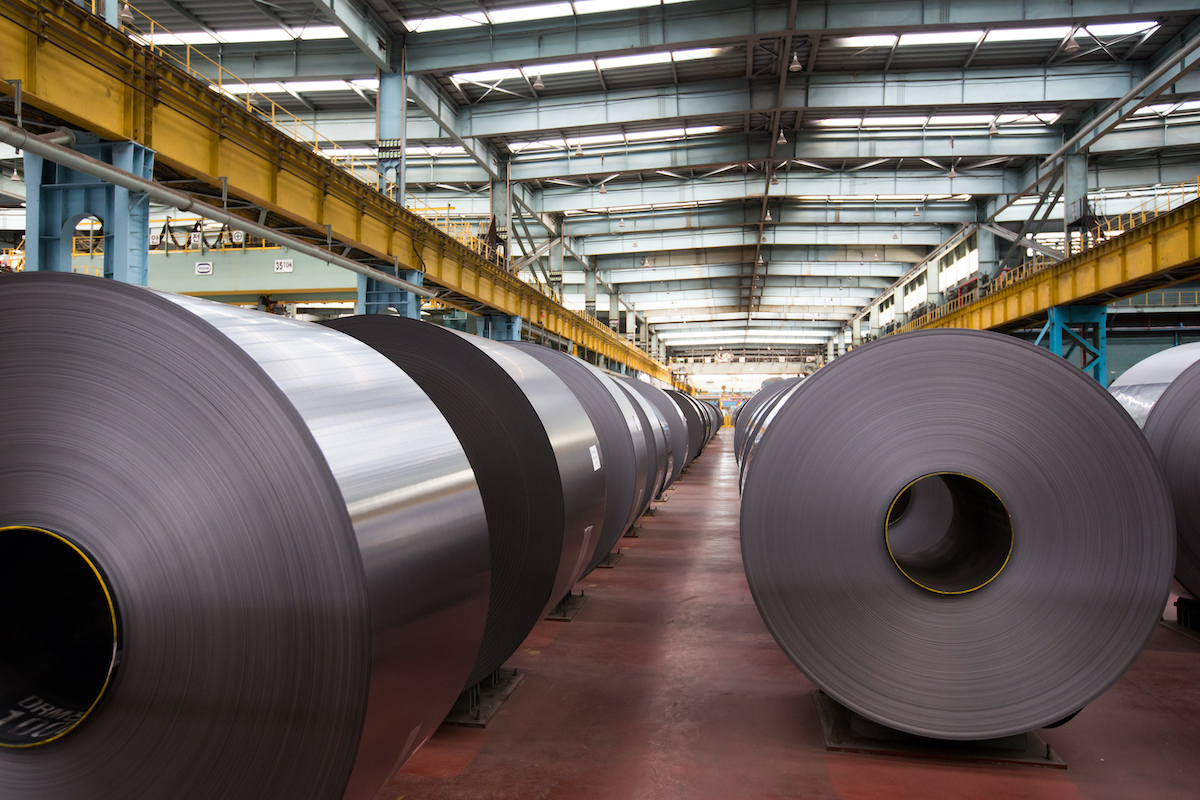
European domestic steel CRC, HDG prices up amid prolonged import limitations
European domestic flat steel prices rose further in the week to Thursday March 12, with production costs raised following the breakout of new conflict in the Middle East and persistent import limitations affecting the market, trade sources said.
Following the start of the US-Israel-Iran conflict last month, the situation has escalated across the region, affecting trade routes and logistics, while also causing energy price spikes in Europe and higher costs for raw materials, Fastmarkets heard.
Market sources said that speculative demand had picked up because of changing geopolitical dynamics, adding that consumption levels in the European market remained low.
But while producers were increasing prices as a result of growing interest in domestic products, to avoid risks linked to imported materials, it was still unclear whether demand was strong enough to absorb all the increases, market sources said.
Meanwhile, mills were heard to be comfortably booked, and in no rush to place new orders.
Domestic
In Northern Europe, domestic prices for cold-rolled coil and hot-dipped galvanized coil increased in the week to Wednesday.
Fastmarkets’ weekly price assessment for steel cold-rolled coil, domestic, exw Northern Europe, was €790-830 ($912-958) per tonne on March 11, rising from €785-790 per tonne the week before.
Meanwhile, the weekly price assessment for steel hot-dipped galvanized coil, domestic, exw Northern Europe, was €790-830 per tonne, widening from €795-800 per tonne in the previous assessment.
The new assessment matched higher estimates of workable levels reported by market sources.
In Southern Europe, domestic CRC and HDG prices were mostly unchanged.
Fastmarkets’ weekly price assessment for steel CRC, domestic, exw Southern Europe, was €805-820 per tonne on Wednesday, widening upward from €805-810 per tonne in the previous week.
The new upper end of the range was attributed to offers heard at €820 per tonne ex-works.
The weekly price assessment for steel HDG, domestic, exw Southern Europe, was stable at €785-790 per tonne on Wednesday.
Imports
Meanwhile, imported prices for these products were unchanged on Wednesday, with no new trading reported during the assessment week.
Import activity was limited following the introduction of the EU’s Carbon Border Adjustment Mechanism (CBAM) earlier this year and other trade regulations still affecting buyers’ appetite for imported coil, Fastmarkets understands.
The weekly price assessment for steel CRC, import, cfr main port Northern Europe, was stable at €630-660 per tonne, while the assessment for steel CRC, import, ddp Northern Europe, stayed at €730-770 per tonne.
Fastmarkets’ weekly price assessment for steel HDG import, cfr main port Northern Europe, was stable at €650-700 per tonne, while the assessment for steel HDG import, ddp Northern Europe, held at €760-770 per tonne.
The weekly price assessment for steel CRC, import, cfr main port Southern Europe, was stable at €620-650 per tonne, while the weekly price assessment for steel CRC, import, ddp Southern Europe, was €730-780 per tonne, also unchanged.
Fastmarkets’ weekly price assessment for steel HDG, import, cfr main port Southern Europe, was stable at €660-700 per tonne, while the weekly price assessment for steel HDG, import, ddp Southern Europe, was also stable at €750-770 per tonne.

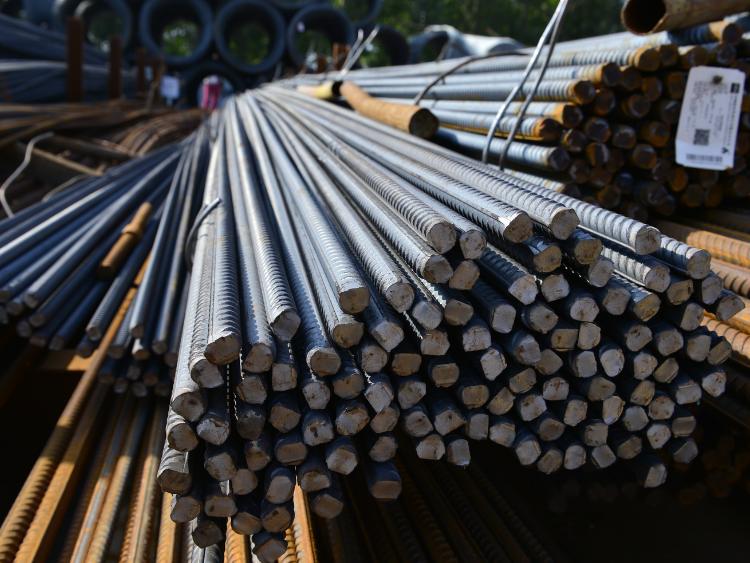
European rebar suppliers return to market with higher prices
Rebar suppliers in Europe returned to the market with higher prices during the week to Wednesday March 11, after withdrawing last week following the effects of the US-Iran conflict.
Higher energy and fuel costs forced suppliers to increase rebar prices for domestic customers, while competition from imports weakened further because of rising freight costs and longer freight times.
Suppliers in Germany increased offers by €10-30 ($11.56-34.70) per tonne over the week, with new offers starting at €650 per tonne delivered for 8-32 mm rebar.
In France, similar material was heard at €630-640 per tonne delivered.
In Austria, workable prices were also estimated at €630 per tonne delivered.
Fastmarkets’ weekly price assessment for steel reinforcing bar (rebar) domestic, delivered Northern Europe was at €630-650 per tonne on Wednesday, up €10-20 from €610-640 per tonne on March 4.
Market sources reported that suppliers were offering limited tonnages with short validity periods amid the fast-changing situation in the energy sector.
At the same time, demand remained moderate, with expectations of improving construction activity because of the start of the spring.
In Southern Europe, mills followed a similar policy, with higher price levels heard in Italy and Spain.
Mills in Italy increased offers for 8-40 mm bar to €620-640 per tonne ex-works, but buyers were said to be cautious with “few requests coming in.” Workable prices were estimated at €600-620 per tonne delivered, but again with very short validity.
“Customers are disoriented. They remember what happened at the beginning of Russia’s invasion of Ukraine with the fast price uptrend and costs out of control, but at the same time they’re afraid that a rapid end to the US-Iran conflict will bring a new decrease. Someone is buying, [while] some others are in wait-and-see mode, [but] no one is optimistic regarding the near future,” an Italian trading source said.
“I can understand customer caution, but believe me, the fear among producers in selling at prices that are not sustainable with higher costs is very high. Consider also the psychological aspect for old-economy producers: we have always had scrap prices and availability as our benchmark, so we have difficulty understanding the hyper-speculative attitude of energy suppliers,” an Italian producer said on Wednesday.
“Even as I write, we are stopping production three to four hours a day to avoid peak energy costs and this is obviously lowering our stocks, so we are not under pressure to sell volumes. We need to get ahead of the cost curve as quickly as possible,” he added.
Fastmarkets’ weekly price assessment for steel reinforcing bar (rebar) domestic, ex-works Italy rose to €600-640 per tonne on Wednesday, up €20-50 from €550-620 per tonne on March 4.
Spanish suppliers also raised offers, with new levels at €675-690 per tonne delivered.
Sources noted that unlike in other parts of Europe, demand for rebar in Spain has been strong because of healthy economic performance and more favorable weather conditions.
Fastmarkets’ weekly price assessment for steel reinforcing bar (rebar) domestic, delivered Spain was €675-690 per tonne on Wednesday, up €10 from €665-680 per tonne on March 4.
European HRC prices extend gains as mills restrict volumes amid tightening import outlook
European hot-rolled coil prices climbed higher as suppliers limited offered tonnages in the rising markets, sources told Fastmarkets on Thursday March 12. Positive sentiment, supported by a shortage of imports, continued to dominate the European flat steel market.
European producers were said to be limiting offered tonnage to the market in order to not “overcommit” and to retain flexibility should prices continue to rise.
Offers for May delivery coil were reported at €710-750 ($823-870) per tonne based delivered (around €690-735 per tonne ex-works) from integrated suppliers in Northern Europe during the week beginning Monday March 9.
Italy-origin coil was heard offered to Italy at €720-730 per tonne base delivered, but with limited volumes.
Transactions for limited tonnages of HRC were heard done at €710-720 per tonne ex-works during the week, in Germany and the Benelux area.
Some buyers stepped back from the market, digesting the price rally.
“We are not booking at these levels [above €700 per tonne ex-works]. Last deals we did for a few thousand tonnes were around €700 [per tonne ex-works],” a buyer in Germany said.
Estimations of achievable prices were largely coming in the range of €700-710 per tonne ex-works form industry stakeholders.
As a result, Fastmarkets’ daily steel hot-rolled coil index domestic, exw Northern Europe was calculated at €707.19 per tonne on March 12, up by €1.21 per tonne from €705.98 on March 11.
The index was up by €6.56 per tonne week on week and by €52.19 per tonne month on month.
After the index was published, a deal was also reported at €730 per tonne ex-works, but it was not widely confirmed by the market so far.
Meanwhile, in Southern Europe, Fastmarkets calculated its daily steel hot-rolled coil index domestic, exw Italy at €692.50 per tonne ex-works on March 12, up by €3.75 per tonne from €688.75 per tonne on March 11.
The index was up by €12.50 per tonne week on week and by €41.50 per tonne month on month.
A local integrated mill was maintaining offers at €710-720 per tonne base delivered [around €695-705 per tonne ex-works] with limited flexibility for discounts, sources said.
Offers from re-rollers were heard at €700 per tonne ex-works.
Buyers estimated the market levels at €680-690 per tonne ex-works.
In the secondary market in the week commencing March 9, some steel service centers (SSCs) claimed to have achieved €800 per tonne CPT for 4 mm S235 grade HR sheet, indicating improved buying activity. Other sources reported that achievable prices were still hovering around €750-770 per tonne CPT, but buyers were showing more acceptance of higher prices.
“We have much more inquiries this week, some SSC are pushing [HR sheet] offers above €800 per tonne CPT to reflect higher HRC costs,” a buyer source in Italy told Fastmarkets.
Concerns over reduced import availability in the second half of the year due to new safeguards and Carbon Border Adjustment Mechanism (CBAM) effects were fuelling the upward sentiment.
New offers were scarce on both a DDP and a CFR basis, reflecting growing concerns about quota availability and CBAM costs for imports.
“Many sellers withdrew DDP-based [CBAM-accounted] HRC offers from the market, reassessing the calculation,” a second buyer in Italy said.
The first CBAM Certificate price will be published on April 7, the European Commission reported.
HRC offers from Turkey were reported at €565-570 per tonne CFR, including anti-dumping duty.
An Algerian supplier reportedly withdrew offers after securing some tonnages at €520 per tonne CFR earlier in March. Sources expected new offers to be “at least €30 per tonne higher.”

VDMA establishes new regional branch in Benelux
Germany’s association for mechanical and plant engineering, Verband Deutscher Maschinen- und Anlagenbauer (VDMA), has established a regional chapter for the Benelux region, Kallanish learns.
VDMA so far has extended into Austria, but notes that the new launch of VDMA Benelux is its first “transnational” European regional association outside Germany.
VDMA Benelux, is based in Maastricht, Netherlands where VDMA established a regional office years ago. The new chapter represents a significant and growing number of member companies from the region embracing Belgium, the Netherlands, and Luxembourg. With a turnover of around €83 billion ($96 billion) in 2025, the region is a key global centre of machine manufacturing that is deeply embedded in European values, the association notes.
“In particular in times of global turmoil and rapid change, the challenges the entrepreneurs face and industry encounters cannot be solved on national level(s) alone. To strengthen and ensure Europe’s competitiveness as well as machinery industry base, actions are needed,” says Arjan Schmits, managing director of VDMA Benelux.
At the first general meeting of VDMA Benelux, Theresa Spaan-Burke, co-owner and innovation director of IBS Precision Engineering BV (Netherlands), was elected chairwoman of the board.


EU ETS weakening would hamper competitiveness-improving investments: coalition
Weakening the EU Emissions Trading System (ETS) to ease pressure on industry would erode investment certainty, rather than aid competitiveness, with the possibility already causing capital markets and financiers to hesitate in partaking in decarbonisation investment, according to a coalition of over 100 companies and investors.
Instead, the upcoming ETS reform must ensure revenues from ETS are re-deployed by Member States to improve the bankability of decarbonisation projects in industrial sectors, says the coalition, which includes decarbonisation first movers SSAB, Outokumpu, Hydnum, Stegra and GravitHy.
“Revenues need to be channelled towards accelerating industrial electrification by enhancing access to low-carbon energy and supporting breakthrough technologies that reinforce the EU’s industrial base and its strategic autonomy,” it writes in an open letter seen by Kallanish to European Commission President Ursula von der Leyen and European Council President Antonio Costa.
Calls have been growing from EU industry in recent months for a delay to the phaseout of free ETS emissions, to alleviate the cost burden of blast furnace steelmakers, with Italian steel association Federacciai, voestalpine and Trinecke Zelezarny among the proponents. The phaseout began from 1 January, simultaneously with the phase-in of CBAM.
These calls are a “misdiagnosis of the problem”, instead of “focusing on the structural causes of economic erosion – higher energy prices set by fossil fuels, unfair competition stemming from global overcapacity in certain sectors, insufficient integration of the single market,” the coalition notes.
Weakening ETS would “privilege incumbency over transformation, penalise first movers that built business cases and invested in decarbonisation, and leave the EU without a serious gameplan to compete in new industries,” it adds.
The upcoming ETS revision represents an opportunity for improvement but the trajectory must remain. “Regulatory stability and clarity on the long-term outlook will be critical to unlocking investments in Europe,” the letter states.
Critical will be the continued deployment of abundant, firm and affordable clean power, paired with long term investments in grids, flexibility, efficiency and storage to enable electrification at scale. Consideration should be given to using Member States ETS revenues to support long-term clean industrial Power Purchase Agreements (PPAs) to provide sufficient predictability for decarbonisation investments, the letter notes.
Also important will be ensuring CBAM functions effectively and, where justified, is extended to prevent carbon leakage in the value chain and additional sectors. ETS revenues, the Innovation Fund and Modernisation Fund should also be effectively disbursed towards scaling up clean technologies.
The coalition urges the European Council to adopt a clear statement at its 19-20 March meeting that removes “any ambiguity about Europe’s path towards energy security, competitiveness and decarbonisation”.

Italian sections, merchant bar offer prices increase
Italian long steelmakers are pushing prices higher in line with other European mills after suspending sales last week, market sources tell Kallanish.
Rebar prices are increased by as much as €70/tonne ($81.48/t), while other products such as merchant bar are seeing more moderate increases of around €30/t. The merchant bar segment remains structurally weak, with reduced consumption levels. Passing on price increases has proved difficult as buyers are struggling to transfer higher costs downstream.
Two distributors and an agent say overall consumption remains slow, with sales of sections or wire rod derivatives helping offset weaker merchant bar demand.
Last month, merchant bar producers attempted to implement increases of around €50/t, though these were later reduced to roughly €20/t. This month, however, rising energy and transport costs are pushing mills to seek new hikes of around €30/t.
Before the latest increases, contracts had been concluded at €270-300/t base ex-works, equivalent to €690-720/t including size extras. Mills are now targeting around €330/t ex-works.
Section prices in Italy are also rising by €40/t after the market leader suspended sales last week due to surging energy costs linked to the US-Iran conflict, in line with several other European producers and ArcelorMittal (see separate article).
First-category sections in Italy are now quoted at around €800/t delivered for April delivery, compared with roughly €760/t delivered before the escalation. Last week, lower levels were still available for imported material.