


Dillinger’s Power4Steel Project awarded in Europe


CBAM critical deadline: March 31! Non-compliant companies face risk of blockage

UK is preparing to raise tariffs to 50% in the steel sector

Czech steel industry struggles to escape ongoing deep crisis
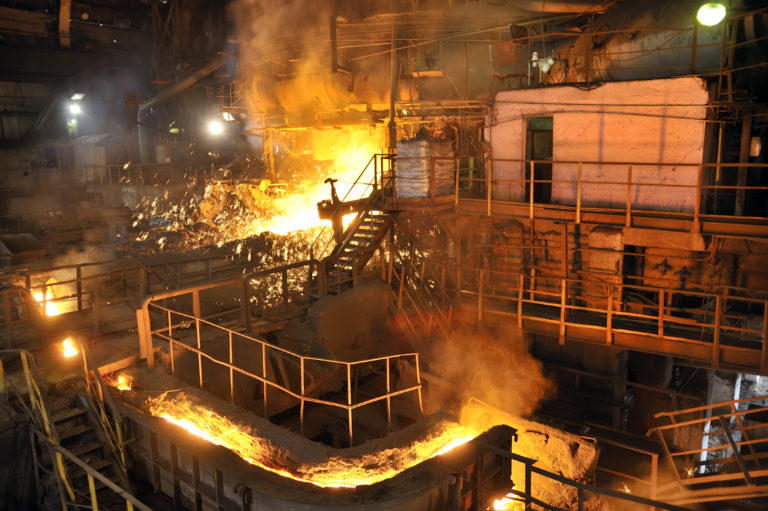
EUROFER: EU’s steel exports down 12 percent in 2025, trade deficit widens
According to the Economic and Steel Market Outlook 2026-2027/Q1 2025 Report from the Economic Committee of the European Steel Association (EUROFER), total exports of steel products of EU countries to foreign markets decreased by 12 percent year on year in the full year of 2025. Finished and flat product exports fell by 11 percent and eight percent, respectively, while long product exports recorded a sharp 17 percent fall, all year on year.
According to information released by EUROFER, in 2025 the main destinations for EU steel exports were the UK, US, Turkey, Switzerland and India. These five destinations together accounted for 59 percent of total EU finished product exports. Countries which recorded year-on-year increases for EU finished steel exports were Algeria with 39 percent, the United Kingdom with five percent, and India and Switzerland each with a one percent increase.
Exports declined across all major flat product categories, reflected in major decreases for cold rolled sheets with 20 percent and plate by 11 percent. In long products, shipments also decreased across all main categories, with rebars down by 35 percent and wire rod shipments down 25 percent, followed by heavy sections down by 15 percent and merchant bars decreasing by nine percent.
The EU’s steel trade deficit widened markedly in 2025, reaching about 2 million mt per month including semis, up from 1.4 million mt in 2024. For finished steel, the deficit rose to 1.2 million mt per month, driven by flat products (1.1 million mt) and long products (156,000 mt). In 2024, the finished steel deficit was 890,000 mt per month, with a flat product deficit offset slightly by a small surplus in longs.
The largest deficits in 2025 were with South Korea, Turkey, Indonesia, China, Taiwan, India, Ukraine and Vietnam, while the EU posted its biggest surpluses with the US, UK and Switzerland.

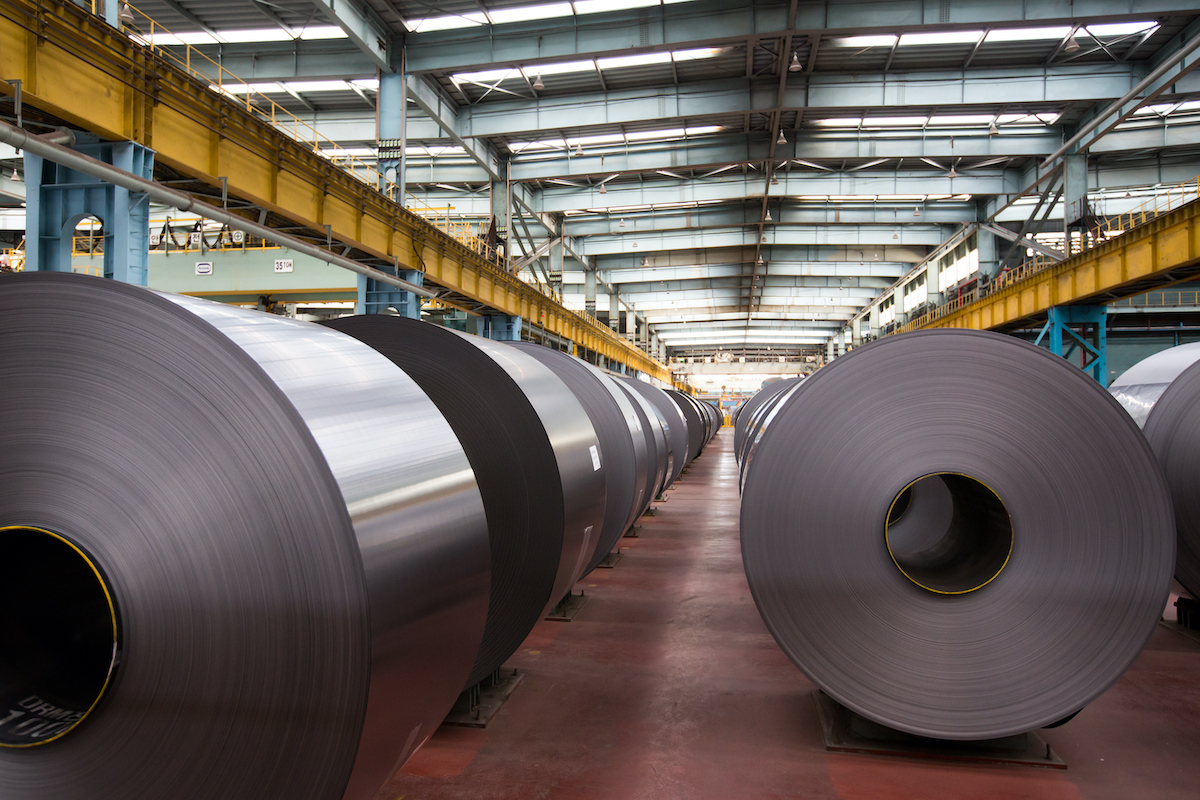
European HRC price momentum slows amid limited demand
Soft demand tempered price increases in the European domestic hot-rolled coil market, Fastmarkets heard on Monday March 16.
Market participants unanimously reported the lack of interest from customers’ side amid sufficient stocks, while mills were also said to be well-booked.
“Demand isn’t strong right now, but that’s mainly because buyers already have enough material to cover their needs well ahead, while mills have sufficient orders, so no one needs to rush,” a buyer from Benelux area said.
Sellers and buyers in Northern Europe said that while last week the market leader made some initial sales at €720-730 ($822-833) per tonne ex-works, the level of €700 per tonne ex-works was still more applicable to wider trade.
Fastmarkets’ daily steel hot-rolled coil index domestic, exw Northern Europe was calculated at €705.63 ($805.61) per tonne on March 16, down by €7.49 from €713.57 on March 13.
The decrease in the index is not a sign of a market trend reversal but rather a result of the lack of new transactions at higher price levels. The index was up by €4.17 per tonne week on week and by €45.63 per tonne month on month.
Sellers from Italy hold offers for May-June delivery coils at €700 per tonne ex-works. However, latest assessments of workable prices came at €680-690 per tonne ex-works.
Fastmarkets daily steel hot-rolled coil index domestic, exw Italy was assessed at €694 per tonne on March 16, up by €1.5 per tonne from €692.50 per tonne ex-works on March 13.
The index was up by €9 per tonne week on week and by €42.4 per tonne month on month.
Market participants reported that buyers have become increasingly cautious about imports, fearing that changes in transportation routes — particularly for material sourced from Asia — could result in delays. Their concern is that shipments may not arrive before the new safeguard measures take effect in July 2026.
“Bid trading houses are not very keen to take on more business as importers of records,” a representative of a large trading company said.
Another trader noted that some Asian mills are now offering on an FOB basis, unwilling to assume the additional costs and risks associated with rapidly changing freight rates driven by the US‑Iran conflict.
HRC from India and Turkey was heard available at €560–580 per tonne CFR, with Turkish material including the anti-dumping duty.
Offers from Asia for HRC scheduled for shipment in May–June were said to be around €630–640 per tonne DDP.

Salzgitter installs waterjet cutting system for defence applications
Salzgitter is investing just over €2 million ($2.3m) in a new waterjet cutting system at its plate mil in Ilsenburg, the German steelmaker tells Kallanish.
The investment is intended to contribute to the company’s expanding future segment of defence. The plate mill will deploy this technology to meet the high demands of its customers in the field of safety steels in particular, Salzgitter notes.
The new water jet cutting system is being integrated in the ongoing expansion of the cutting area of the plant. The system is relevant for the production of sensitive steel grades, where thermal distortion can occur at the cutting edges during flame cutting in oxyfuel or plasma cutting processes. In the cold cutting process, the cutting jet consisting of water, garnet sand and air ensures lower material losses for high-strength grades in a wide range of thicknesses, Salzgitter explains.
Supplied by H.G. Ridder Automatisierungs, the facility will feature a cutting table around 18 metres long as well as a maximum cutting width of over 5m. In contrast to conventional flame cutting with natural gas, the waterjet cutting system is operated with electricity using renewable energies. The project is scheduled for completion at the end of the second quarter.


German fabricators report another year of recession
Production at German steel and metal fabricators was 1.0% lower last year than in 2024, Kallanish hears from industry federation Wirtschaftsverband Stahl- und Metallverarbeitung (WSM).
The drop in 2025 marks the fourth year of recession in a row, the federation notes. In comparison with the pre-Covid year 2019, the production volume has sunk by as much as 14.6%.
The positive detail WSM highlights is the improved activity in the second half of the year, which saw production in the fourth quarter rise to 2.1% higher than that of the fourth quarter of 2024. Demand has improved, too, though not in all sectors, WSM observes. It points at the segment of arms & ammunition production, where orders have risen five-fold since the Russian invasion of Ukraine.
According to general economy data, the current year could see an uptick of production by 1-2%, WSM says. However, it notes that this is more a resurfacing from a low level after a year-long trough, rather than a change of trend.
It adds that companies have entered the year with a subdued mood. WSM cites sentiment surveys of the business climate, which shows that assessments dropped both for the current conditions as well as for expectations.
The federation speculates that this could at least be partly attributed to the erratic US policy and the resulting insecurity. An indication of this is the drop of the production capacities’ utilisation from 74% in October to 72.4% in January.
Liberty Galati fails to find buyer at auction
Troubled Romanian steelworks Liberty Galati has not found a buyer at the first international auction for the sale of the steel plant last week, Kallanish learns.
Although five investors purchased the specifications and analysed the offer, none submitted the necessary guarantee to participate in the auction, according to Romanian-based publication Informat.
The main reason for the lack of bidders is that the price of the assets is considered too high at approximately €720 million ($826.4m). According to Informat, the plant’s administrators say that investors are discouraged by the high operating costs for energy, gas, and CO2 certificates, as well as the age of the facilities.
It is understood that the plant could be put up for auction again but at a reduced price, estimated at €420-500m.
Liberty Galati and Euro Insol, the company’s bankruptcy administrator, did not reply to a request for comment by Kallanish at the time of publication.
Among those believed to have expressed interest are industrial groups from India, China, Turkey, Ukraine and Iraq, as well as the Romanian company UMB Grup.
Also, on the list of potential buyers are JSW Steel and Jindal Group from India, DeLong Steel from China, KMC Steel from Turkey, Galiawa Group from Iraq and Metinvest from Ukraine.
The Ukrainian group is already present in Romania, after its acquisition of the ArcelorMittal Tubular Products factory, which completed in December.
Liberty Galati has amended an earlier restructuring plan proposed by the two administrators, which was approved by the Galati County Court.
The plant has annual production capacity of around 2.5 million tonnes of steel for the construction, naval, oil and gas, and power generation sectors. It was acquired by Liberty Steel Group from ArcelorMittal in July 2019.
The plant entered into a preventive arrangement in March 2024, in an attempt to avoid bankruptcy. Since then, the plant’s activity has been severely affected.
Last summer, Liberty Galati resumed operations at its metallurgical plant following a pause of almost a year.

Jindal joins the race for ADI
Jindal has submitted a new bid to acquire troubled Italian steelmaker Acciaierie d’Italia (ADI), the Minister of Enterprises and Made in Italy Adolfo Urso confirms during a Senate hearing monitored by Kallanish.
“The Indian group Jindal, market leader on a global scale has submitted… an expression of interest for the entire steel complex with an ambitious industrial plan guaranteeing the process of full decarbonisation. This opens a new phase in the negotiations,” Urso says.
The special commissioners overseeing ADI’s sale will now examine the new bid and compare it with the offer submitted by Flacks Group, Urso adds. He reiterates that the government aims to identify a new owner for Ilva before the end of April.
Meanwhile, the maintenance programme currently underway at the Taranto steelworks is expected to be completed by the end of next month. The plant should then resume operations with two blast furnaces, No. 2 and No. 4, with a combined production capacity of up to 4 million tonnes/year.
Last year the Taranto site operated with only one blast furnace, No. 4, which was idled on 28 February 2026 for maintenance. At the same time, restart operations for blast furnace No. 2 were initiated.
Meanwhile, Flacks Group is in discussions with Italian steelmaker and re-roller Marcegaglia, as well as Metinvest and technology supplier Danieli regarding the industrial plan Flacks intends to implement for ADI after its acquisition. This was confirmed to Kallanish by Flacks chairman Michael Flacks, Antonio Marcegaglia and Danieli president Alessandro Brussi.