UK announces new Steel Strategy, welcomed as game-changer by industry body
The UK government presented its new Steel Strategy on March 19 setting an ambition for up to 50% of steel used in the UK to be made in the country, boosting production from its current 30% market share.
The new strategy was welcomed by trade body UK Steel, which said the government had been “incredibly bold in its approach to trade”, but it added that the sector still needs more competitive energy prices, an effective carbon border policy and stronger public procurement rules.
With its landmark strategy, the UK is introducing trade measures to preserve domestic steel production for critical national energy security, defense and transport infrastructure. From July 1, overall quota levels for steel imports will be reduced by 60% compared to current arrangements, and steel coming into the UK above these levels will be subject to a 50% tariff.
The government is considering a transitional arrangement under which the new tariff would not apply to goods under contracts agreed before March 14 and imported between July 1 and Sept. 30, 2026.
The government will also be raising the UK’s maximum Most Favoured Nation steel tariffs at the WTO to 50% to protect the domestic industry from global overcapacity in the long run. For the same reason, it will consider introducing requirements to identify where steel imports are melted and poured.
The new strategy also commits to electric arc furnaces as the future of British steelmaking, continuing the shift from blast furnaces to EAF-based production, and enabling offshore wind developers to include steel manufacturers in the next round of Clean Industry Bonus applications launching this year to maximize UK steel use in renewables.
The National Wealth Fund will be the government’s main mechanism for providing up to GBP2.5 billion ($3.3 billion) for investment in the steel sector, which already includes a deal backed by UK Export Finance worth GBP70 million, for British Steel to supply the refurbishment of Nigerian ports.
“With this strategy we are closing the decades-long chapter of destructive de-industrialization and committing instead to strengthening and sustaining Britain as a steel-making nation,” said UK Business and Trade Secretary Peter Kyle.
The strategy builds on the support the government has already put in place for the steel industry since taking office, including cutting electricity costs for producers via the “Supercharger”, reforming procurement rules to ensure more UK-made steel is considered for public projects, and speeding up grid access for new investment projects.
Since the government’s intervention at Scunthorpe last year, British Steel has made further progress, including hiring new apprentices and signing significant contracts, such as a contract to supply a Turkish rail project worth tens of millions.
Other government support for the UK’s steel sector since taking office has included GBP500 million for the construction of a new EAF at Port Talbot, and the funding to run a sales process for Speciality Steel UK.
Game changer
UK Steel welcomed the Steel Strategy, calling it a game-changer.
“The government’s bravery in taking the required measures represents a real shift in the culture of Westminster from protecting the ideology of free trade at any cost, to defending critical industries and national security,” the trade body’s director general Gareth Stace said in a March 19 statement.
The association praised the headline cuts to import quotas, saying they go even further than similar measures taken in the US, Canada and EU, and make clear that the government recognizes the distortions that overcapacity and extreme subsidy have created in global steel markets, and that the UK must domesticate more of its steel supply, especially in areas such as defense, grid infrastructure and civil nuclear.
Domestic steelmakers have seen their share of UK steel demand slump to just 30% as a result of continuous subsidized steel flows into international markets, according to UK Steel.
However, while the progress made to support the sector is encouraging, significant challenges remain, it warned, pointing to unresolved carbon border policy, still uncompetitive industrial energy prices, and somewhat loose public procurement policy.
According to the association, UK steelmakers face industrial electricity prices 14% higher than in Germany and 25% higher than in France. While the government increased compensation for electricity network charges in its Industrial Strategy, the Steel Strategy does not contain any new initiatives to deliver competitive industrial power prices.
“Despite this government’s progress on shielding steelmakers from network costs in electricity bills, the strategy fails to address the need for action on wholesale power prices,” said Frank Aaskov, director of energy and climate change policy for UK Steel. “That omission leaves the final piece of the competitiveness jigsaw firmly missing.”
UK Steel also warned that the UK CBAM risks making importing Chinese steel cheaper than producing lower-emission steel locally. The policy also covers a narrow range of products, so importers can avoid the UK CBAM by switching to finished or semi-finished steel-containing goods not included in its scope.
Finally, the increased carbon costs will make UK steelmakers uncompetitive in non-EU markets, without an export solution. Instead of creating a fair market, the policy, due to the remaining loopholes, risks favoring imports over domestic production.
“Without a change in direction… the policy risks achieving precisely the opposite of its stated aim,” Aaskov said, adding that the steel industry is ready to work with the government to address both CBAM and industrial energy pricing issues.


Brazil, China should collaborate on green steel: study
Researchers at the London School of Economics (LSE) Green Finance unit suggest that Brazil and China will have better chances to commercialise green steel if they integrate their value chains.
The new study evaluating the prospects of low-carbon steel production in Brazil, China and Mexico finds that the three markets have specific advantages, but closing the profitability gap remains a structural problem for all of them. It identifies a gap of $95/tonne in China and a global average of $140/t, when comparing production via the traditional blast furnace-based route with the promising hydrogen-based route with electric furnaces.
“The gap between BF-BOF and H2-DRI-EAF is material, recurring, and reinforced by multiple layers of the system itself. Energy pricing, capital intensity, underdeveloped scrap systems and fragmented demand work together to sustain the cost advantage of traditional production,” the researchers say. “Even when technology improves, the economics often do not.”
Policy intervention is critical to narrowing the gap to a level that the private sector would feel comfortable to engage, “where producers can scale new technologies without absorbing all the risk themselves”, they continue. “Fiscal tools can cut capex and opex burdens; regulatory tools can reshape market incentives; market-based tools can embed climate costs into production decisions. None works in isolation.”
Highlighting the challenges in each market, the LSE study indicates that “the most plausible outcome” towards global leadership would be based on collaboration, rather than a single dominant player, Kallanish reports.
“China’s strengths, combined with Brazil’s comparative advantage centred on low-cost renewable energy and proximity to raw materials, point toward a spatial division of production,” says LSE. “A collaborative model, where Brazil develops as a major green iron production hub while China coordinates downstream processing and technological innovation, could prove more effective.”
Without such an approach, China would present the strongest case for green steel production leadership, but it would be a slow, gradual process. The country would still face a challenging environment, considering its high carbon-intensive energy mix; technology bottleneck on DRI shaft reactor, which is currently dominated by US-based Midrex and Italy-based Tenova/Danieli; limited scrap supply chain; high blast furnace capacity; and low demand prospects.
Brazil has high-quality iron ore, an abundant renewable energy supply, a highly skilled workforce and emerging supportive policies. However, the country’s steel market is still characterised by low growth, intense import competition, margin pressure and low investment commitment, which threaten industry competitiveness.
According to the study, just over half of Brazilian blast furnace capacity is due for relining by 2030, presenting a “key opportunity” for a low-carbon technology pivot.

EU tube sector growth relying on construction: Eurofer
The EU steel tube industry is expected to recover only gradually in the coming years, with output forecast to rise by 0.2% in 2025, followed by 0.8% growth in 2026 and 1.5% in 2027.
In the third quarter of 2025, EU tube industry output increased by 3.8% year-on-year, marking the first expansion after six consecutive quarterly declines, Kallanish learns from the Eurofer 2026 outlook.
However, the industry’s outlook remains constrained by structural shifts in energy markets. Demand from the oil and gas sector is not expected to improve substantially as the EU continues shifting from pipeline gas to liquefied natural gas imports, reducing the need for new pipeline infrastructure.
As a result, future growth in tube demand is expected to rely increasingly on the construction sector, while demand from automotive and mechanical engineering is forecast to remain relatively subdued.
Meanwhile, the tubes and pipes sector has struggled in recent years. Steel tube output declined by 1.4% in 2023 and fell further by 2.4% in 2024 amid weak industrial demand, supply chain disruptions and war-related impacts following Russia’s invasion of Ukraine.

Polish President seeks ETS abolition
Polish President Karol Nawrocki has conveyed his position to Prime Minister Donald Tusk that the EU should abolish the Emissions Trading System (ETS) to reduce costs and prevent an exodus of industry from the bloc. Tusk is due to meet other EU leaders to discuss ETS in Brussels on Thursday, Kallanish notes.
The current Polish heads of state and government come from different political parties and rarely see eye to eye. Although Tusk is under no obligation to follow Nawrocki’s lead, the President has the power to propose and veto legislation.
The EU has reduced CO2 emissions by nearly 35% in 20 years to approximately 2.4 billion tonnes, but emissions on a global scale have increased, driven by China, Undersecretary of State in the Chancellery of the President Karol Rabenda said during a press conference earlier this week.
The EU’s share in industrial production has declined to 17%, while China’s has surged to 28%, indicating that ETS “does not reduce industrial production, but pushes it to other regions of the world”, he added.
If the majority vote required to abolish ETS cannot be obtained, the Polish President proposes alternative solutions, including the payment of a so-called substitution fee to the budgets of individual member states. The Market Stability Reserve should meanwhile be adapted to enable the release of additional ETS allowances when their price exceeds €10/tonne.
Financial institutions “that in no way contribute to decarbonisation” should also be excluded from trading allowances, presidential advisor Wanda Buk explained. Finally, free allowances should be retained because “CBAM doesn’t work – it doesn’t cover the entire supply chain, and it can be easily circumvented”, she added.
According to press reports, European Commission President Ursula von der Leyen wrote to EU government heads this week proposing that ETS prices could be capped and subsidies channelled towards less wealthy members. This would include using the Market Stability Reserve to keep prices in check.
Various steelmaking representatives have recently called for ETS free allowances to be retained for longer, including Italian steel association Federacciai, voestalpine and Moravia Steel (see separate story). The situation is receiving even greater scrutiny since the escalation of the Middle East conflict has elevated energy prices.

EU needs its fossil fuels, ETS revision: Popelar
The EU must consider using its indigenous fossil fuel resources to ensure economic resilience during geopolitical instability, while the focus on building out nuclear energy, although correct, will not benefit steelmakers in the near term. Emissions Trading System (ETS) prices should be kept at lower levels and the system made able to react to prevent costs during crises.
So said Moravia Steel chairman Petr Popelar in an exclusive interview with Kallanish this week.
ETS needs revision to ensure industry continuity
ETS has been in the spotlight in recent months, with the phaseout of free allowances beginning from 1 January, together with the phase-in of CBAM. The scrutiny has been tightened further by the escalating conflict in the Middle East putting pressure on fuel prices. EU government leaders are expected to discuss potentially weakening ETS during their summit planned for Thursday and Friday.
For Moravia Steel, which owns Czech steelmaker Trinecke Zelezarny, free ETS allowances will fall significantly short of its emissions in 2026. At an EU allowance (EUA) price of around €80/tonne of CO2, this would mean around €100 million in additional costs for the steelmaker, making it harder to invest in decarbonisation projects at the pace required, Popelar notes.
The outlook is not helped by financial speculators being allowed to trade allowances and create EUA price volatility and unpredictable costs for industry. “The Market Stability Reserve should keep ETS prices more stable and closer to the levels originally expected by the European Commission, around €25-45/tonne for 2026,” he said. “In times of geopolitical shocks or energy crises, the system should be able to react and avoid additional costs.”
Nuclear a ‘lost opportunity’, EU fossil reserves need utilising
Given the current climate of high energy costs and supply uncertainty, the reluctance of some EU states to deploy nuclear energy has “led to higher costs and lost opportunities”, Popelar observed. However, EU sentiment has shifted in favour. “While the recognition of this strategic mistake is correct, time and investment constraints mean that energy-intensive industries will not benefit from new nuclear capacity in the near term. New reactors and SMRs [small modular reactors] will come online only after the current transition period,” he added.
This mistake is being repeated with fossil fuels, he continued. “Fossil reserves located in Europe, especially in the Czech Republic … could provide important geopolitical and economic resilience for the EU,” he added.
He considers the Czech government’s decision to close coking and thermal coal miner OKD this year as a mistake. “The current crisis in the Middle East shows the consequences. The Czech Republic has already lost its domestic fuel sources and is now fully dependent on imports,” he said. Instead, policymakers should consider the use of often overlooked technologies to reduce fossil-based emissions, such as efficient coal-based power generation.
Uneven energy costs across Europe amid varying wholesale electricity prices, network charges, surcharges, levies and taxes also present a problem as they create competition between member states. “EU energy prices therefore need to be both more uniform and globally competitive,” Popelar noted.
EU policy support welcome but must go further
Although EU policymakers have become aware of the need to support industry in recent years, “rhetorical recognition and the correct diagnosis of issues is not sufficient to save the EU steel industry,” he warned. “The real test is whether this new pragmatism produces more decarbonisation funding, faster permitting, lower energy costs, stronger trade defence, effective CBAM anticircumvention and actual demand for EU produced low-carbon steel.”
“For us, the key question is not whether the Czech industry can decarbonise. It is whether the European regulatory framework allows primary steel production to remain economically viable during the transition,” he continued.
Scrap-EAF transitioning will be necessary but some steel-using sectors still depend on iron ore-based production for high value-added products. There is a risk the EU will become dependent on imports of these products produced under different regulatory and carbon cost regimes. In Trinecke Zelezarny’s mainstay long steel segment, this relates mainly to the wire rod ecosystem, including automotive springs, tire cords, chains, bearings and welding electrodes.
The Czech steelmaker said last year it was delaying its EAF transition to at least 2030 due to uncertain policy support. Some EU steelmakers have since indicated that following the CBAM implementation and new steel trade regime announcement, the policy environment is more conducive now to decarbonisation investments. However, hurdles remain.
CBAM requires a further downstream extension and implementation of the melt-and-pour rule, with the new trade regime also requiring downstream coverage and melt-and-pour. Only this will ensure a level playing field and prevent circumvention, thereby enabling transition investments, Popelar pointed out.
Smaller member states, like the Czech Republic, also require stronger EU funding support as their fiscal resources are more limited.
Popelar gave the example of Moravia Steel subsidiary Bohemia Rings, which produces steel rings for wind turbines. The feedstock needed for production is covered by CBAM, but imports of finished wind‑energy rings under CN 8482 and 8483 remain unprotected. EU wind ring production thus faces an existential threat from Asia-origin imports, mainly from China, he said.
EU domestic demand outlook subdued, threatened by circumvention
In terms of the EU’s demand outlook, this remains subdued amid structural shifts in the bloc’s manufacturing sectors, with Europe’s competitiveness gap still not addressed. “The effectiveness of CBAM and the new steel trade regime will be tested this year and may need adjustment if necessary. In the case of CBAM, we already see a clear risk of downstream circumvention. Importers may shift towards higher value-added products to avoid carbon costs and other European standards,” Popelar concluded.
German, Austrian rebar price hikes gain acceptance
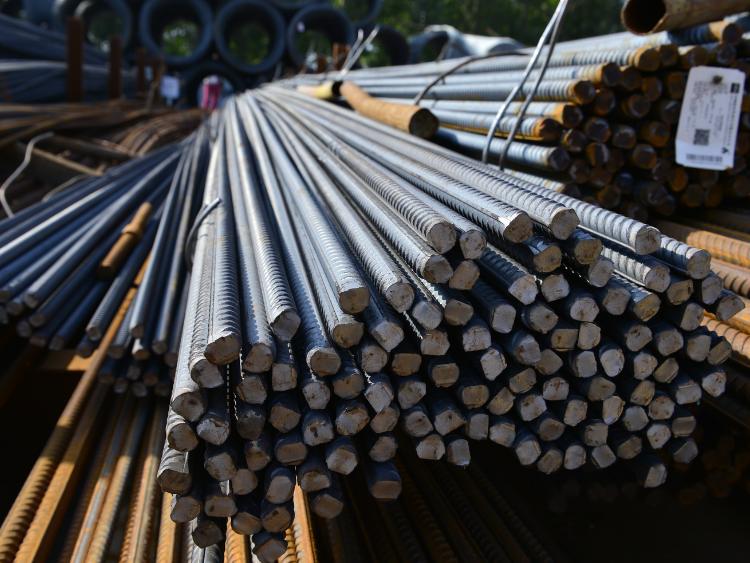
The latest announcements by German rebar mills of price hikes lifting base levels to €400/tonne ($461/t) appear to have been largely accepted by the market, Kallanish notes.
Mills are reportedly keeping their offer volumes low. In Austria, the Alpine price gap has virtually closed after the latest announcement from Italian mills.
According to German sources, the rise is seen across all domestic mills, and equals around €50/t, although in some cases more, depending on the previous level. Adding size extras of €265/t, the delivered price would come to €665/t, “and it will have to be paid,” a Ruhr-based buyer is sure.
Sources in Austria agree. The sudden hike seen in Germany at the end of last week is not being reported from Austria, where an announcement of more than €30/t came already, shortly after the US-Israeli attack on Iran.
Austrian sources also report a €30/t hike announcement from Italian mills, with the Italian domestic market striving for an increase of as much as €70/t.
To Austria, the latest offers are at €660/t delivered, so do not make much difference to the price of German mills. Observers note recent transport costs have risen to the point they eat up the price advantage of Italian mills.
The cost factor is a strong driver, with rising fuel and other energy prices looming due to the crisis in the Persian Gulf. Buyers express sympathy for the increases, but also note that demand on the market has not risen from its long-term trough.
One manager believes the current offers apply mostly to existing inventories at mills, “and once they are sold off, they might revert their prices”. He adds that fear of further hikes is the only cue that is making people buy.
However, another manager says such a move might be a good cause to spur activity. “As a trend, the customer buys when they believe prices will go up,” he says. He notes that mills are currently playing hard-to-get, offering only small volumes for sale, to keep avenues open for further increase.
European stainless flats prices gain momentum
European stainless flat prices continue to rise, with further increases expected on coils and sheets for June and July delivery compared with May offers, market participants tell Kallanish.
A large stainless steel processor says demand remains broadly unchanged from the second half of 2025, with no significant order intake increase. However, the supply chain has changed with very low imports and EU mill lead times now extending into late May.
Producers are expected to implement further price increases for cold and hot rolled coils for June and July delivery. Delivery delays are gradually improving, although some mills continue to face disruptions due to technical issues and other operational problems.
For May delivery, mills are quoting and agreeing CRC deals at €2,500–2,570/tonne ($2,877-2,960/t) delivered, while hot rolled coil is heard at around €2,300-2,350/t. HRC and CRC imports have both declined sharply in recent weeks due to CBAM, the upcoming safeguard changes and other protectionist measures. Some mills have already begun offering CRC at around €2,600/t delivered in certain markets for June delivery.
A mill source expects further increases in raw material, energy and logistics costs in the coming weeks. Another mill source says uncertainty remains over how far prices can be pushed given rapidly rising scrap costs.
According to the source, levels of around €2,600/t would only offset cost increases without restoring margins. For June and July delivery, CRC prices could rise to around €2,700/t, a third source suggests.
Another mill source highlights difficulties in securing raw materials, particularly scrap, as well as logistical constraints since the start of the conflict.
The second half of the year is expected to be seasonally weaker, and at price levels of around €2,600/t for CRC, mills would generate no profit.
At the same time, downstream demand remains subdued, with consumption still limited. Several buyers report shifting towards lower-priced products, saying they cannot afford higher price levels for larger volumes.
One buyer notes they are reducing purchasing volumes, while another comments that “distributors are not performing any better and are coming off a year of financial strain”.
Italy is lagging slightly behind northern Europe in terms of CRC prices, although the market has also seen a sharp increase in recent weeks. From levels of around €2,250/t delivered in February, buyers are now paying €2,470–2,480/t delivered for CRC.
Scrap prices are also rising. For April, mill sources and sellers expect 304 scrap to exceed €1,400/t. Mills have been using lower-cost semis and raw materials imported from Asia before the implementation of CBAM and are now turning to scrap, which is both expensive and in limited supply.
With scrap at these levels, sources expect CRC prices to move above €2,650/t in the coming weeks.
Placing orders for Asian coils would see deliveries in the third quarter, when the new safeguard measures will be in force. This, together with rising scrap prices, is providing strong support for further price increases.
One steel processor and coil producer says it is suspending sales for its products. It notes that the outlook for the first half of 2026 is largely set, with CRC prices and scrap costs continuing to rise and imports remaining limited due to protectionist measures. The outlook for the second half of the year, however, remains uncertain.
Meanwhile, service centres in northern Europe report improving activity, with a more positive order intake and increasing sheet prices to €2,700-2,750/t ex-works, Kallanish notes.

European domestic steel HRC prices steady amid import limitations, low consumption
European domestic prices for steel hot-rolled coil remained steady on Wednesday March 18 following prolonged limitations on imports resulting from trade regulations and shifting geopolitical dynamics, Fastmarkets understands.
The introduction of the EU’s Carbon Border Adjustment Mechanism (CBAM) early in the year, and the conflict in the Middle East disrupting normal trade flows, have shifted market dynamics toward domestic production.
According to market sources, prices will continue to rise as long as the US-Iran conflict persists, while market representatives also noted that real consumption in Europe was still low.
Fastmarkets’ daily steel hot-rolled coil index, domestic, exw Northern Europe, was calculated at €710.12 ($817.38) per tonne on March 18, down by €0.01 per tonne from €710.13 per tonne on March 17.
Estimates of tradable prices were heard around €700-720 per tonne ex-works, but no new trading was reported during the day.
The index was up by €4.14 per tonne week on week and by €47.31 per tonne month on month.
Meanwhile, in Italy, estimates of workable prices were heard around €700 per tonne ex-works, again with no fresh trading heard during the assessment period.
Fastmarkets’ daily steel hot-rolled coil index, domestic, exw Italy, was calculated at €698.33 per tonne on Wednesday, up by €0.83 per tonne from €697.50 per tonne on March 17.
The index was up by €9.58 per tonne week on week and by €43.33 per tonne month on month.

Salzgitter launches construction initiative to expand low-carbon steel solutions
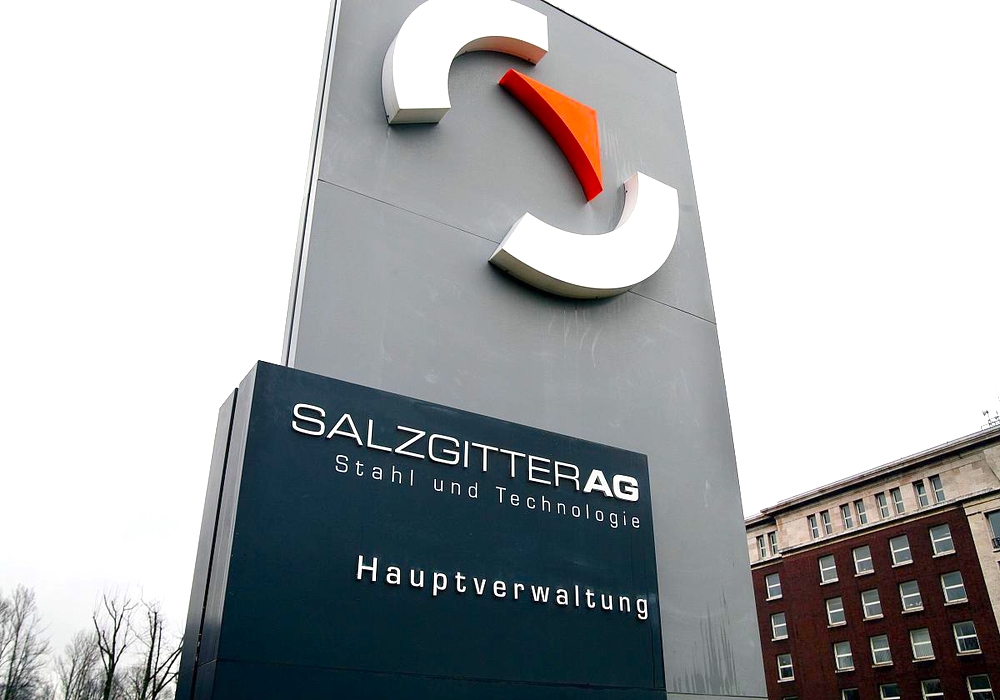
Germany-based steel producer Salzgitter AG has announced that it has launched a new “Construction Initiative” aimed at strengthening its position in the construction sector by offering integrated steel solutions and low-emission products.
The initiative is designed to provide centralized access to the group’s full service portfolio for clients, planners and construction companies.
The launch highlights the company’s strategy to align its steel offering with decarbonization goals and evolving construction sector requirements, while strengthening its role as a partner for large-scale projects.
Integrated steel solutions for construction sector
Under the initiative, Salzgitter will combine the capabilities of its group companies to deliver coordinated products, services and technical expertise for construction and infrastructure projects. The company stated that closer integration within the group will enable more efficient project execution and reliable processes, supporting customers across the construction value chain.
A key element of the initiative is the offering of low-emission steel products under the SALCOS® program, which is part of Salzgitter’s broader decarbonization strategy.
Supporting infrastructure and circular economy solutions
Salzgitter stated that the initiative combines:
- carbon-reduced steel products,
- technological expertise,
- and reliable supply chains,
while also incorporating circular economy principles into construction solutions.
The company added that the initiative is intended to support the sustainable expansion of infrastructure projects in Germany.