


Murat Eryılmaz: Turkish steel sector faces weak demand and high costs
On Tuesday, March 24, at the Istanbul Marriott Hotel Asia, during the second session of the EUROMETAL Steel Day & YİSAD Flat Steel Conference organized in collaboration with SteelOrbis, SteelOrbis general manager Murat Eryılmaz delivered a presentation titled “Turkish Steel Industry Overview” and shared key insights regarding global and local markets.
Mr. Eryılmaz noted that global steel production exceeded 1.9 billion mt in 2021, though there has been a limited decline over the past two years. Referring to China’s production policies, he stated that, despite production cut targets announced at the beginning of last year, production increased during the year but ended with a total of 960 million mt, reflecting a decline of approximately 45 million mt by the year-end. He added that he believed this decline was more a result of weak domestic demand than a planned measure, adding that China began 2026 with more aggressive production cuts, resulting in a production volume of 75.3 million mt in January, a 14 percent year-on-year decline. He emphasized that the production decline in China also affected global production, with a 6.5 percent year-on-year decline observed worldwide in January.
Signs of weakening production and capacity utilization in Turkey
In his assessment of Turkey, Mr. Eryılmaz noted that liquid steel production had reached its peak in 2021, experienced a significant decline during the 2022-23 period, and then entered a growth trend again in 2024 and 2025 with the addition of new capacity, surpassing 38 million mt. However, noting a weak start to 2026, he said that production in January stood at 3.39 million mt; while this represented a 5.8 percent increase year on year, it marked a decline compared to previous months. The primary reasons cited for this decline included export difficulties resulting from the implementation of CBAM and weak domestic demand.
Mr. Eryılmaz noted that the upward trend in electric arc furnace and blast furnace production observed in the second half of 2025 gave way to a decline at the start of the current year, adding that a downward trend in production had emerged due to the decline in exports and the weak performance of the domestic market. Looking at capacity utilization rates, he noted that flat products saw a level above 80 percent in January, but a decline to around 75 percent is expected in February due to weak exports. He added that the situation is even weaker for long products, with the capacity utilization rate falling below 60 percent.
Cost pressures are rising, while demand remains weak
Noting that costs have begun to rise again following the low levels seen in mid-2025 on the raw materials side, the SteelOrbis general manager stated that changes in iron ore and coal prices have increased blast furnace costs, while, on the scrap side, freight costs in particular have been the determining factor. He noted that hot rolled coil production costs declined for both electric arc furnaces and blast furnaces during the January-February period but rose again in March due to increases in energy and freight costs. He reported that hot rolled coil production costs for blast furnaces rose from $564/mt in February to $587-588/mt in March, while costs for electric arc furnaces rose from $588/mt to $604/mt.
The EU remains the largest supplier of scrap imports to Turkey, with the US in second place. As rising energy and fuel costs impact freight rates, making imports more difficult, it is critically important that no new restrictions are imposed, particularly on the EU side. Eryılmaz noted that slab imports have gained prominence during periods of high liquid steel production costs, adding that the primary suppliers in recent times have been Russia, Malaysia, and Algeria.
Significant increases in flat steel production capacity have been introduced over the past two years; while production reached 16.7 million mt in 2024 and 16.5 million mt in 2025, it was noted that, while a slowdown may be observed in the first months of 2026, production levels for the year as a whole could reach a higher level compared to pre-2024 levels.
Murat Eryılmaz, noting that hot rolled coil is the most important export item and that galvanized sheet ranks second, stated that the main reason for the decline in exports in the first two months of the year was CBAM. He also noted that the primary product in imports is hot rolled coil, and that antidumping measures and changes in the inward processing regime in Turkey have limited imports. Nevertheless, Eryılmaz noted that imports continue to exceed exports in Turkey’s trade balance, emphasizing that last year 6.5 million mt of exports were made against 8.94 million mt of imports, and that this balance has remained unchanged for the past seven to eight years.
Looking at the data, it appears that monthly flat steel consumption has followed a fluctuating trend; while it has occasionally exceeded the 2 million mt level, a slight slowdown has been observed over the past three months.
Addressing the risks for the coming period, Eryılmaz noted that rising protectionist trends on a global scale are one of the most significant pressures on the sector, adding that the process initiated by the US is being continued by other countries as well. He stated that the effects of CBAM, import pressure, and rising energy and freight costs will continue to be decisive factors for the sector, adding that price increases are not demand-driven but largely cost-driven.

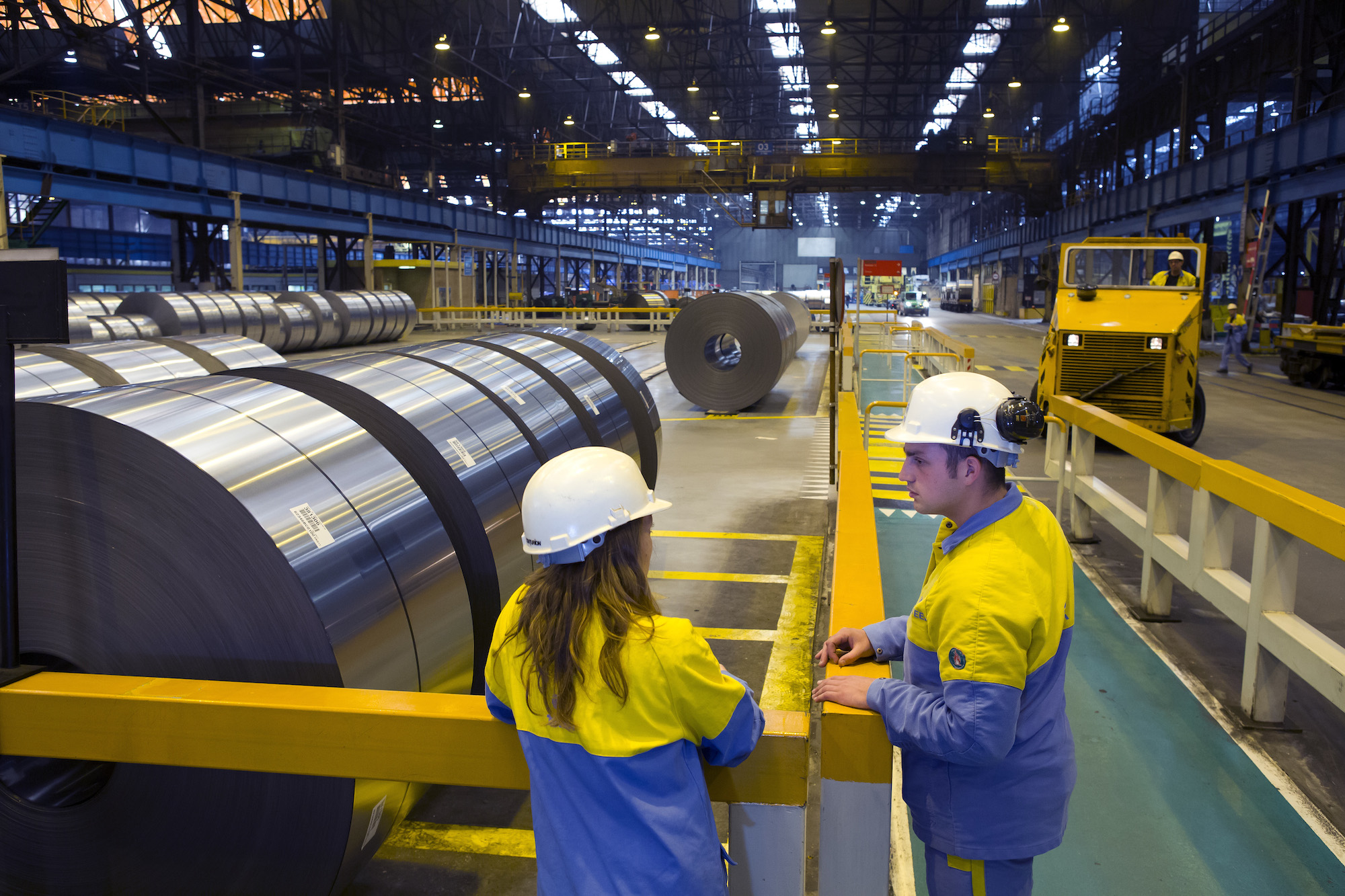
Tata Steel Nederland develops energy-efficient high-strength steel for auto sector
Tata Steel Nederland, the Dutch subsidiary of Indian steelmaker Tata Steel, has announced that it is leading a European consortium in cooperation with Volkswagen Group aimed at developing a new generation of automotive steel that improves energy efficiency in production while enhancing passenger safety.
The initiative is part of a European-funded research project involving multiple industrial and research partners.
The project is focused on developing ultra-high-strength steel for automotive applications that can be formed at lower temperatures compared to conventional grades. This approach is expected to reduce energy consumption during manufacturing, simplify production processes, and lower overall production costs.
The new steel grades are being designed for use in passive safety components, which are critical for absorbing impact during collisions. According to the project partners, the material will combine high strength, improved formability and enhanced energy absorption, supporting higher levels of passenger safety in future vehicles
Current ultra-high-strength steels often require high forming temperatures, which can lead to challenges such as coating damage or reduced corrosion-resistance
The new material aims to overcome these limitations by enabling the use of zinc coatings, improved corrosion-resistance and more efficient processing.

Tolga Yalgı: Competition is no longer between companies, but between countries’ industrial policies
Speaking at the EUROMETAL Steel Day & 11th YISAD Flat Steel Conference held at Istanbul Marriott Hotel Asia on Tuesday, March 24, in cooperation with SteelOrbis, Tolga Yalgı, CEO of Turkish steel producer Tatmetal, addressed developments in the global market and Tatmetal’s investments.
Stating that the balances established after the Second World War have shifted, giving rise to a new geopolitical and economic order, Mr. Yalgı noted that, in this new system, a model has emerged in which the market is guided by governments instead of free market dynamics, and strategic sectors are protected. Emphasizing that this transformation has fundamentally changed the rules of competition, he added that competition is no longer between companies, but between countries’ industrial policies.
He noted that the US is pursuing a strong reindustrialization policy aimed at bringing production back within its borders, with the support of trade policies to reduce dependency in critical sectors. Pointing out that China’s approximate 30 percent share in global production significantly affects market balances, Mr. Yalgı noted that China’s high capacity creates structural pressure not only through price competition but also through global oversupply. Meanwhile, the European Union is reshaping its industrial policy through mechanisms such as carbon regulations, the emissions trading system, and the Carbon Border Adjustment Mechanism. According to Yalgı, this approach indicates that production is being redefined not only by costs but also by environmental criteria.
European market remains critical for Turkey
While the European market continues to play a decisive role in Turkey’s steel exports, factors such as geographical proximity, logistical advantages and the Customs Union Agreement provide significant competitive advantages. Mr. Yalgı stated that Turkey stands out with its fast delivery capabilities and electric arc furnace-based production, adding that existing trade relations offer a strong foundation for the Turkish steel industry. However, he warned that the EU’s protectionist measures pose the greatest risks, particularly planned quota reductions and higher tariff applications set to take effect as of June 30, 2026, which could directly impact Turkey’s exports.
Energy and geopolitical risks come to the forefront
Highlighting that rising geopolitical risks in the Middle East are creating upward pressure on energy costs and supply chains, Yalgı noted that increases in energy prices and potential logistical disruptions could affect production continuity, making energy supply security a strategic issue for the sector.
Tatmetal’s position
Concluding his remarks, Yalgı outlined Tatmetal’s position and investments, stating that the company, with an annual production capacity of 1.5 million mt, exports to 80 countries across six continents. He added that renewable energy investments are among the company’s strategic priorities, noting that solar power plants with a total installed capacity of 110,000 MWp are expected to generate 176,000 MWh of electricity in 2026, while wind power plants with a total installed capacity of 66 MWm are expected to produce 220,000 MWh annually.
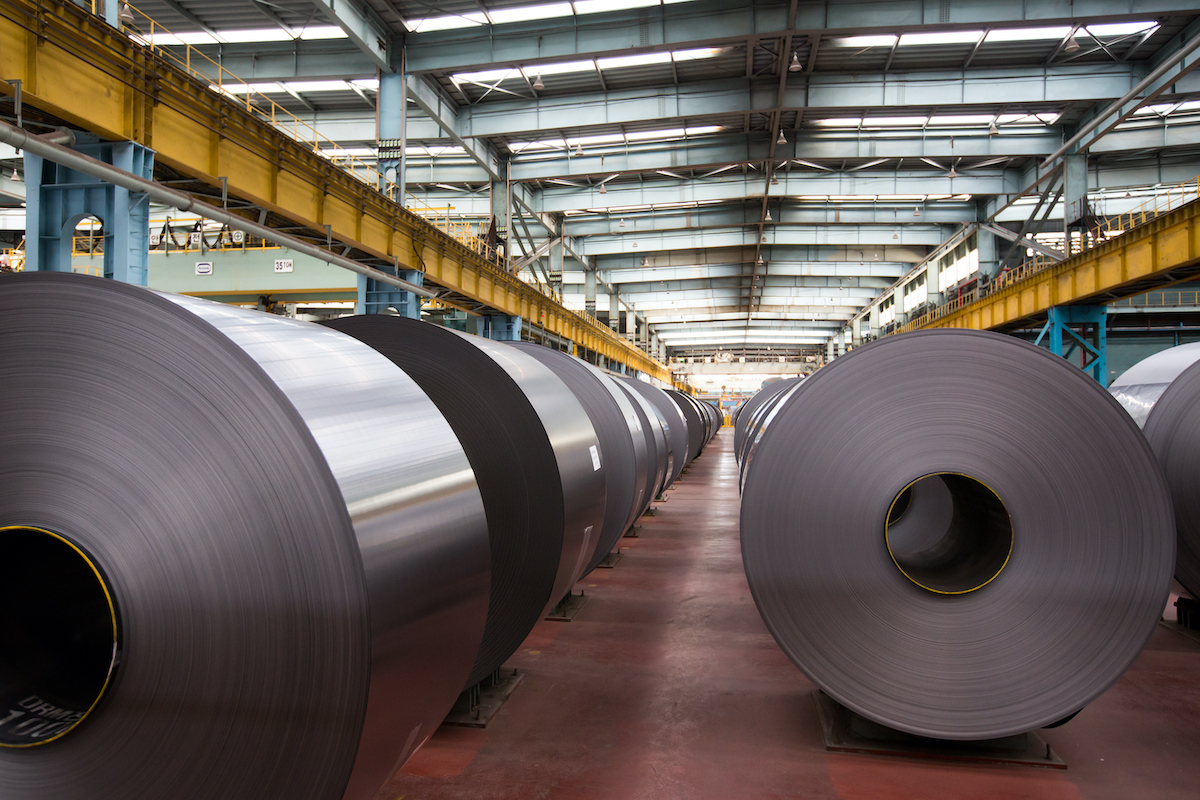
European HRC prices steady as tight imports underpin near-term sentiment
European hot-rolled coil prices held steady on Tuesday March 24, with tight domestic and import supply supporting upbeat sentiment near term, sources told Fastmarkets.
European suppliers were largely sold out of coil for May delivery, with some also sold out of second-quarter volumes overall.
In Germany, one local supplier had no spot availability of HRC, sources said.
Other mills were heard offering coil for May-June delivery at €730 ($845) per tonne base delivered.
One leading European supplier was heard to have achieved €720-730 per tonne ex-works for limited HRC tonnages — more or less in line with target offers for May delivery — but was not in a rush to revise offers just yet, sources said.
A target offer from a Benelux supplier for June volumes was reported at €725 per tonne ex-works.
“Most likely the market won’t see any major changes before Easter [celebrated on April 5], but toward Tube and Wire Trade fair [held on April 13-17 in Dusseldorf, Germany] European mills might reconsider offers upward again – it’s a sellers’ market now,” a German buyer said.
Buyers’ estimates of achievable prices in Germany, the Benelux area and the Nordics were heard at €700-720 per tonne ex-works on Tuesday.
Buyers were pivoting to European steel lately as import risks mounted, driven by CBAM cost uncertainty, volatile freight, longer lead times amid Iran-US-Israel tensions, and looming safeguards.
As a result, Fastmarkets’ daily steel hot-rolled coil index, domestic, exw Northern Europe was calculated at €716.00 per tonne on Tuesday, down slightly by €1.50 per tonne from €717.50 per tonne on Monday March 23.
The index was up by €5.87 per tonne week on week and by €34.12 per tonne month on month.
In the secondary market, meanwhile, steel-service centers (SSCs) were pushing HR sheet prices toward €800 per tonne CPT for 4mm S235 material, with deals already reported at that level. Sporadic sales around €760-770 per tonne CPT and lower, however, continued to weigh on price stability.
According to SSCs, prices needed to climb to €820-830 per tonne CPT to reflect higher HRC costs, but firm resistance from end users remained, leaving the downstream market lagging the HRC uptrend.
In Southern Europe, meanwhile, the market situation was similar.
Fastmarkets’ steel hot-rolled coil index, domestic, exw Italy was calculated at €697.50 per tonne on March 24, up slightly from €695.63 per tonne on March 23.
The index stable week on week and up by €31.25 per tonne month on month.
Local suppliers were heard offering HRC around €700-710 per tonne ex-works, with May lead times still said available.
Estimates of tradable prices varied between €690 per tonne and €700 per tonne ex-works on Tuesday, but buying was limited.
“Everyone is cautious with new bookings, purchasing only what’s necessary. HRC increases don’t catch up with derivatives prices yet,” a buyer in Italy said.
Import prices, meanwhile, have increased over the past couple of weeks, driven by logistical complexities and soaring freight rates because of the conflict in the Middle East.
New import offers were limited, with buyer considering North African and Turkish suppliers as relatively “reliable” origins, while cargoes from Asia were mostly offered on FOB basis since suppliers were trying to avoid exposure to volatile transport costs.
An Algerian mill was heard to have sold cargoes to Europe recently at around $715 per tonne FOB and was said to be nearly sold out of second-quarter cargoes.
Offers from Turkish mills were heard around €640-655 per tonne CFR, including the anti-dumping duty.


Lars Hillmann: EU to replace safeguards with permanent steel trade measure
Speaking at the EUROMETAL Steel Day & 11th YISAD Flat Steel Conference held at Istanbul Marriott Hotel Asia on Tuesday, March 24, in cooperation with SteelOrbis, Lars Hillmann, lawyer/counsel at law firm Cattwyk, presented an overview of the legal framework and expected market impact of the EU’s post-safeguard steel trade measures.
Recalling that the current EU steel safeguard system, in force since 2018, will expire on June 20, 2026, reaching the maximum eight-year duration allowed under WTO rules, Mr. Hillman noted that the European Commission is preparing a new trade measure that will replace the existing safeguard system.
New measure to significantly reduce quotas, to double tariffs to 50 percent
The proposal foresees a total quota volume of around 18.3 million mt per year, compared to approximately 34 million mt under the current measures, marking a 47 percent reduction in import volumes. The new framework is expected to introduce an out-of-quota tariff of 50 percent, doubling the current 25 percent duty applied under safeguards. Hillmann noted that this change would represent a significant tightening of EU trade protection measures for steel imports.
Unlike the current safeguard measures, the new measure is designed to be permanent, with no predefined expiry. “This is a permanent measure… We have a permanent measure because there is a permanent problem,” he said. The new system is expected to enter into force on July 1, 2026, immediately after the existing safeguards lapse.
“Melt and pour” rule to reshape origin requirements
Hillmann highlighted the introduction of a “melt and pour” rule, under which importers will be required to prove the country where the steel was originally melted and cast. According to Hillman, the “melt and pour” criteria will not be another part of “the rules of origin”, it will be independent of that. This requirement will determine access to country-specific quotas and is expected to increase administrative complexity at customs level.
Meanwhile, the proposed system would apply to all countries (erga omnes), with only EEA countries exempt. Hillmann underlined that FTA partners would be included, and developing country exemptions would be removed, representing a broader scope compared to the current safeguard regime.
He noted that negotiations with multiple WTO members would be required, compensation may need to be offered, and trading partners could respond with retaliatory measures if no agreement is reached. “If there is no agreement, trading partners are free to implement countermeasures as they see fit,” he stated.

Cosmin Bakai: European auto supply chain under pressure from China, low growth and rising component imports
Speaking at the EUROMETAL Steel Day & YISAD Flat Steel Conference held at the Istanbul Marriott Hotel Asia on Tuesday, March 24, in cooperation with SteelOrbis, Cosmin Bakai, global director of raw material supply chain development at automotive safety components manufacturer Autoliv, stated that the European automotive components sector is under pressure from rising Chinese competition, increasing imports and geopolitical uncertainties. Mr. Bakai indicated that global light vehicle production is expected to grow by around 1.3 percent by 2030, while growth in Europe will remain much more limited, with the market generally displaying a stagnant outlook.
Global automotive market – growth to remain limited
Commenting on the sectoral outlook, Bakai said that annual global vehicle production and sales stand at around 100 million units, but production is not expected to return to pre-Covid-19 levels. From a European perspective, he emphasized that the market is gradually shrinking, noting that exports of light vehicles from Europe are showing a flat or weak trend, while import pressure is increasing. Bakai also highlighted that European light vehicle production is contracting due to imports, traditional EU-based manufacturers are losing market share, and China is steadily gaining a larger share of the global market.
Chinese investments in Europe and scale dynamics
Addressing the investment plans of Chinese automotive manufacturers in Europe, Mr. Bakai said that new facilities are being planned in countries such as Italy, Poland, Hungary, Spain and Turkey. However, he underlined that these investments will initially be relatively small in scale. According to Bakai, Chinese players typically start with plants of around 50,000 units in Europe, then move to assembly structures of 100,000 units, while full-scale facilities emerge at capacity levels of around 300,000 units. Therefore, he noted that such investments may not immediately generate large tonnage demand in components, safety equipment and steel processing, and that it will take time for Chinese players to establish themselves in local markets.
Component trade outpacing vehicle trade
Bakai stated that the main pressure stems not only from vehicle trade but also from the transformation on the components side. He pointed out that global component trade is growing much faster than the vehicle market, adding that the volume of China-origin components imported into Europe reached $8 billion last year, nearly doubling compared to three years ago.
Referring to protectionist measures in the US, Bakai said that the European Union exports approximately $11 billion worth of components annually to the US, while tariffs are putting pressure on this flow. He also noted that high duties on steel-based components may push Chinese suppliers to seek alternative markets, which could further increase competitive pressure on Europe. In his presentation, geopolitical instability, protectionism, tariffs and energy costs were listed among the key risk areas facing the sector.
Short- and medium-term outlook for Europe
Bakai added that he does not expect a clear recovery for the European steel industry in the short and medium term. He stated that European light vehicle production is shrinking due to import pressure, while intense competition within China is creating increasingly strong competitors. He concluded that future decisions regarding industry and trade policies in Europe will be decisive for the sector’s trajectory.

Anıl Akalın: CBAM to increase costs and pressure EU-bound exports
Speaking at the EUROMETAL Steel Day & YISAD Flat Steel Conference, organized in collaboration with SteelOrbis at the Istanbul Marriott Hotel Asia on Tuesday, March 24, Anıl Akalın, environmental markets, country president Turkey & GCC at UK-based consulting company Redshaw Advisors, stated that the EU’s Carbon Border Adjustment Mechanism (CBAM) will significantly increase costs and reshape trade flows for exporters targeting the European market.
Akalın noted that the definitive phase of CBAM began on January 1, 2026, marking the transition toward full financial implementation of the mechanism.
Gradual phase-in until 2034
According to Akalın, CBAM certificates will become available during 2026, while the first certificate surrender deadline is set for September 30, 2027.
The mechanism will be gradually phased in until 2034, when 100 percent of embedded emissions will be covered, in parallel with the full phase-out of free allowances under the EU Emissions Trading System. Non-compliance under CBAM will result in penalties of €100/mt, while failure to obtain declarant status may lead to fines of up to €500/mt.
Scope to expand across sectors
CBAM is expected to expand its scope over time. By 2028, sectors such as white goods, automotive, metals and machinery are expected to be included, with downstream industries such as plastics and chemicals likely to follow in later phases. Akalın emphasized that the mechanism will become increasingly comprehensive, with the full cost burden ultimately borne by producers.
Carbon prices expected to rise in long term
Akalın highlighted that CBAM certificate prices are not directly equal to EU ETS allowance prices but are derived from similar market mechanisms. EU carbon prices have shown significant volatility over the past decade, and current lower levels should not be interpreted as a long-term trend.
Analysts expect carbon prices to increase over time, potentially reaching €200 as the market approaches the 2030s. By 2050, declining supply of emission allowances is expected to support sustained high carbon prices.
Significant cost impact for Turkish exports
According to estimates shared during the presentation, Turkish steel exports to the EU could face additional costs of around 11 percent of product prices by 2026.
For Turkey, total CBAM-related costs are projected to reach €771 million in 2026 and increase to approximately €2.5 billion annually by 2032. This could result in a reduction of EU-bound exports by around two to three percent over the same period. Aluminum and cement exports are expected to face even higher cost impacts.
Verified emissions critical to cost management
Akalın also highlighted the importance of emissions verification in reducing compliance costs. Based on a model calculation for 50,000 mt of flat steel imports, CBAM costs for 2026 are estimated at approximately €5.8 million when default emission values are applied, compared to around €1.4 million under verified emissions.
Even after adjusting for carbon costs already paid at origin, the cost remains significantly higher under default values at approximately €4.8 million, versus about €1.1 million under verified data.
These findings underline the importance of accurate emissions reporting and verification in managing CBAM-related cost exposure for exporters.

Alexander Julius: EU steel measures and CBAM driving price increases
Speaking at the EUROMETAL Steel Day & YISAD Flat Steel Conference held in Istanbul on March 24, Alexander Julius, president of EUROMETAL, stated that upcoming EU steel trade measures and the Carbon Border Adjustment Mechanism (CBAM) are expected to drive steel prices higher in Europe.
According to Julius, the new EU measures, set to replace existing safeguards after June 30, 2026, and to take effect from July 1, 2026, will significantly restrict supply. The planned halving of import quotas is expected to create a unilateral shortage in the market.
High duties seen as major barrier to trade
Julius emphasized that the 50 percent out-of-quota duty is “non-digestible” for market participants. Once import quotas are exhausted, companies importing steel into the EU, including from Turkey, would be required to pay the full duty, which cannot be absorbed or passed on to customers. He described this as a critical issue for future trade relations, particularly given the quarterly quota system, where importers may face duties early in the period.
CBAM adding cost pressure across value chain
In addition to trade measures, Julius highlighted that CBAM is already contributing to rising steel prices in Europe. He noted that the mechanism increases costs not only for European steel producers but also for importers and end-users, as carbon costs are passed through the value chain. At the same time, uncertainties remain regarding emission calculation methodologies and regulatory definitions, creating additional challenges for market participants.
Steel-based imports raise competitiveness concerns
Julius also pointed to the growing inflow of steel-based products into the EU, which are often not subject to the same duties, carbon costs or safeguard measures. This situation is seen as undermining the competitiveness of European manufacturing, as companies increasingly relocate production outside the EU and re-import finished components. According to industry data, the automotive sector accounts for around 40 percent of such imports.
Turkish exporters face uncertainty
From the perspective of Turkish exporters, Julius noted that uncertainty among EU buyers remains high due to quota limitations and the risk of 50 percent duties. He suggested that an export licensing system aligned with EU quota levels, similar to those used by South Korea and Taiwan, could help stabilize trade flows. Such a system would ensure that exports do not exceed quota volumes, allowing European customers to avoid unexpected duties.
Global protectionism intensifies trade pressure
Julius also highlighted the broader global context, noting that protectionist measures are increasing. The United States has expanded its Section 232 tariffs to include steel-based products with duties of up to 50 percent, with Canada adopting similar measures. These developments are expected to redirect global trade flows toward the EU market, increasing competitive pressure.
Structural shifts in EU steel market
Within Europe, the steel service center sector continues to process around 46 million mt annually, with overall capacity remaining relatively stable.
However, production is increasingly shifting toward higher-value products, while lower-value manufacturing activities are being relocated into the region. Industry consolidation is ongoing, with larger players expanding their market share and investing in advanced processing technologies.
Decarbonization remains key focus
Despite these challenges, decarbonization continues to be a central priority across the steel value chain.
Companies are maintaining investments in emissions reduction, renewable energy and logistics improvements, while demand for low-carbon steel products remains present in certain end-user segments.

EUROMETAL Steel Day and 11th YİSAD Flat Steel Conference brings industry representatives together in Istanbul
On Tuesday, March 24, the EUROMETAL Steel Day & YİSAD Flat Steel Conference, organized in collaboration with SteelOrbis at the Istanbul Marriott Hotel Asia, kicked off with nearly 400 participants.
Now in its 11th year, the event – which has gained an international profile in recent years with Eurometal’s inclusion – was sponsored by Tatmetal, with other sponsors including Ağır Haddecilik, Yatırım Finansman, Gökmetal and Yametaş.
Delivering the opening remarks, Tayfun İşeri, chairman of Turkey’s Association of Flat Steel Importers and Manufacturers (YISAD), expressed his satisfaction with the strong interest in the conference despite the challenging global conditions, noting that it had created a productive platform for speakers to share their knowledge and experience.
Touching on global developments, Mr. İşeri noted that, in recent years, the flat steel sector has faced numerous challenges, including the Russia-Ukraine war, the earthquakes in Turkey, and developments in Gaza and the Middle East. Emphasizing that trade costs have risen and protectionist tendencies have strengthened during this period, he said that expectations regarding the fight against inflation and interest rate cuts also appear to have been postponed.
Noting that there are serious challenges regarding demand in the flat steel sector, the YİSAD chairman stated that many companies have begun to slow down their planned investments. Stating that finding a short-term solution to the current problems is difficult, İşeri added that such platforms as the EUROMETAL-YİSAD conference hold great importance in bringing sectoral players together on common ground.