


ArcelorMittal and Renault partner on low-carbon steel for EV production
Luxembourg-based steelmaker ArcelorMittal has announced a partnership with French automaker Renault Group focused on sustainable mobility, marked by the start of deliveries of low-emission steel for electric vehicle (EV) production.
Since September 2025, ArcelorMittal has been supplying its Usibor® 1500 XCarb® steel for five hot-stamped structural components used in several Renault models.
Low-carbon steel production with EAF route
The steel is produced via an electric arc furnace route using 75 percent recycled content and powered entirely by renewable electricity. This production method enables a reduction in carbon emissions of nearly 70 percent compared to conventional blast furnace-based steelmaking, supporting the decarbonization of the automotive supply chain.
For several years, the Renault Group has used Usibor® 1500 for its body structural components. Now, as part of its broader decarbonization strategy, Renault has collaborated with ArcelorMittal to validate multiple steel grades developed under the XCarb® initiative.
The newly approved XCarb® version of Usibor® 1500 maintains the same mechanical performance and safety characteristics as conventional grades while significantly reducing the carbon footprint of vehicle components.
The use of advanced low-carbon steel supports both emissions reduction targets and lightweight vehicle design, contributing to improved efficiency in electric vehicles.
Author: SteelOrbis Editorial Team


Turkish steel sector: CBAM default values fail to reflect low-carbon production
The Turkish steel sector has stated that the default emission values under the EU’s Carbon Border Adjustment Mechanism do not accurately reflect Turkey’s low-carbon production structure, calling for a reassessment of the methodology.
Yalçın Ertan, chairman of the Aegean Ferrous and Non-Ferrous Metals Exporters Association, emphasized that CBAM has become a key policy tool in a global trade environment increasingly shaped by carbon considerations.
Default values risk distorting competitiveness
Ertan noted that, for Turkey’s export-oriented steel industry, CBAM is not only an environmental mechanism but also a strategic factor directly impacting competitiveness in the EU market.
While the mechanism aims to prevent carbon leakage and support sustainable production, he stressed that calculation methodologies must reflect the actual production conditions of exporting countries.
EAF-based production structure overlooked
According to Ertan, approximately 70 percent of Turkey’s steel production is carried out via the electric arc furnace route, which relies heavily on scrap and results in significantly lower carbon emissions compared to blast furnace-based production. However, in cases where verified emissions data are not submitted, default emission values are applied. He argued that these default values appear to be based on higher-emission production routes, failing to reflect Turkey’s actual carbon intensity. In some cases, Turkey’s assigned values are reported to be higher than those of regions where production is predominantly based on blast furnace routes, creating a clear competitive disadvantage.
Ertan also highlighted ongoing uncertainty regarding accredited verification bodies required under CBAM. Although the EU mandates verification of emissions data, the institutions authorized to carry out this process have not yet been clearly defined. This could limit companies’ ability to access verification services in a timely manner, potentially leading to additional costs and operational challenges.
Call for alignment with real data
The Turkish steel sector has called for emissions to be calculated based on verified, plant-level data in line with CBAM methodology. Ertan stressed that recognizing Turkey’s EAF-based production structure is essential to preserving export competitiveness, while also urging stronger institutional engagement to address verification issues and ensure that Turkey’s position is effectively represented in international discussions.
Author: SteelOrbis Editorial Team

Romania’s Liberty Galati prepares restart after failed sale, backed by state support
Romania’s sole flat steel producer Liberty Galati is preparing to resume operations after nearly seven months of inactivity, following a failed sale process in which the asset was deemed overpriced and failed to attract buyers. After the unsuccessful process, the Romanian government stepped in, declaring the company an operator of strategic economic interest and enabling financial support measures aimed at stabilizing operations.
According to official statements and local media reports, the decision allows the company to access state-backed funds through the national Guarantee Fund to cover unpaid wages for nearly 3,000 employees. The payment backlog had built up after the company suspended most of its operations in recent months, placing a large share of its workforce on technical unemployment.
Preparations to restart operations at the Galati steelworks are reported to have begun, with market sources indicating that any restart is likely to be gradual. Initial activity is expected to focus on rolling mills, mainly under tolling arrangements. However, sentiment in the market remains cautious. Despite the state intervention, Liberty Galati is still seen as being in a debtor position toward both the state and private counterparties. Combined with previous disruptions in order fulfillment and delayed payments, this continues to weigh on the company’s credibility and raises doubts over its ability to secure new orders in the near term.
“Given the previous issues with unpaid obligations and operational disruptions, it remains unclear how quickly the company can regain market trust and attract fresh orders,” a regional source told SteelOrbis.
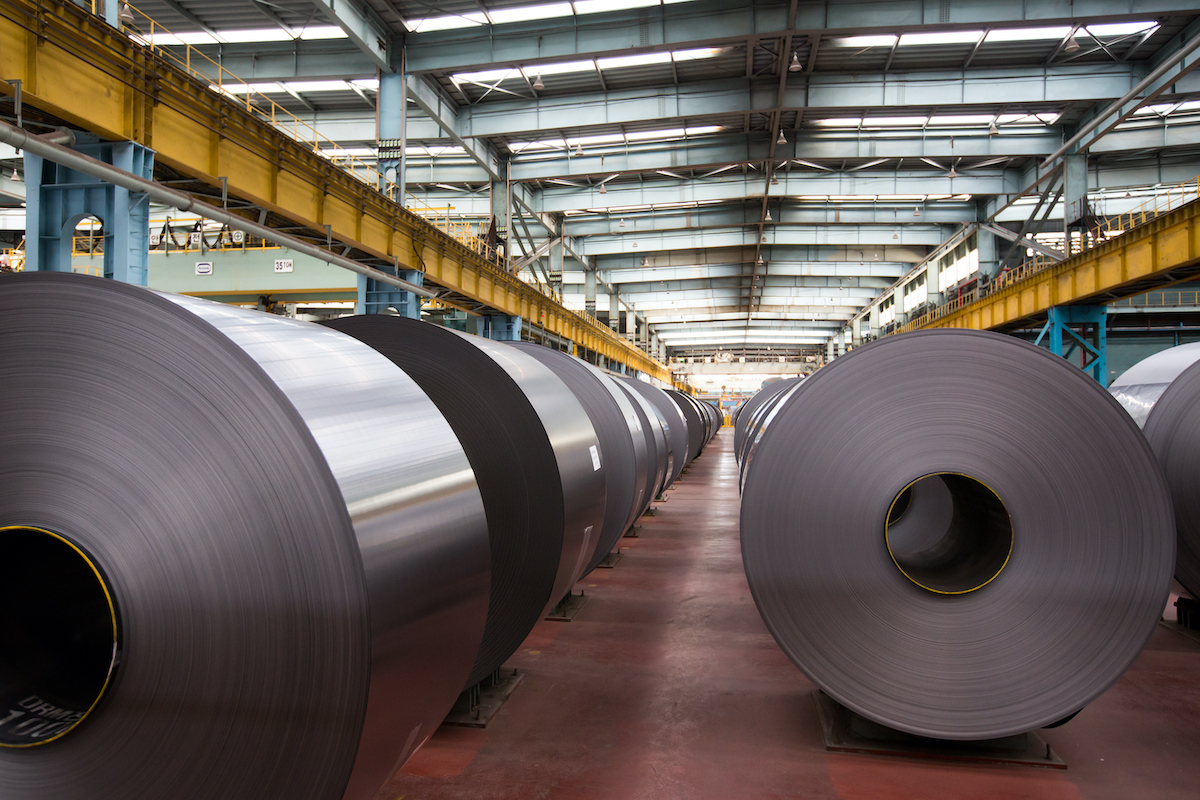
European domestic HRC prices steady amid subdued activity; imports show mixed trends
Domestic hot-rolled coil (HRC) prices in Northern Europe and in Italy were broadly unchanged on Wednesday April 1, with limited trading activity amid prolonged uncertainty in the market and the Easter holidays fast approaching, Fastmarkets heard.
“Buyers don’t know if prices will go up further, so they don’t want to overspend” a source said but added that persistent limitations with imports might cause prices to go higher.
However, no new trading was reported during the day for May-June delivery coil, with fewer orders and enquiries in the market in the run-up to the holiday, sources said.
Fastmarkets’ daily steel hot-rolled coil index domestic, exw Northern Europe was calculated at €711.50 ($818.48) per tonne on April 1, unchanged day on day.
The index was down by €3.50 per tonne week on week and up by €25.43 per tonne month on month.
The Italian market also remained quiet on April 1, with no new transaction activity reported during the day.
Market participants still estimated workable levels for domestic HRC at €690-700 per tonne ex-works.
Fastmarkets’ steel hot-rolled coil index domestic, exw Italy was calculated at €695 per tonne on Wednesday, also unchanged day on day.
The index was down by €2.14 week on week, but up by €24.37 per tonne month on month.
According to sources, real consumption remains weak, with recent upward trends linked to the introduction of new trade regulations, like the EU’s Carbon Border Adjustment Mechanism (CBAM), which has limited import volumes while favoring domestic production.
Meanwhile, prices for imported HRC decreased in parts of the market with some assessments reflecting lower offer levels, while others tightened at the lower end.
Fastmarkets’ weekly price assessment for steel hot-rolled coil import, cfr main port Southern Europe was €610-640 per tonne on Wednesday, decreasing from €640-690 per tonne the previous week.
A transaction was reported from Turkey to Southern Europe at €610-620 per tonne CFR, while offers from Turkey and Algeria were heard at €610-640 per tonne CFR.
On the other hand, prices for imported HRC to Northern Europe narrowed up in the week to April 1, with offers from Turkey heard at €620-685 per tonne CFR.
Therefore, Fastmarkets’ weekly price assessment for steel hot-rolled coil import, cfr main port Northern Europe was €620-685 per tonne, narrowing up from €608-685 per tonne the previous week.
The DDP assessment for HRC imports to Southern Europe also decreased amid reports of lower offers from Asian origins heard around €690 per tonne DDP, while offers from Turkey were heard around €720 per tonne DDP.
Fastmarkets’ weekly price assessment for steel hot-rolled coil import, ddp Southern Europe was €690-720 per tonne on April 1, decreasing from €720-740 per tonne the previous week.
The DDP assessment for imported HRC to Northern Europe was unchanged.

CBAM introduces uncertainty, adjustment challenges for Brazilian exporters
Brazilian industrial exporters continued to face a high degree of uncertainty following the entry into force of the EU’s Carbon Border Adjustment Mechanism (CBAM), as key aspects of the system — including methodologies, certification processes and compliance requirements — remained under development.
Three months after implementation began, market participants said there is still limited clarity about how the mechanism would operate in practice, reinforcing challenges for companies seeking to adapt to the new framework.
Meanwhile, the National Confederation of Industry (CNI), the entity representing Brazilian industry, told Fastmarkets that the mechanism is already creating challenges.
“Companies that are not prepared to measure and report their emissions may face additional costs and difficulties in accessing the European market,” Davi Bomtempo, superintendent of Environment and Sustainability at CNI, aid on March 11, adding that the ability to provide verifiable carbon data has become a key condition for maintaining export competitiveness.
The EU’s instrument to apply a carbon price on imported products ensures that foreign producers face costs equivalent to those paid by European companies under the bloc’s emissions trading system.
Importers must now report and verify the emissions embedded in products such as steel and aluminium and purchase corresponding certificates, effectively extending carbon pricing to international trade.
The impact is expected to be concentrated in emissions-intensive sectors, with iron, steel and aluminium among the most exposed, given their relevance in exports to the EU, according to the CNI.
Short-term impact limited by unclear CBAM rules
Despite the formal requirements, the verification infrastructure is not yet fully operational, according to industry sources.
“People are still being trained, and methodologies and calculations are still being defined,” Silvia Nascimento, chief executive officer of the green long steel producer Aço Verde do Brasil (AVB), told Fastmarkets on March 27.
AVB produces long steel products sustainably, being the steelmaker with the lowest CO2 emissions per tonne of steel produced in Brazil, according to GHG Protocol data.
The company produces rebar and wire rod and aims to export these products to Europe in the future.
Fastmarkets’ monthly price assessment for steel wire rod (mesh quality) export, fob main port Latin America was $545-585 per tonne on March 6, up from $525-545 per tonne in the previous month.
For now, through CBF Indústria de Gusa, one of Brazil’s pig iron producers, they produce 260,000-300,000 tonnes of pig iron per year, with 50% destined for Europe.
Fastmarkets’ weekly price assessment for pig iron export, fob port of Vitoria/Rio, Brazil was $460 per tonne on March 27, up from $450-465 per tonne on March 20.
And Fastmarkets’ weekly price assessment for pig iron, export, fob Ponta da Madeira, Brazil was $455-475 per tonne on March 27, up from $450-460 per tonne a week earlier.
“We’ve already reached out to certifiers, such as SGS and Bureau Veritas, with processes expected to move forward around September or October this year,” Nascimento added, noting that no companies have been certified so far. “Some say certain products will be included, others say they won’t. So everything is still very preliminary at this stage.”
The emissions verification process is expected to begin in the fourth quarter of 2026, while the first CBAM Certificate price will be published on Tuesday April 7, the European Commission reported.
This lack of clarity has made it difficult for exporters to assess potential costs or define adjustment strategies, particularly as certification requirements remain unclear.
“There may be an advantage [for Brazilian exporters], but no one can clearly quantify how significant that advantage will be. It all depends on what the final certification requirements look like,” Nascimento said.
Market participants also pointed to uncertainty regarding the timing of costs. While CBAM entered into force in 2026, payments for that year’s imports are expected to be settled in 2027, with charges applied retroactively from January 1, 2026, adding another layer of complexity for exporters.
In terms of product-level impact, market participants see limited immediate commercial shifts, as, according to Nascimento, “at the moment, it doesn’t make much sense commercially.”
Domestic regulation gains urgency under CBAM
The mechanism is also reshaping the domestic regulatory debate, reinforcing pressure for the operationalization of Brazil’s regulated carbon market. Under CBAM rules, importers can reduce the number of certificates purchased if it is proven that a carbon price has already been paid in the country of origin.
“Countries with explicit carbon pricing will have a competitive advantage over those that do not,” the CNI said, noting that the mechanism reinforces the need to advance Brazil’s regulated carbon market to avoid the transfer of resources abroad.
The Brazilian government, in turn, is moving forward with the implementation of the system following the enactment of the Brazilian Emissions Trading System (SBCE) law in December 2024, currently focusing on defining governance, sectoral scope and monitoring, reporting and verification (MRV) rules.
“We are in the phase of structuring the pillars of the system, including governance, scope definition and the development of the central registry and MRV criteria,” Cristina Reis, the country’s extraordinary secretary for the Carbon Market, said in an interview with Fastmarkets on March 16.
Reis noted that key steps are expected to be completed in 2026, with some measures already planned for the first half of the year.
For Bomtempo, a central point is advancing the implementation of the SBCE and providing legal certainty to the system. “To achieve this, it will be important to publish the implementing regulations by the end of 2026 and to structure the rules for monitoring, reporting and verification of emissions,” he said.
He stressed that the CNI was selected to represent the industrial sector in the Permanent Technical Advisory Committee of the SBCE, which will play an important role in defining the rules of Brazil’s carbon market.
The government said it is seeking to align the system with international carbon markets, according to Reis, including interoperability of MRV rules and emissions accounting, as part of a broader strategy to strengthen competitiveness and facilitate integration with other jurisdictions.
Worthington Steel secures majority stake in Kloeckner
Worthington Steel has exceeded the minimum acceptance threshold in its voluntary public tender offer for German steel and metal distributor Kloeckner & Co SE, marking a decisive step in its planned acquisition.
At the close of the initial acceptance period on 26 March, Worthington Steel secured approximately 58.8% of Kloeckner’s issued share capital, surpassing the required 57.5% threshold, Kallanish determines from company statement. This total includes both shares tendered into the offer and voting instruments held by Worthington Steel GmbH, the wholly owned German subsidiary established for the transaction.
“We are pleased with the strong support from shareholders during the initial acceptance period, which brings us an important step closer to completing the transaction,” says Geoff Gilmore, Worthington Steel president and chief executive.
The company confirms that shareholders who have not yet accepted may still participate during the additional acceptance period, open through 14 April.
“As we enter the additional acceptance period, we are delighted to provide shareholders with another opportunity to participate in the offer.” says Gilmore.
Worthington Steel announced its intention to acquire Kloeckner in January through an all‑cash offer of €11/share ($12.70/share), representing a 98% premium over Kloeckner’s undisturbed three‑month volume‑weighted average price as of 5 December. The offer document was published on 5 February and amended to a lower threshold on 10 March.
Following completion of the transaction, Worthington plans to pursue a domination and profit and loss transfer agreement (DPLTA) with Kloeckner. The deal remains subject to regulatory approval, with completion expected in the second half of 2026.
Worthington Steel, based in Columbus, Ohio, is one of North America’s largest metals processors with 37 facilities in seven US states and ten countries. The company specialises in carbon flat‑rolled steel, electrical steel laminations and tailor‑welded solutions, supporting automotive, energy and industrial markets.
Kloeckner, headquartered in Duisburg, Germany, is a major producer‑independent steel and metal distributor with a network of about 110 service and warehouse sites across North America and within the EU, Germany, Austria and Switzerland.
Both companies serve thousands of customers and each employs about 6,000 people. An acquisition integration plan and its effect on the workforce has not yet been established.


Renault increases use of ArcelorMittal’s low carbon steel
Renault has started using ArcelorMittal’s low-carbon emission steel in three of its electric vehicle models, Kallanish learns from the steelmaker.
Deliveries of the steel grade include five hot-stamped structural parts used on the Renault 5 E-Tech, the Alpine A290 and the Renault 4 E-Tech. The parts are fabricated at the Douai plant, in Northern France, with the Renault 5 and Alpine A290 assembled at Renault’s Ampère plant in Douai and the Renault 4 assembled at the Ampère plant in Maubeuge, the steelmaker says in a note.
The automotive producer has been using standard Usibor 1500 steel for body structural components for its high tensile strength and weight savings of up to 40% compared to cold-stamped steel. The XCarb version retains the same mechanical properties while delivering a significantly lower CO2 footprint via the use of an electric arc furnace (EAF) and 75% recycled scrap with 100% renewable electricity.
The validation of XCarb grades by Renault is part of a broader collaboration with ArcelorMittal to qualify low-carbon steel grades across the carmaker’s supply chain, a joint note says.
The use of the low-carbon emissions steel was first explored as part of the Renault Emblème concept car, unveiled in early 2025, a collaborative innovation project with ArcelorMittal showcasing how advanced steel solutions could combine safety, lightweighting and low-carbon production.
Several solutions developed for the Emblème project are now moving into serial production, with multiple parts using reduced carbon emission materials entering the manufacturing line.
In 2023 ArcelorMittal teamed up with French automotive component maker Lisi Automotive to build components and assembly systems using Usibor with the aim of reducing carbon footprint in the vehicle manufacturing process.

Benteler improves operational productivity with new technology
Benteler group, a leading manufacturer of seamless and welded tubes, has placed an order with SMS group to upgrade its stretch-reducing mill (SRM) in Paderborn-Schloss Neuhaus, Germany, Kallanish notes.
This upgrade ensures long term system availability, improves product quality, and strengthens the plant’s competitiveness, the supplier claims.
This includes updates to crop end control (CEC), wall thickness control (WTC) modules, and the SRM technology system.
According to SMS, the new system runs in a virtualised server environment based on its real time technology.
“This significantly reduces the risk of system failure, eliminates single point hardware dependencies, and safeguards long-term maintainability with an open source operating system and database components,” it adds.
The upgrade also allowed for a redesign of the SRM motor-control strategy. The new approach reduces load peaks on the drives, minimises unnecessary load cycles, improves coordination with the downstream flying saw, and enhances process stability at higher tube speeds.
Earlier, Benteler said it is pursuing further investment at its location in Paderborn-Schloss Neuhaus. The group is lining up approximately €17 million ($20m) for the expansion of tube manufacturing at the plant in Paderborn. It is responding to rising demand for seamless and welded steel tubes, particularly from the automotive industry.
Sarralle supplies EAF technology to UMB Steel
Spanish technology supplier Sarralle Group tells Kallanish it has won an order to supply a new electric arc furnace meltshop for UMB Steel’s steelworks in Romania.
“The project is part of an ambitious industrial programme aimed at establishing a modern, energy-efficient steelmaking facility aligned with the green steel and sustainable transition,” the technology company observes. “The upgrade of the existing Oțelu Roșu plant infrastructure will enable UMB Steel an uninterrupted production of 700,000 tonnes/year of bars, compact coils, and wire rod from scrap, guaranteeing minimal carbon emissions and high production efficiency.”
The equipment for the new EAF involves the so-called KR-MELT scrap vertical preheating technology developed jointly with KR Tec. This enables continuous scrap charging during furnace operation, eliminating the need to open the EAF roof. This configuration enables the complete capture of fumes and cold dust, significantly improving environmental performance.
The supply also includes new ladle furnaces and a vacuum degasser, combined with Sarralle’s Bluesky Plant high-capacity fume extraction system.
The EAF mill has been out of action since 2012, when it was known as Mechel Ductil Steel Oțelu Roșu under its former Russian owner.
Dorinel Umbrărescu’s construction conglomerate, UMB group, acquired the Oțelu Roșu steel plant in late 2024. It also recently agreed to purchase the Romania-based Hunedoara steelworks from ArcelorMittal (see Kallanish passim).

European steel HRC markets quiet with little urgency in trade as Easter holidays approach
Trading was still subdued in European domestic markets for steel hot-rolled coil on Monday March 30 with neither sellers nor buyers under pressure to book new volumes.
Mills were said to have almost sold out their material scheduled for delivery in May, and to be well booked for June deliveries. Meanwhile, buyers preferred to avoid overstocking in the current uncertain market conditions and with Easter holidays approaching.
A market source from Northern Europe reported that, in the sheet steel sector, there was still a lot of May-delivery material available for sale, which was affecting coil business.
Offers of May- and June-delivery material in the region were reported within the wide range of €700-750 ($803-860) per tonne ex-works.
Nevertheless, no fresh bookings were heard on Monday with estimates of workable prices varying within the range of €700-730 per tonne ex-works.
Fastmarkets’ daily steel hot-rolled coil index, domestic, exw Northern Europe, was calculated at €718.75 ($8274.02) per tonne on March 30, up by €1.25 per tonne from €717.50 March 27.
The index was up by €1.25 per tonne week on week and up by €32.68 per tonne rfom the last day of February.
Preliminary offers for July-delivery HRC in Northern Europe were heard in the range of €750-780 per tonne ex-works.
The rise in the domestic prices was expected, considering the rises in import prices as well as the introduction of a new tighter safeguard system in July.
The Italian market was also quiet on March 30 with no new transactions heard.
“The market is extremely quiet. If any deals are made, their volume is very small,” a local source said. “People are afraid of the negative economic outlook amid a tense global geopolitical situation, so they do not want to exaggerate with new volumes.”
Market participants said that workable prices for June-delivery coil, and for what was left of May allocations, still varied within the range of €690-700 per tonne ex-works. This was was reflected in the steel HRC index, domestic, exw Italy, which was €695.00 per tonne on Monday, down by €2.50 per tonne day on day.
The index was down by €0.63 per tonne week on week but up by €24.37 per tonne compared with February 27.