


EU HRC quota filled by India ahead of expected safeguard changes
The quota for European hot-rolled coil under category 1A has been exhausted by India following the start of the new quota period on April 1, according to the latest data published by the European Commission.
India had a total quota of around 225,305 mt that appeared to be over-subscribed in the first few days, a similar trend to the quota from the prior quarter.
The exhaustion comes ahead of the widely expected safeguard measure changes from July 1, which would see the European Commission cut quotas by almost 50%, increase the out-of-quota duty rate to 50% from the current 25%, and look at introducing a melt-and-pour origin rule.
Any additional material from India that is cleared before June 30 will now incur a duty of 25%. Importers will also need to budget for the purchase of CBAM certificates in February 2027 to cover for embedded emissions in material that has been imported in 2026.
After the first quarterly CBAM price was confirmed at Eur75.36/mtCO2e, importers at least have a firmer basis to calculate their 2027 costs using default values, but uncertainty still surrounds the use of actual emissions values, in particular with the speed of the verification process for exporting mills.
The quota for Turkey has also seen high rates of utilization since April 1, with a balance of 169,607 mt from a total allocation of 398,355 mt, not including over 18,000 mt that is awaiting clearance.
Taiwan has a balance of around 71,100 mt from a total allocation of 111,491 mt, but other country-specific quotas are largely untapped in a time of import uncertainty.
Since the start of the Middle East war, fresh import deals have been scarce as freight cost volatility and longer lead times for certain routes dampen interest, which, sources said, has shifted focus into sourcing some material domestically instead.
With a two-week ceasefire announced by the US and Iran, importers will be evaluating the situation to see whether the risk of ordering material from certain regions will be reduced.
Platts, part of S&P Global Energy, last assessed imported HRC in Northern Europe at Eur550/mt CIF Antwerp, and in Southern Europe at Eur540/mt CIF Southern Europe, both up Eur35 month over month.
Author: Riley Waters


New EU Rules reinforce steel safeguards on rebars and merchant bars
The European Commission has published today an Implementing Regulation providing further clarification on the classification of rebars and merchant bars within the EU steel safeguard regime.
This clarification is intended to ensure that these products are consistently classified and imported under the correct tariff rate quota categories, thereby reinforcing the effectiveness of the existing measures.
The Regulation enters into force immediately and will also apply under the new steel import regime from 1 July 2026.

French longs prices rise despite demand easing
French long products transaction prices have risen sharply since early March compared to pre US-Iran conflict levels, Kallanish hears.
After an initial wave of restocking driven by buyer concerns of further price increases following the outbreak of the conflict, demand has since eased across most product categories over the past two weeks.
Rebar demand is showing signs of recovery after the Easter break, however, with buyers returning to the market amid fears of supply disruption linked to the conflict.
Sources confirm that longs procurement during the March restocking phase has created inventory levels that will take time to deplete. The general demand landscape remains challenging. The French economy has been weak in the first half of the year and inflation is rising. The country is now entering an extended period of reduced commercial activity, with the Easter break, mid-term school holidays and several public holidays in May set to dimmish sales in the weeks ahead.
Longs prices have risen by around €40/tonne ($46.16/t) on average against pre-conflict levels. Apart from rebar, for which consumption remains dynamic, general market activity is stalling as distributors struggle to absorb the increases and pass them on downstream.
A large buyer notes there is no panic buying in the market, while a distributor warns that demand has turned very weak following a solid March.
First-category section prices is now at €800/t delivered. Rebar has increased steadily over the past weeks to €660-690/t delivered. Merchant bar prices have also increased significantly, by some €40/t on average reaching €300/t delivered from €260-270/t to a level of €700-720/t including size extras.

Italian rebar prices jump further
Italian rebar producers have pushed prices up by a further €20/tonne ($23.08/t) this week, with some mills suspending sales as offers move to €430/t base ex-works compared €410/t the week before the Easter break, Kallanish learns.
The sharp and successive price increases seen in Italy began shortly after the outbreak of the US-Iran conflict and are driven by surging energy costs linked to the hostilities.
At the beginning of March, buyers were purchasing material at €270-280/t depending on order size. New transactions are now at €410/t base ex-works.
However, the steep increases and repeated sales stops by producers are impacting market activity. Multiple sources confirm transactions are minimal at current price levels, with buyers limiting purchases to very small tonnages, one or two truckloads at a time, to cover immediate needs only.
Distributor stocks are described as high, with weak downstream demand allowing only a slow depletion. Construction companies are said to be delaying new building projects in response to soaring prices, by several months until there is greater market clarity. One large distributor says he will not purchase a single tonne in April at current prices, having covered his needs before the successive rounds of increases began. With the market so sluggish April is seen as a slow month.
Sources are also pointing out the payment defaults and delays that are now more and more frequent both in the north and in the south noting that companies cannot afford to buy at high prices. Including size extras of €260-270/t, effective transaction prices for Italian rebar are currently assessed at €670-680/t ex-works, up from an average of €540/t at the beginning of March.
Mesh prices have also risen sharply, from contract levels of €340/t base ex-works at the start of March to €460-470/t, excluding approximately €300/t in extras.
Author: Natalia Capra France


7 Steel Nordic expands sales into Czech Republic
Czech-owned 7 Steel Nordic Manufacturing is preparing to send its first shipment of steel to a customer in the country, marking an expansion of its European footprint, Kallanish learns.
The material has been produced at the rolling mill in Mo i Rana, Norway and marks the beginning of what is intended to become a new long-term market channel for the company’s low-emission steel. This is produced at Mo i Rana using recycled scrap steel, electric arc furnaces and hydroelectric power.
The first batch consists of approximately 1,200 tonnes of reinforcing bars and coils. Mill owner Sev.en Global Investments says the steel will be used in the completion of the D11 and D35 motorways and in residential projects in Prague, Brno and Ostrava, in the Czech Republic.
The supply process started with a homologation approval programme carried out during the fourth quarter of 2025 to ensure the products meet the technical and regulatory requirements of the Czech market, the group says.
“This is an important milestone for us. The first shipment to Czechia marks the start of developing a new market channel step by step, and we see good opportunities to build a long-term presence there as production in Mo i Rana increases in the coming years,” says Halvard Meisfjord, sales manager at 7 Steel Nordic Manufacturing.
The company aims to position itself as a supplier capable of contributing to the transition towards lower-carbon construction as demand for more sustainable construction materials grows across Europe.
“For us it is important to bring low-emission steel to the Czech Republic and increase awareness of sustainable construction materials in the region. This is a natural step as the European construction sector gradually increases its focus on reducing CO₂ emissions,” Meisfjord adds.
The company says the Nordic and Czech markets complement each other and do not compete directly, making the Czech Republic a suitable channel for gradual growth.
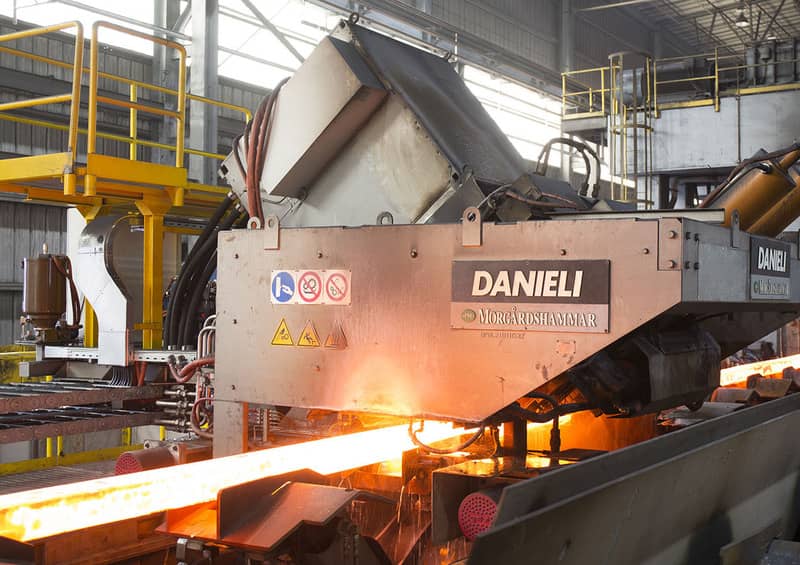
Italy’s Acciaierie Bertoli Safau starts building Hybrid Digital Green Plant
Acciaierie Bertoli Safau (ABS), the steelmaking division of Italy’s Danieli Group, has officially begun construction of its Hybrid Digital Green Plant. This €400 million operation – €355 million of which is dedicated to machinery and digital systems – promises to position the Pozzuolo del Friuli facility among the global leaders in special steel production.
According to a statement from ABS, “For the first time in the world, a single plant will integrate as many as 12 steelmaking process innovations designed by Danieli, ranging from scrap management to continuous casting solidification, including melting, secondary metallurgy, flue gas cleaning, water recovery, and full automation.”
With an estimated annual capacity of 730,000 mt, the new line aims to redefine the concept of industrial efficiency. The plant inherits and enhances the path established ten years ago with the Saturno-QWR line, confirming ABS’s strategy centered on high-quality specialty steels.
The Hybrid Digital Green Plant serves as the cornerstone of a broader industrial plan. Between 2023 and 2028, ABS will invest a total of €817 million. The goal is to achieve a transformation that reduces emissions by 30 percent by 2030 and completes the modernization of the two active furnaces at the site in Cargnacco province.
Thanks to these measures, the group’s production capacity will increase from the current 1.4 million mt to over 2.1 million mt per year.
This announcement follows the guidelines set in May 2024, when Danieli Group communicated a €600 million investment over two to three years dedicated to the development of ABS, with the aim of driving its turnover to €3 billion.
Author: SteelOrbis Editorial Team

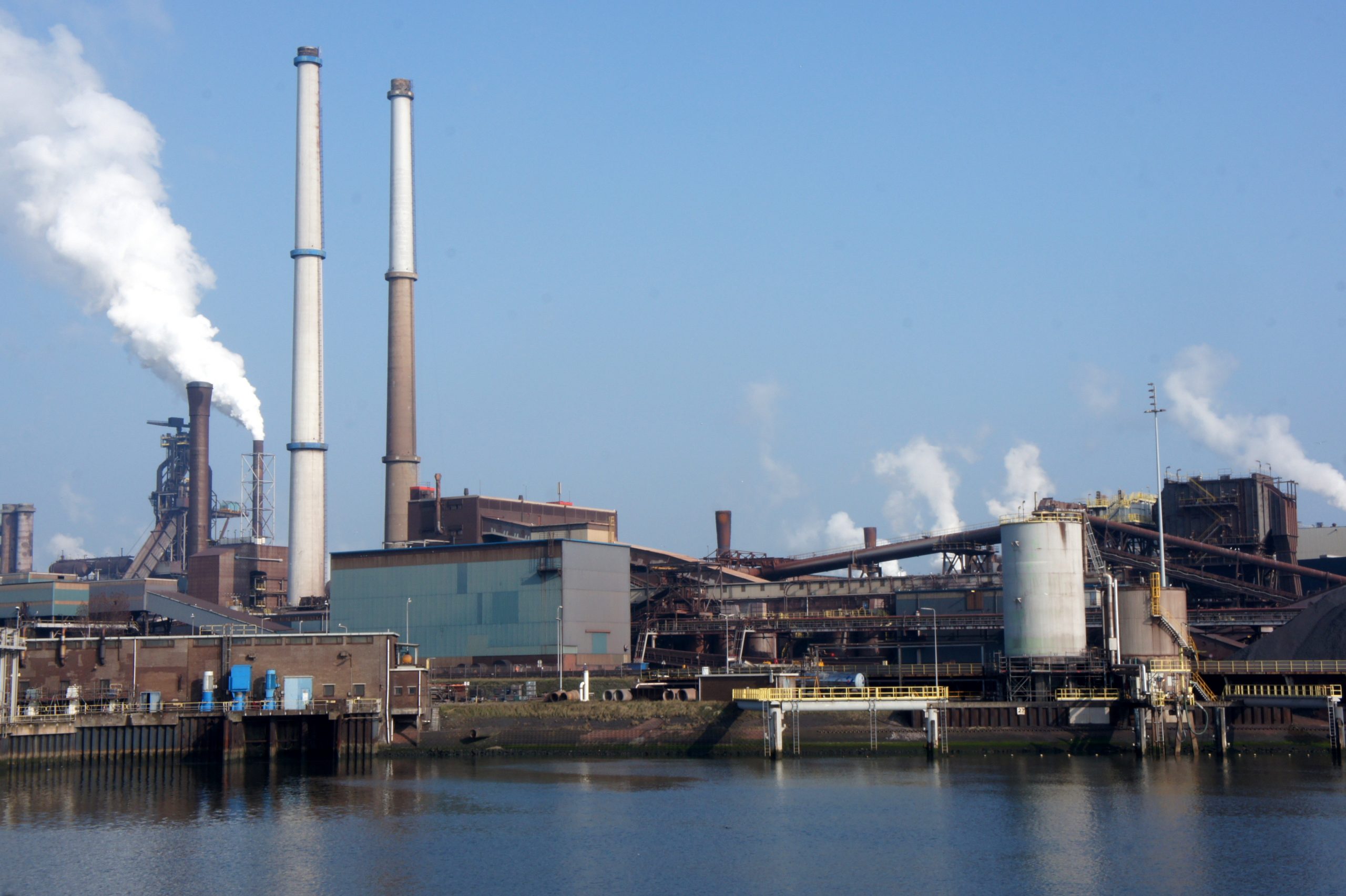
Dutch parliament considers €2 billion support for Tata Steel Nederland decarbonization
The Dutch parliament has announced that it debated a proposed subsidy of up to €2 billion for Tata Steel Nederland, aimed at supporting the company’s transition to lower emissions. The proposal follows provisional agreements between the Dutch cabinet and the company, setting out conditions for financial support.
Funding linked to emissions and performance targets
Under the plan, subsidies would be disbursed in installments and tied to specific milestones, with the government retaining the right to withdraw funding if conditions are not met.
Tata Steel Nederland is required under the agreement to achieve climate neutrality by 2045, while additional incentives, including €200 million, are linked to reducing natural gas usage.
The proposal has faced criticism from several lawmakers, who questioned the company’s ability to meet its commitments. Some called for stricter enforcement measures rather than negotiated agreements, while others emphasized the need for binding conditions, including clear emissions targets, employee involvement and guarantees to maintain domestic production.
Strategic importance of domestic steel production
Supporters of the subsidy highlighted the strategic importance of maintaining steel production in the Netherlands. They pointed to its role in employment, industrial capacity and European strategic autonomy, as well as the need to ensure resilient and diversified supply chains.
Health concerns were a central topic in the debate, with lawmakers calling for measurable targets to reduce harmful emissions and for transparent, independent monitoring. Environmental issues such as steel slag management were also discussed, with a temporary ban currently in place until mid-July pending further decisions.
Competitiveness and regulatory challenges
Lawmakers raised concerns that stricter climate regulations in the Netherlands could create an uneven playing field compared to countries with less stringent policies. In response, the government stressed the importance of stimulating demand for green steel to support both decarbonization and industrial competitiveness.
The total investment required for the transition is estimated at between €2.3 billion and €4 billion, with Tata Steel expected to contribute a significant portion alongside public funding.
The Dutch parliament is scheduled to vote on motions related to the proposal on April 14.

European domestic CRC, HDG prices grow amid tight import availability despite low demand
European prices for domestic cold-rolled coil and hot-dipped galvanized coil grew in the week to Wednesday April 8, supported by limited import availability and high production costs, despite subdued demand from customers.
Import offers remained scarce in the market in the run-up to the implementation of new steel safeguards measures, set to come into effect on July 1 and which are expected to significantly reduce import quotas.
The measures, paired with current import limitations posed by the EU’s Carbon Border Adjustment Mechanism (CBAM), are expected to strengthen buyers’ appetite for domestic steel in the third quarter, Fastmarkets understands.
According to sources, import offers were mostly available for June shipment.
Meanwhile, buyers were heard to be sufficiently stocked up for the time being, while mills were heard to be maintaining good order books.
“We have a full stock situation and no demand from customers, so it is not the time to speculate on higher prices,” a market source in Northern Europe told Fastmarkets.
In Northern Europe, prices for domestic CRC and HDG increased in the week to Wednesday.
Estimates of workable levels for CRC were heard hovering around €820-830 ($958-969) per tonne ex-works, with some offers also reported around €820-840 per tonne ex-works.
Fastmarkets’ weekly price assessment for steel cold-rolled coil domestic, exw Northern Europe was €820-830 per tonne on Wednesday, rising from €800-820 per tonne the previous week.
Meanwhile, estimates of workable levels for domestic HDG were heard around €820-830 per tonne ex-works during the assessment period.
The weekly price assessment for steel hot-dipped galvanized coil domestic, exw Northern Europe was €820-830 per tonne on Wednesday, narrowing up from €810-830 per tonne previously.
In Southern Europe, domestic prices for CRC and HDG also increased.
Fastmarkets’ weekly price assessment for steel cold-rolled coil domestic, exw Southern Europe was €820-825 per tonne on Wednesday, rising from €800-820 per tonne the previous week.
The upper end is based on a deal heard at €825 per tonne ex-works, with offers also heard around that level; no confirmed transactions were heard below the assessed range.
Meanwhile, offers for domestic HDG were heard within the range of €825-835 per tonne ex-works during the assessment period.
Therefore, Fastmarkets’ weekly price assessment for steel hot-dipped galvanized coil domestic, exw Southern Europe was €825-835 per tonne ex-works on Wednesday, rising from €800-830 per tonne week on week.
Furthermore, the recent escalation of the US-Iran war has also caused spikes in costs for energy and raw materials, which has supported European domestic prices, Fastmarkets heard.
According to sources, once people “check the risks and the quality” of import offers, especially when factoring in new safeguard measures, there are no “good offers” in the market, with buyers having to assess logistics and transportation costs.
Import prices for CRC and HDG across the region remained unchanged in the week to Wednesday, both on a CFR and a DDP basis, reflecting the cautious stance from buyers on imported materials amid the lack of clarity with quotas and new regulations, Fastmarkets understands.

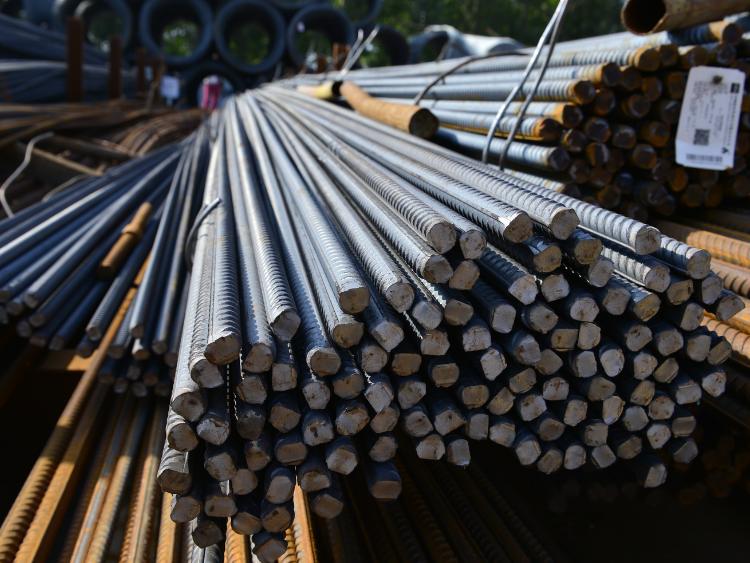
European domestic steel rebar market quiet after holidays, mills seek further price rises
The European domestic markets for steel rebar and wire rod have remained quiet after the Easter holidays, with buyers maintaining a wait-and-see stance. At the same time, producers were looking for further price increases amid a significant drop in import activity and higher production costs.
Southern Europe
Buyers in Italy were said to be taking a cautious approach because it is currently difficult to relay higher costs to construction companies in the current conditions of geopolitical uncertainty.
Many cut-and-bend mills reported plans to use stocks created earlier at lower prices rather than actively purchasing new volumes.
“My intention is to use the warehouse this month in order to monetize it,” one cut and bend producer said.
“On the other hand, mills have announced higher offers, which gives us hope for further [price] increases. We’re undecided whether to continue with the idea of using the warehouse, or to stock up heavily this month to liquidate the surplus in May,” he added.
“Demand is dropping a bit [so] let’s hope the [the conflict between the US and Iran] ends and the entire market starts to go up again,” he said.
“Construction [operations] are going slow,” a trading source said. “Price escalation on all building materials is making operators careful. They do not accept the uptrend, [and] prefer to wait for a clearer view of the situation.”
As of Wednesday, both producers and buyers said that pre-holiday prices were still applicable, with €670-690 ($783-806) per tonne ex-works being proclaimed as the workable range in the North and €700 per tonne ex-works in the South.
But by the end of the day, information came to light about some suppliers setting a target of €720 per tonne ex-works as the initial offers for the next round of sales.
Fastmarkets’ weekly price assessment for steel reinforcing bar (rebar), domestic, exw Italy, narrowed downward to €670-700 per tonne ex-works on April 8, compared with €670-710 per tonne on April 1.
The Spanish market was also said to be largely quiet in the week to Wednesday, so Fastmarkets’ weekly price assessment for steel reinforcing bar (rebar), domestic, delivered Spain, remained at €715-725 per tonne on April 8.
Local suppliers, like their Italian peers, reported intentions to raise offer prices from Monday next week.
Lack of competition with import material, combined with growing production costs, and scrap and energy prices, as well as a favorable economic situation, were said to be the main drivers for the positive mood.
Northern Europe
A similar situation was seen in Northern Europe. Estimates of workable prices for rebar in Germany remained at pre-holiday levels of €655-665 per tonne delivered, while offers were heard at €680 per tonne delivered.
Fastmarkets’ weekly price assessment for steel reinforcing bar (rebar), domestic, delivered Northern Europe, remained at €655-665 per tonne on April 8.
Market participants noted that demand for long steel in the region was currently stable to slightly decreasing, but the limited import activity resulting from the introduction of the Carbon Border Adjustment Mechanism (CBAM), and imminent changes in the safeguarding measures, meant that local mills enjoyed healthy demand.
Nevertheless, the goal of the producers was not to increase production but to generate better margin.
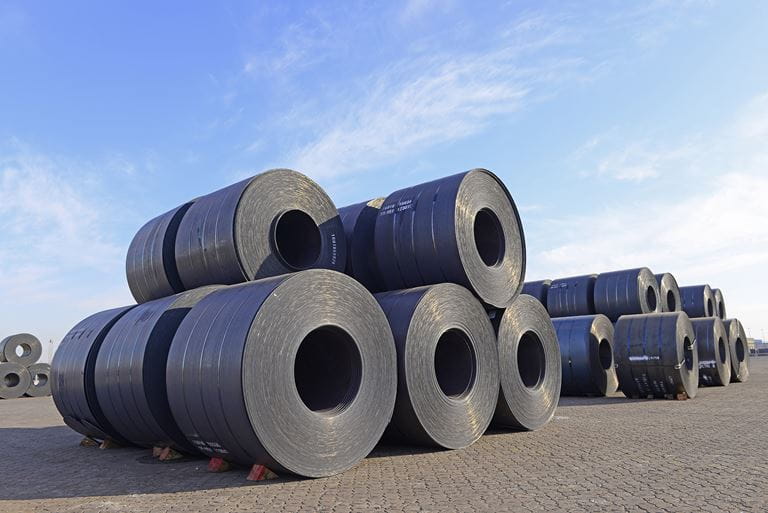
European HRC prices mostly steady; mills eye price hikes for July deliveries amid import constraints
Domestic prices for hot-rolled coil held steady across Europe on Thursday April 9, with local mills indicating they will be looking to increase prices for July deliveries, despite stable demand, sources told Fastmarkets.
Import constraints were seen as a major driver behind the uptrend, sources said.
“As of July 1, we will have new safeguards in place and a 50% cut in imports, so European suppliers will be counting on support from the regulations,” a buyer in Germany said.
Integrated mills in Germany and the Benelux area were largely sold out of second-quarter delivery coil, with only limited tonnages of June delivery HRC still available at some suppliers.
“The order books for May-June lead times HRC are 80-90% full, depending on a mill,” a supplier source told Fastmarkets.
Deals for limited tonnages of June delivery HRC were heard at €720-730 ($841-853) per tonne ex-works in Germany, with buyer’s estimates of achievable prices mainly reported at no lower than €710-720 per tonne ex-works on Thursday.
Offers for July lead times were heard at €750-760 per tonne ex-works.
Leading European mill still did not announce firm offers for July delivery, with some buyer sources indicating a base price of €780 per tonne delivered (€765 per tonne ex-works) as a target offer.
Sources told Fastmarkets they expect more clarity on offers next week during the major Tube & Wire steel trade fair in Düsseldorf, Germany, on April 13-17.
Limited tonnages of Italy-origin coil were offered to Germany at a base price of €730-750 per tonne delivered, depending on quality on Thursday. But because of the increased freight rates (estimated to be up by 20% since the US/Israel attacks on Iran and its wide-ranging response across the Middle East), suppliers were said to be prioritizing domestic sales, sources said.
Fastmarkets’ daily steel hot-rolled coil index, domestic, exw Northern Europe, was calculated at €720.00 per tonne on April 9, up by €2.50 per tonne from €717.50 per tonne on April 8.
The index was also up by €1.24 per tonne week on week and by €18.54 per tonne month on month.
In Southern Europe, meanwhile, Fastmarkets’ daily steel hot-rolled coil index domestic, exw Italy was calculated at €699.00 per tonne ex-works on April 9, down by €2.00 per tonne from €701.00 per tonne on Wednesday.
But the index was up by €0.25 per tonne week on week and by €14.00 per tonne month on month.
In Italy trading was limited, with neither buyers nor sellers hungry interested in moving tonnages.
Suppliers had good order books, however, while buyers said their stock levels were sufficient, considering the slow underlying demand from end users.
A local re-roller, who suspended HRC production last week due to technical issues,, has yet to resume operations, sources told Fastmarkets.
Local HRC producers were maintaining HRC offers at a minimum of €700 per tonne ex-works, with June lead times still said to be available, sources said, while for larger tonnages, some suppliers ready to sell coil at levels slightly below €700 per tonne ex-works
Local market participants in Italy estimated the workable level at €690-700 per tonne ex-works on Thursday.
At the same time, new import offers have been very limited recently.
Market participants told Fastmarkets that buyers were mostly holding back, awaiting more clarity on country-specific quota allocations before committing to purchases.
The European Commission is expected to announce revised quota volumes for the new safeguard system in late April/early May, with implementation scheduled for July 1.
The uncertainty surrounding the updated safeguard measures, along with the potential cost implications of the EU Carbon Border Adjustment Mechanism (CBAM) continued to weigh on import buying interest.
Additionally, logistical challenges and sharply higher freight rates linked to the conflict in the Middle East, have constrained import offers from Asia.
But HRC was on offer from Turkish mills at €620-630 per tonne CFR on Thursday, including the anti-dumping duty, but excluding CBAM costs.
CBAM costs for Turkish coil were estimated at €40-50 per tonne, sources said, provided actual emissions values were used.
HRC from Turkey that arrived in the EU in the first quarter 2026 using default values would face CBAM costs of €100.55 per tonne, according to Fastmarkets’ estimates.
“There is a lot of concern over [actual carbon emissions] verifications timeline at the moment,” a buyer in Italy told Fastmarkets.
Earlier this week, the European Commission published the first-quarter 2026 CBAM certificate price at €75.36 per tCO2e.