


Local Chinese longs prices inch down amid lower futures, failing hopes for April
During the past week ending April 13, average Chinese domestic rebar and wire rod prices have moved down amid the declines in rebar futures prices and the lack of expectations of a rebound in demand, while the escalation of the war in the Middle East has again raised concerns regarding further increases in fuel and transportation costs.
The average rebar price has decreased by RMB 20/mt ($2.9/mt) compared to March 30, while the average 6.5 mm HPB 300 wire rod price has declined by RMB 7/mt ($1.0/mt). Rebar prices have remained stable compared to the previous trading day, April 10.
During the given week, rebar and wire rod prices have edged down as demand from downstream users has not been improving as well as market players had expected. Firm raw material prices have bolstered rebar and wire rod prices from the cost side, with iron ore prices exceeding $105/mt CFR and posting only a minimal decline last week, while the second round of price increases is awaited in the local coke market.
US President Trump has announced that the US military will blockade the Strait of Hormuz, targeting all major Iranian ports (which were still partially functioning), starting from April 13, driving oil prices higher again and increasing fears globally of inflation, which could negatively impact the global economy and commodity markets. Cautious sentiments have prevailed among market players. It is thought that rebar and wire rod prices in the Chinese domestic market will fluctuate within a limited range in the coming week. Hopes of some rebound in the local Chinese market in April have again been postponed.
As of April 13, rebar futures at Shanghai Futures Exchange are standing at RMB 3,100/mt ($451/mt), decreasing by RMB 39/mt ($5.7/mt) or 1.2 percent since March 30, while up 0.19 percent compared to the previous trading day, April 10.
Average domestic rebar and wire rod prices in China’s main markets are presented in the tables below.
Rebar prices in local markets
| Spec. (mm) – Category | City | Price (RMB/mt) | Price ($/mt) |
Weekly change (RMB/mt) |
Weekly change ($/mt) |
| 25 – HRB400 | Beijing | 3,140 | 457.3 | -40 | -2.1 |
| Guangzhou | 3,440 | 501.0 | 0 | 4.1 | |
| Shanghai | 3,130 | 455.9 | -20 | 0.8 | |
| Average price | 3,236.7 | 471.4 | -20 | 0.9 |
All prices include 13 percent VAT and all prices are ex-warehouse.
Wire rod prices in local markets
| Spec. (mm) – Category | City | Price
(RMB/mt) |
Price ($/mt) | Weekly
change (RMB/mt) |
Weekly change ($/mt) |
| 6.5 – HPB300 | Beijing | 3,680 | 536.0 | -10 | 2.9 |
| Guangzhou | 3,750 | 546.2 | 10 | 5.9 | |
| Shanghai | 3,590 | 522.9 | -20 | 1.3 | |
| Average price | 3,673.3 | 535.0 | -7 | 3.4 | |
| 8 – HPB300 | Beijing | 3,460 | 503.9 | -10 | 2.6 |
| Guangzhou | 3,690 | 537.4 | 10 | 5.8 | |
| Shanghai | 3,360 | 489.4 | -20 | 1.1 | |
| Average price | 3,503.3 | 510.2 | -7 | 3.2 |
All prices include 13 percent VAT and all prices are ex-warehouse.
$1 = RMB 6.8657
Author: SteelOrbis Editorial Team

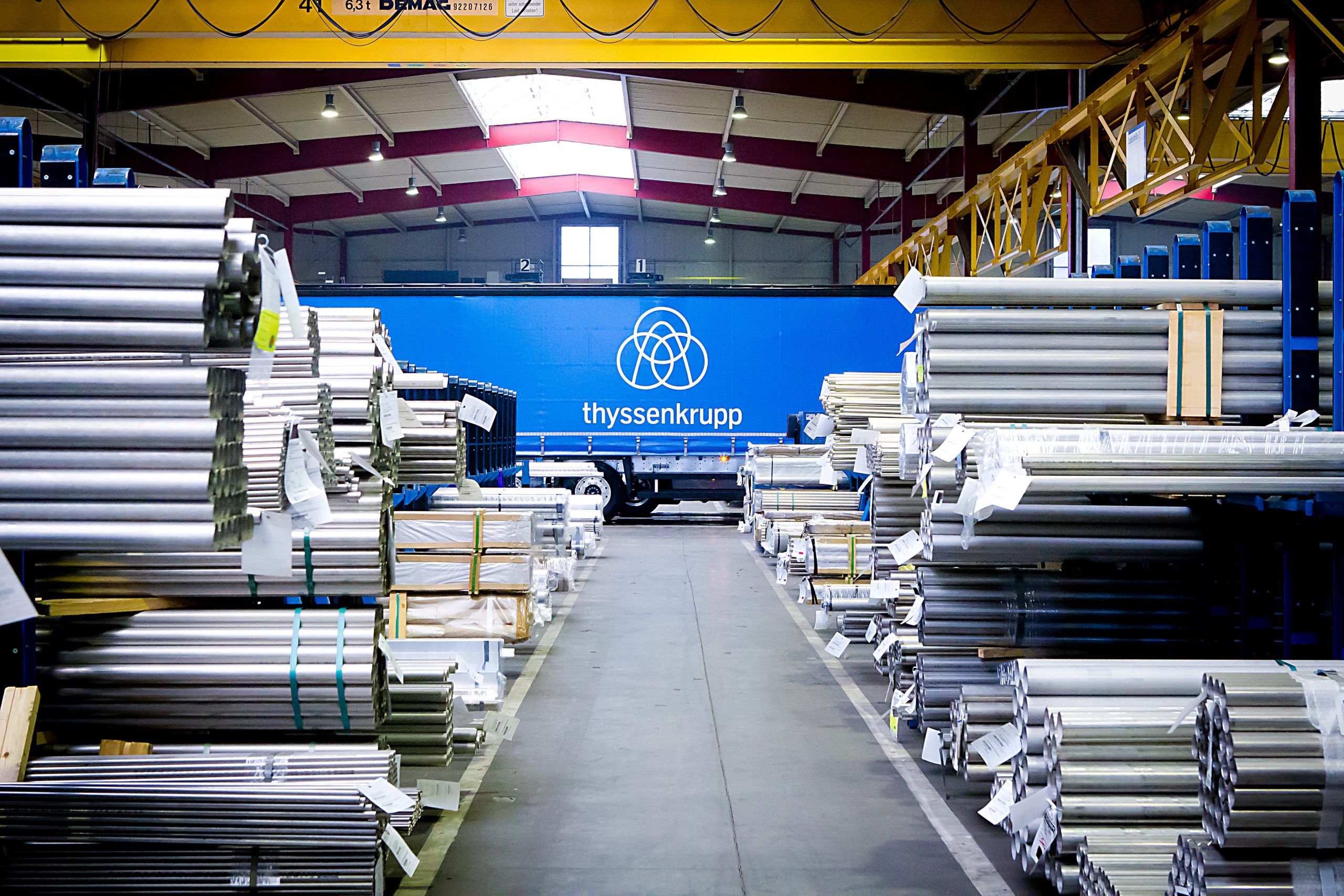
Thyssenkrupp expands North America footprint with Aceroteca acquisition
Thyssenkrupp Materials Services has announced that it has acquired a majority stake in Mexico-based Aceroteca Trading, marking a strategic move to expand its footprint in North America and support increasing nearshoring trends.
Aceroteca operates a flat-rolled carbon steel processing and service center in Santa Catarina, part of the Monterrey metropolitan area, one of Mexico’s most important industrial regions.
The facility offers a modern and scalable processing platform, enabling closer proximity to customers, shorter lead times, and improved supply chain efficiency. According to Heather Wijdekop, CEO of the Processing business unit, the transaction strengthens the company’s ability to adapt to localized production and distribution requirements.
Expanding capabilities and customer reach
Aceroteca currently supplies sectors such as heating and cooling and power transmission, while also providing additional capacity for both existing and new customers. The deal is expected to enhance thyssenkrupp Materials Services’ Coil Processing Group presence in the region. While the initial focus remains on flat-rolled carbon steel products, the platform offers potential for expansion into additional product segments.
Author: SteelOrbis Editorial Team
Tensions in Strait of Hormuz drive up energy and logistics costs, raising risks for steel sector
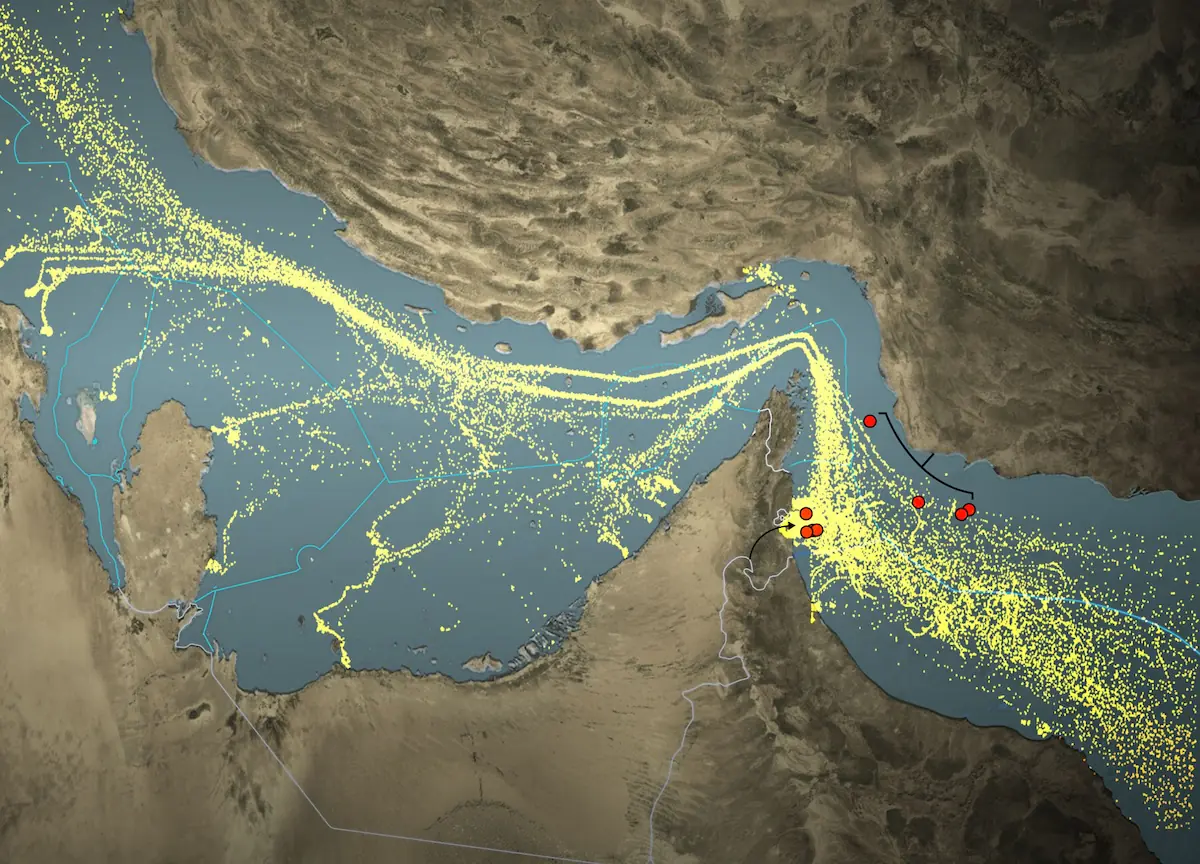
The escalation of tensions between the United States and Iran has reignited concerns in global markets, with immediate impacts on energy, logistics and supply chains. The US naval blockade targeting Iranian ports, which enters into force today, April 13, represents one of the most significant measures seen in the Gulf region in recent years, directly affecting trade flows linked to one of the world’s main energy hubs. Although it does not amount to a full closure of the Strait of Hormuz, the route through which around 20 percent of global oil supplies pass, the measure is exerting a strong impact on market expectations, increasing risk premiums and fueling uncertainty over energy flows.
Energy prices rise: oil above $100/barrel, pressure mounts on industrial costs
The market reaction was immediate. Brent climbed above $102/barrel, while WTI moved past $104/barrel, posting gains of around 6-7 percent within a matter of hours. For the steel sector, which is highly energy-intensive, the return of elevated energy prices represents a critical factor. Rising oil and fuel costs are directly affecting production costs, particularly for integrated mills and downstream processing activities, while also increasing transportation costs for raw materials and finished products. In this context, electricity and gas prices, which are already subject to volatility, are expected to come under further pressure, with knock-on effects on the competitiveness of steel producers, especially in Europe.
At the same time, instability in the Gulf region is undermining the regular flow of maritime traffic. Restrictions and operational risks are reducing the number of transits through the Strait of Hormuz and forcing operators to use longer and more costly alternative routes. Initial evidence points to delivery delays of up to 20-25 days, creating difficulties in logistics planning and inventory management. The uncertain environment is also affecting vessel availability and the organization of trade flows, both of which are key elements in the international trade of steel and raw materials. A further critical factor is the rise in ocean freight rates, which, according to market sources, have seen significant increases in recent weeks, in some cases tripling and further aggravating overall costs along the supply chain.
For the global steel sector, tensions in the Strait of Hormuz are translating into concrete risks both on the raw materials procurement side, including iron ore and coal, and on the export side toward key Middle Eastern markets. The Gulf region is in fact an important destination for numerous producers, as well as a strategic logistics hub for trade flows between Asia and Europe. Any disruption or slowdown in traffic may therefore alter trade balances, reduce traded volumes, and increase price volatility. In addition, growing uncertainty may push market players to revise their sourcing and sales strategies, favoring alternative markets or shortening supply chains.
Direct impact on Italian ports: exports and energy costs
The repercussions are already becoming visible in Italy as well. The port of Ancona, one of the Adriatic’s main ports with strong trade links to the Gulf, is already seeing a significant impact on operations. According to local operators, as much as 20-25 percent of annual exports are directly exposed to those markets, with volumes already declining due to difficulties in maritime traffic. Delivery delays and the cancellation of some shipments are creating a knock-on effect on industrial activity, raising the risk of lower production for the companies most exposed. At the same time, rising energy costs are beginning to affect the real economy. Higher fuel, gas and electricity prices are weighing both on industrial costs and on domestic demand, which is already under pressure. For Italian steel companies, which are heavily dependent on energy and deeply integrated into global supply chains, the current environment represents an additional source of strain.
Some operators are trying to work around logistical difficulties by resorting to alternative solutions such as overland transport, but these options are more expensive and not always sustainable in the medium term.
Outlook
In the short term, the market remains exposed to high volatility. The evolution of the crisis between the United States and Iran will be decisive for the stability of energy and trade routes. For the steel sector, the main risk lies in the combination of elevated energy costs, logistical tensions and uncertainty on the demand side. A prolonged crisis could further increase pressure on margins and slow international trade even more.
Market players are waiting for developments on the diplomatic front, but in the meantime the market has already begun adjusting to a more complex scenario marked by greater risk and lower predictability.
European HRC prices steady as higher offers fail to raise market
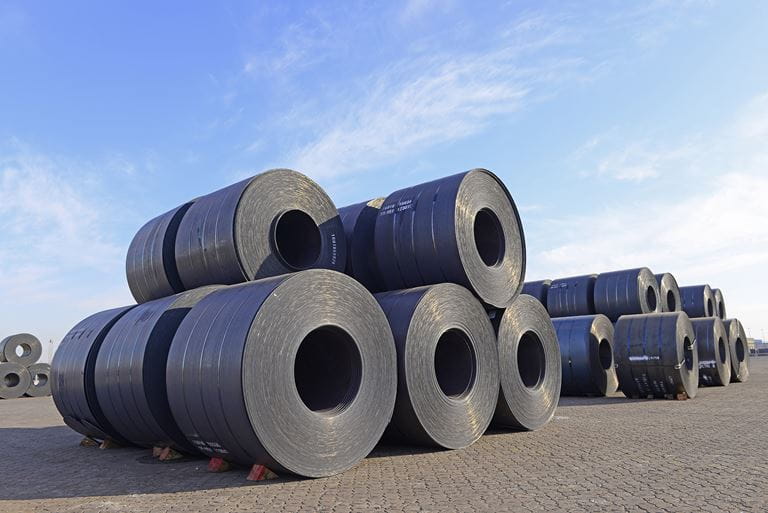
European hot-rolled coil (HRC) prices were largely unmoved on Monday April 13, despite higher offers voiced by several suppliers; buyers were questioning further price increases amid stable consumption, Fastmarkets heard.
Integrated producers in Germany and the Benelux area sold a large portion of their second-quarter coil volumes, with only small quantities of HRC still available for June delivery from certain mills.
For July deliveries, offers have been heard in the range of €750-760 ($879-890) per tonne ex-works, but buyers considered these levels unworkable so far.
“There is still no demand on either [the] stockholders’ or manufacturers’ side; only project-related purchases are being conducted,” a source on the buy side said.
Buyers’ estimates of achievable prices for June delivery HRC were mainly reported at no lower than €700-730 per tonne ex-works on Monday.
As a result, Fastmarkets’ daily steel hot-rolled coil index domestic, exw Northern Europe was €720.00 per tonne on April 13, unchanged since Friday April 10.
The index averaged €708.05 per tonne in March 2026, up from a monthly average of €664.51 in February.
There was also information that a leading European steelmaker was selling leftovers of second-quarter delivery HRC in Central Europe, notably Poland, at discounted prices — around €695 per tonne CPT (€680 per tonne ex-works) — while in other regions no such low prices were reported.
“These sales [at lower prices] are sporadic and regionalized and have no impact on [the] general price trend,” a buyer in Poland said.
Sources expected more clarity on further price direction during the Wire & Tube trade fair in Dusseldorf, Germany, held over April 13-17.
Fastmarkets’ steel hot-rolled coil index domestic, exw Italy was calculated at €697.64 per tonne on April 13, down by €2.36 per tonne from €700.00 per tonne on April 10.
The index averaged €690.79 per tonne in March 2026, up from a monthly average of €655.14 in February.
Local buyer and seller sources estimated achievable prices at €690-700 per tonne ex-works on Monday.
Offers from local suppliers for June delivery HRC were reported around €700-705 per tonne ex-works earlier in April.
“Trading is presently more driven by speculation and expectations of higher prices, but not driven by demand,” a buyer source said.
A local re-roller, which suspended HRC production at the beginning of April due to technical issues, has yet to resume operations, sources told Fastmarkets.
However, shorter supply has had no visible effect on the market so far.
“[Re-roller] only produces about half a million tonnes [of HRC] per year at most, so the impact is not tremendous, but considering the situation with imports, it might get tighter, especially if the stoppage is prolonged,” a buyer in Italy said.
Meanwhile, new import HRC offers to Europe remained limited. Buyers are holding back ahead of revised safeguard quotas from the European Commission, effective July 1, with uncertainty over the regime and potential costs from the EU Carbon Border Adjustment Mechanism (CBAM) weighing on demand, while Middle East-related disruptions and higher freight rates continue to restrict Asian import offers.
Sources reported Indonesian HRC available at €700 per tonne DDP, CBAM paid, in Spain. However, due to high default values for Indonesian steel and uncertainty around actual emissions verification, demand for such material was limited.
The most recent offers for Turkish HRC were heard at €620-630 per tonne CFR Italy in the week to April 10, including the anti-dumping duty but excluding CBAM costs.


Polish long steel prices stable following Easter break but mills seek rises
Polish domestic prices for steel rebar and wire rod remained broadly stable in the week to Friday April 10, with mills pushing for higher offers despite subdued trading activity following the Easter holidays, Fastmarkets heard.
Over the week, market sources pointed to a slowdown in demand for long steel products, as well as for processed products, such as reinforcing meshes, while the market regained pace following the break.
Market participants remained on a wait-and-see stance while they watched current geological events, including the latest developments in the conflict in the Middle East.
According to one source, there is “no way” that Polish steel mills will stop pushing for higher offer prices due to surging energy prices, which have been affecting production costs since before the start of the war between the US and Iran, as well as higher scrap costs.
“I do not see any possibility that prices can go down,” the source said, adding that steel mills must factor-in the effects of rising costs to their businesses.
Fastmarkets’ weekly price assessment for steel reinforcing bar (rebar), domestic, cpt Poland, was 2,700-2,750 zloty ($746-760) per tonne on Friday, narrowing downward from 2,700-2,780 zloty per tonne the previous week.
Mills were heard to be targeting around 2,720-2,800 zloty per tonne CPT for rebar. But market sources said that prices of 2,800 zloty per tonne were not yet achievable in the market.
Estimates of workable prices were reported within the range of 2,700-2,750 zloty per tonne CPT on Friday.
Meanwhile, Ukraine was heard to be offering rebar to Poland at €645 ($756) per tonne delivered, for April and May delivery.
Fastmarkets’ weekly price assessment for steel wire rod (drawing quality), domestic, delivered Poland, was 2,800-3,000 zloty per tonne on Friday, unchanged week on week.
Across Europe, domestic markets for rebar and wire rod have remained quiet following the Easter break, with regional sources pointing to subdued demand, especially from the construction sector.
European producers keep on pushing for higher prices amid higher production costs and a sharp drop in import activity, Fastmarkets heard.
Fastmarkets’ weekly price assessment for steel reinforcing bar (rebar), domestic, exw Italy, was €670-700 per tonne on April 8, narrowing downward from €670-710 per tonne the previous week.
The corresponding weekly price assessment for steel reinforcing bar (rebar), domestic, delivered Northern Europe, was €655-665 per tonne on the same day, unchanged week on week.