


EU steel industry unites behind downstream protections
Supported by over 330 signatories across the EU’s steel value chain, steel distribution association EUROMETAL issued a “call-to-action” to safeguard Europe’s steel and metals value chain at a press conference on 14 April during the Tube & Wire trade fair in Düsseldorf.
Titled “Safeguarding the European steel and metals industry,” the briefing document will be sent to representatives of the EU’s national governments and the European Commission on 15 April, stressing the urgency of extending regulatory protections to the EU’s steel consuming industries.
Spearheaded by EUROMETAL, the campaign outlines a number of measures considered necessary to “safeguard and revitalise” European industry:
- a new trade regime “to follow up” the EU steel safeguard, effective across all CN codes under headings 73-95 and ready for implementation on 1 July;
- a similar extension of CBAM to steel derivatives and steel intensive products;
- “Made in EU” mandates across public procurement and funding schemes;
- “Cost-relief measures” that would limit industrial electricity prices to a maximum 5ct/KWh, slow the free allowance phase-out under the ETS/CBAM, and reduce EU-level and national bureaucracy (including the “suspension of additional regulations and corrections of existing rules”).
Speaking at the press conference, EUROMETAL President Alexander Julius described how recent and ongoing geopolitical developments necessitate a new regulatory reality, citing a “Trumpish” approach as the EU’s last chance to prevent further erosion of its industrial base to substitute steel derivative imports in undermining its national and social security.
EUROMETAL thus calls for a stark change in the Commission’s approach to trade regulations, seeing the EU’s strict – and increasingly solitary – adherence to the WTO framework as outdated in today’s geopolitical context. The European Commission did commit to a reduced threshold for trade defence investigations in last year’s Steel and Metals Action Plan, but market sources see little improvement in authorities’ trade reactivity, exemplified by the lack of progress on ongoing anti-dumping investigations, such as on cold-rolled coil.
While the WTO framework is something of a ‘boogeyman’ in today’s fraught global trade context, the European Commission has leveraged WTO instruments at pace in the past, implementing its original steel safeguard between May and July 2018 in reaction to President Trump’s original section 232 steel tariffs and displacement risks. Trilogue negotiations for the EU’s new steel protections were finalised this week, and the communications from EU’s various authorities commonly centralise the measure’s WTO compliance as an institutional success.
The European Commission has also introduced safeguard measures or investigations into ferroalloys and electrical steels in the last year, but has not indicated that downstream protection would be pursued via a safeguard instrument, instead assessing a possible extension of its new replacement steel trade measure in the coming years – a pace deemed far too slow by EUROMETAL and associated signatories.
Protectionist efforts from the US and Canadian steel markets were presented as a lead for the EU to follow – with both jurisdictions expanding existing or new steel steel trade measures to derivative products at relatively short notice to protect their domestic consuming industries from substitutive import pressure.
EUROMETAL highlights that the global intensification of steel trade barriers – with US tariff offensives as the catalyst – will see both steel and steel-containing goods deflected to the EU, compounding the stranglehold on European manufacturing, especially as upstream steel prices rise as a result of their own protection coverage.
Questioned by McCloskey on the form of the potential downstream tariffs, panel speakers advocated for a “holistic” approach, seeing an urgent need to establish protections as a baseline without a need to consider every technicality. Describing the steel value chain as at “5 minutes to midnight” – or even “5 past midnight” for sectors such as automotive – speakers consider industry as no longer able to deflect or absorb non-competitive pressures from outside EU borders – an existential threat.
According to the speakers, the steel industry – characterised as a “chain” by press conference speakers – risks collapsing entirely if allowed to break at a single point (steel-consuming industries), and so must be protected “holistically” as an absolute priority, without the “over-engineering” associated with EU bureaucracy.
EUROMETAL’s ‘call-to-action’ will be updated as new signatories join the campaign, with company profiles and interviews to come in the near-term, intended to better illustrate the specific burdens undermining – and ultimately eroding – the EU’s industrial competitiveness.
Author: Benjamin Steven


Commission welcomes political agreement on new EU steel measure
The European Commission has welcomed the political agreement reached between the European Parliament and the Council on a new measure aimed at protecting the EU steel sector from the effects of global overcapacity.
The measure is intended to ensure the long-term viability of the European steel industry and will replace the current EU steel safeguard regime, which has been in place since 2018.
Under the new framework, tariff-free quotas will be set at 18.3 million tonnes per year, with an out-of-quota duty of 50% applied to 30 categories of steel products imported into the EU. In addition, the measure introduces a “melt & pour” requirement to enhance traceability and transparency across the steel supply chain.
The rules will apply to imports from all countries, with the exception of EEA countries, which will remain subject to the “melt & pour” requirement. The agreed text reflects the key elements of the Commission’s proposal presented in October 2025.
The measure aims to address the impact of global steel overcapacity, which is projected to reach 721 million tonnes by 2027, and to support approximately 2.5 million jobs linked to the European steel sector. It also contributes to the EU’s broader decarbonisation objectives.
The new system will replace the current safeguard mechanism, which operates through tariff rate quotas across 28 product categories.
The agreement will now be submitted for formal adoption by the European Parliament and the Council, with the objective of entry into force on 1 July 2026, coinciding with the expiry of the current safeguard measure.
The Commission is preparing implementing acts on the allocation of quotas by country and on the documentation required to comply with the “melt & pour” requirement. In parallel, discussions with trading partners are ongoing under WTO procedures to ensure the compatibility of the measure with international trade rules.
Stéphane Séjourné, Executive Vice-President for Prosperity and Industrial Strategy, stated: “The steel industry has been at the foundation of our European unity. There is no prosperous Europe without a sustainable, strong and sovereign steel industry. On this strategic sector, like many others, we will do whatever it takes to maintain production, jobs and skills alive in our continent.”
Maroš Šefčovič, Commissioner for Trade and Economic Security, added: “The shape and global standing of Europe’s steel sector are fundamental to our strategic autonomy and industrial strength. We therefore cannot afford to turn a blind eye to global overcapacity reaching critical levels. Today’s outcome helps bring much-needed stability for our producers to thrive in Europe — because this is, at its core, about people and jobs. I welcome the shared urgency of the co-legislators to turn our proposal into action, as we also continue engaging with partners worldwide.”
The initiative forms part of the EU’s broader industrial and trade policy framework, including the Steel and Metals Action Plan adopted in March 2025 and ongoing efforts to address global steel overcapacity through international cooperation.

Germany backs green steel inclusion in EU Automotive Package
The German government has expressed unified support for the EU Automotive Package, endorsing the inclusion of low-carbon materials such as green steel as part of compliance mechanisms. The position was confirmed following a coalition committee meeting held on April 10.
Under the framework, which was proposed in late 2025, carmakers would be required to achieve a 90 percent reduction in tailpipe emissions from 2035 onwards. The remaining 10 percent of emissions could be offset through the use of low-carbon steel produced within the EU, as well as e-fuels and biofuels, providing additional flexibility in meeting climate targets.
Industry sees demand boost for low-emission steel
The German Steel Federation (WV Stahl) welcomed the proposal, particularly the crediting mechanism for low-emission steel.
Industry representatives noted that the measure could simultaneously support the automotive sector’s decarbonization efforts and stimulate demand for green steel, helping to establish a lead market within the EU.
Energy costs continue to pressure industry
Despite policy support, concerns remain over high energy prices, which have been exacerbated by the Middle East crisis. The German government has introduced temporary relief measures, including a reduction in mineral oil tax on diesel and petrol by around 17 cents per liter for two months.
However, industry stakeholders raised concerns over the exclusion of industry from the immediate energy program and warned that energy-intensive sectors such as steel continue to face uncompetitive electricity costs.
Competitiveness at stake
The steel sector has called for the implementation of previously announced support measures, particularly electricity price compensation mechanisms. In addition, industry representatives have proposed the introduction of a guaranteed electricity price of €50/MWh for industrial users, covering all associated costs.
Stakeholders emphasized that such measures are critical to ensuring long-term competitiveness and supporting the transition to low-emission steel production. Without adequate policy support, rising energy costs could undermine both industrial output and decarbonization efforts in Germany’s steel sector.


EU reaches provisional deal on new steel measures to protect steel industry
The Council of the European Union and the European Parliament have reached a provisional agreement on new measures aimed at protecting the EU steel industry from global overcapacity and rising import pressure.
The agreement is designed to address the impact of excess global steel capacity, expected to reach 721 million mt by 2027, which has contributed to increased exports to the EU market and intensified competition for domestic producers. The measures aim to mitigate trade distortions and ensure a more level playing field for EU steelmakers.
As SteelOrbis previously reported, the new measure sets tariff-free quotas at 18.3 million mt per year, with an out-of-quota duty set at 50 percent for 30 categories of steel products imported into the EU. It also introduces a ‘melt & pour’ requirement to improve traceability and transparency of the EU steel supply chain.
The new measure will replace the existing EU steel safeguard, which has since 2018 imposed a tariff rate quota (TRQ) system on 28 product categories, permitting duty-free imports up to a limit before a 50 percent tariff applies.
The agreement also clarifies aspects related to the management of quotas and their allocation among exporting countries. The agreement provides that, during the first year of application, unused import quotas may be carried over from one quarter to the next for all product categories, in order to provide flexibility for economic operators and support supply chains.
Next steps in legislative process
The provisional agreement will now need to be formally approved by both the Council and the European Parliament over the coming weeks, with the aim to ensure its entry into force on July 1, 2026, when the current steel safeguard measure expires.
Once adopted, the measures are expected to play a key role in stabilizing the EU steel market amid ongoing global challenges.
Welcoming the outcome of EU negotiations on a new steel trade measure, the European Steel Association (EUROFER) stated that the agreement will help protect European steel capacity, safeguard over 230,000 jobs and stabilize a sector under pressure from record import levels and global overcapacity. EUROFER emphasized that additional action will be required to ensure the long-term viability of the sector, including measures to reduce energy costs, improve the effectiveness of carbon adjustment mechanisms and address global overcapacity.
The association also called for similar protections to be extended to downstream sectors to support demand across the European steel value chain.

EUROMETAL launches Call to Action to Safeguard the European Steel and Metals Industry
EUROMETAL, the European Federation of Steel Distributors, Traders and Service Centres, together with national federations and steelmakers, has launched a Call to Action to Safeguard the European Steel and Metals Industry, bringing together a broad coalition of stakeholders across the entire value chain.
As of today, the initiative has already gathered more than 300 signatures from individual companies across Europe and 35 national steel associations, demonstrating an unprecedented level of alignment within the sector. The full list of signatories is available on the EUROMETAL website.
European industry at a critical turning point
The signatories warn that the European steel and metals ecosystem is facing increasingly severe pressures, including rising volumes of processed products imports, global trade distortions and protectionist measures by third countries and persistently high energy and regulatory costs in Europe.
These developments are putting at risk the entire European value chain — from steel production to distribution, processing, and manufacturing end-users.
Without immediate and decisive action, the European Union faces an accelerating process of deindustrialisation, with profound economic, social and strategic consequences.
A unified call for urgent EU action
The initiative calls on the EU Member States and European Commission to act swiftly and decisively to safeguard the European steel and metals value chain.
The signatories underline that effective and immediately applicable trade measures are needed now, aligned with those already implemented by major trading partners such as the United States and Canada.
At the same time, they stress that EU climate ambitions must be preserved, but within a framework that ensures global competitiveness and enables European industry to decarbonise without losing ground to unfair competition.
Safeguarding the entire value chain
A central message of the initiative is that the entire European steel and metals value chain is at risk and requires immediate support.
From production, through distribution and service centres, to processing industries and into manufacturing sectors, this interconnected ecosystem supports millions of jobs and underpins Europe’s industrial resilience.
Without swift and coordinated action, the sector risks significant job losses, increased dependence on third countries, and a weakening of Europe’s strategic autonomy.
________________________________
EUROMETAL calls on National and European policymakers to recognise the urgency of the situation and take the necessary steps to secure the future of the European steel and metals industry.
Over 300 companies and 35 Steel Associations urge immediate EU action

Italy’s declining car output trend may be reversing
Italian passenger car production decreased last year but it increased notably in December 2025 and January 2026, Kallanish learns from preliminary data by automotive association Associazione Nazionale Filiera Industria Automobilistica (Anfia).
In 2025, car output stood at 237,800, down by 23.2% year-on-year. However, in December, the index of Italian automotive production reversed the negative trend of the previous three months, recording growth of 13.5%, according to director general of Anfia, Gianmarco Giorda in a note. In December car output stood at 21,600, jumping by 104.3% compared to the same period in 2024.
By comparison, last year the UK recorded an 8% y-o-y decline to 717,400 cars. Spain saw a production decrease of 5.7% to 1.8 million units. German production ticked up by 2% in 2025 to 4.2m units, Anfia says. The most recent data indicates that French car production during January-September experienced a y-o-y increase of 5% to 748,700 cars.
“From the perspective of annual production volumes, as we have repeatedly stressed, 2025 was an ‘annus horribilis’: vehicle output closed the year down nearly 20% compared to 2024, which had itself already been a difficult year in terms of volumes,” Giorda says.
“The hope for the current year is that, thanks to the allocation of resources earmarked by Mimit’s [The ministry of enterprises and made in Italy] automotive fund at the last automotive roundtable – which will also be dedicated to supply-side support measures – and to the launch of new models expected in 2026, domestic production volumes may soon recover,” they add.
In January the positive production trend in Italy continued. Production increased again by 34.5% to 17,500 cars.
January’s Spanish output ticked up by 2.8% to 136,700 cars while output in the UK and Germany declined by 8.2% to 65,200 cars and by 9% to 305,900 cars, respectively.


New US tariffs cause more German machinery-maker pain
The latest US tariff regulation on steel and aluminium will increase the burden on Germany’s mechanical engineering industry, says its association VDMA.
According to a new VDMA survey, the average tariff rate for affected companies has risen from 21% to 26% in a matter of one week, since 6 April, Kallanish hears. “Although the procedures have been simplified, many companies are economically worse off,” says VDMA executive director Thilo Brodtmann. About half of the respondents state they are more heavily affected by the new rules. Only about one fifth see benefits, while one third report no change.
The US Administration claims the revised tariffs would provide relief for Europe. “For the European machinery sector, however, the expected relief has not materialised,” Brodtmann says. VDMA therefore calls on the European Union to secure a binding tariff cap of 15% for the machinery industry in its negotiations with the USA.

European HRC prices steady; weak demand, high stocks limit gains
European hot-rolled coil prices were little changed on Tuesday April 14. Some low-priced deals for the second quarter delivery coil came to light, although most suppliers indicated higher offers for the third quarter, Fastmarkets heard.
Trading remained thin across the European HRC market on Tuesday. Sources said the level of stock across the supply chain was quite high, which also constrained HRC price growth.
In Germany, deals were heard at €710-720 per tonne ex-works for minor tonnage deals from one supplier – for leftovers of June delivery HRC.
German mills were heard being largely sold out for the second quarter delivery HRC, with indications for July lead time heard at around €750 per tonne ex-works – which was not considered workable by buyers.
One integrated mills in the Benelux area reportedly had technical issues and had no HRC availability for June delivery. Price idea for July lead times was heard at €750 per tonne ex-works.
Workable price levels were voiced at €700-720 per tonne ex-works earlier this week.
As a result, Fastmarkets’ daily steel hot-rolled coil index domestic, exw Northern Europe was €719.17 per tonne on April 14, down slightly from €720.00 per tonne on Monday April 13.
The index was also up by €0.92 per tonne week on week and by €5.60 per tonne month on month.
After the index was published, several sourced reported a large-tonnage deal (around 25,000 tonnes) done at €680 per tonne ex-works by one of the major
European mills in the Benelux area for the second quarter delivery coil.
Sources claimed difficulties with passing higher HRC prices downstream amid slow consumption.
For example, s235 grade of 4 mm HR sheet was still being traded at €770-780 per tonne ex-works in Germany, while sources estimated “adequate” spread between HRC and HR sheet to be at least €100-120 euro. Some sources said, however, that €800 per tonne CPT had being achieved in rare transactions.
“Secondary market can’t catch up with the pace of HRC prices rise. There is still a lot of cheap imports in the market,” a buyer in Germany said.
In Southern Europe, meanwhile, Fastmarkets’ daily steel hot-rolled coil index domestic, exw Italy was calculated at €698.75 per tonne ex-works on April 14, up by €1.11 per tonne from €697.64 per tonne on Monday
The index was up by €0.25 per tonne week on week and by €6.25 per tonne month on month.
Sources in Italy estimated achievable prices for HRC to be around €690-700 per tonne ex-works.
Trading was also limited in the region, with buyers holding sufficient stock and not in a hurry to replenish it.
In the secondary market, sources reported that for 4mm S235 grade hot-rolled (HR) sheet, €800 per tonne CPT was being gradually achieved in deals, with only sporadic deals heard at lower prices of €770-780 per tonne CPT.
Steel service center (SSC) sources indicated that, in order to reflect higher HRC prices, HR sheet prices would need to increase further to €820-850 per tonne CPT. However, the downstream market was slower to follow the upward trend amid strong end-user resistance to higher prices.
Meanwhile, new offers for imported coil have been limited recently amid soaring logistics costs and Carbon Border Adjustment Mechanism (CBAM) and new trade measures uncertainty.
On Tuesday, offers for Turkish coil were reported at €620-630 per tonne CFR to Italy, including anti-dumping duty.
From Algeria, offers were heard around €680 per tonne CFR to Spain, which was deemed unworkable by local buyers.
From India, offers were heard at €600 per tpnne CFR to Italy.

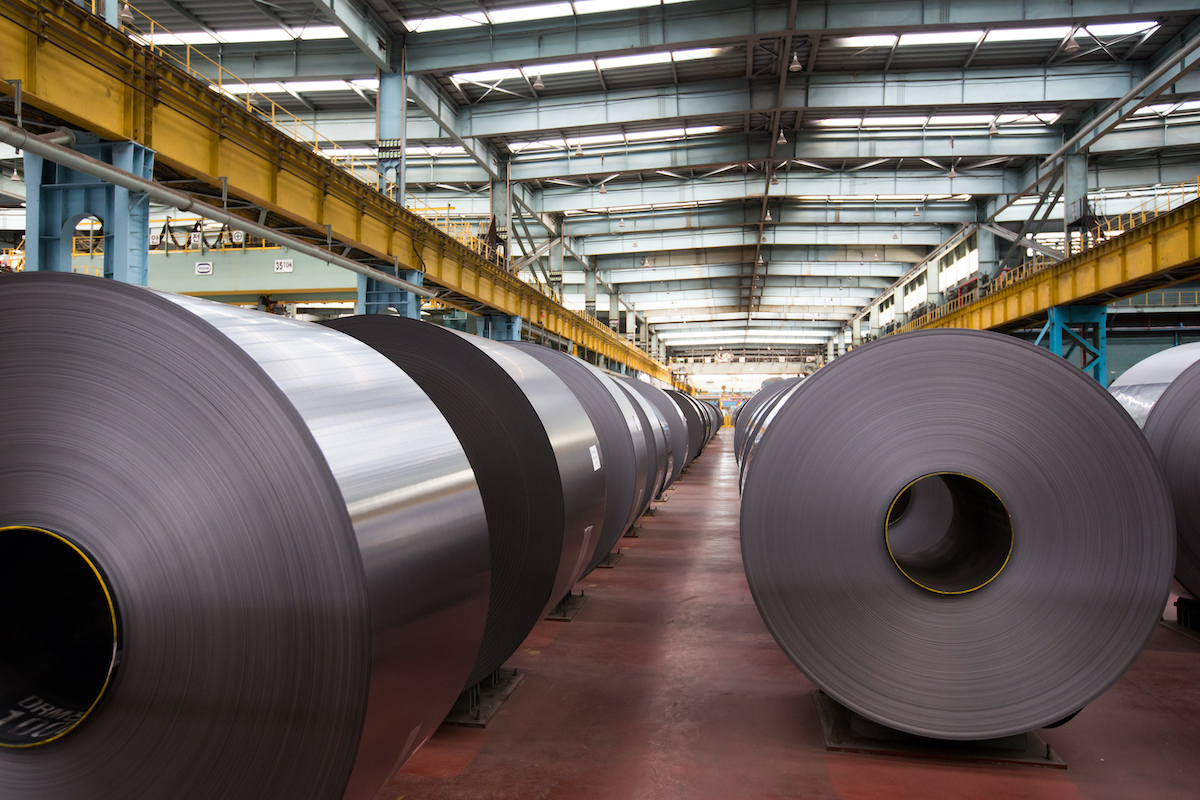
Worldsteel forecasts 2027 steel demand to outstrip tepid outlook for 2026
Global steel demand has been forecast to increase by 0.3% to 1.72 billion tonnes in 2026, followed by an ‘accelerated’ growth rate of 2.2% to 1.76 billion tonnes in 2027, according to the World Steel Association (Worldsteel) in its latest Short-Range Outlook (SRO) report published Tuesday April 14.
The report suggested that global steel demand could be bottoming out in the near-term as the industry exits a “protracted and challenging phase of global structural adjustments that has suppressed demand since 2022.”
Worldsteel attributed the anticipated reversal in demand trends to a deceleration in the rate of demand contraction in China and a “vibrant” Indian steel economy helping steel demand over the next couple of years.
The organization acknowledged, however, that the continuing conflict in the Gulf region and the consequent restrictions on commodity flows could act as a caveat to growth in the region.
Several Gulf steelmakers have been heard reducing their output volumes over the last month due to the regional conflict restricting access to seaborne raw materials including iron ore pellet and ferro-alloys, sources have told Fastmarkets.
Major steel mills in Iran have been damaged by strikes and could take up to 6-12 months to recover from the attacks, local news agencies have reported.
Chinese demand deficit to narrow
Worldsteel expects the deficit in Chinese demand to soften in 2026 to -1.5%, citing that the housing market correction may have reached its bottom and infrastructure investments are expected to increase this year.
In 2027, the association expects steel demand in China to plateau relative to expectations in 2026, which they suggest is due to the effects of a real estate industry correction largely expected to be felt in 2026.
Fastmarkets assessed the price of domestic hot-rolled coil, ex-warehouse Eastern China, at 3,280-3,300 yuan ($474-475) per tonne on Tuesday April 14, compared with 3,280-3,290 yuan on March 13, with continuing supply constraints helping to sustain price levels, sources told Fastmarkets.
Market participants said strong slab export momentum – triggered by the shortfall in Iranian supplies since the war, its wide-ranging effects across the Middle East and the subsequent closure of the Strait of Hormuz – had led to a surge in overseas orders that has diverted slab away from the domestic market, thereby lending underlying support to HRC prices.
Indian steel demand to maintain strong trajectory
India, the world’s fastest-growing major steel market, is expected to grow its steel demand by 7.4% in 2026 and 9.2% in 2027, the association said.
Growth in the infrastructure sector and in the automotive industry were cited as key demand drivers in the report, with a nationwide rail-network expansion project supporting steel demand at present.
Indian crude steel output hit 164.9 million tonnes in 2025, up by 10.4% year on year, further cementing India’s rank as the world’s second-largest producer behind China.
The momentum carried into early 2026, with output rising by another 9.7% year on year in January-February, according to data from WorldSteel.
US market expected to grow on private sector investment
The US market is expected to grow by 1.7% this year and by 2.0% in 2027, with Worldsteel suggesting that easing financing conditions and interest rates could support residential construction.
Data center investments in the US have also been supporting steel demand in the region, with US steelmakers facing a “robust opportunity” in the data center construction boom, driven by rapid implementation of artificial intelligence software, according to Barry Zekelman, executive chairman and chief executive officer of Zekelman Industries.
“However, the pace of this rebound is likely to remain constrained by persistent structural challenges, including elevated material costs, high mortgage rates, affordability pressures, and continuing labor shortages. Additionally, demand for durable goods may be tempered amid a softening labor market,” Worldsteel said.
EU, UK demand to reverse course on recently sluggish growth
Worldsteel expects infrastructure and defense spending to support the European and UK markets to grow by 1.3% in 2026 and 3.0% in 2027, in a “long-awaited” return of steel demand growth.
Demand for imports in the European steel markets has dwindled in the year so far since the introduction of steep Carbon Border Adjustment Mechanism (CBAM) costs faced by European importers in January 2026, according to trade sources.
European markets have therefore been more reliant on domestic production, with producers within the EU reporting healthier demand and in turn moving toward greater ferrous scrap demand to feed their growing output, sources said.

EUROMETAL calls for urgent action to support Europe’s steel and metals industry
EUROMETAL, together with national federations and steel producers, has launched a call for action to protect the European steel and metals industry.
EUROMETAL, representing European steel distributors, traders and service centres, met with members of the press at the Tube & Wire Düsseldorf. During the meeting, EUROMETAL, together with national federations and steel producers, launched a Call to Action to safeguard the European steel and metals industry. The initiative brought together stakeholders from across the entire value chain, forming a broad and unified industry coalition.
According to the statement, the initiative has already secured the support of more than 300 companies and 35 national steel associations across Europe, signalling a strong and coordinated stance within the sector.
Industry representatives highlighted that the European steel and metals ecosystem is under significant pressure due to rising imports of processed products, global trade distortions, protectionist policies by third countries, and high energy and regulatory costs in Europe. These developments were said to put the entire value chain at risk, from production to distribution, processing industries and end users.
The statement warned that without the necessary measures, the European Union could face an accelerating process of deindustrialisation, with far-reaching economic, social and strategic consequences.
Within the scope of the initiative, a call was made to EU Member States and the European Commission to take swift and decisive action. The signatories emphasised the need for effective and rapidly deployable trade measures aligned with those implemented by major trading partners such as the United States and Canada.
At the same time, it was stressed that EU climate ambitions must be preserved, but within a framework that does not undermine the global competitiveness of European industry or create disadvantages in the face of unfair competition.
EUROMETAL underlined that the entire European steel and metals value chain is at risk and requires immediate support, noting that this interconnected structure—from production to distribution, service centres to manufacturing industries—provides employment to millions and forms the backbone of Europe’s industrial resilience.
The statement also noted that without swift and coordinated action, the sector could face significant job losses, increased dependence on third countries, and a weakening of Europe’s strategic autonomy.
EUROMETAL called on policymakers at both national and European levels to recognise the urgency of the situation and take the necessary steps to secure the future of the European steel and metals industry.
Signatories: steelindustrynow.eu
Author: SteelRadar Editorial Team
