Business Finland provides EUR 20 million support to SSAB’s low-carbon steel program

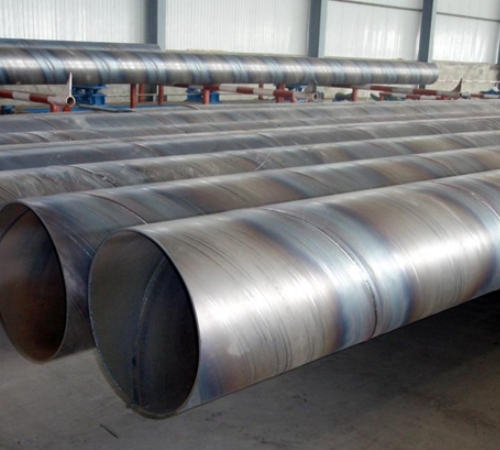
EU reviews Belarus, China, Russia welded pipe duties
The European Commission has initiated an expiry review of anti-dumping measures on imports of certain welded tubes and pipes from Belarus, China and Russia, Kallanish notes from the Official Journal on 17 April.
The probe follows a complaint lodged by the European Steel Tube Association on 16 January, which argued that allowing the measures to lapse would likely result in a recurrence of dumping and injury to the EU industry.
The product under review covers welded tubes and pipes of iron or non-alloy steel, of circular cross-section and with an external diameter not exceeding 168.3 mm, excluding line pipe for oil or gas pipelines, casing and tubing used in drilling, precision tubes, and tubes and pipes with attached fittings for use in civil aircraft. The products currently fall under CN codes ex 7306 30 41, ex 7306 30 49, ex 7306 30 72 and ex 7306 30 77, with corresponding TARIC codes 7306 30 41 20, 7306 30 49 20, 7306 30 72 80 and 7306 30 77 80.
The investigation will assess whether dumping and injury would continue or recur if the measures expire. The review investigation period covers 2025, while injury trends will be examined from 2022 onwards. The probe is expected to conclude within 12-15 months.


Corinth, ArcelorMittal extend cooperation to include XCarb
Corinth Pipeworks has strengthened its long-standing collaboration with ArcelorMittal in a shared commitment to sustainable steel solutions for the evolving energy sector, Kallanish hears from ArcelorMittal.
Corinth will now also be using XCarb, ArcelorMittal’s low carbon-emissions steel, in its production of energy pipe, the companies announced at the Wire + Tube Fair in Düsseldorf last week.
The collaboration reflects the joint ambition of both companies to contribute to the energy transition by enabling the development of resilient, low-carbon infrastructure.
According to ArcelorMittal, the partnership supports the delivery of pipeline solutions with a significantly reduced environmental footprint, suitable for both conventional and emerging energy applications, including hydrogen transportation.
XCarb is a low carbon-emissions steel made in an electric arc furnace with minimum 75% scrap content and with 100% renewable electricity. The production process reduces CO2 emissions by 65% compared with the traditional steelmaking route in a blast furnace, ArcelorMittal states.
“By integrating low carbon-emissions steel solutions into our production processes, we actively support our customers in building next-generation energy networks,” says Ilias Bekiros, general manager of Corinth Pipeworks.

EU assigns new Chinese tinplate exporter 24.6% duty
The European Commission has amended anti-dumping measures on Chinese tinplate imports, granting new exporting producer status to Linqing Hengtai Metal Materials.
The company will now face a 24.6% duty, in line with cooperating non-sampled exporters, after proving it did not export during the original investigation period, is not linked to existing exporters, and began shipments to the EU only after the probe began.
Existing duties on Chinese tinplate range from 13.1% to 46.8% for sampled firms and 62.3% for non-cooperating exporters, Kallanish notes.

NW Europe rebar market anticipates price hike
Northwestern European mills are gearing up for another rebar price hike but have yet to announce it. Unlike most Italian rebar makers, the northwestern mills are still withholding announcements, using last week’s Wire + Tube trade fair in Düsseldorf as orientation for the next step, observers say.
“My last base price offer was still €400/tonne [$473] from March,” says a Dutch manager who plans to buy several thousand tonnes and held various talks at the fair. He and others expect an upward move by €30-40 going forward, but mills have so far not been clear. “They told me they’d need some more time; it’s a difference if you hear it [offer] in a chat, or get it on paper,” he tells Kallanish.
The market is currently suspended between rising production costs for mills and a sustained reluctance in downstream manufacturing and construction industries to decide on investment. The situation has worsened with the start of the war in Iran.
A couple of German sources still believe in the €400/t quote, simply because they have not heard different yet, as mills remain silent. But others dismiss that, seeing €430/t as the next realistic step; some even suggest that offers could reach €450/t.
One Austrian participant considers €450 to be too high, but is also preparing for €430-440. “I expect mills to come out clearly this week after the Wire fair,” he says. It would be unusual for northern mills to stay below Italian offers, which at the same price figure are effectively higher, as they quote ex-works, while the northern offers are quoted delivered.
One Austrian mill is seen offering halfway, with its latest offer of €420. However, that mill has since last year quoted an exceptional size extra for standard gauge 12mm, moved from €265 up to €280. Therefore, its final delivered price of €700 is already at the mark targeted from south to north.

European coil and green steel round-up: EU coil buyers secure discounts to fill mill production lines
More deals for domestic hot-rolled coil (HRC) in Northwest Europe were settled at lower prices in the week to 17 April as some steelmakers need to fill their production lines.
Contrary to earlier market expectations that European mills would increase offers during the Dusseldorf Tube & Wire trade fair held on 13-17 April, target prices have not changed, and some mills continued to give discounts. Other steelmakers, however, are understood to be mulling raising offers by around EUR20/t next week.
Target prices for domestic HRC remained at EUR720-750/t delivered across the EU.
In Northwest Europe, deals have been settled at EUR680-700/t ex-works, with higher number of transactions heard closer to the upper end of the range.
A major steelmaker concluded a deal for 40,000 tonnes of June shipment HRC at EUR685/t delivered to a big buyer in Northwest Europe. This price is the equivalent of around EUR660/t ex-works, according to market sources. Such prices, however, were not available for smaller lots.
Market sources cited lack of demand recovery and the restart of blast furnaces (BFs) in France in Poland as a reason for some price softening.
The geopolitical situation in the Middle East also contributed to concerns regarding demand development. Notably, regarding rising prices and scarcity of plastic car components caused by oil shipment interruptions, as well as disruption of aluminium supply are harming steel demand from automotive industry.
Despite the demand fears majority of the market participants do not view recent deals as a drastic change of trend and they expect prices to remain stable or even pickup in the second half of the year. The reduction of quotas coming into force from 1 July could drive domestic prices higher, sources said.
“There is lack of clarity in the market, so every minor change is used an excuse for pessimism, but this will change as soon as we see the new quota system. Demand is normal, it is not improving, but we also do not know what quota distribution will be between the countries,” a trader said.
The European Council presidency and the European Parliament have reached a provisional agreement on a new regulation aimed at tackling the negative effects of global overcapacity on the EU steel market, the European Commission announced in a press release 13 April.
The EU authorities have not disclosed a full proposal of the new measures, including the country-specific quotas, details on melt-and-poured clause, unused quota carryover, etc.
In Italy, where the market is more dependent on access to imports, domestic prices have remained unchanged at around EUR700/t ex-works.
Green steel market
While activity in the spot green steel market remained muted as buyers focused on dealing with the changes in the traditional steel market, higher demand was reported from construction projects.
Spot market premiums have been heard at EUR80-100/t, reaching around EUR160/t for projects or deals with end users.
Offered premiums were reported at around EUR200/t from both existing installations and projects currently under construction.
| Weekly European steel coil | |||||
| EUR/t | Term | 17-Apr-26 | Change | ||
| Weekly Northwest Europe steel coil | |||||
| Northwest Europe ex-works HRC | EX-WORKS | 695.00 | -25.00 | ||
| Northwest Europe ex-works CRC | EX-WORKS | 825.00 | -5.00 | ||
| Northwest Europe ex-works HDG | EX-WORKS | 820.00 | -5.00 | ||
| Weekly South Europe steel coil | |||||
| Italy ex-works HRC | EX-WORKS | 700.00 | 0.00 | ||
| South Europe CIF HRC | CIF | 600.00 | 25.00 | ||
| Source: McCloskey by OPIS. | © 2026 Dow Jones Energy Limited. | ||||
| Weekly green steel | |||
| EUR/t | Term | 17-Apr-26 | Change |
| Green Northwest Europe HRC premium (scopes 1-3 CO2 under 0.8t) | 100.00 | 15.00 | |
| Green Northwest Europe ex-works HRC (scopes 1-3) | EX-WORKS | 795.00 | -10.00 |
| Green HRC premium (scopes 1-2 CO2 under 0.5t) | 100.00 | 15.00 | |
| Green Northwest Europe ex-works HRC (scopes 1-2) | EX-WORKS | 795.00 | -10.00 |
| Green HRC reduced carbon price (scopes 1-3) | 61.36 | 9.21 | |
Author: Benjamin Steven and Maria Tanatar


Event Insight: Tube and Wire Trade Fair 2026, Dusseldorf
McCloskey was on the ground with steel industry participants at the Tube and Wire Trade Fair in Dusseldorf, April 13-17, navigating the climate of uncertainty currently plaguing the European steel market.
The rules of the European steel market are being actively re-written – from the incoming intensification of the EU’s steel trade quotas (half the volume, double the duty), and the definitive stage of the Carbon Border Adjustment Mechanism (CBAM), to new lead-market stimulus for low-carbon steel products – European authorities have been playing something of a ‘catch-up’ game over the last year in proposing legislative remedies to Europe’s longstanding industrial competitiveness problem, with the steel sector a primary focus.
For some market participants, this influx of new rulemaking threatens to paralyze their trade flows, overwhelmed by cost risks on embedded carbon from CBAM – or fears that import material could be subject to doubled duties of 50% from 1 July, administered under country-specific quotas that still remain unclear. Many importers tell McCloskey that they have had to reduce or even completely cease importing activities in recent months, unable to find any worthwhile competitive advantage under current cost risks.
While CBAM costs have been a primary driver for the bullish trend in EU steel pricing since the start of this year, carbon cost risks are increasingly accepted by McCloskey’s market sources, especially due to the lack of control importers actually have in minimising their CBAM costs versus their suppliers.
Exporters attending the Tube and Wire fair were reasonably confident in their capacity to successfully verify their emissions data to facilitate CBAM declarations and payments on ‘actual’ emissions values, seeing the EU’s upcoming quota revision as a greater burden. After all, what is the point in preparing to meet the EU’s carbon compliance obligations if international material is unable to access the bloc’s single market regardless?
Indeed, McCloskey spoke to multiple exporters – particularly in Turkey – planning to sue European authorities for CBAM and safeguard cost uncertainties, perceiving quantifiable harm from punitive CBAM default values, CBAM verification uncertainties, and an anticipated lack of balance in quota restrictions per country under the upcoming replacement safeguard regime.
Trading sources told McCloskey that exporters were attempting to assess the practicality of selling to the EU under the new duty regime via strategies such as export licensing, but that without a detailed break-down of country-specific quotas – currently being prepared by the European Commission as an Implementing Act to the overcapacity framework proposal – the import of steel remains mostly unworkable where customs clearance cannot be guaranteed before July, risking the 50% out-of-quota duty rate.
While the European steel value chain is relatively unanimous in stressing the necessity of shielding EU industry from non-competitive pressures to at least some degree, red flags are becoming increasingly visible from downstream industries in warning of their inability to absorb the inflationary impact of limiting trade or climate protections to upstream products.
As such, steel trade and distribution association EUROMETAL held a press conference during the Tube and Wire fair, spearheading a new campaign calling on European authorities to extend upstream steel trade and climate protections – namely the replacement safeguards and CBAM – to downstream steel-containing derivative goods. Emphasising the urgency of derivatives protection – and supported by almost 400 signatories from across the EU’s steel value chain – EUROMETAL called for a ‘fix first, ask questions later’ approach to downstream steel protection, drawing comparisons with the agility and scope of the section 232 tariff framework in the US.
Steelmakers are supporting this push to extend trade and climate protections to derivatives, reportedly working behind the scenes at the association level to properly map the EU’s steel consumption by CN code, operating under the general assumption that they will actually need a surviving market to sell their steel to, in the longer-term.
From McCloskey’s conversations with downstream operators, such as in the automotive sector, any downstream extension would need to be exhaustive in scope, and at a significant tariff rate, as substitutive steel-containing derivative imports from China, for example, can already enter the EU at an ultra-competitive margin of around 30%.
Amid these almost impenetrable import uncertainties, one would expect steelmakers to have the run-of-the-fair in Dusseldorf, able to realise pre-fair HRC offer prices of EUR750/t delivered in deals. However, McCloskey in fact traced a decline in steel trading prices through the Tube and Wire fair, generally trading below EUR700/t ex-works, with a large volume deal agreed at the outset of the fair at 685/t effective delivered Germany (EUR660/t base ex-works) for June.
Steelmakers therefore appear willing to give discounts to fill orderbooks for the second quarter, preferring to fill rolling lines than maintain the strongest of price signals. It will be interesting to monitor steel pricing dynamics going forward as the steel market – and import lead times – approach 1 July, with domestic steelmaker pricing power constrained only by what downstream consumers can accept.
Author: Benjamin Steven and Maria Tanatar

EU initiates expiry review on welded pipe from three countries
The European Commission has announced the initiation of an expiry review of the antidumping duties on imports of certain welded tubes and pipes of iron or non-alloyed steel from Belarus, China and Russia.
Accordingly, the EC decided to launch the review after the European Steel Tube Association had submitted a request for a review on January 16, 2026, based on the fact that the expiry of the measures would be likely to result in continuation or recurrence of dumping and recurrence of injury to the EU industry. The review will cover the period between January 1, 2025, and December 31, 2025, and will be completed within 12 months.
The antidumping duties on the given products are at 38.1 percent for Belarus, 90.6 percent for China and 10.1 percent, 16.8 percent and 20.5 percent for Russia.
The products subject to the review currently fall under Customs Tariff Statistics Position Numbers 7306 30 41 20, 7306 30 49 20, 7306 30 72 80, and 7306 30 77 80.
Author: SteelOrbis Editorial Team