


Tata Steel and Google Cloud collaborate to deploy agentic AI to scale up autonomous capabilities
Indian steelmaker Tata Steel Limited has entered into a partnership with Google Cloud to scale up autonomous capabilities across its global operations, using agentic artificial intelligence (AI) technology, a joint statement of the two companies said on Wednesday, April 22.
Already more than 300 specialized AI agents have been deployed in just nine months, which is driving efficiency and precision in Tata Steel’s operations, the statement said.
“Working with Google Cloud has allowed us to turn AI from a technical experiment into a specialized partner for every employee,” said Tata Steel’s chief information officer (CIO) Jayanta Banerjee said in the statement.
This collaboration not only introduces new tools but also fosters an execution engine, empowering employees to act promptly on insights, he said.
The digital transformation is steered by two platforms: ‘Zen AI’, facilitating low-code AI agent development by non-expert employees, and the Tata Steel Digital Assistant (TDA), which centralizes diverse data streams.
“By creating a new blueprint for autonomous business processes at scale, Tata Steel has demonstrated that the synergy between a unified data cloud and generative AI is the key to turning industrial complexity into a distinct, data-driven competitive edge,” Sashi Sreedharan, managing director of Google Cloud India, said.
Author: SteelOrbis Editorial Team


Ukraine and Sweden to simplify CBAM verification procedures
Ukraine and Sweden have agreed on a framework to simplify accreditation procedures for emissions verifiers under the EU’s Carbon Border Adjustment Mechanism (CBAM).
The initiative is designed to support Ukrainian exporters in maintaining access to the EU market under tightening environmental regulations. Under the plan, the Swedish Board for Accreditation and Conformity Assessment will assist in accrediting Ukrainian verification bodies, drawing on the National Accreditation Agency of Ukraine’s technical expertise.
Enabling use of actual emissions data
The framework will allow Ukrainian exporters to verify greenhouse gas emissions using actual data rather than default values.
This is critical as default values are typically higher and can significantly increase carbon-related costs under CBAM.
Addressing operational constraints
According to Ukrainian Deputy Minister Oleksandr Krasnolutskyi, the initiative responds to logistical challenges caused by martial law, which has limited the ability of foreign experts to conduct on-site verification. The cooperation is expected to establish a precedent for international accreditation partnerships, accelerating compliance processes.
The move is particularly important for energy-intensive industries such as steel, which are highly exposed to CBAM requirements. By enabling efficient verification and reducing reliance on default emission values, the initiative aims to help Ukrainian exporters remain competitive in the EU market.
Author: SteelOrbis Editorial Team
German car production ticks up in March
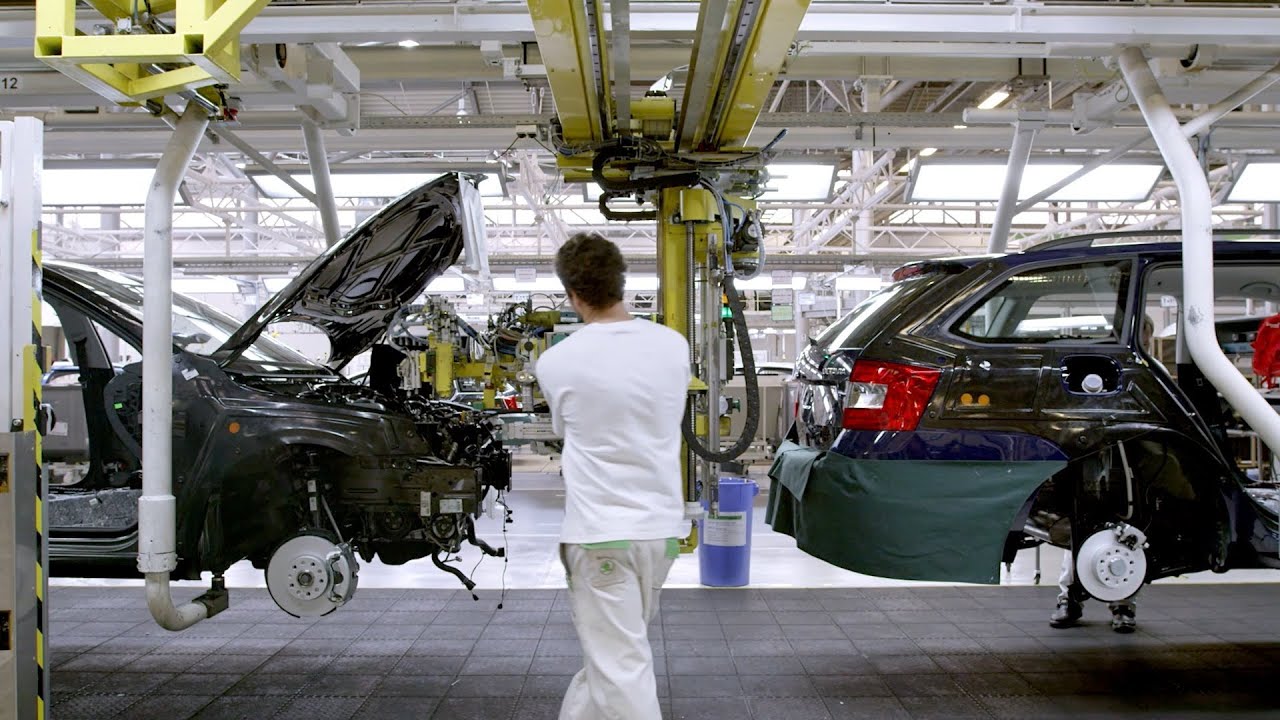
Domestic passenger car production in Germany reached 400,800 units in March, an increase of 3% year-on-year, Kallanish learns from automotive association VDA.
This figure is positively influenced by an additional working day during the month compared with last year, VDA cautions. In the first quarter, just under 1.1 million passenger cars were assembled on German lines, 2% less than in the corresponding period last year.
Production therefore remains significantly below pre-Covid levels. In the quarter, it was 16% below the first quarter of 2019.
Exports rose by 3% y-o-y in March, reaching 310,700 units. From January to March, 799,500 passenger cars were sold abroad, 2% less than the first quarter of 2019.
A clearer upward trend is reported for the registration of new cars. In March, the number of passenger car registrations rose by 16% y-o-y to 294,200 units. In the first quarter, 699,400 units were newly registered, 5% more than in the corresponding period of the previous year.
In the past month, new registrations of electric vehicles rose by 46% to a volume of 100,700 units. The share of electric vehicles in total registrations thus reached 34%, meaning that roughly one in three new registrations in the past month was an electric car.
According to VDA, the impact of tensions in the Middle East is not yet reflected in the current figures. Later this year, higher energy and fuel costs may provide further support for demand for electric vehicles, it notes.

Italian merchant bar producers push up prices
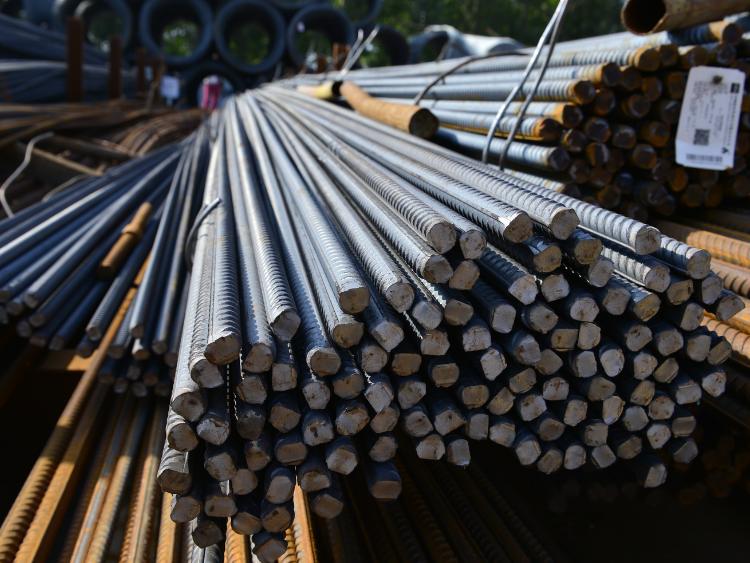
Italian merchant bar producers are pushing up prices by a further €30/tonne ($35.29/t) this week in an effort to cover elevated costs and high scrap prices. This is the latest in a series of successive increases between March and April, Kallanish hears.
The move is being met with resistance from buyers and agents. Several sources say they are “confused” by the pace of increases, arguing that hikes have come too quickly without giving the market time to absorb them or see whether they can be passed on downstream.
This is happening against a backdrop of weak economic conditions and subdued consumption, with buyers saying they can no longer afford to purchase the same volumes as in previous months at current price levels.
Sources describe a fractured market, with producers displaying an optimism increasingly disconnected from reality while the downstream sector grapples with low demand, financial issues, payment defaults and delays.
Domestic merchant bar prices have risen significantly against pre-conflict levels. Current contracts for merchant bar are heard at €330-355/t base ex-works, equivalent to €750-775/t including size extras. Mills are now asking €370-375/t base ex-works, the same levels as the large distributors.
“Officially prices are increasing but how long can producer continue to sell a few truckloads at higher prices? Downstream we cannot afford high prices; the market is not there to absorb this. Soon we will see the impact of this downstream,” a source argues.
One agent says he has been selling at increased prices sensibly for lower volumes, which is about a third of what he sold before prices started to climb at the beginning of March.
Section prices meanwhile are increasing gradually as the market leader implemented a hike of €30/t before the Tube and Wire trade show with new levels at €830/t. The first category of sections is now at €800-820/t delivered on average. However, some levels of below €800/t from stock are heard.
Rising transport costs are emerging as a further pressure point in the market. Multiple truck drivers are reportedly refusing to load and transport material at current fuel prices, which have risen sharply in the context of the Middle East conflict. Drivers say they are awaiting a government decree expected to provide relief on fuel costs.