CS WIND Portugal reinforces its role in the global wind energy industry and announces intention to join EUROMETAL
CSWind, the world’s largest wind‑tower manufacturer and a leading producer of offshore foundations, is strengthening its global presence through CS WIND Portugal, one of the region’s most relevant industrial employers and an important contributor to the European economy.
Operating in Portugal for over two decades, the Onshore plant in Sever do Vouga has produced most of the country’s onshore wind towers and exports more than 700 tower sections annually to European markets. At the Port of Aveiro, the Offshore plant in Gafanha da Nazaré has focused on offshore tower manufacturing since 2019 and is today the largest supplier of offshore towers to the U.S. market and the highest‑capacity producer in the EU.
With nearly 1,000 employees in Portugal, CS WIND is driven to deliver high‑quality, large and heavy steel structures with an outstanding customer experience, backed by responsibility, efficiency, and continuous innovation. Deep industrial know‑how and full vertical integration ensure capacity, speed and reliability for the world’s most demanding renewable‑energy projects.
Supported by the global CSWind Group, strong technological leadership, and a well‑established reputation within the wind‑energy value chain, CS WIND Portugal stands as a trusted partner in the global energy transition, playing a vital role in enabling the worldwide expansion of sustainable energy solutions.
To further strengthen collaboration across the European steel value chain, CS WIND Portugal announces its intention to join EUROMETAL, supporting shared industry goals in sustainability, competitiveness, and innovation. Through this membership, we aim to align industry voices and combine strengths to advocate for pragmatic updates to European import regulations covering steel and its derivatives. We will actively contribute to policy dialogue that fosters fair competition, resilient supply chains, and a market environment that accelerates investment and job creation in the energy‑transition ecosystem.
Read more: cswind.com
Salzgitter accelerates transformation despite challenging conditions in 2025


WV Stahl criticizes procurement law: Transformation cannot be achieved without concrete criteria

Global production declines for seventh consecutive month
Global crude steel production fell for a seventh consecutive month in March, by 4.2% on-year to 159.9 million tonnes. Besides India, the US and Germany continued to buck the trend, Kallanish notes from worldsteel data.
China saw output fall 6.3% in March to 87.04mt, but Indian output surged 9.4% to 15.3mt. Although Japanese production declined 4% to 6.9mt, South Korean output inched up 1.5% to 5.4mt.
EU output fell 4.6% in March to 11.35mt, although this was up considerably on February. The on-year decline happened despite German production surging 7.5% to 3.3mt and Italian output inching up 0.2% to 2.06mt. Spanish and French output were however estimated to have slumped significantly.
Turkish output rose 6.4% to 3.33mt (see separate story).
US crude steel production surged 5.2% in March to 7.2mt, but Brazilian output fell 2.5% to 2.8mt.
Russian production was estimated down 11.4% to 5.4mt and Ukrainian output was confirmed to have surged 28% to 702,000t.
January-March global crude steel production thus fell 2.3% on-year to 459.16mt, with India, the US, South Korea, Turkey and Germany bucking the trend.


EU flags expiry of GOES anti-dumping duties
The European Commission has published a notice of impending expiry for anti-dumping duties on imports of certain grain-oriented flat-rolled products of silicon-electrical steel (GOES) from China, Japan, South Korea, Russia and the US, Kallanish notes.
The current duties were imposed following a previous expiry review. Unless an expiry review is requested and initiated, the measures are set to lapse on 18 January 2027.
EU producers may submit a request for review no later than three months before the expiry date, meaning by 18 October 2026, supported by evidence that ending the measures would likely lead to continued or renewed dumping and injury.

Stegra, Sunfire suggest IAA must be reviewed
“Green” steel start-up Stegra and electrolyser manufacturer Sunfire believe the EU’s Industrial Accelerator Act needs to go back to the drawing board to boost steel decarbonisation, Kallanish reports.
Debating the act during a webinar hosted this week by trade body Hydrogen Europe, Stegra public affairs director Ola Hansén said the definition of low carbon needs to be reviewed as it is currently not fit for purpose.
“I am sad to say, when it comes to flat steel, hot-rolled coil production [classification and labelling], it was a complete catastrophe,” Hansén claimed. “With the thresholds proposed, all current European flats production will be considered low carbon. All current flat steel production in China would also be eligible for the classification of low carbon … and the US too, meaning that it is not helping the transition.”
“If 100% of current production already meets low-carbon [definition], why put a 25% quota in the public procurement? I mean, there is no sense if our production already meets that,” he said, calling for more ambitious targets.
His counterpart at Sunfire, Christopher Frey, added that industry needs a “transparent and meaningful” labelling scheme for net-zero steel to create demand for green hydrogen and electrolysers, as proposed under the lead market concept. “What we have heard between the lines is a bit concerning. I would agree that we have to go back to the drawing board and make this more meaningful,” he said.
Frey also highlighted the “special relationship” between the steel and electrolyser industries. “We are customers of the steel companies, but obviously we also want the steel industry to drive the demand for green hydrogen and for our products … We source quite a lot of steel for our electrolysers and exclusively from Europe,” he noted.
Sunfire and peers estimate the steel industry could potentially provide around 9 gigawatts of electrolysis demand if the right framework is in place. Yet, Frey acknowledges the steel industry is facing strong competition, which is challenging decarbonisation efforts.
Stegra sees the proposed low-carbon steel credits “as the most promising lead market … more than any Industrial Accelerator Act.” Hansén explained that having quotas for low-carbon steel usage in the automotive sector, for example, will provide investor certainty and help unlock progress in different industries. “In the end, the additional cost of a couple of hundred euros, if you use only low-carbon steel, compared to the price of a car, is very limited,” he said, referring to a shared development approach.
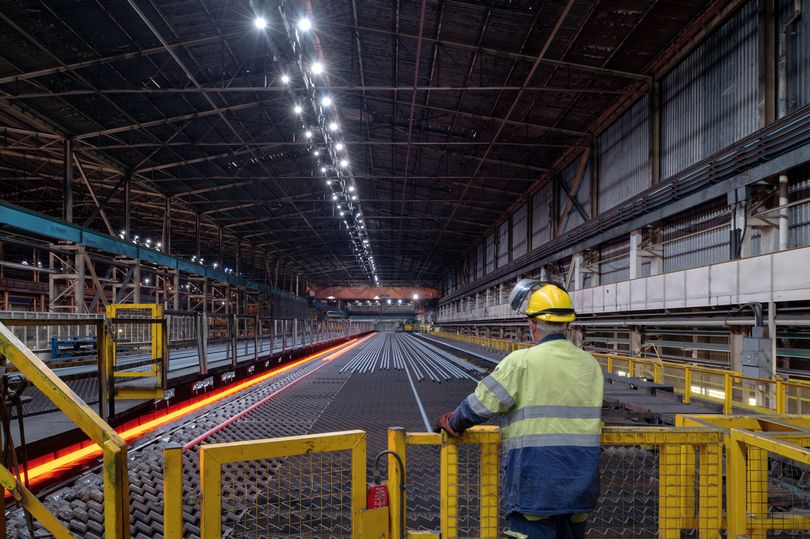
Italian rebar market stalls as buyers resist €440
Italian rebar transaction prices are holding stable week-on-week despite producers continuing to push hard for further increases, Kallanish learns. The market appears to have reached a standstill, with buyers refusing to pay the new asking price of €440/tonne ($517.55/t) base ex-works.
Multiple buyers say they are unable to pass increases on downstream. One construction company has decided to postpone future building projects due to sharply rising raw material costs, including for steel and cement. The company says it cannot absorb an average cost increase of around 40% and is scaling back activity in an effort to preserve a slim margin.
The rapid succession of price increases in Italy following the US-Iran conflict has left Italian rebar among the most expensive in Europe.
Large buyers have stepped back from the market, relying on their stocks. Smaller buyers continued to purchase until last week at €410-420/t base ex-works, limiting their purchases to a few truckloads at a time to cover immediate needs only. Including size extras of €260-270/t, effective transaction prices for Italian rebar are currently assessed at €670-680/t ex-works, up from an average of around €540/t at the start of March, sources suggest.
Mills are maintaining an uncompromising attitude, preferring to lose orders rather than decrease prices, even as sales volumes remain tight. Sources note that if sales continue at current low levels, producers will eventually be forced to reduce output.
Many buyers are questioning how long mills can maintain such rigidity. “There is a will to buy and work, but the market is now stuck and we don’t even know if we will manage to pass on the €410/t downstream,” one source comments.

Payment delays, weak demand impact Italian longs distribution
Italian long products service centres and distributors report a quiet April following an improved March. Multiple companies tell Kallanish that downstream consumption remains limited amid deep concern over rapidly rising prices, cost inflation and cutomers’ financial difficulties.
Two purchasing groups report widespread payment delays with buyers unable to absorb current increases. Mill forecasts of demand improvement in the second quarter are not supported by any positive consumption signal or economic indicator. The Italian economy, which outperformed France and Germany last year, is now slowing, with depressed industrial production growth for several months.
“Customers buy day to day and only in small volumes. I tend to buy second-choice material, which can be of very high quality, and we have some work but not enough to be able to pay the €100/tonne ($117.62/t) plus increases producers are asking. Steelmakers have now become a powerful lobby and are so protected they will be the only ones able to make a profit this year with a disastrous effect downstream that will sooner or later backfire,” one service centre source comments.
Distributor prices are struggling to move higher despite what one purchasing group describes as “producers’ determination to keep the market tense”. The source notes this is not solely an Italian issue. Some of the lowest coil derivative prices in Europe have been recorded in Germany.
Since the close of the Tube and Wire trade show, German buyers have resumed some restocking activity, though not at increased prices. German values have also been impacted by high import volumes in the first quarter, particularly of tube from Turkey. However, the combination of the melt and pour regulation and new safeguard is expected to limit imports, which should push German tube prices higher.
Despite this support, Italian tube consumption remains in line with 2025 levels, the purchasing group source says. A member of the second purchasing group laments a complete lack of visibility in tube sales and difficulty passing increases on downstream.
One longs agent says he is confused by the succession of increases, noting no visibility and order sizes of between 30 and 90 tonnes, making it difficult to advise customers.
Several sources believe the current disconnect between the steelmaking and end-use manufacturing sectors will bring the market to a standstill within months, with the consequences only felt upstream after some lag.
One source adds a wider policy critique: “The key was not adopting Trump-style protectionism, as Europe is doing, to only protect one segment of the industry, producers, but stimulating demand. This strategy, however, is not in line with current and future European policies.”

Piotr Sikorski calls for protection of the entire Steel Value Chain at the European Economic Congress
At the 18th European Economic Congress 2026 in Katowice, Piotr Sikorski, EUROMETAL Board Member and President of the Polska Unia Dystrybutorów i Przetwórców Stali (PUDS), delivered a compelling intervention during the session dedicated to the iron and steel industry. His message was clear and urgent: Europe must rethink its approach to the steel market and move decisively to protect the entire value chain, not just isolated segments.
Framing the steel market as a “connected vessels system,” Sikorski emphasised that all actors—steel producers, distributors, processors and end-users—are deeply interdependent. Pressures affecting one part of the system inevitably ripple across the whole. In this context, he pointed to the growing structural imbalance between global steelmaking capacity and actual production, recalling that excess capacity reached around 650 million tonnes in 2025, with further expansion expected in Asia and the Middle East. At the same time, Europe’s share in global steel and metal production continues to decline, reflecting a steady erosion of competitiveness.
According to Sikorski, this loss of competitiveness is driven by a combination of high energy costs, regulatory uncertainty and an increasingly complex legislative environment. European producers and downstream industries face costs that are significantly higher than those of their global competitors, while the policy framework continues to evolve without providing sufficient predictability. Beyond supply-side challenges, he warned that regulation is now also weighing on demand, further weakening the industrial ecosystem.
While apparent steel consumption has shown some resilience in recent years, the underlying reality is far more concerning. Key industrial sectors such as automotive, machinery and household appliances are experiencing negative dynamics, signalling a deeper structural shift. Sikorski underlined that this is not simply a cyclical downturn but the result of a profound transformation of the market, driven by the rapid increase in imports of steel-containing products. Over the past fifteen years, imports of items such as steel cables, chassis and components for air conditioning systems have surged dramatically, particularly in Poland but also across the European Union. This trend highlights how international competitors are increasingly targeting downstream segments, effectively bypassing traditional trade defence measures focused on primary steel products.
This development lies at the heart of Sikorski’s call to action. Existing instruments, including anti-dumping measures, safeguards and CBAM, are largely designed to protect upstream production. However, when exporters shift towards semi-finished or finished goods with high steel content, these tools lose their effectiveness. The result is growing pressure on European manufacturers, distributors and processors, who find themselves competing with imported products that fall outside the scope of current protections.
For EUROMETAL and PUDS, the conclusion is straightforward. Europe must adopt a comprehensive, value chain approach to steel policy. Protection mechanisms need to be extended to downstream products, ensuring that all parts of the ecosystem operate on a level playing field. The objective is not only to safeguard steel production, but also to preserve the industrial base that depends on it. Without such an approach, the risk is clear: protecting one segment of the market while allowing others to weaken ultimately undermines the entire system.
Sikorski acknowledged that a number of policy tools are already on the table at European level, including CBAM, the Net-Zero Industry Act and emerging discussions on local content requirements. However, these initiatives remain fragmented and do not yet fully address the challenges facing downstream sectors. What is needed now is greater coherence, better implementation and a clear recognition that demand-side measures are as important as supply-side support.
In his closing remarks, Sikorski delivered a powerful reminder of what is at stake. Europe may succeed in producing the greenest steel in the world, but without a strong and competitive customer base, that steel will have no market. Distributors, processors and manufacturing industries must therefore be placed at the centre of the transition. Protecting the steel value chain in its entirety is not only an industrial necessity; it is a strategic imperative for Europe’s economic resilience and autonomy.

EU HRC prices stay largely rangebound as participants await safeguard clarity
European hot-rolled coil prices were largely stable on April 22 as market participants noted further direction on the EU’s new safeguard measures would be needed before making any sizeable trading decisions.
“The market will stay the same, quiet with normal demand until quotas with numbers allocated to each country are announced,” one Italian-based trader said, also highlighting that some people were underestimating the impact of the measures.
Offers for domestic HRC in Italy were reported at Eur700-720/mt ex-works, while tradable values were pegged at Eur695-700/mt ex-works.
In Germany, some service centers with leftover stock were reported to be offering material on a lower basis compared to mills, who were holding offers firm.
Service center offers were reported at Eur705/mt ex-works Ruhr, while mill offers were heard between Eur720-750/mt ex-works Ruhr. Workable levels for normal tonnages were reported at Eur700-715/mt ex-works Ruhr, while sources noted for larger tonnages, Eur680-695/mt would be achievable.
“To be honest, the EU mills are quite happy with their feet on the desk,” one Benelux-based service center said. “They are cherry picking orders as there are no imports coming.”
A North European-based mill source confirmed the regulatory situation was positive for sellers, but noted that they had been unsuccessful in their attempts at hiking prices to Eur750/mt, and that further increases would be more likely to come in H2.
Platts assessed in Northern Europe at Eur705/mt ex-works Ruhr, down Eur5 day over day, and in Southern Europe at Eur695/mt ex-works Italy, up Eur5 across the same period.
In the import market, uncertainty remained the main talking point.
“If you make a purchase today, it would be for July customs clearance, and nobody knows what this will look like,” the same trader said.
Algerian HRC offers for S355 grade material were reported at $830/mt CFR Italy, excluding CBAM costs, but sources deemed this unworkable in the Italian market.
Turkish export offers were reported at $630-$650/mt FOB, unchanged from levels heard last week, but participants said it would be too risky to import from the region given the upcoming regulatory changes.
Platts assessed imported HRC in Northern Europe at Eur550/mt CIF Antwerp, and in Southern Europe at Eur540/mt CIF S. Europe, both stable day over day.
Author: Riley Waters | Charles Thompson