


Tube fair leaves some market players disappointed
Market players have said that the recent Wire+Tube trade fair in Düsseldorf provided mixed sentiment on pricing trends, to the disappointment of some.
“There was a lot of chatter around the fair of price hike announcements and whatnot, but effectively I heard nothing concrete, actually,” a Ruhr-based buyer of coil tells Kallanish.
For him, the two-hour journey may not have been worthwhile. “Some colleagues who went there for decades have said they might not come again,” he notes.
Another German buyer highlights that one mill group had lowered its coil prices to collect orders in the week prior to the fair (see separate article). This appears to have slowed upward momentum.
Offer values of €730/tonne ($855) and above for hot-rolled coil had been heard prior to the fair and reiterated at the event, but not confirmed by the mills.
Latest offers are now in the €700-730 range, after the temporary downward dip below €700.
Against that, makers of tubes have been more outspoken and concrete with their announcements of pushing up prices by €50. According to buyers, that move was expected as it was overdue.
The development of tubes prices was seen lagging far behind the hikes achieved for coil in recent months. “While coil took leaps, tubes went up in drips at best, by maybe €5 per week,” one source says.
Separately from the trade fair, one mill group informed those who seeking quotes that its next offers would be €50 higher, mostly for products like sections and merchant bar, which it did not feature at the fair.
Elsewhere, a large buyer for construction tells Kallanish that one producer now aims for a base price of €480/t for straight rebar. Well above the €430 targeted by most northwestern European rebar mills. According to the buyer, that offer is an outlier, and not really echoed by the wider market.
APAC ‘green’ steel demand could hit 6.1mt: RMI
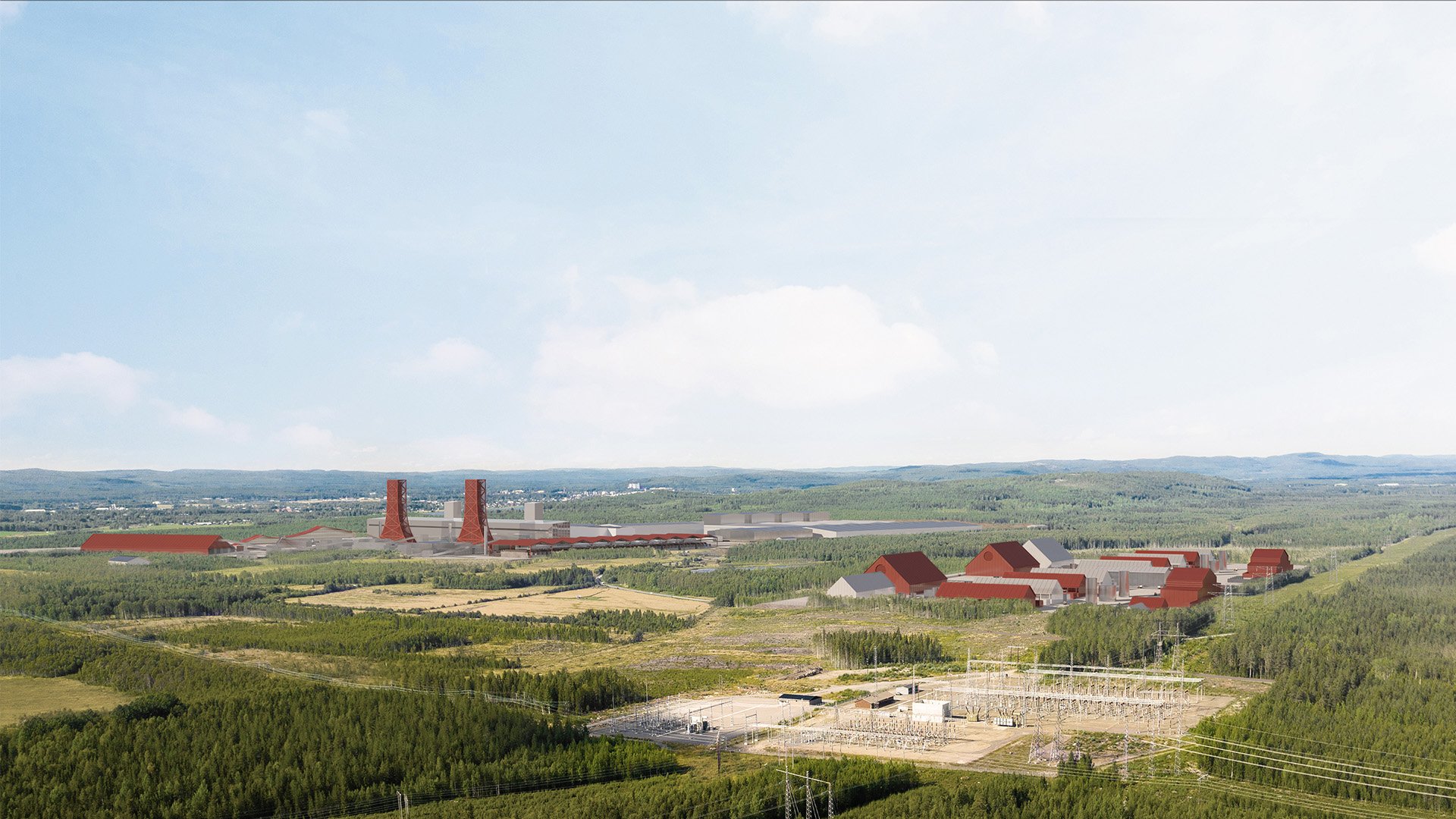
Private sector demand for “green” steel across seven APAC countries could reach 6.1 million tonnes/year by 2030, according to a new report by clean energy think tank Rocky Mountain Institute (RMI).
Of this, ore-based steel is estimated to account for 80% of demand, while scrap-based steel accounts for the remaining 20%. Total steel demand across the seven analysed countries – Japan, South Korea, Vietnam, Indonesia, Malaysia, the Philippines, and Thailand – is projected to reach 241m t/y by decade-end, Kallanish finds from the report.
If public procurement aligns with 2030 emissions targets, governments could unlock a further 11.5m t/y demand for near-zero emissions steel in the region. However, only 2.5mt of ore-based green steel capacity is expected to be operational by 2030 in the APAC region, excluding China, RMI estimates.
“This gap creates opportunities for new clean supply projects, some of which could be met by green iron imported from cost-competitive regions like Australia to complement domestic production,” the report notes.
Steelmakers across the region are exploring a range of decarbonisation solutions. These include injecting green hydrogen to reduce the use of coking coal in blast furnaces, or replacing coal with green hydrogen to produce DRI, which is subsequently melted in an electric arc furnace.
Green H2 DRI-EAF, paired with renewable energy, is currently the leading large-scale, commercially viable technology to remove nearly all iron production emissions, RMI points out. If all analysed countries replaced pig iron with green H2-based DRI, it would collectively reduce 211mt of CO2 equivalent per year – equal to 64% of these nations’ total steel emissions, the report claims.
Despite the projected green steel demand, several barriers impact buyers, including “supply chain complications, unclear product definitions and standards, and premiums for near-zero emissions steel products,” RMI points out. It recommends demand aggregation mechanisms, as well as government actions and public incentives, as “critical to scaling the green market” in this region.
“A combination of supply-side and demand-side incentives, coupled with stringent emissions standards, is needed to unlock demand at scale and support supply development,” the report concludes.
The report comes as the Institute for Energy Economics and Financial Analysis (IEEFA) recently warned against the South Australian government’s reliance on natural gas for the planned revival of the Whyalla steelworks. This, the think tank said, could undermine the project’s long-term competitiveness and delay South Australia’s green iron and steel ambitions.

EU widens Russia sanctions to scrap, metal goods
The EU has widened its sanctions on Russia and Belarus under broader packages covering finance, trade, transport, services and anti-circumvention measures, with steel and metals among the sectors impacted, Kallanish notes.
The new measures tighten controls on parts of the steel supply chain by targeting revenue from steel scrap, metals, minerals and industrial raw materials, while restricting exports of steel articles, welding consumables, metalworking tools, lubricants and related industrial equipment that could support Russian or Belarusian capacity.
For Russia, the package adds import bans including CN 7204 ferrous waste and scrap, CN 7404 copper waste and scrap, CN 7503 nickel waste and scrap, and CN 7602 aluminium waste and scrap.
Export restrictions have also been expanded to include CN 7318 screws, bolts, nuts, rivets and washers of iron or steel, CN 7325 other cast articles of iron or steel, CN 8311 welding wire, rods, electrodes and similar metal-deposition products, and CN 8457 10 machining centres for working metal.
For Belarus, the measures similarly add import bans on CN 2601 iron ores and concentrates and CN 2619 slag, dross, scalings and other waste from the manufacture of iron or steel. While export restrictions now cover CN 7318 iron or steel fasteners, CN 7325 other cast articles of iron or steel, and CN 8311 welding and brazing products, alongside metalworking tools and industrial-use lubricants.
Some measures include transitional wind-down periods for pre-existing contracts, including a Belarus exemption until 25 July 2026 for certain newly listed goods.

Tata Ijmuiden runs direct sheet plant emission tests
Tata Steel Nederland has started trial operations at the direct sheet plant (DSP) at its works in Ijmuiden, after the plant exceeded emission standards for chrome 6.
The DSP was shut down on 3 April after measurements showed that the emissions were well above the allowed standard.
Tata has been investigating the cause of the overrun in recent weeks and reports that it has been found with the required adjustments being made, Kallanish learns from regional authority North Sea Canal Area Environment Service (ODNZKG).
The steelmaker started heating up the installation on 21 April with the trial runs being carried out from 22 April exclusively for the purpose of carrying out measurements.
After the trial runs, the DSP will be stopped again, and will remain so until ODNZKG has determined whether the installation can be put back into use.
At Ijmuiden’s DSP, liquid steel is transformed into hot rolled steel in one continuous process. The resulting product is used in electrical components such as slats for electric motors and transformer parts, but also in car seats, furniture and façade panels. It has the capacity for 1.4 million tonnes/year.

European domestic steel HRC market remains quiet, but some import bookings heard
The European domestic market for steel hot-rolled coil (HRC) remained quiet on Friday April 24, with no new trades heard during the day. Both buyers and sellers were waiting for more clarity on the new EU trade regime, and especially the country-specific import-quota allowances that will come into force on July 1, 2026.
Availability of material scheduled for delivery in June was limited, with two German producers reported to be inactive in the spot market because of strong order backlogs. Meanwhile, a supplier in the Benelux region was expected to restart production next week after a maintenance outage.
Estimates of workable prices were heard in the range of €700-720 ($819-842) per tonne ex-works, which was reflected in Fastmarkets’ daily steel hot-rolled coil index, domestic, exw Northern Europe, assessed at €710.00 per tonne on Friday.
The index was up by €1.67 per tonne week on week, but down by €6.00 per tonne month on month.
The market leader had yet to announce its offers for July-delivery volumes and other mills in the region had not given any firm offers either.
The Italian market was also very quiet during the week. Market sources in the country estimated achievable prices for HRC to be around €700 per tonne ex-works, and local sellers kept their offers at that price or higher.
So Fastmarkets’ daily steel hot-rolled coil index, domestic, exw Italy, was calculated at €700.00 per tonne ex-works on April 24, stable day on day.
The index was also stable in a week on week comparison but was up by €2.50 per tonne month on month.
But while the domestic market was quiet in Europe, market sources reported two Turkish cargoes being sold to the region.
One Turkish supplier was heard selling its cargo at $640-650 per tonne FOB, while another seller was reported selling 15,000 tonnes of material at €590 per tonne CFR, including anti-dumping duty.
In Central Europe, HRC prices decreased in the week to April 22 with buyers resisting higher offers from mills.
The drop was despite recent increases in production costs as a result of soaring prices for energy and for raw materials linked to the US-Iran war.
This week offers from mills were reported around €695-715 per tonne ex-works, while estimates of workable prices were heard around €700 per tonne ex-works.
No new trading was reported during the assessment period.
Fastmarkets’ weekly price assessment for steel hot-rolled coil, domestic, exw Central Europe, was €695-715 per tonne on Wednesday, falling from €700-720 pert tonne the previous week.

European steel heavy plate prices rise on steady bookings
Prices for domestic and imported heavy steel plate in Europe increased in the week to Thursday April 23, supported by active trading, sources told Fastmarkets.
Slab import prices to Italy stabilized during the week, having increased since the start of March, after the US/Israel attacks on Iran and its wide-ranging response across the region started the conflict in the Middle East on February 28. The conflict has disrupted global trade ever since by pushing up energy-related costs for all industries, including the steel sector and European re-rollers.
Fastmarkets’ weekly price assessment for steel slab, import, cif Italy, was $600-620 per tonne on Thursday, unchanged week on week.
Southern Europe
Deals for domestic heavy steel plate in Italy were heard at €750-790 ($877-924) per tonne ex-works, widening up from €750-780 in the week to April 16.
One producer told Fastmarkets that €750 ex-works was applicable to larger orders (of more than 1,000 tonnes), while €770-780 ex-works applied to medium-sized tonnages, all for June-July delivery.
The latest offers in Italy were reported at €800-830 per tonne ex-works on April 16, but no transactions have been confirmed at that level since then.
Fastmarkets’ weekly price assessment for steel domestic plate, 8-40mm, exw Southern Europe, was €750-790 per tonne on Thursday, widening up from €750-780 on April 16.
Import deals for steel plate from Indonesia were heard at €780-800 per tonne delivered-duty-paid (DDP) Spain, in the week to Thursday, but were not included in Fastmarkets’ CFR price assessment.
Two sources indicated that import prices were around €700-750 per tonne CFR into Southern Europe, but said that while there have been no recent offers to Italy on a CFR basis, offers were now likely to be no lower than €700 per tonne CFR to Italy.
Fastmarkets’ weekly price assessment for steel plate (8-40mm), import, cfr main port Southern Europe, was €700-750 per tonne on Thursday, up from €664-700 on April 16.
Northern Europe
In Germany, fresh deals for domestic steel plate were reported at €840-860 per tonne ex-works in the week to Thursday, up from €800-830 per tonne ex-works in the week to April 16.
One trader said that only one producer had been offering material at lower prices, while a distributor reported bids to that producer at €800-810 per tonne ex-works.
The trader said that, despite there being “no boom in orders,” buyers were still booking steel plate, while the distributor told Fastmarkets that “stockholders had considerably reduced their inventories by the end of March.”
German mills have been citing higher production costs since the escalation of tensions in the Middle East conflict pushed up energy costs.
Fastmarkets’ weekly price assessment for steel domestic plate 8-40mm, exw Northern Europe, was €840-860 per tonne on Thursday, up from €800-830 on April 16.
Steel plate import deals from Indonesia to Antwerp were reported €780-800 per tonne DDP, sources said.
In the week to April 16, Indonesia had been offering plate at €725 per tonne CFR Antwerp, but no fresh deals were heard at that level in the week to Thursday.
Sources said the latest relevant import prices into Northern Europe were around €700-750 per tonne CFR.
Fastmarkets’ weekly price assessment for steel plate (8-40mm), import, cfr main port Northern Europe, was €700-750 per tonne on Thursday, up from €700-725 a week earlier.
Europe’s green steel market split between ambition, affordability
The European green steel market continued to show fragmented demand with spot activity remaining close to nil amid high premiums, sources told Fastmarkets on Thursday April 23.
Demand for steel produced with reduced carbon emissions footprint across Europe remained patchy and regionalized.
A mill source reported an inquiry for 200 tonnes for green steel from a construction company, noting increased amount of inquiries for green material from
construction sector in general lately, but noted that high premiums remained a stumbling block.
“Some buyers inquire for green steel, but refuse to pay three-digit premiums, noting that other steelmakers can sell green steel cheaper,” an electric-arc furnace (EAF)-based green steelmaker said. “But here we once again stumble over the lack of clarity on green steel definition in Europe. Naturally, steel with carbon footprint of 1.6 tonnes of CO2 per tonne of steel is cheaper than steel with carbon footprint below 1 tonne of CO2 per tonne of steel. But these are two different products,” they added.
Under Fastmarkets’ framework, European green steel refers to material produced with combined Scope 1, 2 and 3 emissions not exceeding 0.8 tonnes of CO2 per tonne of steel.
Suppliers reported offers for premiums for material witch such specs around €200 ($234) per tonne, with one supplier even aiming for €300 per tonne.
Achievable premiums, however, were lower — at €150-170 per tonne, sources said, and mainly achieved for project business rather than spot sales.
Overall, industry sources continued to report project-driven demand for green steel from construction and wind sectors, as well as from automakers and white good producers, while spot activity remained negligible.
“The cost of steel in a car or in a washing machine is relatively low, so it’s affordable. For distributors and steel-service centres buying green steel for stock is simply freezing money,” a buyer in Germany said.
Buyers estimated workable green steel premiums for spot market from €0 to €100 per tonne during the assessment week.
A buyer source said that green steel premiums in the three-digit range were attainable only in project-driven transactions, noting that higher premiums are typically limited to public procurement and are otherwise unaffordable.
An automotive end-user told Fastmarkets it is locking in green steel through offtake agreements with upcoming DRI-EAF producers, maintaining that currently available scrap-based green steel is not “fully green.”
Therefore, the green steel uptake across the market remains gradual and fragmented.
Fastmarkets’ weekly assessment of the green steel domestic, flat-rolled, differential to HRC index, exw Northern Europe was stable at €100-160 per tonne on Thursday.
Meanwhile, Fastmarkets’ assessment of the flat steel reduced carbon emissions differential, exw Northern Europe was €0-50 per tonne on Thursday, also stable week on week.
For steel produced in blast furnaces with reduced carbon emissions of 1.4-1.8 tonnes of CO2 per tonne of steel, offers for premiums were reported at €70 per tonne during the assessment week.
Buyers’ estimates of tradable prices were around €0-50 per tonne, with no new trades reported.
A source on the sell side indicated that, in certain cases, transactions for such material can be concluded without a premium for marketing reasons.

Polish industry strikes positive tone despite challenges
Poland’s steel industry is fairly upbeat despite challenging external forces, thanks to supportive regulation and the revival of a national steelmaking icon. However, a reduction in energy costs, among the highest in Europe, and protection for downstream steel users will be critical to the industry’s future survival.
This was the conclusion of the steel industry panel during Friday’s European Economic Congress in Katowice attended by Kallanish.
Henryk Orczykowski, chief executive of distributor Stalprofil, even went as far to say that “the European steel industry is currently seeing its largest opportunity for future development of the 21st century” – what he called “a controversial argument”.
This is because it has been recognised by policymakers as strategic for economic development and defence. It has received support measures at EU level, such as CBAM and the new trade regime, and in Poland it is benefiting from local content regulation, the repolonisation drive, and infrastructure spending, he noted.
Adrian Sienicki, ceo of Huta Czestochowa, which went bankrupt under former owner Liberty and has since been acquired by the Polish government, said the mill has produced 500,000 tonnes of steel since “we basically got up off our knees”. Over 20% of this goes for export. “We’ve become part of the local content chain, maybe somewhat quietly,” he added, supplying product requested by domestic customers, such as for a recent naval vessel.
Downstream, as well as upstream steel industry players will need protection, with the most effective measures being “both simple and tight, regardless of products, regardless of countries [of origin]”, Sienicki said. Without specifying which, he acknowledged the will to help “the country that is victim of an attack” as a result of war, but added this should not happen at the cost of domestic industry.
Polish Union of Steel Distributors and Processors (PUDS) president Piotr Sikorski expressed concern over the growing volumes of steel-containing product imports into Europe, and the fact steelmaker-protecting trade measures have not addressed this. “We have to start thinking [about the steel market] in a complex way. This means, using the same trade defence, we need to cover all elements of the supply chain,” he noted. The simplest way would be to extend downstream the scope of measures that already exist.
While designed to support industry, the Industrial Accelerator Act does not contain a Made-in-EU mandate for steel, while it remains to be seen how local content regulation is implemented in Poland, he added.
ArcelorMittal Poland (AMP) chief financial officer and board member Adam Preiss meanwhile said his firm is “definitely happy with the introduction of CBAM” and already seeing its first positive consequences in the market. “The question is will it [also] be protection for our customers’ products, will they get driven out of the market?”
The most pressing steel industry requirement is low-cost energy, he continued. Polish energy prices exceeding €100/MWh make domestic industry uncompetitive on an EU scale, let alone globally.
Correcting earlier press reports that suggested AMP has scrapped its plan to transition to electric arc furnaces, he said the project has been “shelved” rather than cancelled and “is waiting for better times”, given uncompetitive energy costs.
Polish coke producer Koksownia Czestochowa Nowa ceo Marek Serafin pointed out it is critical to find a balance between protectionism and competitiveness – as too much of the former always hurts the latter. He suggested it is not necessary to produce everything in Poland or the EU, but what is important is to have control over key stages of the supply chain.
Coke makers are in a “system conflict” between themselves and steelmakers. “The market is open, everyone can bring in as much coke as they want, coke is not subject to ETS … there are no entry barriers,” Serafin noted. Coke makers have three ways to survive. Increase operational efficiency; look into downstream integration, through mill partnerships or long-term agreements; and lobbying, which the coke industry has not done as effectively as steelmakers, he added.
Whereas previously it was not possible to push the narrative that “there is no steel without coke”, this situation is changing now, he added. Polish coke makers could join hands to work on measures that support the industry’s continuity at least for another 10-20 years, to feed continued blast furnace steelmaking.
Author: Adam Smith