

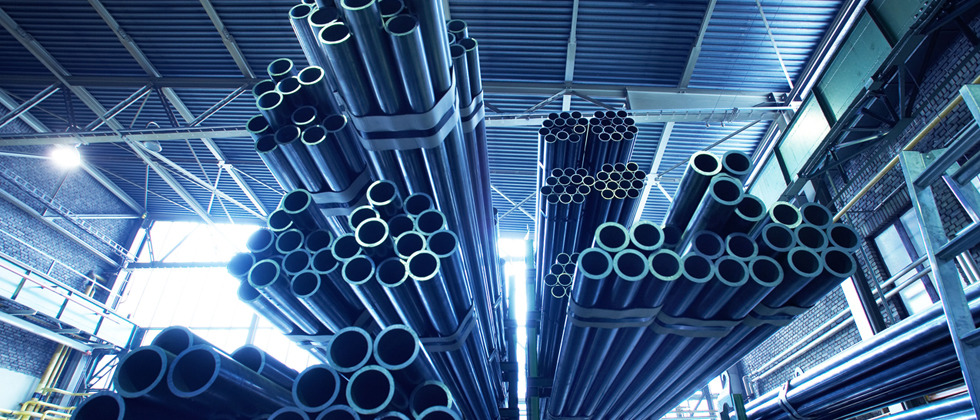
Saarstahl Ascoval signs long-term supply agreement with Mannesmann Precision Tubes
France-based Saarstahl Ascoval, part of the Saarstahl Group, has announced that it has signed a long-term supply agreement with Germany-based Mannesmann Precision Tubes. The partnership includes the supply of steel semifinished products for pipe applications in the automotive and industrial sectors.
The companies will also cooperate closely across the entire supply chain and develop tailored logistics solutions to ensure efficient delivery to end customers.
Focus on low-carbon steel production
Saarstahl Ascoval highlighted its positioning as a supplier of carbon-reduced steel, produced via electric arc furnace technology using scrap. According to the company, this production route enables a carbon footprint reduction of up to 70 percent compared to conventional blast furnace-based steelmaking.
The company stated that contracts such as this provide planning security for its operations and support further development of its production facilities. The agreement also reflects growing demand for low-carbon steel beyond traditional segments, expanding into automotive and industrial applications.
Investments in EAF capacity underpin strategy
In recent years, the Saarstahl Group has invested in modernizing its electric steelmaking infrastructure, enabling large-scale production of environmentally friendly steel.
The cooperation with Mannesmann Precision Tubes is expected to strengthen its position in the European market for sustainable steel solutions.
Author: SteelOrbis Editorial Team


UNESID: Spanish consumption seen growing, imports to cool
Spain saw apparent steel consumption (ASC) decrease 1.2% year-on-year in 2025, but a rebound is forecast this year, says Alfonso Hidalgo de Calcerrada, head of the economic studies department of Spanish steelmakers’ association Unesid.
During the last quarter of last year, demand climbed ahead of the implementation of CBAM. “The consumption growth is reflected in the latest transactions in Q4 2025, where importers increased their purchases before this complex mechanism came into force,” Hidalgo observed during the EUROMETAL Steel Net Forum Iberia in Santander last week attended by Kallansh. “At the beginning of this year [January-February] volumes declined.”
Spain’s 2025 ASC reached 3.31 million tonnes, making it one of the few leading EU countries to record a decline versus 2024. By comparison, ASC in Italy was 4.6% higher y-o-y, Germany’s grew by 0.4%, whilst France saw an increase of 0.2%.
Spanish steel consumption in Q4 alone accounted for 1.72mt. This volume was 16.4% higher than 1mt in Q3 2025 and up 9% y-o-y.
“The increase was most pronounced in the consumption of flat steel, which reached 736,000 tonnes in Q4 2025, whilst that of long products stood at 413,000t. Both volumes declined with the entry of the CBAM, with data for the first two months of 2026 showing a sequential fall of 6% and 4%, respectively, for flats and longs,” the economist revealed.
Imports from third countries remained a major cause for concern throughout 2025. However, the implementation of CBAM and the forthcoming introduction of the EU’s new trade defence measure will provide some relief for European industry and bring greater certainty for demand from this year onwards, concluded Hidalgo.

Iberian distributors express optimism over market recovery
Spanish and Portuguese steel distributor representatives see demand improving in the short term amid the complex global scenario, with the market undergoing a transformation. Steel prices should stay elevated with fluctuations of €5-10/tonne ($5.85-11.71/t), delegates told Kallanish during the EUROMETAL Steel Net Forum Iberia in Santander this week.
According to Spanish distributors association Unión de Almacenistas de Hierros de España (UAHE) president Roberto González, stocks in Iberia remain at a higher, healthy level, while companies in the sector have improved their services through innovation.
“Value is being added to the distribution chain because the market demands it. Good management by companies in the face of the challenging economic panorama does not consist only of selling steel, but also of supplying better and innovative services to customers,” González said.
The new economic reality is seen requiring new solutions from both producers and the distribution chain. The sector says that some long-standing concerns remain, but the market is showing positive signs of recovery and an improvement in the outlook.

“There is an increase in stocking in the Iberian Peninsula since mid-2025,” commented Arimany Ferro executive Josep Arimany. “Most of the distribution companies are already in good financial health and are moving more material. Producers are making profits thanks to rising prices, and the steel industry is reporting higher margins.” According to him, after restocking large quantities of steel, distribution centres seem to have transformed “from stockists to collectors”.
Arimany believes that, given the new market reality, the Spanish sector has reached a turning point regarding its future. “We must prioritise quality over sales volume. We are currently undergoing a period of transformation in Europe, in which regionalisation will become more entrenched alongside new protective measures. Our sales prices will be considerably higher than those of imported material. Entries will gradually decline as a result of the new trade regulations, and this will lead to fair competition within the continent, with a focus on value-added offers,” he noted.
Megasa’s representative at the event, Víctor Martínez, assured distributors that producers do not face any dilemma over whether to “produce to sell or sell to produce”.
“We are seeking a sustainable model for our operations. Our investments have brought us a new range of products, meeting very high standards, and this comes at a price. Demand for these products is constantly growing, which presents major challenges for the supply chain. The outlook is positive but very challenging,” said Martínez.
For Gerardo Garcia, an executive at León Tubos, the future of companies in the sector hinges on planning and sustainability. “We must cover our costs and ensure a return on investment amidst a climate of rationalisation and regionalisation,” he observed. “We must focus on local customers and nearby export markets.”
Distribution is an integral part of the production process because it reaches places that manufacturers cannot. This makes it an indispensable part of the value chain, according to Nicolás Rivas, chief executive of steel processor Susider.
“The value of the distribution sector lies in its responsiveness, its proximity to the customer, and its ability to provide innovative and rapid solutions to the market. Its future is linked to sustainability, the restructuring of the value chain with processes not offered by producers, and constructive dialogue aimed at developing complementary relationships with steelworks,” Rivas asserted.
Most participants at the event agreed steel prices will soon stabilise and participants should manage costs and improve customer service.
Some producer representatives, meanwhile, did not rule out the possibility that, in the not too distant future, a phase of corporate consolidation may begin within the distribution chain, which in Spain is one of the largest in Europe. This would be the result of rising inflation and oversupply.

Extend CBAM to more products, steel industry says
EUROMETAL’s chair, Alexander Julius, said manufacturing is decreasing “slowly but surely” in the EU, adding: ”For some manufacturers, it is existential“. But sectors further downstream have other ideas.
The German association VDMA, which represents 3,500 mechanical construction and plant engineering companies, wants CBAM to be abolished, or its shortcomings addressed. In a 20 April op-ed, it said the Commission’s planned expansion risked increasing costs for downstream operators, which needed inputs not available from EU suppliers.
Author: Mariette Thom

EU raises electricity cost support to 70% for energy-intensive industries under crisis framework
The European Commission has announced that it has adopted a new temporary state aid framework aimed at supporting sectors affected by the economic impact of the Middle East crisis.
The Middle East crisis Temporary State aid Framework (METSAF) will remain in force until December 31, 2026, providing targeted and time-limited support.
Increased electricity cost compensation
A key element of the framework is the increase in electricity price compensation for energy-intensive industries.
METSAF allows member states to raise support levels for electricity price compensation schemes approved under the Clean Industrial Deal State aid framework from 50 percent to up to 70 percent of eligible electricity consumption costs, without requiring additional decarbonization commitments.
The framework also introduces a simplified mechanism allowing companies to receive support of up to €50,000 based on estimated fuel consumption, using sector benchmarks.
METSAF allows partial cumulation with aid granted under EU Emissions Trading System (ETS) state aid guidelines. Companies will be able to combine different support mechanisms for up to half of the total aid, improving overall effectiveness.
Steel sector welcomes flexibility
The German Steel Federation (WV Stahl) has welcomed the framework, noting that it introduces important flexibility for energy-intensive sectors. CEO Kerstin Maria Rippel highlighted that the ability to combine electricity price compensation with industrial electricity pricing schemes marks a significant improvement.
WV Stahl stressed that rapid implementation at national level is essential to deliver tangible cost relief. It also noted that under previous rules, limited flexibility reduced the effectiveness of existing support schemes, particularly in Germany.
Structural energy cost challenge remains
Despite the new measures, the steel sector emphasized that high electricity prices are a structural issue rather than a temporary crisis. Short-term aid alone is insufficient to restore competitiveness or support long-term investment.
The federation is calling for permanent policy measures, including full combinability of support instruments and broader eligibility across total electricity consumption. It reiterated the need for a competitive industrial electricity price of €50/MWh, covering all taxes, levies, and network charges, as a key condition for maintaining industrial competitiveness and enabling the transition to low-emission steel production.
Author: SteelOrbis Editorial Team

EU Industrial Accelerator Act risks falling short without clearer rules and stronger industry alignment
A cross-sector debate hosted by the European Economic and Social Committee Employers’ Group has raised concerns that the EU’s proposed Industrial Accelerator Act (IAA) may fall short of its objectives without significant revisions.
Participants included the European Steel Association (EUROFER), Cement Europe, European Automobile Manufacturers’ Association, and European Aluminum.
Lack of clarity creates uncertainty
A key concern is the absence of clear definitions for critical concepts such as “low-carbon materials” and “Made in Europe.” Industry representatives warned that without harmonized definitions, companies face uncertainty in compliance and investment decisions, particularly in capital-intensive sectors like steel and cement.
Stakeholders highlighted the risk of excessive administrative burden, noting that complex reporting, certification, and compliance requirements could turn the IAA into a bureaucratic framework rather than a practical demand-driving tool. This could delay investment decisions and slow the pace of industrial decarbonization.
One-size-fits-all approach questioned
Participants also criticized the IAA’s horizontal design, arguing that it fails to reflect sector-specific realities. Industries differ significantly in cost structures, exposure to global competition, and reliance on public procurement, raising doubts about the effectiveness of a uniform policy approach.
A major weakness identified is the lack of focus on underlying structural issues, particularly high energy costs. Industry representatives stressed that demand-side measures alone are insufficient to restore competitiveness without addressing core cost drivers.
Global competition intensifies pressure
The EU’s approach was contrasted with more coordinated industrial strategies in competing regions, which combine subsidies, local content rules, and streamlined regulation. In comparison, the EU framework was described as fragmented, potentially weakening its global competitiveness.
Concerns were also raised over governance, including the complexity of implementation, limited coordination among member states, and heavy reliance on delegated acts. These factors reduce predictability and create additional legal uncertainty.
Risk of limited real-world impact
Overall, stakeholders warned that the IAA may fail to create clear market signals or guarantee demand for low-carbon products produced within the EU. Without stronger alignment with energy and industrial policy, the framework risks remaining symbolic rather than transformative.
Industry participants concluded that the IAA requires significant adjustments, including clearer definitions, simplified procedures, and a more integrated policy approach. Such changes are seen as essential to ensure the act can effectively support both industrial competitiveness and the transition to a low-carbon economy.
Author: SteelOrbis Editorial Team

SSAB expects stable prices through summer
SSAB’s ceo Johnny Sjöström believes that prices for the company’s products will remain stable through summer before picking up at the end of the third quarter.
After realising higher shipments in the first quarter of 2026 compared to the corresponding 2025 period (see Kallanish 29 April), it expects volumes to remain stable in the second quarter, and for prices to be “somewhat higher”, according to its Q1 earnings release.
The Swedish group with mills in the USA sells a large share of its output on long-term contracts, and is less exposed to the spot market, therefore follows general market trends with a delay. Sjöström, during an online press conference, monitored by Kallanish, pointed at the company’s high share of long-term contracts, and noted that price increases will become obvious at the end of the third quarter.
By then, distributors will be destocking volumes built up in preparation of the new safeguard measures in the European Union.
Sjöström dismissed suggestions that high inventories could cause a price fall towards June when asked. “I don’t think so; they will maybe stabilise, that’s my speculation.”
Group cfo Leena Craelius explained the structure of long-term contracts are typical for the group with its special products. Of the SSAB Europe division, 15% of the volumes are on annual contracts, 25% are on half-year contract, which she notes is “quite high”, while 40% are on annual contracts, with only 20% on a spot basis.
In the Special Steels division, spot business makes up only 5%. The overall mix of contracts has not changed, she said.
On price increases, Sjöström noted that “all increases we have announced were accepted,” adding that there seems to be a consensus on the market. Right now, the company is just about to open up books for June orders. “What we do is we lift prices before we open the books,” and the company tries to avoid adjustment by mid-month, but is still open to negotiations, he said.
He added that the group’s sales of special steels in the USA are benefiting from the fact that Canada’s Algoma has withdrawn from the US market.
For the group’s steel products that are used for defence, he noted that “we have extremely good margins,” for this sector, and that demand will go up.
However, he noted that the development procedures are slow, and can take two years for a tank, for example.
Author: Christian Koehl


Wire mesh shortages continue in Germany
Some rebar sources in Germany and Austria are reporting an apparent shortage and longer lead times for wire mesh. However, the issue could be temporary.
Initially heard in Austria, several buyers in Germany concur that they are facing lead times of more than four weeks, compared with less than a week in 2025. The sources assure that orders are not declined, but will take longer to be served, and that, consequently, prices are inching up by more than those for rebar.
For wire mesh, base prices are normally €100/tonne ($117) above straight rebar, but currently fetch a premium of €110-120, with deals at €560-570, Kallanish hears from market players. With size extras of €210, this results in €770-780 delivered.
One observer at a large distributor attributor believes that wire mesh production stalled in the winter months “when it was pretty cold for construction to continue as usual,” and has not quite caught up yet.
A manager at another big distributor agrees, he says that deliveries that were delayed from winter months have lately taken freight capacity away from new orders. He believes production activity is currently reduced by as much as 30%.
Against that, a manager of a producer cannot confirm such suggestions. He says that production runs as usual, and that orders have not surged noticeably.
But this situation may vary among producers, especially as the input material wire mesh is subject to shortage and high prices. Hence, makers who depend on buying wire rod from third parties for the production of wire mesh will be more impacted on their operation.
Meanwhile, another cause cited is a shortage of open trucks needed for wire mesh transport. Truck capacity has become scarce and expensive due to the overall diesel price surge. Plus, many transport companies in western Europe are based in Poland where operations and drivers took an extended break over the Easter holidays.
Author: Christian Koehl

ArcelorMittal: Pricing improves, policy ‘structurally resets’ Europe outlook
CBAM and the EU’s incoming trade regime have “structurally reset” the European steel industry outlook, with lower imports expected to result in higher capacity utilisation and profitability, says ArcelorMittal. The firm expects the materially improved global pricing environment observed over recent months to be reflected from second-quarter performance onwards.
Policies are reinforcing the shift towards regionalised steel markets, as a result of stronger trade protection in response to excess capacity in China. This favours ArcelorMittal’s business model which is built around local production to serve local customer demand, the firm notes.
With the start of the phasing in of CBAM and phaseout of free ETS allowances, increased carbon costs are being reflected in European steel prices. With CBAM in place, the additional CO2 cost is expected to be recovered via steel prices from Q2 onwards, the group says.
The new trade regime is seen reducing imports by 13 million tonnes versus 2025, with the “melt & pour” requirement to improve traceability, limit circumvention and strengthen supply-chain transparency, it adds.
Consolidated steel shipments fell 6% on-year in Q1 to 12.8 million tonnes, with crude steel production down 10% to 13.3mt. Sales nevertheless rose 4% to $15.5 billion but adjusted net income fell 29% to $575 million. Ebitda rose 6% to $1.68 billion.
“Performance in the first quarter was resilient despite the unsettled backdrop in the Middle East with profitability of $131/t Ebitda reflecting the benefits of our global diversified asset portfolio and the consistent application of our strategy,” ArcelorMittal chief executive Aditya Mittal says in the group’s latest earnings report seen by Kallanish.
On the policy-driven upside in Europe, “ArcelorMittal is well positioned to capture this upside through existing capacity and by re-starting idled capacity. In Europe, this will result in higher domestic capacity utilisation and restore profitability and ROCE to healthy, sustainable levels,” he adds.
The firm restarted its Dabrowa Gornicza blast furnace no.3 in Poland earlier this week.
Author: Adam Smith

Soft demand weighs on European steel heavy plate prices; some Italian re-rollers pause production
Italy
Deals for domestic steel S235-grade plate in Italy were heard in the range of €740-770 ($868-903) per tonne ex-works. Sales at €740-750 per tonne were reported for deliveries to large stockholders for May-June, while the upper end of the range, at €760-770 per tonne, was linked to offers and transactions with smaller customers.
One trader said deals below €770 per tonne EXW must be “exceptional,” but this was not supported by information from other market sources.
The reported levels were down from deals heard a week earlier at €750-790 per tonne EXW, amid subdued demand for plate in the country.
June production was “still largely open”, according to a distributor, who said that “overall buying activity remained slow.”
One of the largest steel plate re-rollers in northern Italy was reported to have paused production in May, with plans to restart in early June, market sources said.
Fastmarkets contacted the producer but had not received a response by the time of publication.
“There is a lack of orders for Italian plate. They [re-rollers] want the cheap stock of slab to last longer and are not forcing sales,” a trader said.
A second re-roller in northern Italy was also reported to have paused production following an unplanned stoppage in late March, a source at the producer said.
“We can’t comment on the exact restart date, it should be in late May or the beginning of June,” the source told Fastmarkets on Thursday, citing an unplanned technical issue that led to extended extraordinary maintenance.
“Quarto producers and re-rollers face more difficult times as there is, for the time being, no real demand. Stockholders and end-users only purchase missing dimensions and grades,” a second trader said regarding the market situation.
Fastmarkets’ weekly price assessment for steel domestic plate, 8-40mm, exw Southern Europe, was €740-770 per tonne on Thursday, down from €750-790 per tonne a week earlier.
No fresh offers or transactions were reported for imported plate during the week.
Fastmarkets’ weekly price assessment for steel plate (8-40mm), import, cfr main port Southern Europe, was €700-750 per tonne on Thursday, unchanged week on week.
Northern Europe
Steel heavy plate prices in Germany declined slightly during the week, with a wider range of deals reported.
Transactions were heard at €810-850 per tonne EXW. Most deals were linked to €810-840 per tonne, while some orders at €850 per tonne were also achievable, market sources said.
This was down from deals heard a week earlier at €840-860 per tonne EXW. One trader said workable prices should not fall below €840 per tonne, but other sources reported lower indications.
“Workable prices continue to vary significantly between producers,” a distributor said.
Sources told Fastmarkets that prices had risen too quickly in recent weeks, leaving fabricators, service centers and end users with limited time to adjust to the situation.
“The second quarter is supposed to be well booked. Generally, customers, end users and fabricators are still uncertain [about] which trend the market might take. Therefore, they now purchase majorly commodity grades [in the] 12-40 mm [range],” a fourth trader said on Thursday.
The same trader added that demand was “simply not there yet”, with the recent price increase driven more by geopolitical tensions involving the US, Israel and Iran than by the level of demand.
“End users are still adjusting to the mid-March price increase, which pushed S235/S275 offers to around or slightly above €800 per tonne EXW. Since then, high distributor inventories and weak demand have kept prices largely stable,” the fourth trader told Fastmarkets.
Italian domestic plate prices remained below German levels in March and April. Market sources attributed the price gap to freight costs from northern Italy to the Ruhr region, which were estimated at €80-90 per tonne, driven largely by higher fuel prices and trucking rates in Europe.
“So even the minimum level from Italy, €750 base per tonne EXW means delivered in Germany at €830 base,” an Italian producer source said.
A fifth trader said German mills can maintain higher EXW prices because their domestic freight costs are significantly lower than those faced by Italian re- rollers.
“Secondly, their product is more sophisticated, generally cut edges, suppliers’ declaration, and on top, they fill their production with non-commodity volumes, which re-rollers cannot produce,” the trader added.
A sixth trader said the quality of German plates was, on average, higher than that of Italian plate, citing steel cleanness and technical factors such as residual surface defects and flatness.
Fastmarkets’ weekly price assessment for steel domestic plate 8-40mm, exw Northern Europe, was €810-850 per tonne on Thursday, down from €840-860 a week earlier.
Import offers for S355 grade plate were heard from Indonesia at €820 per tonne FCA Antwerp, while Indian suppliers were offering S355 material at €890 per tonne CFR Antwerp, attracting “little interest,” market sources said.
Fastmarkets did not include these offers in its assessment because they did not meet the specifications outlined in the methodology.
Fastmarkets’ weekly price assessment for steel plate (8-40mm), import, cfr main port Northern Europe, was €700-750 per tonne on Thursday, unchanged week on week.
Author: Ivelina Nikolova
