

Tariffs alone will not rebuild US manufacturing: AEM
Tariffs alone will not deliver a new golden age for US manufacturing, according to Johan “Kip” Eideberg of the Association of Equipment Manufacturers (AEM). Eideberg argues that President Donald Trump’s administration risks undermining its own industrial ambitions by making it more expensive to build in America, Kallanish reports.
In an opinion article in Fortune, Eideberg says manufacturing remains central to Trump’s economic vision, even as courts and policymakers reshape the legal basis for parts of the administration’s tariff regime. Eidenberg contends that tariffs on steel, aluminium and derivative components are raising costs for domestic producers at the very moment Washington says it wants to boost output and competitiveness.
“President Trump’s goal of ushering in the greatest manufacturing era in American history remains intact,” says Eideberg, who is AEM’s senior vice president of government and industry relations. “But the fatal flaw of the administration’s current tariff strategy is that it is making it more expensive to manufacture in America.”
Eideberg pushes back against prominent protectionist voices such as Oren Cass, Michael Lind and former US trade representative Robert Lighthizer, who have argued that tariffs are necessary to rebuild industrial capacity and secure supply chains. He says those arguments overlook how modern equipment manufacturing actually works.
“Supply chains are vast, intricate and global,” Eideberg points out. “Companies operate on multi-year investment cycles, and suppliers cannot be uprooted overnight.”
That means efforts to force rapid reshoring through tariffs risk creating bottlenecks, shortages and inefficiencies rather than strengthening the sector, he argues. Higher input costs threaten export performance by making US-sourced equipment less competitive internationally.
“Higher input costs make US goods less attractive in foreign markets, forcing manufacturers to either absorb losses or relocate production abroad to remain competitive,” Eideberg says.
He warns that labour shortages present an even deeper structural barrier to any large-scale reshoring push. The manufacturing sector is already struggling to fill hundreds of thousands of open roles, while equipment manufacturing alone has more than 85,000 vacancies, he says. Retirements, tighter labour supply and immigration constraints are all intensifying the problem.
“It will take far more than tariffs to rebuild domestic manufacturing,” Eideberg emphasises. “Meaningful increases in workforce availability through training, retention, workforce participation strategies and immigration reforms are essential.”
Instead of relying on tariffs as a blunt instrument, Eideberg calls for a broader competitiveness agenda centred on innovation, infrastructure, workforce development and supply-chain resilience.
“President Trump is right to champion manufacturing as the backbone of American strength,” he confirms. “But tariffs and forced reshoring are costly detours.”

Thyssenkrupp, Jindal suspend takeover talks
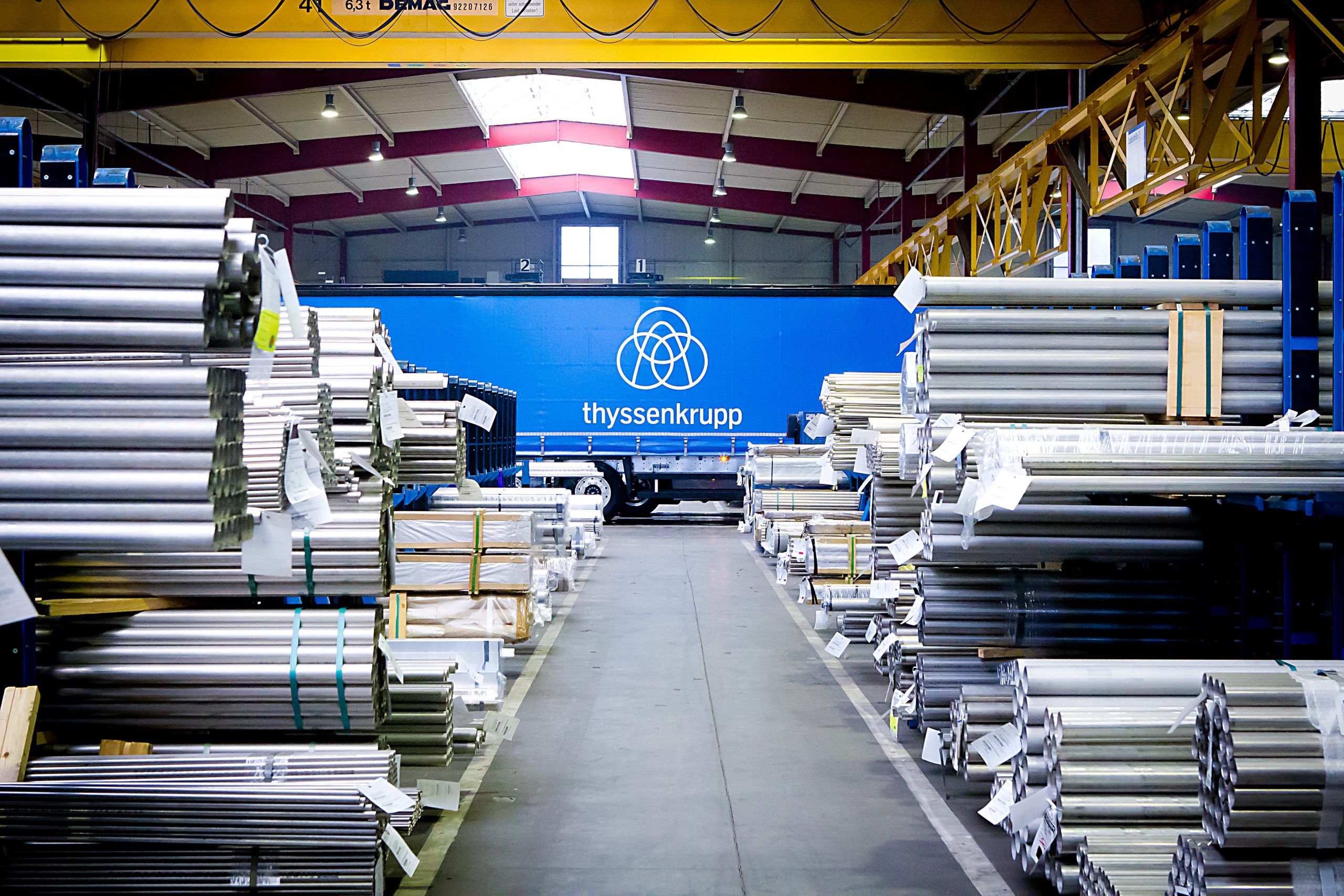
Germany’s thyssenkrupp and Jindal Steel International have mutually decided to pause discussions about the Indian company acquiring a stake in thyssenkrupp’s Steel division, the two groups announced over the weekend.
“The original assumptions and prerequisites for a potential sale of thyssenkrupp Steel have significantly changed in recent months,” the German group says in a statement sent to Kallanish. It refers to progress it has made in realigning its steel segment, for example, with the collective restructuring agreement concluded with union IG Metall.
The self-confidence expressed in the press release is probably even more attributable to developments in the regulatory environment for steelmakers in Europe, which “has changed significantly, becoming fundamentally more favourable”, the firm notes.
Thyssenkrupp welcomes the fact policymakers are increasingly addressing the challenges facing the steel industry, particularly with regard to trade protection measures targeting unfair competition and global overcapacity.
“The conditions for the profitable continuation of thyssenkrupp Steel are better than they have been in a long time,” says thyssenkrupp AG chief executive Miguel López. Thyssenkrupp says it will continue to operate its Steel division “independently”, in order to prepare it for a potential floatation on the stock market.
Although the group is not explicit about it, the strategy it indicates in the statement seems to reject the idea of seeking another partner or buyer for the steel division. This could be considered a signal to US investment fund Flacks Group, which is in talks to take over Acciaierie d’Italia. In March, Flacks was heard suggesting it would consider a bid for thyssenkrupp Steel Europe if talks with Jindal fail (see Kallanish passim).
In a reaction statement, union IG Metall demands to have a say in the upcoming considerations for the future of the Steel division. Regarding the cautious tone used by thyssenkrupp and Jindal in so far as they have “paused” negotiations, the union asks for a clear-cut end to the negotiations “without leaving a back door open”.
Continued insecurity during a period of long negotiations means stress for the workforce, IG Metall warns.

European HRC prices edge lower, buyers resist higher offers
European hot-rolled coil prices edged lower on Tuesday May 5, weighed down by sluggish demand and comfortable inventory levels on the buy side – and with summer approaching, few in the industry see any realistic path to a substantial price recovery in the short term, sources told Fastmarkets.
In Northern Europe, buyer sources estimated achievable prices at €680-700 ($796-820) per tonne for June-July delivery, with the lower end of the range said be have been offered by a re-roller in the Benelux area.
German mills had no June delivery coil availability, according to sources, but attempts to consolidate offers at €730-750 per tonne delivered (€715-735 per tonne ex-works) for July delivery volumes have failed to gain traction so far.
“There is no chance [of a] price increase going into summer, when demand usually slows down,” a steel service center source in Germany said. “Besides, we are well stocked and don’t need [more] material – especially looking at the demand from end users.”
One integrated mill in the Benelux region was said to still have technical issues and, therefore, had no June-delivery coil available, sources said. And because of the tech issues, the supplier was down by 70,000-80,000 tonnes of HRC in the short term and therefore could not be very flexible on pricing. Offers for July were heard at €740-750 per tonne ex-works, but no confirmed deals were reported at that level.
Fastmarkets’ European HRC indices were not published on Monday May 4 because of the Spring Bank Holiday in the UK.
But Fastmarkets’ daily steel hot-rolled coil index domestic, exw Northern Europe was calculated at €698.75 per tonne on Tuesday, down by €3.75 per tonne from the latest calculation of €702.50 per tonne on May 1.
The index was down by €6.88 per tonne week on week and by €20.01 per tonne month on month.
In Southern Europe, Fastmarkets’ daily steel hot-rolled coil index domestic, exw Italy was calculated at €693.75 per tonne ex-works on Tuesday, down by €1.25 per tonne from the most recent calculation of €695.00 per tonne on Friday May 1.
The index was down by €6.25 per tonne week on week and by €5.00 per tonne month on month.
Trading remained thin in the Italian HRC market, where tradable values were still hovering below the official offers, according to sources.
“The [HRC] market is totally flat. No new inquiries, no new negotiations… European mills couldn’t further raise prices [for July lead times] despite being protected by several trade barriers,” a trading source in Italy said.
Italian mills were offering June-July delivery coil at around €720 per tonne delivered (€705 per tonne ex-works), but most sources said the realistic transaction level in Italy was no higher than €680-700 per tonne ex-works.
A local re-roller, which suspended HRC production at the beginning of April due to technical issues, was expected to resume operations in June, sources told Fastmarkets.
No new import offers have been heard in Italy since last week.
Fastmarkets weekly price assessment for steel hot-rolled coil import, cfr main port Southern Europe, was €590-652 per tonne on April 29, with the lower end of the range reflecting transactions for Turkish coil and the upper end for Algerian HRC.
The pool of HRC suppliers willing to import into Europe remained limited on Tuesday. Offers from Asia have been scarce lately, with the potential costs arising from the EU Carbon Border Adjustment Mechanism (CBAM) weighing on demand, while disruption related to the conflict in the Middle East and higher freight rates added to the downward pressure on prices.


Coalition calls for broader CBAM scope to protect EU industry
A coalition of 162 European industry associations and companies, including the European Steel Association (EUROFER), the European Federation of Steel, Tubes and Metals Distribution & Trade (EUROMETAL), and major producers such as ArcelorMittal, thyssenkrupp and Voestalpine, has called on EU policymakers to expand the scope of the Carbon Border Adjustment Mechanism (CBAM).
Industry stakeholders argue that while CBAM addresses carbon leakage risks for upstream materials like steel and aluminum, it fails to cover downstream products. This limitation leaves large parts of the value chain exposed to imports that are not subject to equivalent carbon costs.
Downstream industries face growing pressure
Sectors including energy, mobility, construction, machinery, packaging, defense, and home appliances are increasingly affected.
These industries face rising costs under EU climate policies while competing imports benefit from less stringent environmental regulations, creating a competitive imbalance.
Risk of carbon leakage shifting downstream
The coalition warned that the current system may unintentionally shift carbon leakage further along the value chain rather than eliminating it. This creates a risk of production relocation to regions with lower environmental standards, undermining EU climate objectives.
According to industry representatives, failing to expand CBAM could weaken incentives for investment in low-carbon production. The current framework risks distorting supply chains and reducing the effectiveness of decarbonization policies.
Call for rapid and simplified extension
The coalition is urging the European Parliament and Council to implement a fast and simplified expansion of CBAM to include downstream steel- and aluminum-intensive products. Such a move is seen as critical to ensuring a level playing field and protecting European industry.
Axel Eggert, director general of EUROFER, emphasized that without broader coverage, importers may bypass carbon costs by shifting emissions downstream. He stressed that expanding CBAM is essential to maintaining fair competition and ensuring the mechanism achieves its intended environmental and industrial objectives.
Author: SteelOrbis Editorial Team