


EC proposes new ETS methodology to support industrial decarbonization
European Commission has announced that it has proposed updated benchmark values under the European Union Emissions Trading System (EU ETS) for the 2026-2030 period.
The proposal is expected to be formally adopted through an implementing act by the end of June following a four-week public consultation and review by member states within the Climate Change Committee.
Proposal aimed at supporting competitiveness and decarbonization
According to the Commission, the revised methodology is intended to support both industrial competitiveness and decarbonization while reinforcing stability and predictability within the EU carbon market. The Commission also emphasized that the revised framework should be implemented as early as possible to support industries most affected by the transition.
The Commission confirmed that the broader review of the EU ETS planned for July 2026 will assess whether the system remains suitable for supporting Europe’s industrial transition. The review is expected to examine the effectiveness of the ETS in balancing climate objectives with industrial competitiveness.
Indirect electricity emissions remain included
Under the updated methodology, indirect emissions linked to electricity consumption will continue to be included across 14 product benchmarks.
The Commission stated that this adjustment is intended to support industrial electrification efforts and results in higher benchmark values. According to the proposal, the financial impact of this measure is estimated at around €4 billion during the 2026-2030 period.
Free allocation system remains central
The benchmark update plays a key role in determining the volume of free emissions allowances allocated to industrial producers. The Commission stated that the proposed benchmarks would allow companies to continue receiving free allocations covering approximately 75 percent of emissions on average.
The revised benchmark values are based on greenhouse gas efficiency data submitted by installations for 2021 and 2022. The calculation methodology takes into account the performance of the cleanest 10 percent of installations in each industrial sector. Under the EU ETS framework, companies whose emissions exceed benchmark levels must purchase additional allowances, while more efficient installations benefit from higher free allocation levels.
Steel sector benchmark definitions revised
One of the major revisions concerns product definitions. The sintered ore benchmark has been expanded to include alternative agglomerated iron ore products, while hydrogen produced through water electrolysis has been included within the hydrogen and ammonia benchmark scope.
A significant steel-sector adjustment relates to the hot metal benchmark. Delegated Regulation (EU) 2024/873 expanded the hot metal benchmark definition to include steel production using direct reduction technology. However, the Commission clarified that direct-reduction-based steel production covered under the hot metal benchmark will not be included when calculating average greenhouse gas efficiency for determining revised benchmark values for 2026-2030.
As part of the upcoming ETS review, the Commission also plans to introduce sector-specific fallback benchmarks in response to industry requests. These benchmarks would be developed using dedicated methodologies tailored to individual industrial sectors.
Author: SteelOrbis Editorial Team


ArcelorMittal Belgium restarts Galva 5 galvanizing line after four-year shutdown
ArcelorMittal Belgium has announced that it has officially restarted its Galva 5 hot dip galvanizing line in Flémalle after four years of inactivity. The reopening strengthens the company’s industrial footprint in Europe and expands its production capabilities for metallic-coated steel products in thicker gauges.
Major modernization program completed
The Galva 5 line was acquired by ArcelorMittal in July 2025, after which the company launched an extensive refurbishment and modernization project.
The upgrades included roof renovations, maintenance work on coil feeding and uncoiling systems, restoration of the pickling section and zinc bath, and improvements to the site’s digital infrastructure.
Expanded coated steel production capabilities
With the restart of Galva 5, ArcelorMittal Belgium regains domestic production capacity for metallic-coated steel in thicker formats. The facility is integrated into the company’s broader European coated steel network and processes hot rolled coils supplied from ArcelorMittal’s Ghent plant.
The galvanized steel products produced at the Flémalle site are intended for several industrial applications, including road safety infrastructure, HVAC systems, industrial equipment, and automotive components. According to the company, the facility’s location in central Europe will improve proximity to customers and support shorter lead times and greater supply flexibility.
Advanced technical specifications
Technically, the Galva 5 line is capable of processing hot rolled substrates up to 6.35 mm thick and 1,880 mm wide. The facility also includes in-line pickling technology, enabling shorter production routes and compatibility with high-strength steels and various metallic coatings.
ArcelorMittal Belgium stated that the restart of the line also supports the company’s lower-carbon steel solutions strategy.
Author: SteelOrbis Editorial Team
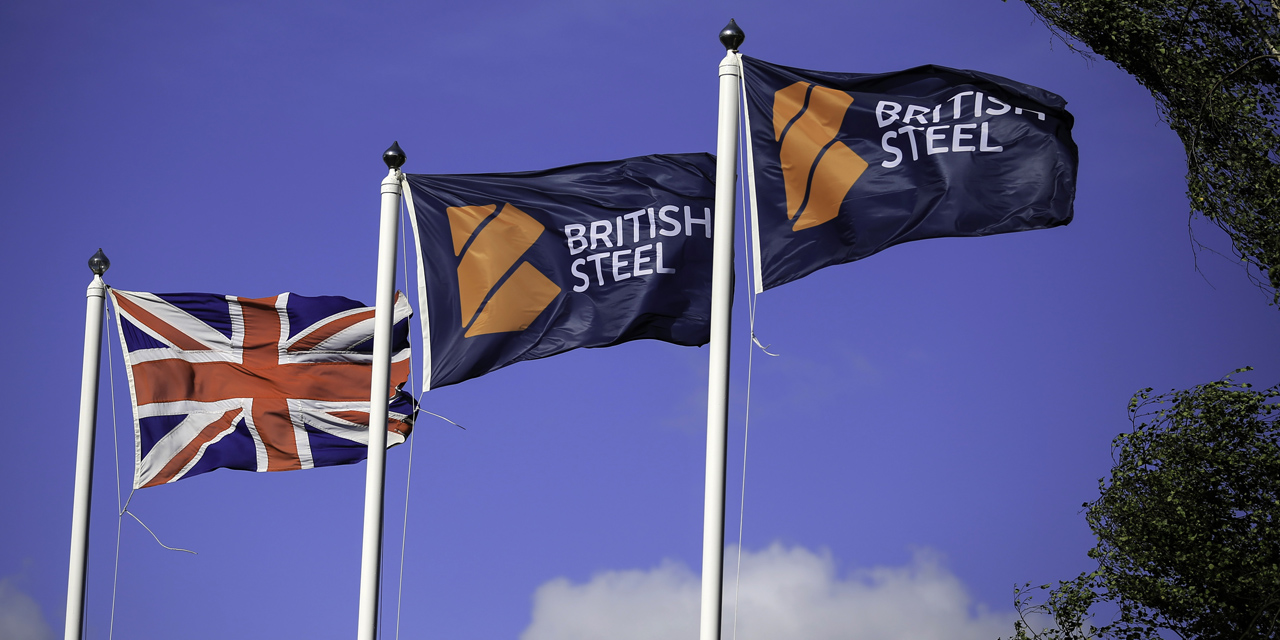
UK will take action to safeguard steel: King Charles
The King’s Speech on Wednesday confirmed that the UK government will continue to explore ways to nationalise British Steel, Kallanish learns.
“The United Kingdom’s economic security depends upon world class infrastructure,” King Charles said. “My ministers will continue to take all action necessary to safeguard the domestic production of steel,” he added.
This comes after UK Prime Minister Keir Starmer announced earlier in the week, ahead of the King’s Speech, that the government would introduce legislation that will give it powers to bring the steelworks into public ownership, subject to a public interest test.
An agreement could not be reached with the current owners, Jingye, Starmer added. The move has been broadly welcomed by industry associations and workers’ unions.
The time frame for the proposed legislation is currently unknown.
Cara Haffey, leader of industry for industrials and services at PwC UK, says: “Measures to safeguard domestic steel production and invest in major infrastructure reflect the growing recognition of industrial sectors as strategic national assets, underpinning supply chain resilience and competitiveness.”
Author: Carrie Bone