


EUROMETAL warns at Steel Summit 2026: CBAM gaps threaten European manufacturing and 13 million jobs
Within the scope of the 2nd International Steel Industry and Global Markets Summit held in Çeşme, the “Carbon Economy Panel” addressed carbon costs— which have become a key factor determining pricing and trade flows in the European steel market as of 2026— and the sector’s competitiveness outlook for 2026–2027.
The session, moderated by YİSAD Chairman of the Board and EUROMETAL Board Member Tayfun İşeri, featured EUROMETAL President and Macrometal Managing Partner Alexander Julius, Diler Holding Iron and Steel Group CSO Fatih Gökçe, CBAMBOO Founder and CEO Gabriel Rozenberg, and NLMK Europe Business Development and Decarbonization Director Tsanislav Kolev as panelists. The panel discussed the effects of CBAM (Carbon Border Adjustment Mechanism), ETS, and quota mechanisms on the steel industry, as well as cost analyses based on assumed and actual emission data.
Julius: “The Tax Gap in Derivative Products Poses a Threat to 13 Million Workers”
Highlighting the protection of European manufacturing and competitiveness issues, EUROMETAL President Alexander Julius stated that the European Commission, due to strong lobbying pressures, focuses only on steel production, while the fragmented manufacturing sector remains vulnerable. He noted that without a level playing field, industrial relocation and bankruptcies would be inevitable. Julius also said that they have launched an “action call” signed by more than 460 steel producers and users, aiming to reduce costs and cap electricity prices at a maximum of 5 cents.
Emphasizing the serious gap in taxation for steel-based derivative products, Julius said:
“The Commission expects European producers to bring their prices down to CBAM-inclusive imported steel levels, which increases overall costs. Countries like China can bypass tariffs by making minor modifications—such as drilling a hole in a pipe or changing its shape—and exporting it under a different HS code without paying duties. This represents a major threat to 13 million workers in the manufacturing sector.”
Gökçe: “Hydrogen Will Take 50–60 Years, Default Values Can Lead to Company Closures”
Fatih Gökçe, CSO of Diler Holding Iron and Steel Group, stressed the need for realism regarding the timeline of green transformation technologies. He noted that hydrogen technology is still at the laboratory stage and that scaling it to global steel production of 2 billion tons would take at least 50–60 years. He stated that supporting existing blast furnace capacities with carbon capture is the only viable solution in the short to medium term.
He warned that being forced to rely on default emission values instead of real verified data would create additional costs exceeding 100 euros per ton, especially for low-margin products such as rebar, potentially leading to company closures. Regarding verification processes, he added:
“Customers now demand certainty. For mandatory verification in 2027, it is essential to establish monitoring plans and systems in advance. Otherwise, delays until September revisions may result in a lack of data, pushing companies into default values. Moreover, most countries supplying pig iron and HRI still do not know how to report carbon emissions, meaning we will have to bear the cost of default values for the first 2–3 years.”
Rozenberg: “The Era of Back-of-the-Napkin Calculations Is Over”
CBAMBOO Founder and CEO Gabriel Rozenberg stated that CBAM is now a complex but legally binding reality and that the European Commission has formalized detailed cost calculation rules. He emphasized that companies should no longer calculate obligations informally, saying:
“Since payments for 2026 imports will be made in September 2027, there is currently a false sense of security in the market. However, CBAM is now central to the EU’s global stance, and revising these values this year is not realistic.”
Rozenberg also noted that the default value set for stainless steel billet imports from Türkiye is €367 per ton, making it the fourth highest in the world.
Kolev: “Customers Do Not Want to Pay a Premium for Green Steel”
NLMK Europe Business Development and Decarbonization Director Tsanislav Kolev stated that customers are generally unwilling to pay an additional premium for green steel. He explained that ETS and CBAM mechanisms are effectively designed to increase blast furnace costs to the level of electric arc furnace (EAF) production.
He added that importers are currently more concerned about “Can I trust my supplier’s data?” than cost, which is shifting risk management toward new trade models such as DDP (Delivered Duty Paid). Kolev also highlighted global capacity risks:
“Europe has the highest labor and transformation costs in the world. Meanwhile, half of the 500 million tons of new global capacity is being built based on blast furnace technology, especially in India. This leaves the question of how carbon leakage will be prevented unresolved.”
İşeri: “Turkey and the US Have the Same EAF Share, Why Is the Default Value Three Times Higher?”
Emphasizing fairness and competitiveness, moderator Tayfun İşeri stressed that Türkiye must defend its rights. He said:
“Both Türkiye and the United States use electric arc furnace (EAF) technology at a rate of 75%. Yet Türkiye’s default emission value is three times higher than that of the US. This issue must be questioned in Brussels. If we remain silent, we will effectively accept this injustice.”
Highlighting the problem of uncontrolled derivative products, İşeri added:
“When a shock absorber manufacturer in Türkiye imports pipes from China, processes them slightly, and exports them to Europe, it pays no tax. This directly harms established European producers such as Monroe. If the system is not urgently expanded to cover all derivative products, European industrial competitiveness will be severely undermined,” and concluded the session.
Author: SteelRadar Editorial Team


European heavy plate round-up: Italian plate prices soften on relaxing cost pressures
European heavy plate prices remained stable in Germany and moved slightly lower in Italy in the week to 15 May due to slow demand.
In Germany, steelmakers have limited volumes to sell in the spot market and are focussing on long-term contracts and projects instead. As a result, they remain less exposed to demand hurdles and are not competing for volumes with European re-rollers in the commodity grade plate segment.
German steelmakers have remained firm in their s235jr heavy plate prices, asking for EUR820-830/t ex-works.
In Italy, a softening of slab prices, combined with lack of demand recovery, resulted in some heavy plate price decreases. Large volumes have been traded at EUR740-750/t ex-works, and smaller lots have been sold at EUR750-770/t ex-works.
Although the introduction of the Carbon Border Adjustment Mechanism (CBAM) adds costs and risks for European re-rollers that traditionally rely on imported semi-finished material, the lower slab prices encouraged buyers to push for lower prices, some sources said.
Slab offers have been heard at $600-610/t CIF Italy for material from Asia, and buyers estimated a workable price range at $590-600/t CIF Italy.
Market sources estimated CBAM duties for Asia-origin slab at EUR50-80/t. However, until exporters secure the required verification, which will take place in 2027 for imports custom cleared in 2026, European importers face the risk that duties will be calculated using default values, potentially leading to significantly higher costs.
| Weekly European heavy plate, slab and green steel | |||||
| Unit | Term | 15-May-26 | Change | ||
| Weekly heavy plate | |||||
| Northwest Europe ex-works heavy plate | EUR/t | EX-WORKS | 820.00 | 0.00 | |
| Germany delivered heavy plate (Northwest Europe) | EUR/t | DEL | 850.00 | -10.00 | |
| Italy ex-works heavy plate | EUR/t | EX-WORKS | 760.00 | -5.00 | |
| Weekly steel slab | |||||
| Italy CFR slab | $/t | CFR | 600.00 | -5.00 | |
| Weekly green steel | |||||
| Green heavy plate premium (scopes 1-3 CO2 under 1t) | EUR/t | 25.00 | 0.00 | ||
Author: Benjamin Steven and Maria Tanatar

EC launches draft on CBAM carbon credit deductions
The European Commission has published its draft implementing act defining the requirements to qualify for certain deductions to CBAM liabilities, 13 May, as part of a four week public consultation.
EU Carbon Border Adjustment Mechanism (CBAM) rules entitle importers to make deductions from their annual CBAM liability – charged on the basis of the emissions embedded in imported steels from their respective production processes – for carbon prices already paid on the goods in international jurisdictions.
As the CBAM seeks to equalise carbon costs for domestic and exporting producers selling in the EU, permitting deductions for carbon costs “effectively paid” ensures that a carbon price “is not paid twice on the same emissions” – important for defending legal challenges such as WTO compliance.
The draft implementing act and annex were published as part of a four week feedback period, open for responses between 13 May and midnight 10 June. The regulation details proposed rules on:
- determining relevant carbon prices “effectively paid,” and the use of default carbon prices;
- how different forms of “compensation” for said carbon prices can reduce what price was “effectively” paid, and how to factor these rebates into deductions;
- euro currency conversions, using yearly averaged exchange rates;
- evidence requirements on how carbon price deductions were rationalized;
- required qualifications for the “independent person” responsible for assessing and certifying said evidence.
As detailed in the draft documents, the Commission proposes to limit carbon price deductions to only those emissions relevant to CBAM liabilities, meaning deductions will only be possible where CBAM declarations are submitted using actual values due to common data and evidence requirements in mapping process emissions to the goods level. As with product emissions values, the Commission will in the future publish a set of “default carbon prices” for third countries with their own carbon pricing rules. Importers will again have freedom to choose between deductions on actual and default carbon prices, where the default price offers a larger or equivalent deduction.
The EU certainly possesses the world’s most developed carbon trading system in the EU ETS, but other countries do have – or have signalled intentions to develop – their own mechanisms to levy carbon costs on polluting production processes. After all, EU representatives have explicitly stated that CBAM is in part intended to incentivize the development and consolidation of global carbon pricing.
It follows, however, that these pricing mechanisms would need to meet a certain standard of integrity and transparency such to be deemed equivalent to domestic ETS burdens for the purposes of CBAM deductions.
As per the draft regulation, the ‘quality threshold’ for a carbon pricing scheme to qualify for deductions should be met “where that scheme takes the form of a tax, levy or fee or of emission allowances under a greenhouse gas emissions trading system that is binding in nature and imposes compliance obligations on all operators active in the relevant sectors covered by that mechanism without discrimination.”
Sufficiently developed carbon pricing schemes can collect on carbon costs in various ways; importantly including the surrender of international carbon credits, but only to cover up to 10% of an exporter’s reported emissions under said scheme, intended to ensure producers remain motivated to engage in direct decarbonisation of their own production processes back home.
Once relevant carbon payments have been properly mapped and assessed, the actual deduction entitlement will be calculated in reference to yearly average euro exchange rates – to be published by the Commission – and a yearly reference price for CBAM certificates.
Wider calculation and verification rules largely mirror those of the wider CBAM and ETS frameworks, reducing available deductions where producers paying carbon prices receive rebates or other relevant compensations, with the exception of carbon price revenues “reinvested in the decarbonisation of an operator’s installation.”
More rules, more certainty?
In many ways, this latest implementing act represents the final piece of the CBAM puzzle for importers, who now – in theory – are able to calculate their effective liability for 2026 imports once CBAM declarations and certificate surrenders come due in 2027.
Of course, the reality is more complicated, as many of the factors determining an importer’s annual CBAM bill are outside importers’ direct control. Verification procedures can only really start from 2027 (as they require a calendar year of import data post-2026 start), and emissions monitoring and reporting requirements under CBAM follow a strict methodology closer to EU Emissions Trading System (ETS) rules than established global standards such as those governing Environmental Production Declarations (EPDs).
Many of the EU’s importers now subject to CBAM are also relatively unfamiliar with carbon accounting and trading systems, especially as relates to national regulatory frameworks, and are unlikely to be practiced at assessing or operationalising on carbon price differentials between national or supra-national carbon markets.
Ultimately, this serves to frontload another CBAM obligation into early-2027 for importers, as any carbon price deductions will similarly require a range of verified data based on 2026 averages. There is something of a silver lining in that they should be able to estimate possible carbon price deductions on the basis of these averages before certificates become available for purchase in February 2027, as well as arrange combined verification of carbon price deductions and embedded emissions – but these factors do little to alleviate business financing and planning burdens in 2026, stemming from indeterminate costs risk.
Experts also suggest that – at least initially – carbon price deductions are likely to be minimal for the EU’s core steel exporting origins, such as recent research from TULIP Consulting on EU-India trade cooperation in the context of CBAM, which cites expectations that costs due to India’s Carbon Credit Trading Scheme (CCTS) could reach just under EUR13/t by 2029, from initial estimates of EUR8.5/t.
Naturally these estimates would vary when applied to CBAM’s new carbon price deduction methodology, but it is unlikely that any methodological adjustment could make even a dent on default value costs. For example, Indian hot-rolled coil carries a default value of 4.7t CO2e/t, which incurs a default cost of approximately EUR250/t (at a EUR75 CBAM certificate price).
That said, EU importers could benefit down the line where the Commission’s facilitation of deductions for third country carbon price revenues incentivises greater environmental policy cooperation and regulatory harmony between the EU and its trading partners. TULIP describes how CCTS data could be used to update India’s published country-specific default values (reducing worst-cast costs for importers) – a cooperation initiative also included in the annexes of January’s EU-India Free Trade Agreement.
Author: Benjamin Steven

China’s Hebei eyes 20 green steel categories in 2026
China’s largest steel‑producing province, Hebei, is looking to roll out more than 20 green steel product categories in 2026 as part of its annual key tasks.
This follows the debut of the Hebei Green Steel brand earlier this year, the country’s first provincial‑level low‑CO₂ label designed to accelerate downstream adoption.
The Provincial Department of Industry and Information Technology told local media earlier this week that it plans to release more than 20 Hebei Green Steel product categories, while launching targeted promotion to match these products with 10 key steel‑consuming sectors within the province.
The department also said that Hebei will facilitate green electricity and green hydrogen metallurgy, supporting steelmakers in developing direct green power connections through either self‑built facilities or market‑based partnerships.
Priority support will go to hydrogen-based steelmaker Zhangxuan Technology, under HBIS Group, for it to fully leverage nearby wind and solar resources, integrate renewable power and green hydrogen with low‑CO₂ steel production, while creating a demonstration model for zero-carbon transformation, the department said.
In March, the province released its inaugural batch of 27 products under the Hebei Green Steel brand, mostly falling under commodity‑grade categories, such as rebar, billet, hot-rolled steel sheet and strip.
Beyond the green pivot, the province aims to roll out a series of high‑end products to fill national and provincial supply gaps. For example, leveraging Beijing Shougang’s division in Hebei, the province will implement a project to produce 0.1 mt/y of high‑performance grain‑oriented electrical steel, addressing the global shortage of high‑grade, high‑magnetic‑induction electrical steel.
The agenda also includes four benchmark “Artificial Intelligence + Steel” projects and expansion of centralised procurement to bulk materials, such as iron ore and metallurgical coke, to help local producers cut costs.
These provincial efforts align with a broader national push towards green transition along the supply chain.
In April, the Ministry of Industry and Information Technology released guidelines to promote green design for industrial products. These guidelines encourage key steel-consuming industries to adopt design solutions with an emphasis on durability, harmlessness, lightweight, energy and water saving, material efficiency, noise and space reduction, recyclability, reusability, and zero‑carbon performance.
Applications range from using high‑strength steel, aluminium alloy, and carbon fiber as lightweight substitutes for conventional steel and cast iron in car frames, to replacing traditional hot‑dip galvanised steel with corrosion‑resistant zinc‑aluminium‑magnesium alloys in solar panel frames to extend service life.
Author: Benjamin Steven
European Commission publishes delayed, lower ferrous ETS benchmarks
The European Commission has finally released draft Emissions Trading System (ETS) benchmark values for 2026-2030 and opened them to public consultation until 8 June. The proposed benchmarks, initially scheduled for first-quarter adoption, are based on the emissions performance of the 10% best installations in 2021 and 2022, Kallanish notes.
For a significant number of installations this performance is significantly better than the previous benchmark levels, the Commission says. The benchmark reductions versus the previous period, 2021-2025, are determined within a defined range based on observed performance improvements across sectors.
Among the products used in the ferrous complex, the benchmark values (allowances/tonne) for 2026-2030 are 0.143 for coke, 0.086 for agglomerated iron ore and 1.248 for hot metal. This compares to 0.217, 0.157 and 1.288 respectively in the previous period. EAF carbon steel is at 0.142 and EAF high alloy steel at 0.176 versus 0.215 and 0.268 respectively previously.
One European blast furnace-based mill source tells Kallanish his firm had been hoping for higher benchmarks than those published, with the proposed values offering no relief for the steel industry.
The proposed regulation cites a 2024 delegated regulation that modified the hot metal benchmark by adding to the definitions of products covered the production of steel using direct reduction technology.
Production of steel under the hot metal benchmark using DRI is not to be considered when calculating the average greenhouse gas efficiency of the installations for the revised benchmark values for 2026-2030, the Commission draft document states.
The same regulation included hydrogen produced from water electrolysis in the hydrogen benchmark or ammonia benchmark. Those modifications should be considered when determining the revised benchmark values for the period from 2026 to 2030.
It was not possible to precisely determine emissions in product benchmark sub-installations, in particular those importing or exporting intermediate products whose production is covered by the system boundaries of another product benchmark. The greenhouse gas efficiencies of the concerned sub-installations should therefore not be considered when determining the revised benchmark values, the document notes. This concerns hot metal, among others.
The Commission will adopt the benchmarks by the end of June. The act is required to allocate free allowances to industry for 2026. This allocation is expected shortly after the act’s adoption.
ETS operators already know the amount of allowances they need to surrender by 30 September 2026 for their emissions from the previous year. “The publication of this Commission draft implementing act updating the EU ETS benchmark values will provide ETS operators with clarity on the amount of free allocation that will be allocated to them, thereby avoiding liquidity risks on the EU carbon market,” the Commission says.
Industry will, on average, continue to receive free allocation covering around 75% of its emissions. To incentivise industrial electrification, the updated approach maintains coverage of indirect emissions from electricity use across 14 product benchmarks. This leads to higher benchmark values with a financial impact of around €4 billion ($4.7 billion) for 2026-2030.
In response to concerns from industry, the Commission will also propose the introduction of sector-specific fallback benchmarks as part of its EU ETS revision scheduled to be announced in July.

Benelux merchant bar prices rise to German level
Benelux merchant bar prices have seen a notable increase so far this year, and now are heard matching, if not surpassing, Germany’s prices.
The German base price is currently assessed at around €350/tonne ($412), below that of Italy, where domestic deals can reach up to €380/t. The size extra to be added would be €420/t for standard sizes, resulting in a delivered price in Germany of around €770/t.
One German buyer located near the western border is astonished about the current levels he sees in Belgium at present. “Normally, they used to be €50/t below us,” he tells Kallanish.
Benelux countries, like Germany, have no domestic mills. Their closest supplier mill would be Beltrame in France.
So far, the supplier mills have worked with regional agents, rather than employees. “An agent who is paid by the tonne is easier with granting lower prices,” the German manager believes. Another reason for the previously lower price level is the proximity to the large ARA ports, and the region’s access to imports.
The recent move in prices could be attributable to a change of mind at the mills, and an increasing unwillingness to compete too much with price concessions, the manager believes.
Mills also seem to insist more on transportation costs, which have recently risen substantially, and now can reach €60-70/t if ordering from further away than France.
“Some sizes can only be made in Italy, but normally you do not need a full truckload of special sizes; so you complement the truck with standard sizes, but still have to pay the full long-distance fare,” the manager explains.
And he points at one noteworthy difference in the transport pricing of Benelux versus Germany: “For Benelux, the mills charge for the real distance.” For Germany, which has no domestic merchant bar mill either, the foreign mills “apply a standard price that treats all regions equal, no matter if it’s to Hamburg or to Munich.”
Italian rebar prices increase despite buyer hesitation
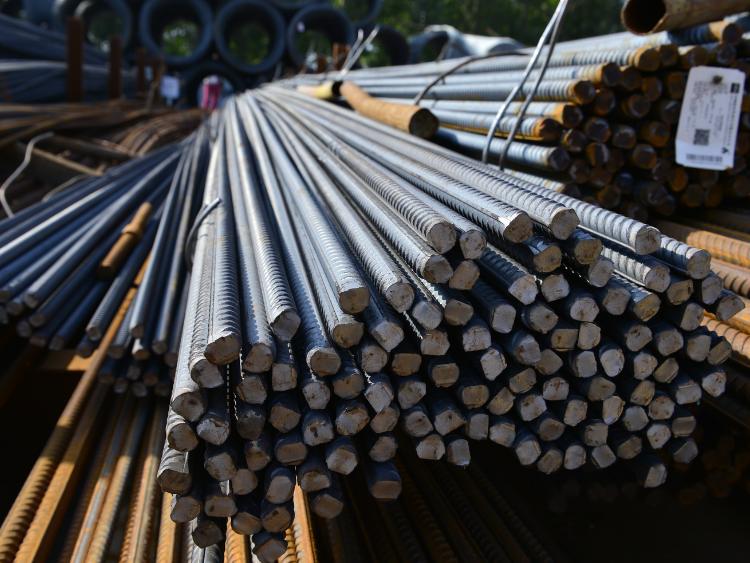
Italian rebar prices are rising in contracts, though demand remains subdued, and buyers are reluctant to restock at current levels.
Producers are seeking €460/tonne ($541.07/t) base ex-works, a level that has not yet been translated into agreed contract prices. Transaction prices have risen around €30/t over the past week to €440/t base ex-works.
Buyers and agents are uncertain over downstream demand and their ability to pass increases on. Despite this, price increases are holding. Two buyers tell Kallanish they are purchasing only what they sell rather than building stock, while others have reduced volumes to what they can afford at current prices.
One large buyer reports taking just one third of its usual purchasing volume.
A mill source says the market is usually quiet in the first ten days of the month, but buyers return to purchasing in the second half as their inventories deplete, providing enough demand to support the current high price levels.
All European rebar producers have raised prices and none are willing to make concessions, leaving buyers with no choice but to pay the increases.
Producer costs have skyrocketed amid the US-Iran conflict. With the large volumes missing due to the high prices, several mills are planning production stoppages in the coming weeks to balance supply and avoid building high stocks. This will push up their fixed costs further.
Including size extras of €260-270/t, effective transaction prices for Italian rebar are currently assessed at €700-710/t ex-works, up from around €540/t at the start of March. Mesh is at €510-520/t ex-works, before size extras of around €300/t.
Commission consults on CBAM discounts to account for purchase of carbon credits by non-EU industry
The European Commission began consulting on a draft implementing regulation on 13 May, which defines rules for potential rebates on the CBAM tax on carbon-intensive imports for goods subject to non-EU carbon pricing.
The text says EU importers of goods whose emissions have been partly offset through the purchase of carbon credits under a local carbon pricing system could receive a discount on the CBAM certificates they must purchase.
The draft act differentiates between “domestic” credits and “international” credits. Rebates for the former, corresponding to national decarbonisation projects, would not be subject to any conditions; those offered for projects beyond a nation’s own jurisdiction would have to comply with conditions laid out in Article 6 of the Paris Agreement.
International credits may also represent only up to 10% of the emissions declared by the installation subject to the carbon pricing scheme.
At the moment, only Japan, South Korea and Vietnam allow international credits to be used as part of their carbon markets, according to the International Carbon Action Partnership.
The consultation runs until 10 June. The Commission also published stakeholders’ input on the draft.

Thyssenkrupp maintains plans to spin-off Materials Services
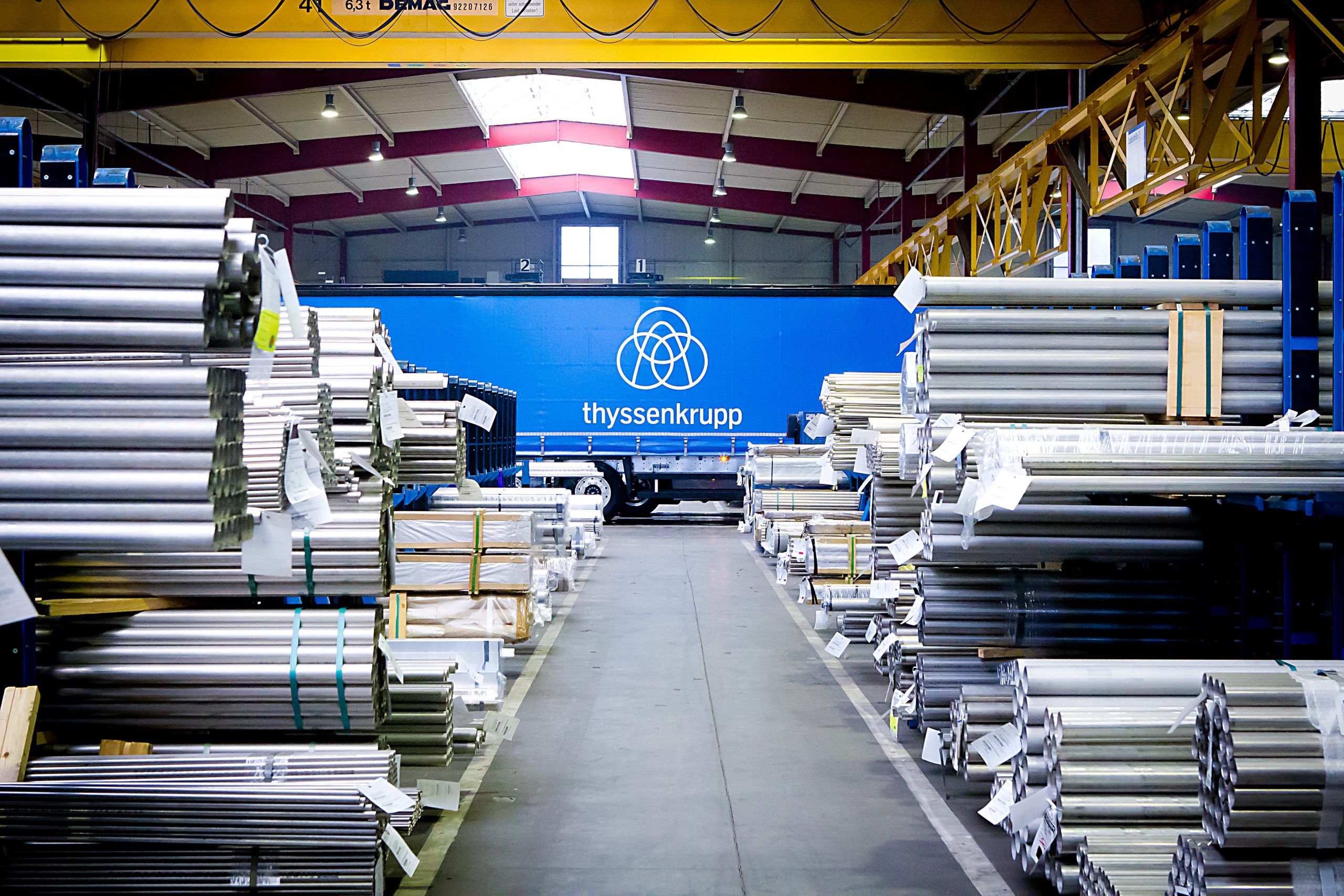
Thyssenkrupp group remains dedicated to spinning off its distribution division tk Materials Services and has confirmed its plans during its recent conference call, monitored by Kallanish.
For more than a year, the German group has said that it was open to investors for the division, and at the conference call maintained the division’s capital market readiness.
This is part of a larger plan of thyssenkrupp to reshape the multi-industries conglomerate into a holding of largely independent companies, which also applies to its steelmaking unit thyssenkrupp Steel.
While the steelmaking unit reported reduced revenue in the first half of its fiscal year because of lower sales prices, tk Materials Services gained, partly due to higher prices.
The distribution division’s business in North America and the international trading business, is more shielded from negative developments in Germany and Europe. The division now generates 39% of its revenue in the USA, where it ranks among the top 20 stockholding distributors. Many of its US operations offer value-added services.
The division reported stable half-year revenue at €5.78 billion ($6.72 billion) year-on-year, although shipments in the reporting period fell from 2.3 million tonnes y-o-y to 1.7mt.
It notes that by far the largest increase was recorded by the warehousing business in North America, while the warehousing business in Europe, the automotive-related service centres and the supply chain business also developed positively.
The group remains upbeat for the prospects of the division, and for the full year forecasts a growth of 2-5% compared with the prior year.
Author: Christian Koehl

British commerce chamber warns over steel quota damage
The British Chambers of Commerce (BCC) is warning that planned changes to UK steel quotas could add millions of pounds to manufacturers’ costs, Kallanish learns.
In a letter to UK business secretary Peter Kyle, the BCC has said the proposed regime risks creating “real financial and logistics problems” for downstream industries. These include construction, engineering and manufacturing, which rely heavily on imported steel products that cannot be obtained domestically.
The reduction in quota allowances and increase in the above quota tariff is “creating a double hit for firms already grappling with high costs and fragile supply chains,” it adds.
The letter warns that policy decisions appear to favour primary steel production at the expense of manufacturers who depend on imports of the metal to remain competitive. It also points to a lack of any formal impact assessment of the changes on downstream users of steel.
The BCC adds that some manufacturers face millions of pounds in additional costs if quotas are exhausted and warns of disruption if production is halted where specialist steel grades are unavailable domestically. It also warns that firms could be left with little choice but to source steel from “cheaper, less sustainable overseas suppliers”, which would undermine the UK’s decarbonisation ambitions and encourage offshoring of production.
William Bain, head of trade policy, BCC, says: “The government rightly takes the protection of domestic steel production seriously, and action by both the EU and US on tariffs means the status quo is unsustainable. But there is a serious risk of unintended consequences from its tariff and quota proposals which could harm the UK’s manufacturing base at a critical time.”
He highlights the impact of the Middle East conflict and soaring energy prices on the economy, and says the changes will increase costs for firms who imported steel products that are not produced domestically.
“The scale and speed of the quota reductions, combined with steep tariff increases, will create a perfect storm for key supply chains. Many companies are already warning they will lose competitiveness, cancel orders or relocate
“Without intervention, we risk undermining both our industrial strategy and our net zero objectives. Ministers must act quickly to rebalance the proposals, so they support the entire steel ecosystem, not just a part of it,” he concludes.
The BCC has proposed that the scale of the quotas is reduced to align more closely with international partners, while also lowering or phasing in the 50% above tariff rate. It additionally calls for transitional easements for existing orders to be extended from three months to at least 12 months. It is also seeking the publishing of a full impact assessment on downstream sectors and adds that work should be accelerated towards a UK-EU agreement to remove tariffs on steel trade.
Author: Carrie Bone