The EU lowered steel import quotas


Italy’s crude steel production increased by 7.2% in April

Steel producers welcomes European Parliament approval of new trade measure
EUROFER has welcomed today’s approval by the European Parliament of the new EU steel trade measure, calling it an important step towards addressing the growing pressures facing the sector from record imports, global overcapacity and rising international protectionism.
After the European Parliament voted overwhelmingly in favour of the measure, with 606 MEPs voting for, 17 against and 39 abstentions, Axel Eggert, Director General of the European Steel Association (EUROFER), said: “We welcome today’s strong backing by the European Parliament for the new EU steel trade measure. At a time of growing geopolitical uncertainty and market distortions, this sends an important signal that the EU is prepared to act to defend its industrial base, security and autonomy. There must now be no delay in ensuring the measure enters into force by 1 July 2026, when the current safeguard expires.”
The measure introduces a reinforced tariff-rate quota (TRQ) system, including stronger protections against import surges, enhanced monitoring and anti-circumvention tools, and a 50% tariff above quota levels. EUROFER stressed that the EU will continue to remain one of the world’s most open steel markets, with around 18 million tonnes of steel imports continuing to enter tariff-free each year.
The association also underlined that protecting European steel production and securing European steel demand must go hand in hand. EUROFER therefore called for the same strategic approach to be extended to downstream steel-containing goods in order to strengthen the wider European industrial value chain.
EUROFER added that further action remains necessary to support the sector, particularly through tackling high energy prices, delivering an effective Carbon Border Adjustment Mechanism (CBAM) and addressing global steel overcapacity.


Tubos Reunidos resumes Amurrio plant operations
Spanish seamless tube supplier Tubos Reunidos (TR) has told Kallanish that it is restarting production activity at its Amurrio plant progressively as of Monday.
This has been made possible after the workers’ representatives decided on Friday to suspend the indefinite strike they had been holding at the facility in Álava since 16 March to protest against the redundancy plan proposed by the company.
The ELA and LAB trade unions state that workers have not ruled out resuming protests in the future, noting that with TR entering administration, the measures proposed by the company to reduce the workforce have been suspended, though not definitively withdrawn.
The company’s workers have called for action on 26 and 28 May. The first day coincides with the judge of the competent court in Álava’s meeting with the insolvency administrator, management and the trade unions to discuss what employment measures may be taken during the proceedings.
At the beginning of May, the seamless tube supplier filed for voluntary administration (see Kallanish passim).

Italian car production continues positive trend
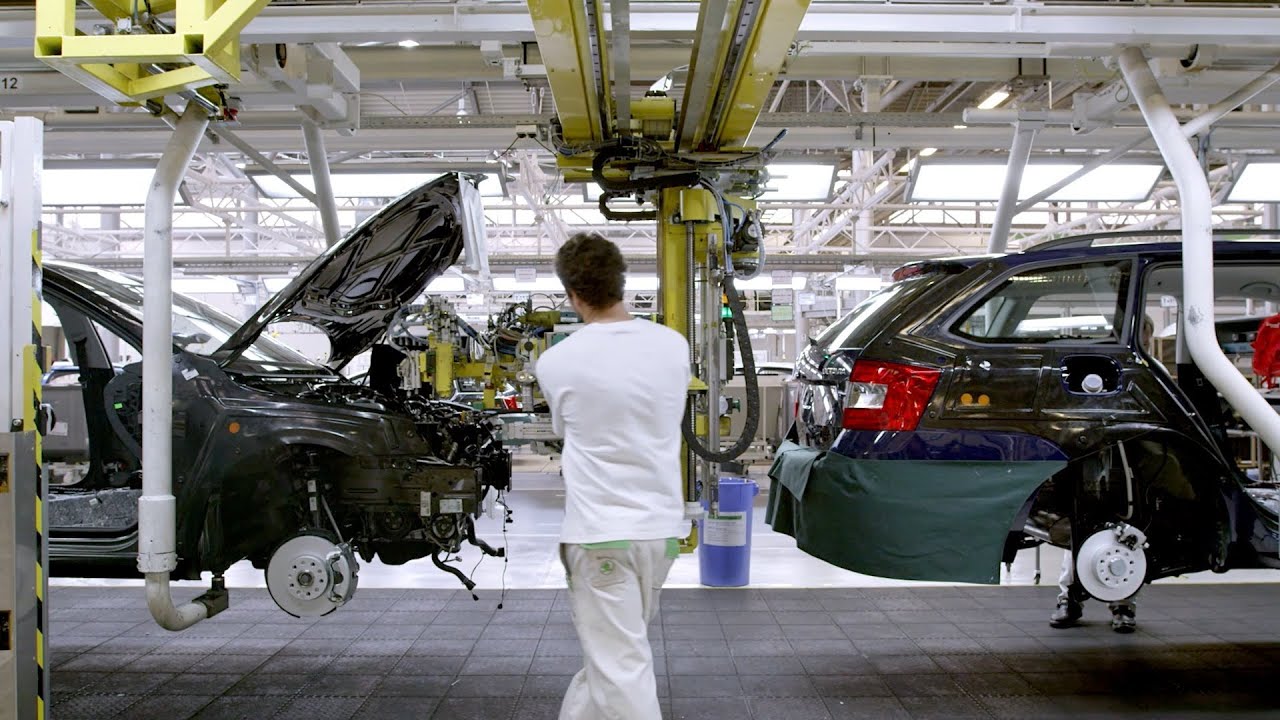
Italian passenger car production increased in the first quarter of the year, showing a trend reversal compared to 2025, Kallanish learns from preliminary data by automotive association Associazione Nazionale Filiera Industria Automobilistica (Anfia).
March car production rose by 7.7% year-on-year to 32,100 units. January-March output also increased by 9.3% on-year to 73,300 cars.
By comparison, the UK recorded a slight 0.8% y-o-y decline in March to 69,800 units and an 6.7% fall in the first quarter to 200,900 cars. Spain also saw a production decrease of 0.6% to 170,800 units in March and 4.7% in Q1 to 500,000 cars.
German production ticked up in March by 3% to 400,800 units but decreased by 2% to 1.1 million units in January-March, Anfia says.
The most recent data indicates that in 2025, French car production experienced a y-o-y increase of 16.6% to 1 million cars.
“The automotive sector is operating within a broader context of a slightly increased Italian industrial production in March 2026 compared with the levels of the same month last year. The overall industrial production index recorded a 1.5% increase in March and closed with a slightly positive figure (+0.5%) in the first three months of the current year compared with the same period in 2025,” Anfia says in a note.
“There is considerable anticipation ahead of the Stellantis Group’s industrial plan presentation… from which clearer indications are finally expected regarding the future of Italian plants, with hopes that production levels can gradually return to those appropriate for a market the size of Italy,” Anfia director Gianmarco Giorda adds.
In 2025, car output stood at 237,800, down by 23.2% y-o-y, Kallanish notes.

Nippon to join EU steelmaking elite
Nippon Steel will form a 5.5 million tonnes/year crude steel capacity European steelmaking operation when it consolidates US Steel Kosice (USSK) and Ovako under direct ownership. The Japanese steelmaker aims to capture policy-supported regional demand and leverage its technological strengths to serve high-grade steel segments, Kallanish notes.
Nippon announced last week it will transition USSK to direct ownership and rename the unit to Nippon Steel Slovakia effective 1 October. The same will happen to Sweden-headquartered special steelmaker Ovako once Nippon completes in April 2027 its merger by absorption of subsidiary Sanyo Special Steel, which owns Ovako.
Nippon says it is “aiming to develop our European business through the formulation and execution of a growth strategy from a long-term perspective, including maximising synergies with Nippon Steel, upgrading product mix, and strengthening products and distribution channels.”
Ovako is a 1m t/y electric arc furnace-based crude steelmaking capacity specialty steel bar and wire rod producer with sites in Sweden and Finland, while USSK is a major blast furnace-based flat and electrical steelmaker, with 4.5m t/y of crude steel capacity situated in Slovakia.
In Central and Eastern Europe, USSK’s main markets, steel demand is expected to increase in the medium to long term due to factors such as the relocation of customer bases to the eastern regions, Nippon said last week.
The new structure would make Nippon a top ten EU crude steelmaker by capacity – unprecedented for a Japanese firm – behind heavyweights such as ArcelorMittal, thyssenkrupp Steel, Tata Steel, SSAB, voestalpine, Salzgitter, Celsa and Riva. Although Acciaierie d’Italia used to be near the top of this list, its effective capacity has dropped considerably due to well-publicised problems.
The move should also provide relief for USSK’s workforce which has faced some uncertainty over future plans for the Kosice plant since US Steel was acquired by Nippon last year.
Iberian HRC prices remain steady, demand volatile
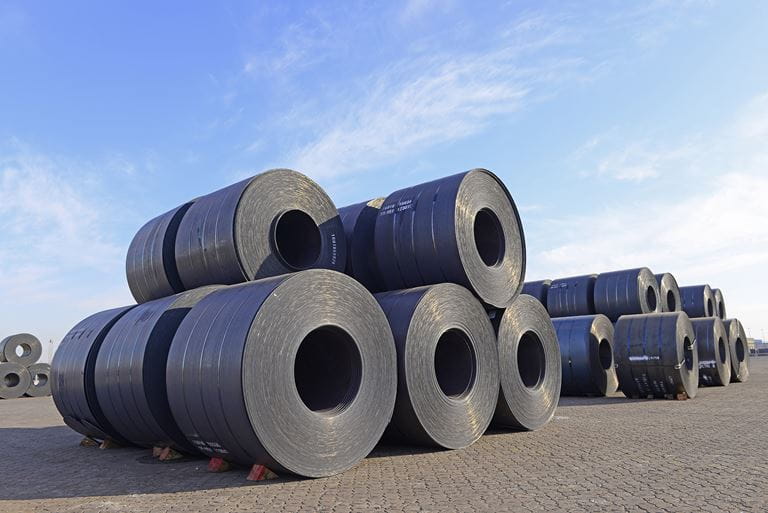
Hot rolled coil prices have remained stable so far in May in the Iberian market. However, demand has failed to pick up due to buyers’ cautious stance, market sources tell Kallanish.
“Higher prices reflect increased costs resulting from the effects of the US-Israel-Iran war,” says one seller. “It is difficult to predict when the market will recover.”
According to another source, steelmakers are limiting production whilst attempting, albeit in vain, to secure higher prices for new contracts.
“HRC values have been stable for a couple of months now. The anticipated adjustment, which was expected to set the selling price at €800/tonne [$931.1], has not materialised,” he explains.
“Although we suppliers have accepted in recent weeks that we need to reduce our profit margins, consumers and the market in general seem to have reached a limit in terms of what price adjustments they are willing to accept. The pressure is now on the producers,” comments a distributor. Orders are currently limited to small-scale projects, he adds.
In addition to the effects of rising energy prices and the disruption to trade flows resulting from the conflict in the Gulf, the Spanish steel market is also concerned about the impact of the EU’s new steel trade regime from July.
“We are currently going through a period of difficult transformation in the sector. CBAM and the new protectionist measures will keep selling prices, which are already higher, considerably above those of imported goods. This, combined with rising transport costs, is significantly dampening consumer interest at the moment,” a market participant observes.
Despite the general optimism for a recovery in demand expressed during the recent Eurometal Steel Net Forum Iberia in Santander, most suppliers recognise that, in the short term, end-users will find it very difficult to prioritise value-added offers when making decisions about new projects. This is particularly the case if local steelworks are reluctant to make concessions.
Spanish HRC prices stand at €730-740/t ex-works. Distributors’ levels have surpassed €750/t delivered.
BCC warns UK steel quota changes could disrupt supply chains
The British Chambers of Commerce (BCC) has warned that planned changes to the UK’s steel import quota and tariff system could significantly increase costs for manufacturers and create major disruptions across industrial supply chains.
In a letter sent to Peter Kyle, UK Business secretary, the BCC argued that the proposed measures risk causing “real financial and logistics problems” for downstream industries including construction, engineering, and manufacturing. Business groups warned that higher steel costs could encourage offshoring of manufacturing, increased imports of finished products, and sourcing from lower-cost overseas suppliers.
Under the new system scheduled to take effect on July 1, the UK plans to reduce tariff-free steel import quotas by 60 percent overall, as SteelOrbis previously reported, exceeding the European Union’s recently announced 47 percent reduction. Some steel product categories reportedly face quota cuts of up to 90 percent.
At the same time, tariffs on imports exceeding quota limits are set to increase from 25 percent to 50 percent, substantially raising costs for companies dependent on imported steel products.
Manufacturers warn of major cost increases
According to the BCC, many UK manufacturers rely on imported steel grades that are not available from domestic suppliers. Industry representatives warned that the proposed changes could add millions of pounds in additional costs, reduce international competitiveness, delay production, and disrupt existing supply chains. Some firms reportedly indicated they may need to halt production entirely if specialist steel products become unavailable or prohibitively expensive.
Manufacturers also warned that the measures could undermine the UK’s climate and industrial policy objectives. According to the BCC, companies may be forced to purchase cheaper steel from less sustainable overseas sources if access to competitively priced imported steel becomes restricted. This could negatively affect domestic industrial investment, supply chain resilience, and net-zero transition efforts.
Businesses call for policy adjustments
The BCC proposed several measures to reduce potential disruption, including:
- reducing the scale of quota cuts,
- phasing in the proposed 50 percent tariff increase,
- extending transitional easements for existing contracts,
- publishing a full impact assessment,
- accelerating negotiations on a UK-EU steel trade agreement.
The organization urged the government to rebalance the policy framework to support the entire steel ecosystem rather than only domestic primary steel production.
Author: SteelOrbis Editorial Team