


EU to factor war into Ukraine import quota
The European Commission says it will take into account Ukraine’s “special and very difficult current situation” when determining country-specific steel import quotas under the EU’s upcoming post-safeguard regime. This comes amid concerns over the potential impact on Ukrainian steel exports, Kallanish notes.
“Ukraine remains an important steel importer to the EU, and we are making sure it can benefit from a special quota and that its exports to the EU can continue, even if at a lower level than in previous years,” Commission chief spokesperson Paula Pinho said on Monday. “During the negotiations and when taking the decision on the exact quota, we will of course take into account the special and very difficult current situation in Ukraine.”
The comments came in response to questions regarding the impact on Ukraine of the EU’s planned measures aimed at restricting steel imports amid global overcapacity.
On Tuesday, the European Parliament plenary voted in favour of the proposed steel trade regulation intended to replace the current safeguard measure from 1 July. The regulation must now receive formal approval from the Council before entering into force.
Ukraine’s situation as a candidate country with special security concerns will be considered when negotiating country quota allocations, the regulation document confirms.
Asked about the timeline for negotiations with trading partners, Pinho noted: “We are working against the clock. So, the objective is to have the implementing act ready by 1 July when the current steel safeguards expire.”

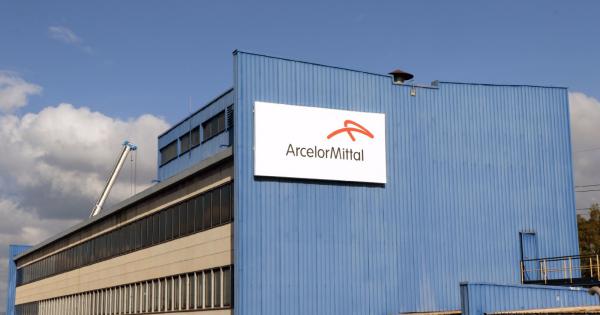
ArcelorMittal sells 10% Vallourec stake
ArcelorMittal has sold part of its stake in French pipemaker Vallourec, amounting to approximately 23.9 million shares, around 10% of the French tubular producer’s issued share capital, at €24 ($27.92) per share.
The sale amounts to gross proceeds of approximately $667 million and leaves ArcelorMittal with roughly a 17.3% stake in Vallourec. The steelmaker will maintain one seat on the board.
Before selling part of its share the steelmaker held a significant 28.4% of the voting rights and 27.5% of the share capital in the pipemaker. This stake was concluded in August at a price of €14.64/share, resulting in a total purchase price of €955m.
“By realising value and returning the proceeds to shareholders through buybacks, we are converting a strong investment outcome into immediate, tangible benefits… It is another example of how we have consistently executed our strategy in recent years – investing in high return opportunities to develop ArcelorMittal into a more resilient, higher quality business, capable of delivering sustainable value for shareholders through the cycle.” ArcelorMittal cfo Genuino Christino says in a note obtained by Kallanish.
The note adds that ArcelorMittal backs Vallourec’s strategy and management and continues to see value in the business.

Feralpi Stahl plans capacity expansion
One year after starting up its spooler rolling mill, Elbe Stahlwerke Feralpi (Feralpi Stahl) is positive about an expansion of its production capacity.
The German rebar mill of Italy’s Feralpi group intends to increase its output capacity from around 1 million tonnes/year to 1.3m t/y of rolled products. The basis for the expansion is the full operation of its new rolling mill.
The technology, supplied by Danieli, enables a new production method for rebar in coil. In the spooler plant, wire rod is processed directly from the rolling vein into a spooled ring. Previously, this was a two-stage process of hot rolling and cold stretching, followed by spooling.
“The spooler mill is the prerequisite to lift our output to a new level, now that we see that the new product is gaining ground on the market,” says managing director Uwe Reinecke.
The mill, located in Riesa, Saxony, was officially started on 15 May last year and has since been run up to two-shift operation. It has so far produced around 850,000t. The spooler mill in full operation would add another 400-450,000t/y.
For this year, the management envisages an output of 1mt, Reinecke has previously told Kallanish (see Kallanish 16 April 2026). Next year, the spooler mill will be shifted into three-shift operation.

European Parliament approves steel safeguard replacement measure
The European Parliament plenary voted on Tuesday overwhelmingly in favour of the proposed steel trade regulation intended to replace the safeguard measure.
The new regulation must now be formally approved by the Council before entering into force on 1 July, a Parliament note states. The Council previously specified the act would pass into law if Parliament adopts the text as detailed by the Council following its provisional agreement on the regulation with Parliament in April, Kallanish notes. This suggests the approval is just a formality.
Country quota allocations remain unconfirmed, as the European Commission is still in talks with trading partners to ensure the measure’s WTO compatibility.
The Commission must take into account the import market share that prevailed in the Union steel market in 2013 – prior to the impact of global overcapacity. It should also take into account current and future free trade agreements. Ukraine’s situation as a candidate country with special security concerns will also be considered.
The total annual quota volume is set at 18,345,922 tonnes, with a 50% out-of-quota duty. The melt-and-pour requirement will be implemented, with the Commission needing to adopt implementing rules on the type of evidence required by 31 August. From 1 July 2026 to 30 June 2027, unused quarterly quota volumes will be carried over to the next quarter, after which a review will take place.
From 1 October 2027, the Commission will need to take into account the information gathered from importers on the country of melt and pour when specifying the country distribution of tariff quotas.
The regulation was approved by 606 votes in favour and 16 against, with 39 abstentions.
Steelmakers association Eurofer welcomed the Parliament approval. “At a time of growing geopolitical uncertainty and market distortions, this sends an important signal that the EU is prepared to act to defend its industrial base, security and autonomy. There must now be no delay in ensuring the measure enters into force by 1 July 2026, when the current safeguard expires,” says its director general, Axel Eggert.
The association reiterated its call for the measure to be extended to downstream steel-containing goods in order to strengthen the wider European industrial value chain.