

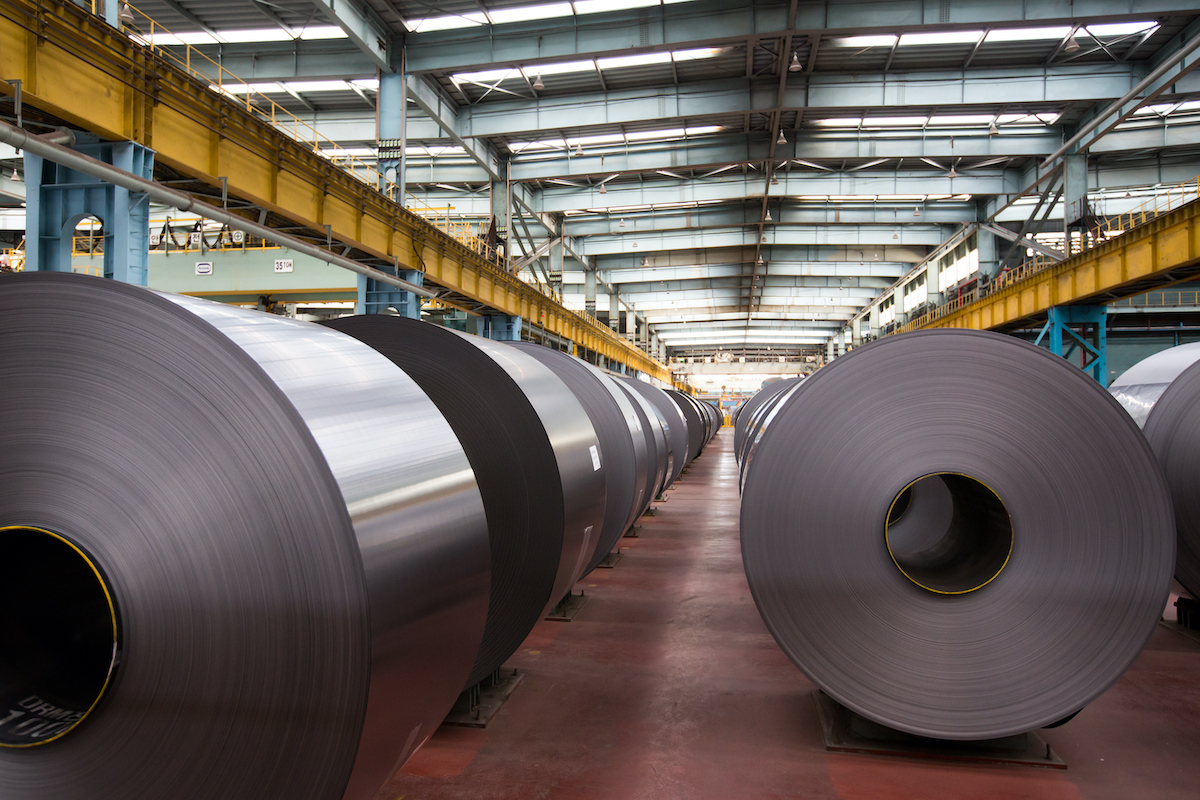
No rebound in sight for European HRC as deals dry up
European hot-rolled coil prices were broadly stable amid an extended trading standstill, with industry stakeholders seeing no room for a rebound during the summer months, Fastmarkets heard on Thursday May 21.
“We won’t see prices [for HRC] with a ‘7’ in front until the end of summer,” a buyer in Europe said.
A supplier source agreed it was increasingly difficult to secure transactions even at €700 ($820.56) per tonne delivered, let alone on an ex-works basis.
In Germany, deals were reported at €675 per tonne ex-works on Tuesday May 19. Earlier in the week, transactions were heard at €675-685 per tonne delivered (€660-670 per tonne ex-works).
“Mills need to fill order books for summer, and some of them are opting for volume over price,” a buyer in Germany said.
A supplier in the Benelux area was not active in the market due to a pending technical issue, sources said.
“[Integrated mill in the Benelux area] does not actively offer coil. Their lates offers for July [delivery] were well above €700 [per tonne ex-works], which is not workable now, but they are also not in a hurry to sell,” a buyer in the Benelux area said.
The supplier continued to face technical issues with a slab thinning unit, leaving it short by around 70,000-80,000 tonnes of HRC in the near term and limiting its pricing flexibility.
As a result, Fastmarkets’ daily steel hot-rolled coil index domestic, exw Northern Europe was calculated at €680.42 per tonne on May 21, down by €1.58 per tonne from €682 per tonne on May 20.
The index was down €3.33 per tonne week on week and down €27.58 per tonne month on month.
In Southern Europe, Fastmarkets’ daily steel hot-rolled coil index domestic, exw Italy was calculated at €677.50 per tonne on May 21, down by €0.50 per tonne from €678 per tonne on May 20.
The index was up €2.50 per tonne week on week but down €22.50 per tonne month on month.
The Italian HRC market remained similarly quiet. Weak demand and comfortable inventory levels at buyers continued to dampen trading activity, with offers heard at €700 per tonne delivered (€685 per tonne ex-works).
Industry sources noted, however, that lower prices could be achieved on larger tonnages, with achievable price estimates coming in at €665-680 per tonne ex-works during the week commencing Monday May 18.
In the secondary market, 4mm S235-grade hot-rolled sheet prices consolidated at €770-780 per tonne CPT Italy, easing from €780-800 per tonne CPT reported at end-April.
Import market activity was similarly muted. Lingering uncertainty over the shape of the new trade regime due to take effect in July 2026, alongside a lack of clarity on costs tied to the EU’s Carbon Border Adjustment Mechanism (CBAM), kept buyers on the sidelines and dampened appetite for fresh import bookings.
On pricing, one Indian mill was heard offering material around €595-605 per tonne CFR to Italy earlier this week.
Turkey-origin coil was heard offered at €695 per tonne DDP in Italy, inclusive of anti-dumping duty and CBAM costs.
Asian HRC was heard offered at €640-660 per tonne DDP from stock in Antwerp. The price reportedly included CBAM costs.


European import flat steel market largely quiet awaiting clarity on safeguard
The European import flat steel market was largely quiet in the week to Wednesday May 20, with the majority of buyers preferring to take a wait-and-see stance until the details of the new safeguard come to light, which is expected to happen in June.
Hot-rolled coil
Turkish material was reported available within the range of €590-600 ($684-696) per tonne CFR Italy, excluding anti-dumping duty, with information circulating about one cargo being sold at the upper end of the range.
Market sources also mulled an Algerian cargo being sold at $750-760 per tonne CFR, which is equivalent to €644-653 per tonne CFR, but this information could not be widely confirmed by the time of publication.
Additionally, sources reported new offers of Algerian coils coming at the equivalent of €670 per tonne CFR, which was considered too high by customers.
Indian coil was heard available at $685-705 per tonne CFR, which is equivalent to €590-605 per tonne CFR.
As a result, Fastmarkets’ weekly price assessment for steel hot-rolled coil import, cfr main port Southern Europe was calculated at €590-605 per tonne on May 20, up from €550-615 per tonne on May 13.
On a DDP basis, offers of material from Asia and Turkey came within the range of €640-665 per tonne, which was reflected in Fastmarkets’ weekly price assessment for steel hot-rolled coil import, ddp Southern Europe on May 20.
In Northern Europe, offers of import HRC were not as numerous as in the south, with customers unwilling to take on risks related to the Carbon Border Adjustment Mechanism (CBAM) and the upcoming safeguard and preferring to cover their needs domestically.
Turkish material was heard available at €585-590 per tonne CFR, including anti-dumping duty.
Due to the lack of input about other origins, Fastmarkets’ weekly price assessment for steel hot-rolled coil import, cfr main port Northern Europe was moved to €590-600 per tonne on May 20, up from €560-600 per tonne on May 13.
On a DDP basis, offers varied within the range of €640-690 per tonne for origins including India, Vietnam, Indonesia and Turkey, which was reflected in the corresponding Fastmarkets’ assessment for steel hot-rolled coil import, ddp Northern Europe on May 20.
Cold-rolled coil
Cold-rolled coil offers were limited in the reported week as buyers showed little interest in foreign material.
Asian material was heard available at €780-800 per tonne DDP Italy, with indications of tradeable levels varying within the range of €750-780 per tonne DDP.
Fastmarkets’ weekly price assessment for steel cold-rolled coil import, ddp Southern Europe was €780-800 per tonne on May 20, narrowing from €750-825 per tonne on May 13.
Due to the lack of input, the corresponding Fastmarkets assessment for steel cold-rolled coil import, ddp Northern Europe was put in line with Southern Europe at €770-800 per tonne on May 20.
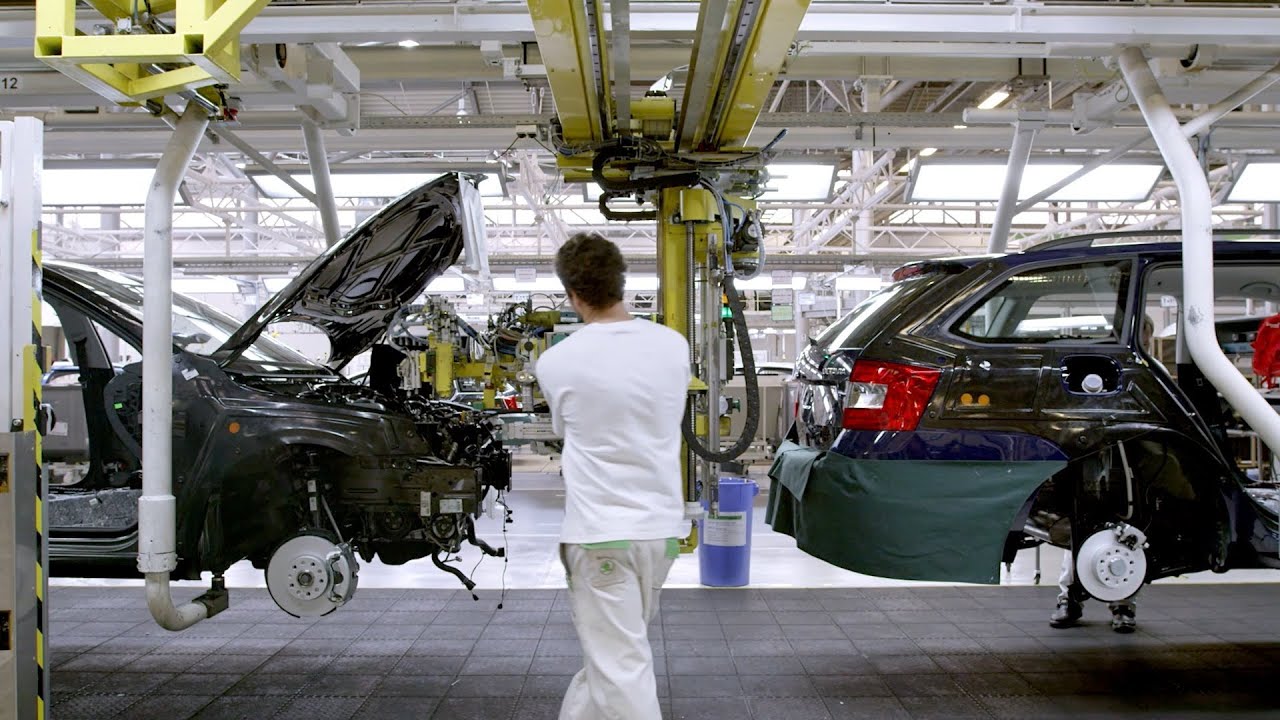
Automotive sector could drive green steel demand: Agora
The automotive industry can play an essential role in supporting green steel projects by European mills to market-readiness, says Agora Industry, a European think-tank promoting the transition to climate-neutrality.
As steelmakers require robust, long-term demand signals for low- and near-zero emission steel to secure investments, the automotive sector can play a key role in stimulating these market signals. The sector requires around 15 million tonnes of primarily flat and high-quality steel depending on the year, Agora states.
For the steel industry transformation, Agora Industry has identified 34mt of announced near-zero capable steel projects in Europe using direct reduced iron (DRI) technology, Kallanish learns.
Its analysis has found that 25mt of these projects are moving forward through the pipeline, albeit at varying stages, with only a small number of projects reaching the crucial final investment decision (FID) stage and even fewer have started construction. These stages critically depend on solid demand signals from offtake agreements and clear lead market policies, Agora notes.
Automotive is a potential catalyst for this transition, because of the obvious volumes it consumes, and because of the low cost impact on consumer. An Agora analysis shows that steel represents only a small share of the final cost of a vehicle, accounting for less than 1% of the end price of a car.
“The project pipeline for clean steel production in Europe is there,” Agora says. “To turbo-charge Europe’s clean steel projects into the construction phase requires turning market signals from steel buyers into a bankable investment case.”


Italian plate prices flatten amid weak demand
Italian heavy plate prices are largely flat compared to the beginning of May as market participants report weak demand amid uncertainty and high costs, Kallanish hears.
Producers expect prices to rise in the coming months as costs continue to climb amid higher slab prices and CBAM-related charges. Asian slab asking prices are reaching as high as $570/tonne fob, according to sources.
Mills have filled or almost filled June order books and are quoting €800/t ($930.77/t) base ex-works for S275 grade for July delivery. Current contracts remain at €760-770/t base ex-works, while slab contract prices in May reached $600/t cif Italy.
Meanwhile, the northwestern European plate market remains subdued with little transaction activity. One mill representative sees the market mood as especially harsh. “The willingness to buy is trending towards zero,” he says. The prices have not risen much beyond the mark of €800/t delivered for S355, where they already stood in late March, when the upward momentum ran out of previous months ran out (see Kallanish 6 May).
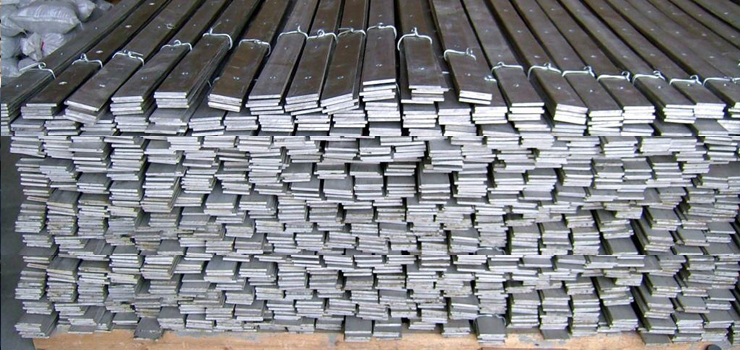
European stainless flats prices continue to rise
European stainless flat prices are continuing to rise for coils, sheets and tubes despite demand remaining flat, market sources tell Kallanish.
End-user consumption is reported as unchanged, but costs are climbing due to the Middle East conflict, pushing mills to keep lifting coil values. For July delivery, European mills have moved cold rolled coil to €2,700-2,740/tonne ($3,141-3,187/t) delivered. June delivery CRC is currently averaging €2,680/t delivered across Europe.
Several distributors report a challenging market as rising prices coincide with slow downstream demand, particularly in Italy where CRC prices continue to lag European levels.
European mills report a restocking phase and improved activity as imported coil stocks are depleted and fresh imports dry up amid CBAM and changing trade measures.
End-user demand, however, remains unchanged, Outokumpu chief executive Kati ter Horst said earlier this month during the company’s first-quarter earnings call. Last month, during Aperam’s earnings call, ceo Sud Sivaji also reported a slight restocking effect but warned that underlying demand in Europe is not improving, describing it as “flat at a very low level… we’re talking 20% below past averages”.
Northern European sources agree demand is flat. Stainless steel processors warn of weakening margins.
Until recently, distributors benefited from material bought at lower prices before values rose, keeping margins profitable. Now service centres and distributors are buying at elevated prices and struggling to pass on increases in a slow market. Sources in Germany, Italy, Poland and elsewhere report being forced into price concessions downstream, squeezing margins further.
Low imports are pushing buyers to increase European purchases significantly, but some sources still see oversupply given continued weak consumption. Mills are said to be targeting €2,900/t delivered for CRC by end of the third quarter, with increases expected to accelerate once the new trade measures take effect in July.
Despite the challenging downstream environment, no buyer anticipates price decreases in the coming months, though maintaining margins and profitability will not always be possible.
In Italy, steel processors are resisting sheet sales below €2,790/t, while sheet prices are being pushed towards €2,900/t across Europe.
“Underlying demand is not good, also because of the war in the Middle East. Investments at our clients are being postponed,” a Northern European service centre tells Kallanish. The source also expresses concern that despite weak consumption, European mills will raise capacity on the back of recent investment programmes.

Commission welcomes political agreement on implementation of EU-US trade deal
The European Parliament and EU Member States have reached a political agreement on legislation implementing the EU–US trade deal. The agreement will eliminate tariffs on all US industrial goods and improve market access for selected US agri-food and seafood products, while including safeguards to protect EU industry against potential trade disruptions. Once formally adopted, the measures will apply until the end of 2029.
The European Commission has welcomed the political agreement reached between the European Parliament and the Council of the European Union on two Regulations implementing the commitments made under the EU-US Joint Statement of 21 August 2025.
The agreement provides for the elimination of tariffs on all US industrial goods entering the European Union, while also granting preferential market access for selected US agricultural and seafood products. According to the Commission, the measures are designed to support stable, fair and predictable transatlantic trade relations while ensuring access to essential products for European industry and consumers.
The Commission stated that the liberalised market access granted to US exports will help make goods needed by EU industry more readily available and more competitive, while safeguarding sensitive sectors through dedicated protection mechanisms. The Regulations include a safeguard clause allowing the EU to take swift action in the event of injurious or potentially injurious increases in imports from the United States. Regular monitoring of trade flows will also be implemented.
In parallel, the Regulations provide the European Union with enforcement tools allowing tariff concessions to be suspended, fully or partially, under specifically defined circumstances linked to the implementation of commitments under the EU-US Joint Statement.
The agreement is intended to reinforce the broader objectives of the EU-US trade framework, including maintaining stable and mutually beneficial transatlantic trade and investment relations and exploring further opportunities to reduce tariffs and address non-tariff barriers.
Commenting on the agreement, European Commissioner for Trade and Economic Security Maroš Šefčovič stated: “Collective effort. Strong result. Meaningful work. After more than five hours of intensive negotiations, I welcome the successful trilogue outcome, fully aligned with the EU-US Joint statement. The EU has shown that we are a reliable trading partner, while standing firm in defending the interests of European stakeholders. Once formally approved by the European Parliament and the Council, this will reinforce stability in transatlantic trade and open the door even wider to constructive cooperation. I trust this is in our shared interest and reflects our common ambition.”
The agreed texts will now proceed to formal adoption by the European Parliament and the Council in the coming weeks, with the objective of ensuring rapid entry into force. Once approved, the liberalised market access measures will apply until the end of 2029, with the possibility of further extension.
The transatlantic partnership remains the world’s largest bilateral trade and investment relationship. According to the European Commission, EU-US trade in goods and services exceeded €1.7 trillion in 2025, including €911 billion in goods trade and €865 billion in services trade. More than €4.9 billion in goods and services cross the Atlantic each day.
The broader EU-US framework also includes continued cooperation on economic security, critical minerals, reduction of non-tariff barriers and addressing global steel overcapacity.
Source: ec.europa.eu